• Fri frakt över 249 kr
  • •
  • Snabba leveranser
  • •
  • Billiga böcker
Kundservice

Du är på sajten för privatpersoner.

Företag, bibliotek eller offentlig verksamhet?

Du handlar på classic.bokus.com, där alla dina funktioner finns intakta.
Till classic.bokus.com
Bokus logotyp. Gå till startsidan.
  • Erbjudanden
  • Student
  • Topplistor
  • Barn & ungdom
  • Bokus Play
  • E-böcker
  • Ljudböcker
  • Pocketböcker
  • Spel och pussel

5% studentrabatt – använd koden KURSBOK27 →

Sidfot

Mina sidor

    Hjälp

    • Kundservice
    • Vanliga frågor och svar
    • Frakt och leverans
    • Retur vid ångerrätt
    • Reklamera vara
    • Betalning
    • Köpvillkor
    • Allmänna villkor
    • Information om webbplatsens tillgänglighet

    Om Bokus

    • Om oss
    • Pressrum
    • För studenter
    • För företag
    • För bibliotek och offentlig verksamhet
    • För leverantörer
    • Hållbarhet

    Populärt

    • Aktuella erbjudanden
    • Presentkort
    • Studentlitteratur
    • Nya böcker
    • Topplistor
    • Signerade böcker
    • Engelska böcker

    Inspiration

    • Boktips
    • BookTok
    • Barnbokskaraktärer
    • Populära författare
    Logotyp för Bokus
    Följ oss på Facebook (extern länk)Följ oss på Instagram (extern länk)Följ oss på YouTube (extern länk)Följ oss på TikTok (extern länk)
    bokus @ CookiesAnpassa cookiesIntegritetspolicyKöpvillkor
    Till Citymail hemsida (extern länk)Till Budbee hemsida (extern länk)Till Postnord hemsida (extern länk)Till Schenker hemsida (extern länk)Till Early Bird hemsida (extern länk)Till Walleys hemsida (extern länk)
    1. Samhälle och politik
    2. Samhälle och kultur
    3. Sociala grupper och identitet
    4. Genusvetenskap

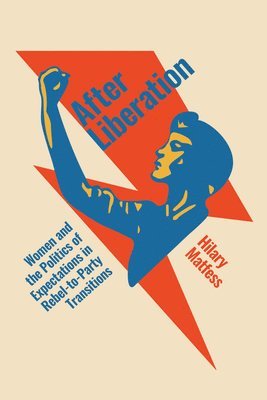
    After Liberation

    Women and the Politics of Expectations in Rebel-to-Party Transitions

    AvHilary Matfess

    Inbunden, Engelska, 2026

    1 314 kr

    Beställningsvara. Skickas inom 5-8 vardagar. Fri frakt över 249 kr.

    Fler format och utgåvor

    Häftad

    320 kr

    Beskrivning

    War offers opportunities for women to liberate their communities and build a better life for themselves. When women join rebel groups, they often take on new roles, cultivate new social networks, and develop new skills. These rebel women often gain the respect of rebel leaders, their comrades-in-arms, and the communities they're fighting for. When the guns are silenced, however, women have struggled to maintain the progress and prestige that they gained during war. Hilary Matfess investigates the gendered legacies of conflict and considers why it is so difficult for female veterans to defend the gains they made during war.This book explores how both individual female veterans and former-rebel political parties balance the incentives to continue their wartime activities or moderate them to succeed in the postwar period. The particular balance struck—by party elites and by female veterans—shapes women's rights and representation after war. Drawing on cross-national statistics and in-depth qualitative case studies of rebel groups—from Ethiopia, Namibia, El Salvador, and Nepal—Matfess advances a theory to explain the postwar legacies of women's participation in rebellion at both the individual and the organizational levels. This book helps us understand why women that were once lauded as the backbone of the revolution are so frequently relegated to the backburner after war.

    Produktinformation

    • Utgivningsdatum:2026-03-24
    • Mått:152 x 229 x 23 mm
    • Vikt:531 g
    • Format:Inbunden
    • Språk:Engelska
    • Antal sidor:274
    • Förlag:Stanford University Press
    • ISBN:9781503645622

    Utforska kategorier

    • Genusvetenskap inom Samhälle och politik
    • Politik och statsskick inom Samhälle och politik
    • Krig och försvar inom Samhälle och politik

    Mer om författaren

    Hilary Matfess is an Assistant Professor at the Josef Korbel School of Global and Public Affairs, University of Denver.

    Recensioner i media

    "When they become ruling civilian parties, why do most winning women-inclusive armed insurgencies become so blatantly patriarchal? Hilary Matfess takes a deep dive into post-war gender dynamics of insurgencies-turned-political parties in Ethiopia, Namibia, El Salvador, and Nepal. With her close scrutiny of party organizations, intriguing first-person interviews, and cross-national comparisons, Matfess makes a genuine contribution to unknotting this crucial puzzle."—Cynthia Enloe, Clark University"Leftist rebel groups may be willing to incorporate women into their fighting ranks, but do not count of them to free women. Through an in-depth analysis of the Ethiopian civil war, Hilary Matfess unveils a disturbing truth: after liberation, as the rebel victors sought to transform their group into a broad-based electoral coalition, they sacrificed women's rights on the political altar."—Dawn Langan Teele, Johns Hopkins University"Guerillas driven by revolutionary ideals may win their wars, but they have a mixed record of liberating their societies from patriarchy. Hilary Matfess explores the neglected question of what happens to female combatants when liberation movements transition to political parties in power. This is an extraordinarily thorough study that is destined to become the go-to reference on this topic." —Alex de Waal, Executive Director of the World Peace Foundation

    Innehållsförteckning

    • AcknowledgmentsIntroduction1. Linking Women's Wartime Contributions to Former-Rebel Parties' Positions on Women's Rights and Representation2. Looking for Continuity and Moderation in Cross-National Perspective3. A Background to the TPLF4. The Ones Who Rebelled at Heart: Women in the TPLF5. Sweet but Not Sticky: Women and the TPLF's Rebel-to-Party Transition6. SWAPO Women: Everything According to PLAN7. Women's Ambition Meets "Ambivalent Moderation": The Experience of the FMLN8. Feminism and Fragmentation: The CPN-M's Transition from Party to Rebel and Back AgainConclusions and Next StepsAppendix A: Women's Activities in Armed Rebellion VariablesAppendix B: Former-Rebel Parties and Wartime CharacteristicsNotesReferencesIndex