• Fri frakt över 249 kr
  • •
  • Snabba leveranser
  • •
  • Billiga böcker
Kundservice

Du är på sajten för privatpersoner.

Företag, bibliotek eller offentlig verksamhet?

Du handlar på classic.bokus.com, där alla dina funktioner finns intakta.
Till classic.bokus.com
Bokus logotyp. Gå till startsidan.
  • Erbjudanden
  • Student
  • Topplistor
  • Barn & ungdom
  • Bokus Play
  • E-böcker
  • Ljudböcker
  • Pocketböcker
  • Spel och pussel

Pocketfynda! Hundratals böcker för 49 kr/st →

Sidfot

Mina sidor

    Hjälp

    • Kundservice
    • Vanliga frågor och svar
    • Frakt och leverans
    • Retur vid ångerrätt
    • Reklamera vara
    • Betalning
    • Köpvillkor
    • Allmänna villkor
    • Information om webbplatsens tillgänglighet

    Om Bokus

    • Om oss
    • Pressrum
    • För studenter
    • För företag
    • För bibliotek och offentlig verksamhet
    • För leverantörer
    • Hållbarhet

    Populärt

    • Aktuella erbjudanden
    • Presentkort
    • Studentlitteratur
    • Nya böcker
    • Topplistor
    • Signerade böcker
    • Engelska böcker

    Inspiration

    • Boktips
    • BookTok
    • Barnbokskaraktärer
    • Populära författare
    Logotyp för Bokus
    Följ oss på Facebook (extern länk)Följ oss på Instagram (extern länk)Följ oss på YouTube (extern länk)Följ oss på TikTok (extern länk)
    bokus @ CookiesAnpassa cookiesIntegritetspolicyKöpvillkor
    Till Citymail hemsida (extern länk)Till Budbee hemsida (extern länk)Till Postnord hemsida (extern länk)Till Schenker hemsida (extern länk)Till Early Bird hemsida (extern länk)Till Walleys hemsida (extern länk)
    1. Samhälle och politik
    2. Samhälle och kultur
    3. Kultur och medier
    4. Medievetenskap

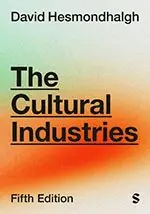
    The Cultural Industries

    AvDavid Hesmondhalgh

    Häftad, Engelska, 2026

    610 kr

    Beställningsvara. Skickas inom 5-8 vardagar. Fri frakt över 249 kr.

    Fler format och utgåvor

    Inbunden

    1 712 kr

    Beskrivning

    Written by leading scholar David Hesmondhalgh, The Cultural Industries remains the definitive text for understanding the ever-evolving world of culture, creativity, and commerce. This textbook provides a coherent and accessible analysis of cultural industries, combining clarity with comprehensive coverage on an international scale.

    In this new edition, David provides incisive updates to reflect today’s pressing issues, including:

    • The emerging impact of generative Artificial Intelligence on cultural production and consumption;
    • Problems surrounding the use of automated, AI-based systems and human curation to recommend cultural products to users;
    •  The increasing importance of social media creators and influencers;
    • Refreshed and internationalised case studies, offering a more inclusive and diverse perspective.

    Packed with real-world examples, The Cultural Industries equips readers with practical insights and critical frameworks to navigate this complex field. From students and educators to industry professionals, this text is an essential resource for anyone seeking to understand the forces shaping cultural production in the modern era.

    Produktinformation

    • Utgivningsdatum:2026-01-30
    • Mått:170 x 242 x 31 mm
    • Vikt:910 g
    • Format:Häftad
    • Språk:Engelska
    • Antal sidor:576
    • Upplaga:5
    • Förlag:SAGE Publications
    • ISBN:9781529691368

    Utforska kategorier

    • Medievetenskap inom Samhälle och politik
    • Media och underhållning inom Ekonomi och Ledarskap

    Mer om författaren

    David Hesmondhalgh is Professor of Media, Music and Culture in the School of Media and Communication at the University of Leeds. He is the author of The Cultural Industries (SAGE, 2019); Culture, Economy and Politics: The Case of New Labour (Palgrave, 2015, co-written with Kate Oakley, David Lee and Melissa Nisbett); Why Music Matters (Wiley-Blackwell, 2013); and Creative Labour: Media Work in Three Cultural Industries (Routledge, 2011, co-written with Sarah Baker). He is also editor or co-editor of eight other books or special journal issues on media, music and culture, including a special issue of Popular Communication (co-edited with Anamik Saha) on Race and Cultural Production; The Media and Social Theory (Routledge, co-edited with Jason Toynbee, 2008) and Media and Society, 6th edition (Bloomsbury, co-edited with James Curran, 2019). He was born and raised in Accrington, Lancashire, did his first degree in English Language and Literature at the University of Oxford, and received his PhD from Goldsmiths University of London in 1996. He lives in Yorkshire with his partner, the philosopher Helen Steward, and they have two adult children, Rosa and Joe.

    Recensioner i media

    The Cultural Industries is justly celebrated for many reasons, but what I find most compelling is the civic and moral passion that infuses every page. While never polemical, Hesmondhalgh makes clear why the making of culture matters and what’s at stake. With each new much-awaited edition, it is this quality that ensures the book’s timeless relevance.

    Innehållsförteckning

    • Chapter 1: Change and Continuity, Power and CreativityChapter 2: The Cultural Industries Approach: Distinctive Features of Culture-Producing BusinessesChapter 3: Theories of Culture, Theories of Cultural ProductionChapter 4: Cultural Industries in the Twentieth Century: Key FeaturesChapter 5: Why the Cultural Industries Began to Change in the Late Twentieth CenturyChapter 6: Policy Change in Media and Telecommunications: Marketing and CopyrightChapter 7: Cultural Policy: Creative Cities, Creative Industries, Creative EconomiesChapter 8 Ownership (1): Concentration, Conglomeration and Corporate Power, 1980–2010Chapter 9: Ownership (2): Concentration, Conglomeration and Corporate Power, 2010 OnwardsChapter 10: How the Claims of Digital Optimists Were Contradicted by the Rise of Digital CultureChapter 11: The Effects of Digital Networks on Individual Cultural IndustriesChapter 12: Creativity, Commerce and OrganisationChapter 13: Working Conditions and Inequalities in the Cultural IndustriesChapter 14: Internationalisation: Neither Globalisation nor Cultural ImperialismChapter 15: Texts: Diversity, Quality and Social JusticeChapter 16: Conclusions: A New Era in Cultural Production?