• Fri frakt över 249 kr
  • •
  • Snabba leveranser
  • •
  • Billiga böcker
Kundservice

Du är på sajten för privatpersoner.

Företag, bibliotek eller offentlig verksamhet?

Du handlar på classic.bokus.com, där alla dina funktioner finns intakta.
Till classic.bokus.com
Bokus logotyp. Gå till startsidan.
  • Erbjudanden
  • Student
  • Topplistor
  • Barn & ungdom
  • Bokus Play
  • E-böcker
  • Ljudböcker
  • Pocketböcker
  • Spel och pussel

5% studentrabatt – använd koden KURSBOK27 →

Sidfot

Mina sidor

    Hjälp

    • Kundservice
    • Vanliga frågor och svar
    • Frakt och leverans
    • Retur vid ångerrätt
    • Reklamera vara
    • Betalning
    • Köpvillkor
    • Allmänna villkor
    • Information om webbplatsens tillgänglighet

    Om Bokus

    • Om oss
    • Pressrum
    • För studenter
    • För företag
    • För bibliotek och offentlig verksamhet
    • För leverantörer
    • Hållbarhet

    Populärt

    • Aktuella erbjudanden
    • Presentkort
    • Studentlitteratur
    • Nya böcker
    • Topplistor
    • Signerade böcker
    • Engelska böcker

    Inspiration

    • Boktips
    • BookTok
    • Barnbokskaraktärer
    • Populära författare
    Logotyp för Bokus
    Följ oss på Facebook (extern länk)Följ oss på Instagram (extern länk)Följ oss på YouTube (extern länk)Följ oss på TikTok (extern länk)
    bokus @ CookiesAnpassa cookiesIntegritetspolicyKöpvillkor
    Till Citymail hemsida (extern länk)Till Budbee hemsida (extern länk)Till Postnord hemsida (extern länk)Till Schenker hemsida (extern länk)Till Early Bird hemsida (extern länk)Till Walleys hemsida (extern länk)
    1. Samhälle och politik
    2. Sociologi och antropologi
    3. Sociologi

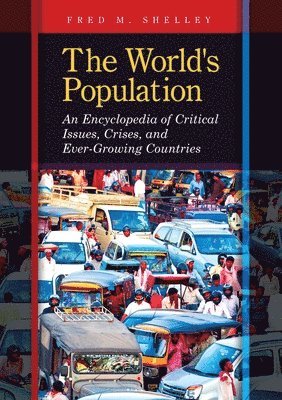
    World's Population

    An Encyclopedia of Critical Issues, Crises, and Ever-Growing Countries

    AvFred M. Shelley

    Inbunden, Engelska, 2014

    1 112 kr

    Beställningsvara. Skickas inom 10-15 vardagar. Fri frakt över 249 kr.

    Fler format och utgåvor

    E-bok

    1 207 kr

    E-bok

    1 207 kr

    Beskrivning

    This one-volume encyclopedia examines key topics, major world players, and imminent problems pertaining to the world's ever-growing population.According to the United Nations, the population of our planet reached 7 billion people in 2011. What areas of the world have the most people? What measures, if any, are in place to control the population? Why is Europe's population shrinking, while the rest of the world is growing? This eye-opening encyclopedia answers questions like these by examining significant issues and topics relating to the population and exploring profiles of the most populated countries and cities of the world. More than 100 alphabetically arranged entries focus on such topics as census, demography, megacity, overpopulation, and urban sprawl. Author Fred M. Shelley, an accomplished academic in the field of environmental sustainability, reveals the steps taken by major cities such as Rio de Janeiro, Paris, Tokyo, Beijing, Mexico City, Seoul, Manila, and New Delhi in handling their population, and what is being done in China and other countries to prevent overcrowding. The text includes a discussion of how factors like migration patterns, war, and disease impact population change. This comprehensive encyclopedia also includes primary document excerpts from court cases, legislation, and political speeches relating to population issues.

    Produktinformation

    • Utgivningsdatum:2014-12-16
    • Mått:180 x 256 x 28 mm
    • Vikt:960 g
    • Format:Inbunden
    • Språk:Engelska
    • Antal sidor:432
    • Förlag:Bloomsbury Publishing Plc
    • ISBN:9781610695060

    Utforska kategorier

    • Sociologi inom Samhälle och politik

    Mer om författaren

    Fred M. Shelley is professor of geography in the department of geography and environmental sustainability at the University of Oklahoma.

    Recensioner i media

    Overall, this encyclopedia provides a great introduction to a complicated and multifaceted topic and is an accessible starting point for those seeking to gain understanding of the complexity of issues related to population and the global implications.

    Innehållsförteckning

    • PrefaceIntroductionPart I: EntriesAge-Specific Death RateAgriculture and PopulationAmerican Eugenics SocietyAsiatic Barred ZoneBaby BoomBerlin WallBlack DeathBlackbirdingBorder FencesBorlaug, NormanBoserup, EsterBrain DrainBureau of Population, Refugees, and MigrationCarrying CapacityCause-Specific Death RatesCensusChannelized MigrationClimate Change and PopulationConvict TransportationCrude Birth RateCrude Death RateDemographic Transition ModelDemographyDependency RatioDiasporaEarth SummitEasterlin, RichardEhrlich, PaulEnvironmental RefugeesEpidemicsEugenicsEuthanasiaExpatriatesFamineFood Prices and PopulationFood Production and Food SecurityGalton, Sir FrancisGender and PopulationGenocideGenocide WatchGlobalizationGravity ModelGreat Bengal FamineGreat Chinese FamineGreat Famine of 1315–1317Great Wall of ChinaGreen RevolutionHardin, GarrettHistory of World PopulationHIV/AIDSHuman Sex RatioHunting and GatheringIllegal ImmigrationImmigration and Nationality Act Amendments of 1965Indentured ServitudeIndigenous PopulationsInfant Mortality RateInternational AdoptionInternational Labor MigrationInternational Migrants DayInternational Organization for MigrationIrish Potato FamineJohnson-Reed ActJustinian PlagueKuznets, SimonLife ExpectancyMalthus, ThomasMarx, KarlMedian AgeMegacitiesMegalopolisMigrationNatural DisastersNatural Resources and PopulationNomadsOne-Child PolicyOverpopulationPhysiological DensityPopulation Association of AmericaPopulation ConnectionPopulation DensityPopulation PyramidPopulation Reference BureauPrimate CityPush Factors and Pull FactorsRate of Natural IncreaseRavenstein, ErnstRefugeesRemittancesReplacement-Level FertilityRockefeller, John D.Rural to Urban MigrationSachs, JeffreySanger, MargaretSex TraffickingSimon, JulianSlaverySmith, AdamSpanish FluSquatter SettlementsStates, Nations, and PopulationTotal Fertility RateTragedy of the CommonsUnited Nations Commission on Population and DevelopmentUnited Nations High Commissioner for RefugeesUnited Nations Population FundUnited States Bureau of the CensusWar and PopulationWorld Refugee DayPart II: CountriesChinaIndiaUnited States of AmericaIndonesiaBrazilPakistanNigeriaBangladeshRussiaJapanMexicoPhilippinesVietnamEthiopiaEgyptGermanyIranTurkeyDemocratic Republic of the CongoThailandFranceUnited KingdomItalyMyanmarSouth AfricaSouth KoreaColombiaSpainUkraineTanzaniaKenyaArgentinaAlgeriaNigerSaudi ArabiaSingaporeUnited Arab EmiratesPart III: CitiesTokyoJakartaSeoulDelhi and New DelhiShanghaiManilaKarachiNew YorkSão PauloMexico CityBeijingGuangzhouMumbaiKeihanshinMoscowCairoLos AngelesKolkataBangkokDhakaBuenos AiresTehranIstanbulTianjinShenzhenLagosRio de JaneiroParisLahoreLondonPart IV: DocumentsAdam Smith's The Wealth of Nations, 1776Thomas Malthus's Essay on the Principle of Population, 1798Karl Marx's Communist Manifesto, 1848Johnson-Reed Act: Text of Section Establishing Immigration Quotas, 1924Immigration and Nationality Act Amendments of 1965: Text of Amendment Eliminating National Immigration QuotasInternational Adoptions: The Hague Convention, Preamble and Articles 1–5, 1993Genocide: The Eight States of Genocide, 1998Environmental Refugees: Living Space for Environmental Refugees (LiSER)—Mission Statement, 2002One-Child Policy: Testimony of U.S. Assistant Secretary of State Arthur Dewey Concerning China's One-Child Policy, 2004One-Child Policy: 2008 Report of the U.S. Congressional-Executive Committee on China on Population PlanningWorld Refugee Day: Remarks of U.S. Secretary of State John Kerry at the World Refugee Event, June 20, 2013International Migrants Day: Remarks by the Director of the U.S. Bureau of Population, Refugees, and Migration on International Migrants Day, December 18, 2013Climate Change and Population: Remarks of U.S. Secretary of State John Kerry in Jakarta, Indonesia, February 16, 2014Selected BibliographyIndex