• Fri frakt över 249 kr
  • •
  • Snabba leveranser
  • •
  • Billiga böcker
Kundservice

Du är på sajten för privatpersoner.

Företag, bibliotek eller offentlig verksamhet?

Du handlar på classic.bokus.com, där alla dina funktioner finns intakta.
Till classic.bokus.com
Bokus logotyp. Gå till startsidan.
  • Erbjudanden
  • Student
  • Topplistor
  • Barn & ungdom
  • Bokus Play
  • E-böcker
  • Ljudböcker
  • Pocketböcker
  • Spel och pussel

Pocketfynda! Hundratals böcker för 49 kr/st →

Sidfot

Mina sidor

    Hjälp

    • Kundservice
    • Vanliga frågor och svar
    • Frakt och leverans
    • Retur vid ångerrätt
    • Reklamera vara
    • Betalning
    • Köpvillkor
    • Allmänna villkor
    • Information om webbplatsens tillgänglighet

    Om Bokus

    • Om oss
    • Pressrum
    • För studenter
    • För företag
    • För bibliotek och offentlig verksamhet
    • För leverantörer
    • Hållbarhet

    Populärt

    • Aktuella erbjudanden
    • Presentkort
    • Studentlitteratur
    • Nya böcker
    • Topplistor
    • Signerade böcker
    • Engelska böcker

    Inspiration

    • Boktips
    • BookTok
    • Barnbokskaraktärer
    • Populära författare
    Logotyp för Bokus
    Följ oss på Facebook (extern länk)Följ oss på Instagram (extern länk)Följ oss på YouTube (extern länk)Följ oss på TikTok (extern länk)
    bokus @ CookiesAnpassa cookiesIntegritetspolicyKöpvillkor
    Till Citymail hemsida (extern länk)Till Budbee hemsida (extern länk)Till Postnord hemsida (extern länk)Till Schenker hemsida (extern länk)Till Early Bird hemsida (extern länk)Till Walleys hemsida (extern länk)
    1. Psykologi och pedagogik
    2. Psykologi
    3. Biologisk psykologi och neuropsykologi

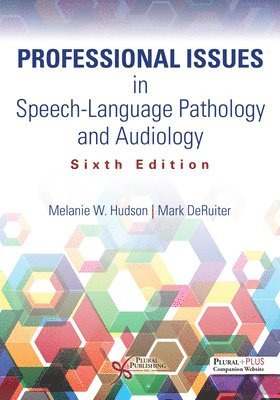
    Professional Issues in Speech-Language Pathology and Audiology

    AvMelanie W. Hudson,Mark DeRuiter

    Häftad, Engelska, 2023

    2 471 kr

    Beställningsvara. Skickas inom 5-8 vardagar. Fri frakt över 249 kr.

    Fler format och utgåvor

    Övrigt

    Tillf. slut

    Beskrivning

    This sixth edition of Professional Issues in Speech-Language Pathology and Audiology is intended to be a primary text for students in speech-language pathology and audiology, as well as a resource for practitioners, providing a comprehensive introduction to contemporary issues that affect these professions and service delivery across settings. It aims to provide a better understanding that day-to-day clinical work, as well as personal professional growth and development are influenced by political, social, educational, health care, and economic concerns. By instilling a big-picture view of the profession, future clinicians will be more prepared to make informed decisions as they provide services, engage in advocacy efforts, and plan their careers as audiologists or speech-language pathologists.The book is divided into four major sections: Overview of the Professions, Employment Issues, Setting-Specific Issues, and Working Productively. The information presented in each section provides the reader with a better understanding and a new perspective on how professional issues have been affected by both internal and external influences in recent years including technological advances, demographic shifts, globalization, and economic factors. Chapter authors are recognized subject-matter experts, providing a blend of both foundational and cutting-edge information in areas such as evidence-based practice, ethics, job searching and employment issues, interprofessional practice, service delivery in health care and education, technology, cultural competence, supervision, and leadership.Students reading this book will appreciate how the professions have evolved over time while acquiring a sense of where they are right now as they prepare to enter the professional world. Each of the topics covered in the book will continue to play important roles in the future of speech-language pathology and audiology, providing early career professionals with the requisite knowledge to achieve success in any setting.New to the Sixth Edition:New information on issues related to the COVID-19 pandemicCoverage of recent changes in technologyUpdates to ASHA certification requirements, the Assistants certification program, and the 2023 ASHA Code of Ethics New contributors: Nicole E. Corbin, Sandra Liang Gillam, Erin E.G. Lundblom, Christine T. Matthews, Shari Robertson, Rachel A. Ritter, and Jennifer P. TaylorUpdated list of acronyms used in the bookKey Features:Chapters authored by recognized experts in communication sciences and disordersEach chapter begins with an introduction and ends with a summary of key areasCritical Thinking questions for each chapter accessible onlineCase studies related to child and elder abuseCase studies related to advocacyFrom the Foreword:"The editors have been immersed for many years in undergraduate and graduate education as well as in the practice of audiology and speech-language pathology. Their varied experiences are illustrated in their selection of topics and authors. ...Chapters on competency-based education and practice, leadership, and stress and conflict in the workplace offer valuable guidance for students as they prepare to shift to the next phase of their evolving careers. Ultimately, this is a resource for crafting a pathway to a vocation. The final chapter, Advocacy, by Dr. Tommie Robinson, serves as a coda to the abundance of resources contained in this text. He offers the "why" for what we do in the professions. According to Dr. Robinson, we all have the opportunity to promote our excellence, help those we serve to speak for themselves, and create access for others who need our services. The authors in this text craft the framework for this endeavor." - Barbara H. Jacobson, PhD, CCC-SLP

    Produktinformation

    • Utgivningsdatum:2023-09-29
    • Mått:178 x 254 x undefined mm
    • Format:Häftad
    • Språk:Engelska
    • Antal sidor:541
    • Upplaga:6
    • Förlag:Plural Publishing Inc
    • ISBN:9781635506556

    Utforska kategorier

    • Biologisk psykologi och neuropsykologi inom Psykologi och pedagogik

    Mer om författaren

    Melanie W. Hudson, MA, CCC-SLP, has over 40 years of experience as a speech-language pathologist in public schools, private practice, and university settings. She currently serves on the ASHFoundation Board of Trustees and served on the ASHA Board of Directors from 2016–2018, the Board of Ethics, the Board of Special Interest Group Coordinators, and on the Ad Hoc Committees on Governance Review in 2018, and Supervision in 2013. Her publications include co-editor and chapter author for the 4th edition of Professional Issues in Speech-Language Pathology and Audiology, (Lubinski & Hudson; Delmar, Cengage Learning, 2013) , the 5th edition (Hudson & DeRuiter, Plural Publishing, 2020), and the most recent 6th edition (Hudson & DeRuiter, Plural Publishing, 2025). She is a former President of the Georgia Speech-Language and Hearing Association and served on the Georgia Board of Examiners for Speech-Language Pathology and Audiology from 2013–2020. Melanie is an ASHA Fellow and Board-Certified Specialist in Child Language and Disorders. She presents on topics related to school-based services, clinical education, and professional ethics. She recently retired from EBS Healthcare and resides in Williamsburg, Virginia. **** Mark DeRuiter, PhD, MBA, is an audiologist and speech-language pathologist. He is the director of the Clinical Science Doctorate in Speech-Language Pathology at the University of Pittsburgh. Dr. DeRuiter has taught introduction to audiology, aural rehabilitation, and advanced aural rehabilitation, with teaching experiences in the United States and Taiwan. Dr. DeRuiter's leadership experiences include serving on the executive board of the Council of Academic Programs in Communication Sciences and Disorders and serving on the American Speech-Language-Hearing Association's Council for Clinical Certification.

    Innehållsförteckning

    • ForewordPrefaceAbout the EditorsContributorsAcronymsSection I. Overview of the ProfessionsChapter 1. Professions for the Twenty-First CenturyMelanie W. Hudson and Mark DeRuiterIntroductionTrends in Technology and the Digital RevolutionTwenty-First Century Trends and IssuesEvidence-Based PracticeSummaryReferencesChapter 2. Professional Issues and Organizations: From the Past to the PresentJaynee HandelsmanIntroductionPractical Dilemmas and AffiliationOrganization of the ProfessionsCommon Characteristics of Professional AssociationsHistorical Perspective on Scope and Practice FrameworkCommon Characteristics of Professional AssociationsRelated Professional AssociationsState Associations and Impacts on LicensureStudent OrganizationsInternational Professional AssociationsFocus on Recent HistorySummary of the Evolution of the ProfessionsSummaryReferencesChapter 3. Establishing our Competencies in Professionals: Education, Certification, and LicensureLissa Power-deFurIntroductionHow Do You Know You Are Competent?Credentialing ProgramsState LicensureProfessional Development and Certification MaintenanceDemonstrating Expertise in a Particular Area of PracticeCredentialing Graduate ProgramsNext Steps: After GraduationSummaryReferencesChapter 4. Professional Ethics, Accountability, and LiabilityJaynee A. HandelsmanIntroductionStandards of Professional ConductConflicts of InterestRole of Professional AssociationsEthical Issues in Practice ManagementEthical Issues in SupervisionEthical Issues in AcademiaEthical DilemmasUnethical Complaint ProcessRecent Changes and Future DirectionsSummary of Professional EthicsIntroduction to Professional AccountabilityAccountable CareManaging Risks and Risk Intelligence for Accountable Clinicians and Organizations Current Critical Risks Facing Health CareConcept of Risk IntelligenceRaising the Bar on Accountability - The Value EquationLearning Health Systems - An Opportunity to Shape the Future of AccountabilityProfessional Accountability Requires Relentless Reimagining Conclusion and Summary of Professional AccountabilityIntroduction to Professional LiabilitySummaryReferencesChapter 5. International AlliancesRobert M. Augustine, Tina K. Veale, and Kelly M. HollandIntroductionDefinitions: Alliances, Partnerships, and CollaborationsInternational Alliances, Partnerships, and Collaborations Promoting Cultural Responsiveness for a Global Workforce Grounded in Standards of PracticeInternational Alliances and AccessInternational Alliances Through Other Professional OrganizationsInternational Alliances and Attributes of High-Quality Programs Offered Through Colleges and UniversitiesAlliances Promoting "Macro" International ExperiencesInternational Alliances Promoting Global Research for ScholarsFinal Summary and PerspectivesSummaryReferencesAppendix 5-A. Definitions of Eight Transferrable Competencies Valued in the WorkforceAppendix 5-B. Global Learning Value Rubric GlossaryAppendix 5-C. Proposed Competencies for Global EngagementAppendix 5-D. An MOU Checklist for International CollaborationsChapter 6. Applying Evidence to Clinical PracticeLizbeth H. Finestack and Stacy K. BetzIntroductionEvidence-Based PracticeEvaluating Assessment EvidenceUsing Assessment EvidenceEvaluating Intervention EvidenceThe Future of Evidence-Based PracticeSummaryReferencesSection II. Employment IssuesChapter 7. Workforce Issues and Finding EmployeementMark DeRuiter and Cathy DeRuiterIntroductionThe Current WorkforceASHA Membership and Affiliation DataShortage of PhD Students and Faculty in CSDThe Future: Factors Affecting EmploymentJob SearchConsider what Information is Available about YouResumeCompleting Your ApplicationInterviewing SuccessThe Anatomy of an Interview"Forbidden" Interview QuestionsPostinterview Follow-UpConsidering the Benefits That Might Be Available to YouSalary and BenefitsRetirement and Other IncentivesReceiving the OfferMaking the DecisionIs This Where I Want to Work?Red FlagsGetting StartedSummaryReferencesResourcesAppendix 7-A. Sample ResumeChapter 8. Building Your Career Shari Robertson and Marva MountIntroductionGetting Off to a Good StartProfessional EthicsCreating A Career PathYour First MentorProfessional Skills That Foster SuccessImposter SyndromeProfessional Engagement and ResponsibilitiesCareer ConsiderationsSummaryReferencesChapter 9. Assistants in Audiology and Speech-Language PathologyDiane Paul, Tricia Ashby-Scabis, and Lemmietta G. McNeillyIntroductionRationale for Use of AssistantsChallenges of Using AssistantsChronology of Ethical and Professional PracticeState RegulationsSupervisory RequirementsAssistant Employment TrendsTraining for AssistantsCredentialing AssistantsSupervision of AssistantsSupervision of Assistants in Speech-Language PathologyJob Responsibilities of Audiology AssistantsJob Responsibilities of Assistants in Speech-Language PathologyPayment of Services Provided by AssistantsResearch Related to AssistantsFuture Research IssuesSummaryReferencesAppendix 9-A. Assistants in Audiology and Speech-Language Pathology: Key Word DefinitionsSection III. Setting-Specific IssuesChapter 10. Health Care Legislation, Regulation, and FinancingJeffrey P. ReganIntroductionMedicareMedicaidPrivate Health InsuranceCoding SystemsKey Health Care Legislative and Regulatory IssuesSummaryReferencesChapter 11. Service Delivery in Health Care SettingsJeffrey P. Johnson, Christine T. Matthews, and Alex JohnsonScope of ChapterHealth Care Settings and Key ResponsibilitiesRoutine Considerations for Speech-Language Pathologists and Audiologists in Health CareDynamic Considerations for Speech-Language Pathologists and Audiologists in Health CareSummaryReferencesChapter 12. Knowledge and Skills for Providing Evidence-Based Services in School-Based SettingsSandra Laing GillamIntroductionPopulation in U.S. SchoolsFederal Legislation, Landmark Court Cases, and the Provision of Special Education Services in SchoolsDue ProcessIdentification, Assessment and Intervention in SchoolsService Delivery OptionsScheduling in the SchoolsWorking with Support PersonnelProfessional Practice in the SchoolsOutreachSupervisionResearchAdministration and LeadershipSummaryReferencesChapter 13. Service Delivery Issues in Early InterventionCorey Herd CassidyIntroductionWhat Is Early Intervention?Roles and Responsibilities of Speech-Language Pathologists and Audiologists in Early InterventionGuiding Principles of Early InterventionServices Based on the Highest Quality of EvidenceOther Considerations for Early Intervention Services in Natural EnvironmentsChallenges and Evidence-Based Practices for Remote Service DeliverySummaryReferencesChapter 14. Service Delivery Issues in Private PracticeRobin L. EdgeIntroductionAdvantages and Disadvantages of a Private PracticePrivate Practice OptionsBusiness PlanMarketing StrategyLocation of Private PracticePrivate Practice Credentials and QualificationsEthicsCultural CompetenceResources Needed for Private PracticePayment for ServicesRates for ServicesBillingOutcomes Data for Private PracticesNetworkingSummaryReferencesResourcesSection IV. Working ProductivelyChapter 15. Strategically Promoting Access to Speech-Language Pathology and Audiology ServicesBrooke HallowellIntroductionIdentifying Barriers to AccessEnsuring Others Understand the Need for Our ServicesOptimizing Reimbursement for Clinical ServicesAdvancing Legislation to Improve AccessAdvocating for Our ProfessionsActions for Advocacy and Professional AssertivenessCare ExtendersExpanding Access through TechnologyEducating the PublicAdjusting Service-Providing EnvironmentsSummaryAcknowledgmentsReferencesChapter 16. Documentation IssuesNicole Corbin and Erin E. G. LundblomIntroductionPurposes of Clinical Documentation for ConsumersGeneral Principles of Clinical Documentation for PracititionersTypes of Clinical DocumentationInfluences on Clinical DocumentationSummaryReferencesChapter 17. Developing Leadership SkillsGail J. RichardIntroductionRoles of a LeaderEffective Leadership SkillsFiduciary ResponsibilitiesStrategies for Conflict in LeadershipPathways to LeadershipSummaryReferencesChapter 18. Safety in the WorkplaceCynthia McCormick Richburg and Donna Fisher SmileyIntroductionRegulatory AgenciesAccrediting AgenciesPolicies, Procedures, and TrainingsPersonal and Environmental HazardsInfection Control in Clinical and Educational SettingsConfidentiality of Client and Research Participant InformationSummaryReferencesAppendix 18-A AcronymsChapter 19. Overview of Interprofessional Practice and Interprofessional EducationAlex JohnsonIntroductionInterprofessional PracticeInterprofessional Education National and International Organizations and Resources for IPE and IPCPSummaryReferencesChapter 20. Child Abuse and Elder MistreatmentCarolyn Wiles HigdonIntroductionChild Abuse and NeglectElder Mistreatment and NeglectPalliative Care and HospiceSummaryReferencesResourcesOther WebsitesVideos Related to Palliative Care and HospiceAppendix 20-A. Case 1: JoshuaAppendix 20-B. Case 2: SamAppendix 20-C. Case 3: MiriamAppendix 20-D. Common Reactions in the Grief ProcessChapter 21. Working With Culturally and Linguistically Diverse PopulationsShirley Huang and Pui Fong KanIntroductionDemographic Landscape in the United StatesSpeech, Language, and Hearing Clinicians and Scientists: Demographic ProfilesDefining Cultural and Linguistic Diversity"An Inconvenient Truth"Cultural Competence, Responsiveness, and HumilityService Delivery for Children and AdultsSystems-Level InequitiesAction Is Long Overdue: Moving the Field ForwardSummaryReferencesChapter 22. Supervision and MentoringMelanie W. Hudson and Mary Sue Fino-SzumskiIntroductionA Brief History of Supervision and MentoringThe Supervisory ProcessKey Elements of the Supervisory ProcessCORE Model of Supervision and MentoringSupervisory Style and Communication SkillsTransition: Supervisor to Mentor/PreceptorRegulations, Standards, and GuidelinesClinical Fellowship Experience and Audiology ExternshipSpeech-Language Pathology Clinical Fellowship (SLPCF)Supervision PostcertificationSupervision of Students and Support PersonnelEthical IssuesCultural, Linguistic, and Generational IssuesSupervision of Challenging SuperviseesTechnology and SupervisionTraining in SupervisionSupervisor AccountabilityFuture Needs in Supervision and MentoringSummaryReferencesResourcesChapter 23. Technology for Service Delivery, Professional Practice, and Student TrainingCarol C. Dudding and Rachel A. RitterScope of ChapterThe Digital RevolutionTechnology for Service DeliveryProfessional Practice SettingsEducation and TrainingEthical ConsiderationsSummaryReferencesChapter 24. Managing Stress and Conflict in the WorkplaceMark DeRuiter and Jennifer P. TaylorIntroductionWhat Is Stress?Burnout and Compassion FatigueWhat Are the Risks for Experiencing Burnout?Workplace ConflictWorkplace ViolenceCoping With Stress: The Importance of Self-CareTalking With OthersEmployee Assistance ProgramsMindfulness Practices for Stress ReductionSummaryReferencesResourcesChapter 25. AdvocacyTommie L. Robinson, Jr.IntroductionDefinitionsRecognizing the Benefits of Being an AdvocateAdvocacy Case ExamplesDeveloping a Game Plan for AdvocacyResourcesSummaryReferencesIndex