• Fri frakt över 249 kr
  • •
  • Snabba leveranser
  • •
  • Billiga böcker
Kundservice

Du är på sajten för privatpersoner.

Företag, bibliotek eller offentlig verksamhet?

Du handlar på classic.bokus.com, där alla dina funktioner finns intakta.
Till classic.bokus.com
Bokus logotyp. Gå till startsidan.
  • Erbjudanden
  • Student
  • Topplistor
  • Barn & ungdom
  • Bokus Play
  • E-böcker
  • Ljudböcker
  • Pocketböcker
  • Spel och pussel

Pocketfynda! Hundratals böcker för 49 kr/st →

Sidfot

Mina sidor

    Hjälp

    • Kundservice
    • Vanliga frågor och svar
    • Frakt och leverans
    • Retur vid ångerrätt
    • Reklamera vara
    • Betalning
    • Köpvillkor
    • Allmänna villkor
    • Information om webbplatsens tillgänglighet

    Om Bokus

    • Om oss
    • Pressrum
    • För studenter
    • För företag
    • För bibliotek och offentlig verksamhet
    • För leverantörer
    • Hållbarhet

    Populärt

    • Aktuella erbjudanden
    • Presentkort
    • Studentlitteratur
    • Nya böcker
    • Topplistor
    • Signerade böcker
    • Engelska böcker

    Inspiration

    • Boktips
    • BookTok
    • Barnbokskaraktärer
    • Populära författare
    Logotyp för Bokus
    Följ oss på Facebook (extern länk)Följ oss på Instagram (extern länk)Följ oss på YouTube (extern länk)Följ oss på TikTok (extern länk)
    bokus @ CookiesAnpassa cookiesIntegritetspolicyKöpvillkor
    Till Citymail hemsida (extern länk)Till Budbee hemsida (extern länk)Till Postnord hemsida (extern länk)Till Schenker hemsida (extern länk)Till Early Bird hemsida (extern länk)Till Walleys hemsida (extern länk)
    1. Historia och arkeologi
    2. Historia
    3. Historia: särskilda händelser och ämnen
    4. Socialhistoria och kulturhistoria

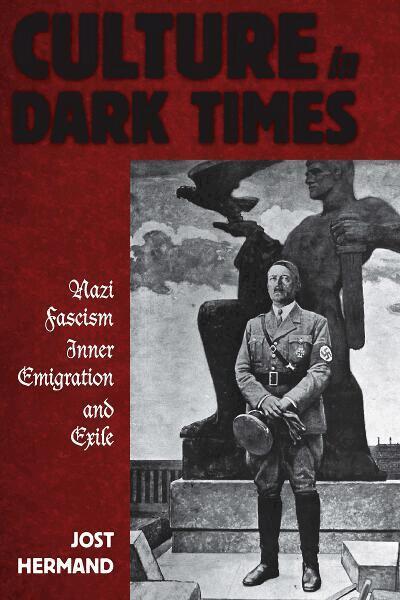
    Culture in Dark Times

    Nazi Fascism, Inner Emigration, and Exile

    AvJost Hermand

    Häftad, Engelska, 2014

    585 kr

    Beställningsvara. Skickas inom 3-6 vardagar. Fri frakt över 249 kr.

    Fler format och utgåvor

    Inbunden

    2 024 kr

    Beskrivning

    BETWEEN 1933 AND 1945 MEMBERS OF THREE GROUPS—THE Nazi fascists, Inner Emigration, and Exiles—fought with equal fervor over who could definitively claim to represent the authentically “great German culture,” as it was culture that imparted real value to both the state and the individual. But when authorities made pronouncements about “culture” were they really talking about high art? This book analyzes the highly complex interconnections among the cultural-political concepts of these various ideological groups and asks why the most artistically ambitious art forms were viewed as politically important by all cultured (or even semi-cultured) Germans in the period from 1933 to 1945, with their ownership the object of a bitter struggle between key figures in the Nazi fascist regime, representatives of Inner Emigration, and Germans driven out of the Third Reich.

    Produktinformation

    • Utgivningsdatum:2014-09-01
    • Mått:152 x 229 x 17 mm
    • Vikt:399 g
    • Format:Häftad
    • Språk:Engelska
    • Antal sidor:294
    • Förlag:Berghahn Books
    • ISBN:9781782383857

    Utforska kategorier

    • Socialhistoria och kulturhistoria inom Historia och arkeologi
    • Europas historia inom Historia och arkeologi

    Mer om författaren

    Jost Hermand is Vilas Professor Emeritus at the University of Wisconsin, Madison and Honorary Professor at the Humboldt University in Berlin. He has been visiting professor at universities across the U.S. and Germany, is a fellow of the Vienna Academy, member of the Saxon Academy in Leipzig, and holds an honorary doctorate from the University of Kassel.

    Recensioner i media

    CHOICE OUTSTANDING ACADEMIC TITLE 2013“What makes this volume particularly valuable is the book's comprehensiveness. Its encyclopedic range will enable students to get a real sense of the complexity of the arts under German fascism…n sum this well-written volume by a master in his field will be an extremely useful guide to interwar German culture…Essential.”  ·  Choice“[The author] closes with a rich, extensive discussion of the efforts of German émigré artists and filmmakers to secure a cultural heritage from fascist barbarism… This monograph has so much to offer… Students of the Nazi years  can learn a great deal too from how Hermand masterfully interweaves analyses of three immensely complicated cases. Finally, the breadth of knowledge on display is remarkable.  Culture in Dark Times will be an extremely valuable work for scholars engaging with the imbrications of culture with barbarism in Germany’s twentieth century.”  ·  German History“Hermand is to be congratulated on successfully bringing together a significant amount of information in a study which covers a great deal of ground. The resulting book…is a tribute to Hermand’s vast knowledge of the topic, and his ability always to be in control of his material. A worthwhile select bibliography rounds off a useful volume, which is further enriched by a number of fascinating illustrations.”  ·  Bulletin of the German Historical Institute London“As in all his books, Hermand impresses…with a wealth of information as much as stylistic elegance. He offers the reader a more precise insight into all that posturing normally described as opportunism, blindness, adjustment, escapism, public spirit or resistance.”  ·  Das Historisch-Politische Buch

    Innehållsförteckning

    • PrefaceChapter 1. Three Claims to Cultural RepresentationPart I: Nazi FascismChapter 2. Cultural-Political PreconditionsChapter 3. Enemy StereotypesChapter 4. Stated ObjectivesChapter 5. The Ideal of an « Eternally German » CultureChapter 6. Approaches to Practical ImplementationChapter 7. Consequences for the ArtsArchitecturePainting and SculptureMusicLiteratureTheaterRadio, Film, and the PressChapter 8. Class-Specific Successes of National Socialist Cultural PoliciesPart II: Inner EmigrationChapter 9. Between Aversion and AccommodationChapter 10. Forms of Artistic ExpressionLiteraturePainting and SculptureMusicPart III: ExileChapter 11. Fragmentation of the German Exile CommunityChapter 12. Places of RefugeChapter 13. Possibilities for an Effective AntifascismChapter 14. Consequences for the ArtsLiteratureTheaterFilmPainting, Graphic Art, and PhotomontageMusicChapter 15. Visions of a “Liberated” Culture in Post-Fascist GermanySelected Bibliography