• Fri frakt över 249 kr
  • •
  • Snabba leveranser
  • •
  • Billiga böcker
Kundservice

Du är på sajten för privatpersoner.

Företag, bibliotek eller offentlig verksamhet?

Du handlar på classic.bokus.com, där alla dina funktioner finns intakta.
Till classic.bokus.com
Bokus logotyp. Gå till startsidan.
  • Erbjudanden
  • Student
  • Topplistor
  • Barn & ungdom
  • Bokus Play
  • E-böcker
  • Ljudböcker
  • Pocketböcker
  • Spel och pussel

Pocketfynda! Hundratals böcker för 49 kr/st →

Sidfot

Mina sidor

    Hjälp

    • Kundservice
    • Vanliga frågor och svar
    • Frakt och leverans
    • Retur vid ångerrätt
    • Reklamera vara
    • Betalning
    • Köpvillkor
    • Allmänna villkor
    • Information om webbplatsens tillgänglighet

    Om Bokus

    • Om oss
    • Pressrum
    • För studenter
    • För företag
    • För bibliotek och offentlig verksamhet
    • För leverantörer
    • Hållbarhet

    Populärt

    • Aktuella erbjudanden
    • Presentkort
    • Studentlitteratur
    • Nya böcker
    • Topplistor
    • Signerade böcker
    • Engelska böcker

    Inspiration

    • Boktips
    • BookTok
    • Barnbokskaraktärer
    • Populära författare
    Logotyp för Bokus
    Följ oss på Facebook (extern länk)Följ oss på Instagram (extern länk)Följ oss på YouTube (extern länk)Följ oss på TikTok (extern länk)
    bokus @ CookiesAnpassa cookiesIntegritetspolicyKöpvillkor
    Till Citymail hemsida (extern länk)Till Budbee hemsida (extern länk)Till Postnord hemsida (extern länk)Till Schenker hemsida (extern länk)Till Early Bird hemsida (extern länk)Till Walleys hemsida (extern länk)
    1. Historia och arkeologi
    2. Historia
    3. Europas historia

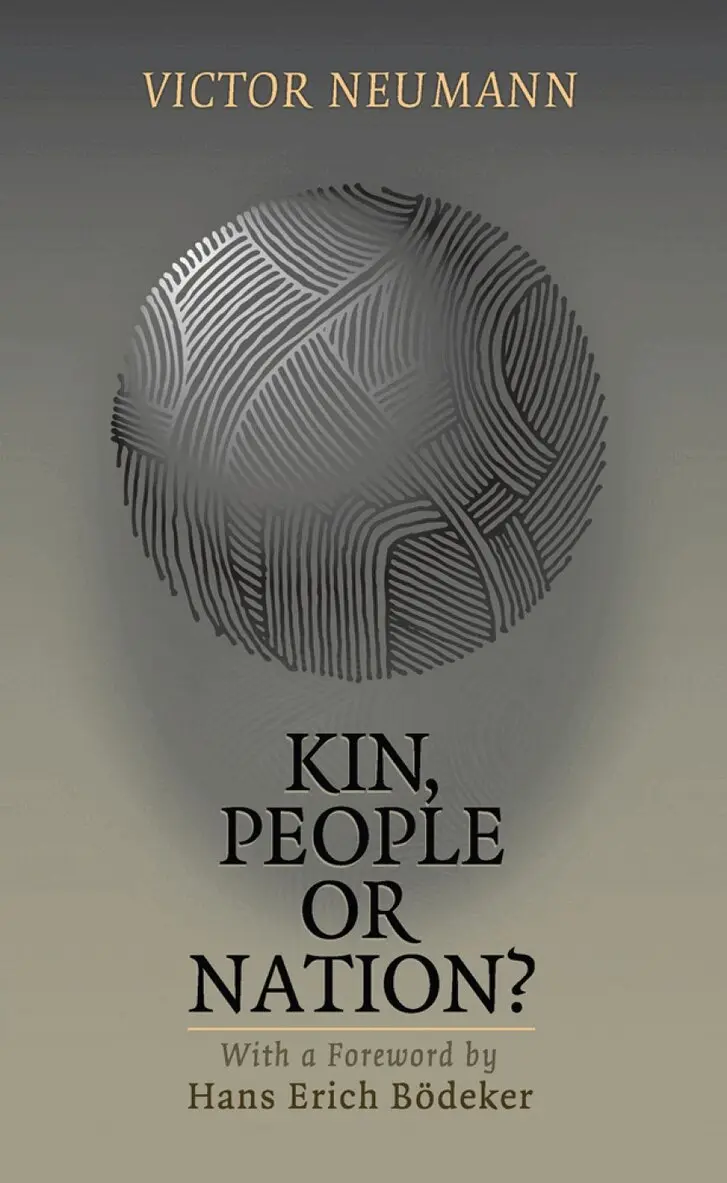
    Kin, People or Nation?

    On European Political Identities

    AvVictor Neumann

    Häftad, Engelska, 2021

    162 kr

    Beställningsvara. Skickas inom 7-10 vardagar. Fri frakt över 249 kr.

    Beskrivning

    "Starting from the history of concepts, Victor Neumann shows how the variety of connotations associated with the ideas of 'nation' and 'people' have been circumscribed in south-eastern Europe, holding back the region over many decades. More important, with erudition and seriousness of purpose, he mounts a defence of a notion of identity that is neither fixed nor monocultural, and proposes a legal definition of 'nation' that can resist exclusivist or racist versions. In an age when counter-rational fantasies about identity seem to be prevailing, when many seem unaware of or have forgotten where such thinking leads, Neumann's is a much-needed voice of reason." — Dan Stone, Professor of Modern History, Royal Holloway, University of LondonWith a focus on the origins and evolution of political identity, this book explores the way different linguistic communities have defined kin, ethnicity, citizenship and the nation. As Neumann traces the transition over the last two centuries of European history, from the medieval to the modern age, he pays particular attention to the idealistic philosophies that have influenced the intellectual landscape and political discourse of European regions today, and which have intensified the division between East and West in terms of cultural norms, legislation and administration.

    Produktinformation

    • Utgivningsdatum:2021-11-08
    • Mått:138 x 216 x 19 mm
    • Vikt:365 g
    • Format:Häftad
    • Språk:Engelska
    • Antal sidor:184
    • Förlag:Scala Arts & Heritage Publishers Ltd
    • ISBN:9781785513749
    • Översättare:Gabi Reigh

    Utforska kategorier

    • Europas historia inom Historia och arkeologi
    • Språkvetenskap och lingvistik inom Språk och ordböcker

    Mer om författaren

    Victor Neumann is a Romanian historian, political analyst, Professor of Romanian and European Intellectual History at the Bucharest National University of Arts and Senior Researcher at the Romanian Academy of Sciences. He is a well-known specialist in the recent cultural and intellectual histories of Eastern and Central Europe.

    Recensioner i media

    “In a study concerning trans-culturalism, Harvey Siegel reveals the reasons that drove the partisans of multi-cultural theory to adopt a sole manner of legitimacy, according to which the philosophical ideals and education would be necessarily specific.” - Levant Institute for Advanced Studies

    Innehållsförteckning

    • Illustrations Foreword Preface Chapter I – JULES MICHELET’S CONCEPT OF PEUPLE1. Commentary on its origins and meanings 2. Michelet’s interrogations 3. Challenging Thierry’s arguments 4. When le peuple becomes la nation 5. The social myth 6. Le peuple and geographical determinism 7. The distinguishing features of Michelet’s concept of peuple Chapter II – VOLK (PEOPLE) AND SPRACHE (LANGUAGE):HERDER’S THEORIES OF ETHNICITY AND THE NATION1. For a new comprehension of Herderian ideology 2. The ‘genius’ of Sturm und Drang 3. ‘Songs are the people’s archive’ – Prussia’s German aspirations, embodied by Kulturnation 4. The spirit of the people, viewed from a scientific perspective 5. The purity of Volk and the organic nation Chapter III – THE NATION: THE MEANINGS OF A HISTORICAL-POLITICAL CONCEPT1. What is a Nation? 2. The concept of nation in contemporary Europe 3. Why does the concept of nation need to be redefined in relation to Central and South eastern Europe? Chapter IV – KIN AND PEOPLE: THE CHARACTERISTICS OF ROMANIAN ETHNOCENTRISM1. Geographical variations of European culture and politics 2. Symbolic figures and Romanian conceptual confusions 3. The racial connotations of kin Chapter V – THEORETICAL ANALYSIS OF THE ROMANIAN CONCEPT OF NATION1. Hostility towards diversity or the fantasy of the organic nation 2. Refusal of discontinuity, or the confusion between the old patriarchal society and the modern nation: a neo-Romantic perspective on the beginnings of the Romanian nation3. The return to Herder 4. The uniqueness of ethnic culture or a further discussion of the idea of nation Chapter VI – MULTICULTURAL PHILOSOPHY: A COMPARATIVE PERSPECTIVE1. The education and philosophy of multicultural differentialism: observations on Charles Taylor’s perspective 2. Ideological meanings of multiculturalism: observations on Habermas’s objection to Taylor 3. Harvey Siegel’s contribution: transculturality 4. Conditions leading to false premises of multiculturalism 5. The concept of multiple identity Conclusions Notes Bibliography Index