• Fri frakt över 249 kr
  • •
  • Snabba leveranser
  • •
  • Billiga böcker
Kundservice

Du är på sajten för privatpersoner.

Företag, bibliotek eller offentlig verksamhet?

Du handlar på classic.bokus.com, där alla dina funktioner finns intakta.
Till classic.bokus.com
Bokus logotyp. Gå till startsidan.
  • Erbjudanden
  • Student
  • Topplistor
  • Barn & ungdom
  • Bokus Play
  • E-böcker
  • Ljudböcker
  • Pocketböcker
  • Spel och pussel

5% studentrabatt – använd koden KURSBOK27 →

Sidfot

Mina sidor

    Hjälp

    • Kundservice
    • Vanliga frågor och svar
    • Frakt och leverans
    • Retur vid ångerrätt
    • Reklamera vara
    • Betalning
    • Köpvillkor
    • Allmänna villkor
    • Information om webbplatsens tillgänglighet

    Om Bokus

    • Om oss
    • Pressrum
    • För studenter
    • För företag
    • För bibliotek och offentlig verksamhet
    • För leverantörer
    • Hållbarhet

    Populärt

    • Aktuella erbjudanden
    • Presentkort
    • Studentlitteratur
    • Nya böcker
    • Topplistor
    • Signerade böcker
    • Engelska böcker

    Inspiration

    • Boktips
    • BookTok
    • Barnbokskaraktärer
    • Populära författare
    Logotyp för Bokus
    Följ oss på Facebook (extern länk)Följ oss på Instagram (extern länk)Följ oss på YouTube (extern länk)Följ oss på TikTok (extern länk)
    bokus @ CookiesAnpassa cookiesIntegritetspolicyKöpvillkor
    Till Citymail hemsida (extern länk)Till Budbee hemsida (extern länk)Till Postnord hemsida (extern länk)Till Schenker hemsida (extern länk)Till Early Bird hemsida (extern länk)Till Walleys hemsida (extern länk)
    1. Kultur
    2. Scenkonst och film
    3. Film

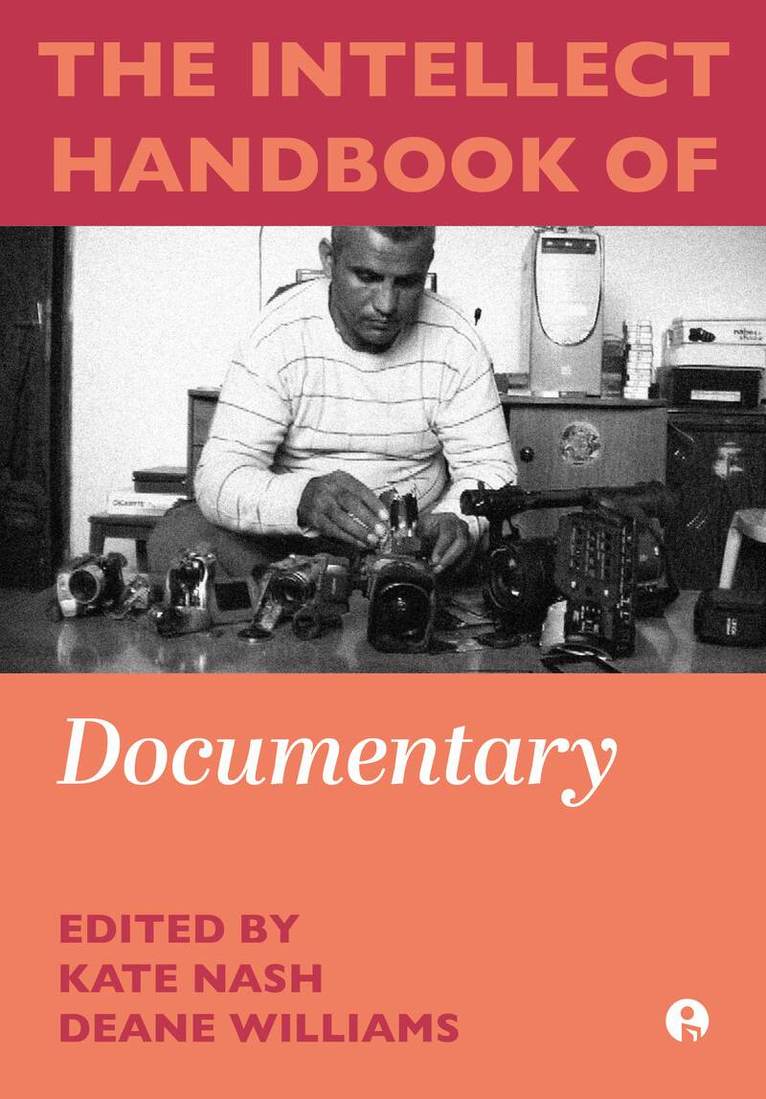
    Intellect Handbook of Documentary

    AvKate Nash,Deane Williams

    Inbunden, Engelska, 2025

    2 059 kr

    Skickas . Fri frakt över 249 kr.

    Beskrivning

    The Intellect Handbook of Documentary is an important go-to resource for practitioners, scholars and students in this burgeoning field. It tackles key topics and debates – from the role of documentary in post-truth culture to the rise of streaming giants (and the implications for national documentary cultures) and the shifting (increasingly hybrid) practices of documentary activism and the professionalization of impact. Featuring work by key figures in international documentary scholarship and talented emerging scholars, the Handbook is a landmark publication for documentary studies in the twenty-first century.The Handbook is broad in its scope, incorporating historical, theoretical, empirical and practical scholarship. It is organized around ten key themes/debates: What and where is documentary (studies)?; documentary in an age of epistemic uncertainty; documentary histories; documentary and the archive; audio/visualities; documentary relationalities; beyond the Anthropocene?; digital/documentary practices; documentary and (new) politics?; a golden age? Documentary distribution and funding. Importantly, the Handbook challenges the dominance of Western voices in documentary scholarship, incorporating the voices and practices of practitioners from the Global South.

    Produktinformation

    • Utgivningsdatum:2025-04-07
    • Mått:170 x 244 x 29 mm
    • Vikt:1 023 g
    • Format:Inbunden
    • Språk:Engelska
    • Antal sidor:518
    • Förlag:Intellect
    • ISBN:9781835950685

    Utforska kategorier

    • Film inom Kultur

    Mer om författaren

    Kate Nash is professor of media and communication at the University of Newcastle, Australia. She has published widely in the areas of documentary ethics, interactive documentary and on the relationship between documentary and politics. Her books include New Documentary Ecologies (2014 with Craig Hight and Catherine Summerhayes) and Interactive Documentary: Theory and Debate (2020). She is co-editor (with Craig Hight) of Studies in Documentary Film.Deane Williams is associate professor of film and screen studies at Monash University, Melbourne. From 2007–17 he was editor of the journal Studies in Documentary Film, and his books include Australian Post-War Documentary Film: An Arc of Mirrors (2008), Michael Winterbottom (with Brian McFarlane, 2009), the three-volume Australian Film Theory and Criticism (co-edited with Noel King and Constantine Verevis, 2013–2017), The Cinema of Sean Penn: In and Out of Place (2016) and (with Julia Vassilieva) editor of Beyond the Essay Film: Subjectivity, Textuality and Technology (2021).

    Recensioner i media

    'The Intellect Handbook of Documentary is a welcome, comprehensive and substantial guide to the subject, incorporating chapters by leading authors on the subject, and covering many areas of historical and topical interest. The editors have a long and distinguished association with the field, and the Handbook will add to that.'

    Innehållsförteckning

    • Handbook of Documentary – Kate Nash and Deane WilliamsSection 1: Where and what is documentary (studies) in an age of epistemic crisis?Saying More about Documentary? Notes on Formation, Continuity and Change in the Field of Study – John CornerNext Steps: Post-Narrativity, Post-Truth (Post-Trump?) and Post-Digital is Poetry – Alexandra JuhaszThe Documentary Disposition – Michael RenovSection 2: Documentary in the Anthropocene ‘We Are Dead and We Are Going to Die’: The Apocalypse Documentary – Alisa LebowCinema of Qi: A Daoist Approach to Ecological, Sensory and Affective Cinema Through Vital Energy – Kiki Tianqi YuThe Possible Worlds of VR Documentary – Mandy RoseDocumentary Realism in the Anthropocene – Selmin KaraSection 3: Audio/Visualities: Polyphony, Complexity and RepresentationReflection, Staging and Documentary Film: The Monadic Camera-Subject – Fernão Pessoa RamosDocumentary Says ‘We’: Lyrical Polyphony as Practice – Simona SchneiderFlee and the Failure of Empathy – Annabelle Honess RoeSection 4: Re-viewing the Ethics and Politics of Representation Shirley Clarke’s The Connection and the Event of (Fake) Documentary – Jaimie BaronTowards a History of the International Association of Documentary Filmmakers: The Congress of Algiers 1968 – Mariano MestmanRecycling Indigenous Images: Archiveology and the National Film Board of Canada – Catherine RussellWang Bing’s Documentary Po/ethics of the Maoist Chaos and the Paradigm of Western Testimony: Unwitnessing, Victims, Collaborators, Followers, Cadres and Dissidents – Raya MoragSouth Somewhere Else: Decolonising the Documentary, Cross-Cultural Collaborative Filmmaking in the Global South – Deane Williams and Antonio TraversoSection 5: Documentary and PoliticsThe Case of Nuclear Documentary – Helen HughesRadical Civic Media: Equipe Media, Western Sahara and Global Documentary Ecologies – Ryan WatsonDocumentary Storytelling for Social Change in the Participatory Media Age: Understanding Nonfiction’s Social Impact and Future Challenges – Caty BorumEntertainment with a Purpose: Netflix and Documentary Today – Annie GoldsonDocumentary-on-Demand: Researching Audience Engagements with (Political) Documentary on Netflix –  Kate Nash and Craig HightFrom Testimony to the Cinema of Action in the Video nas Aldeias Project – Gilberto Alexandre SobrinhoSection 6: Production, Distribution, Audiences: The Changing Documentary ‘Industry’Utility for the Utilitarian: Documentary’s Uses for Other Kinds of Non-Fiction Film – Grace RussellDocumentary Funding in the Age of the Streamers – Inge Sørensen and Nick HigginsAudience Engagement: Streaming Factuality in the Nordic Region – Annette HillSection 7: Digital Documentary PracticesCompilationism and Digital Media: From Documentaries to Audio-Visual Essays – Chiara GrizzaffiAugmented Reality Documentary – Dale Hudson, Claudia Costa Pederson and Patty ZimmermanTilting at Windmills: The Technicizing of Empathy – Brian Winston with an introduction by Kate Nash