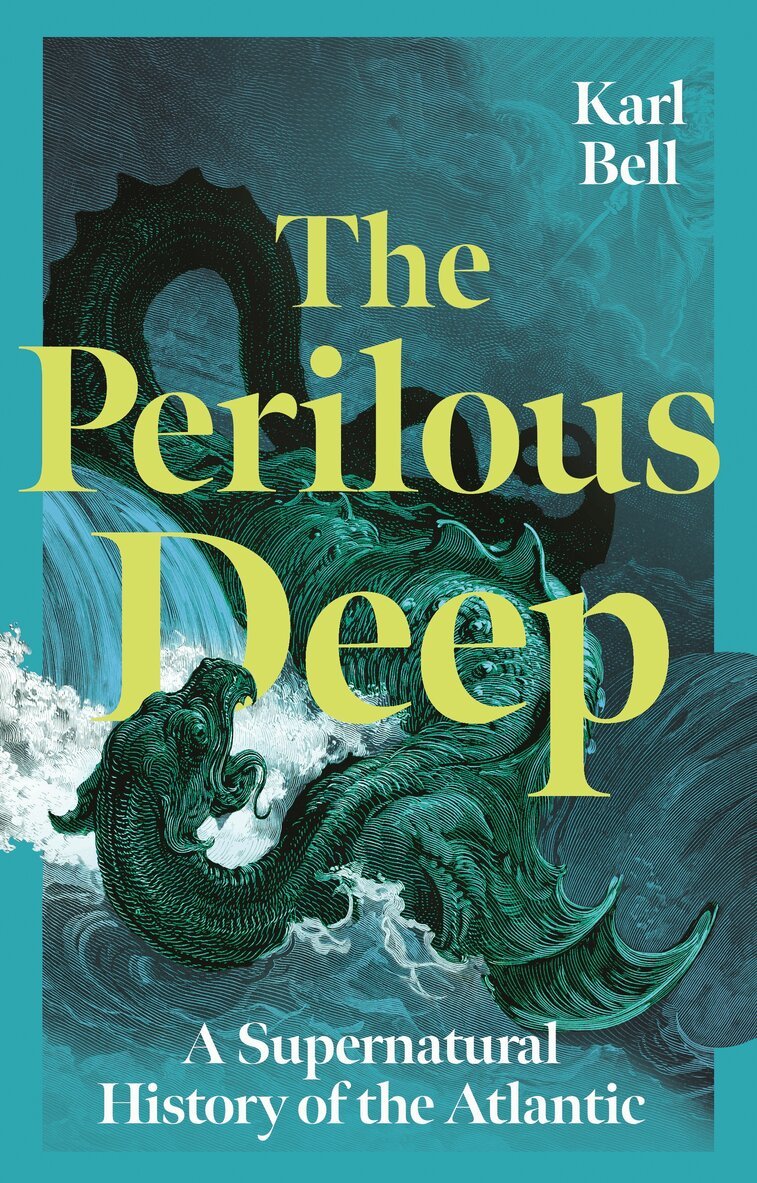
"Not only does Karl Bell’s new book provide a colourful compendium of the “merfolk, ghosts, phantom ships and sea monsters” that have populated the seafaring folklore of the Atlantic nations for centuries, he also looks at how and why these tales came into being, and how they evolved and mutated as they were transmitted from place to place over time." - Roger Cox, The Scotsman". . . presenting meticulous research into the folklore that has bound maritime and coastal communities on both sides of the Atlantic . . . Bell’s research is presented with all the scholarly hallmarks one would expect, including caveats about the reliability of sources and references to other academics . . . For Bell, ancient mariners’ tales and practices can ‘teach us how to confront our own environmental fears as we attempt to navigate the turbulent currents of an uncertain future’." - Mark Nayler, Times Literary Supplement"This is a history of margins and fringes – not only of the Atlantic Ocean itself, but also of the imaginations of those who worked on its surface and lived at its edges. In his new book, Karl Bell draws on everything from street ballads to scientific treatises, mariners' memoirs, newspaper advertisements, paintings and literature . . . this is an uncanny cornucopia of folklore, hovering on the borderlands between fact and fiction . . . This is a tale that grows stronger in the telling, and it is perhaps in the later chapters that Bell's writing is at its most sparkling." - Eleanor Barraclough, BBC History Magazine"Bell casts his net for this book very wide, from sailing men on the deep blue to coastal communities, port cities, even the public for B-movies and weird stories . . . Ambitious, entertaining." - Jeremy Harte, Fortean Times"Bell sets out to challenge the traditional heroic narratives of maritime history – those dominated by explorers, naval battles, and technological triumphs . . . Bell’s work is a scholarly, yet accessible, exploration of how supernatural storytelling shaped the cultural imagination of Atlantic seafarers and coastal communities . . . an engaging and vivid book accessible to general readers interested in myth, mystery and the sea, folklorists as well as academics . . . The Perilous Deep makes several important contributions to the study of folklore and maritime history by highlighting the emotional and psychological dimensions of seafaring, often overlooked in traditional histories. It reframes maritime folklore as a dynamic cultural process, not just a repository of quaint tales." - B.C. Kennedy, Gramarye"What a wonderful book this is, chock-full of mystery and magic. Promising to take the reader “on a seafaring voyage”, it delivers on all fronts. Beautifully written, engaging throughout and wonderfully illustrated, we encounter the “merfolk, ghosts, phantom ships and sea monsters” that have populated folklore tales, myths, legends and dreams for centuries. Take a dive into The Perilous Deep with Karl Bell, who brings exemplary scholarship as well as storytelling flair to the lightless depths of the “supernatural and monstrous Atlantic”." - Ruth Heholt, Professor of Literature and Culture, Falmouth University"More than a compendium of maritime folklore, The Perilous Deep explores how mariners and landlubbers alike have used storytelling to make sense of their relationship to the sea. Engaging with the godlings, leviathans, ghost ships, serpents, selkies and mermaids that haunt the Atlantic, Karl Bell shows that while the ocean can be a place of terror, it is also a place of possibility." - David Hopkin, Professor of European Social History, Hertford College, University of Oxford, and President of the Folklore Society"In this absorbing and entertaining survey, Karl Bell explores how the fear of and fascination with the vastness and unknowable depths of the North Atlantic Ocean were expressed through beliefs and stories of the supernatural. The meaning of spectral ships, omens, talismans, taboos, mermaids, sea monsters and Atlantis are explored using a rich range of sources from journalism, folklore and fiction." - Owen Davies, Professor of Social History, University of Hertfordshire