• Fri frakt över 249 kr
  • •
  • Snabba leveranser
  • •
  • Billiga böcker
Kundservice

Du är på sajten för privatpersoner.

Företag, bibliotek eller offentlig verksamhet?

Du handlar på classic.bokus.com, där alla dina funktioner finns intakta.
Till classic.bokus.com
Bokus logotyp. Gå till startsidan.
  • Erbjudanden
  • Student
  • Topplistor
  • Barn & ungdom
  • Bokus Play
  • E-böcker
  • Ljudböcker
  • Pocketböcker
  • Spel och pussel

Pocketfynda! Hundratals böcker för 49 kr/st →

Sidfot

Mina sidor

    Hjälp

    • Kundservice
    • Vanliga frågor och svar
    • Frakt och leverans
    • Retur vid ångerrätt
    • Reklamera vara
    • Betalning
    • Köpvillkor
    • Allmänna villkor
    • Information om webbplatsens tillgänglighet

    Om Bokus

    • Om oss
    • Pressrum
    • För studenter
    • För företag
    • För bibliotek och offentlig verksamhet
    • För leverantörer
    • Hållbarhet

    Populärt

    • Aktuella erbjudanden
    • Presentkort
    • Studentlitteratur
    • Nya böcker
    • Topplistor
    • Signerade böcker
    • Engelska böcker

    Inspiration

    • Boktips
    • BookTok
    • Barnbokskaraktärer
    • Populära författare
    Logotyp för Bokus
    Följ oss på Facebook (extern länk)Följ oss på Instagram (extern länk)Följ oss på YouTube (extern länk)Följ oss på TikTok (extern länk)
    bokus @ CookiesAnpassa cookiesIntegritetspolicyKöpvillkor
    Till Citymail hemsida (extern länk)Till Budbee hemsida (extern länk)Till Postnord hemsida (extern länk)Till Schenker hemsida (extern länk)Till Early Bird hemsida (extern länk)Till Walleys hemsida (extern länk)
    1. Kultur
    2. Scenkonst och film
    3. Film

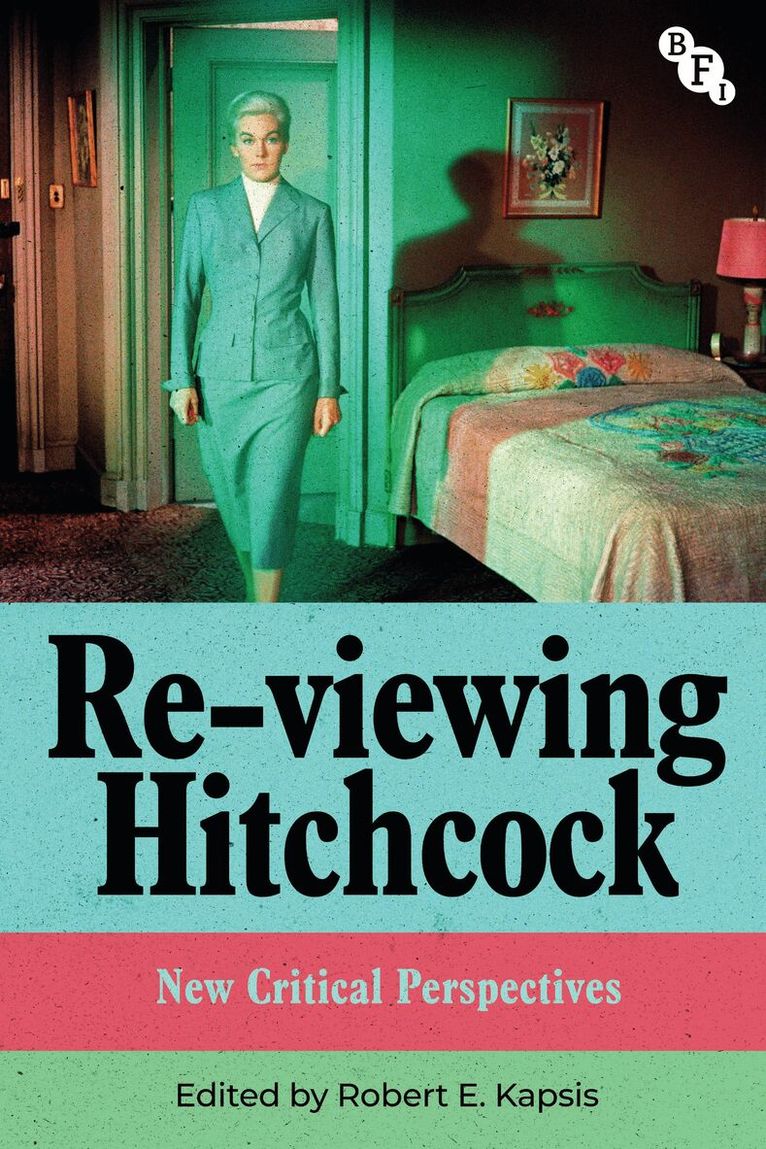
    Re-viewing Hitchcock

    New Critical Perspectives

    Inbunden, Engelska, 2026

    Del i serien British Film Institute

    1 381 kr

    Beställningsvara. Skickas inom 5-8 vardagar. Fri frakt över 249 kr.

    Beskrivning

    Re-viewing Hitchcock approaches Alfred Hitchcock's prolific career in film and television from a reception focus, charting the changing fortunes of the master auteur's work from 1926's silent The Lodger to his penultimate film, the controversial Frenzy of 1972.Each of the chapters, written by eminent international film scholars, critics and historians, offers a detailed analyses of the historical reception of key Hitchcock films. These include films that have enjoyed consistent critical success, such as Rebecca (1940), Rear Window (1954), and North by Northwest (1959), as well as those that have received shifting degrees of critical and scholarly praise, such as Sabotage (1936), Rope (1949), Strangers on a Train (1951), Vertigo (1958), Psycho (1960), and The Birds (1963). The contributors assess the significance of these changing critical perspectives and the extent to which they influence the meaning and significance of Hitchcock's films and filmmaking. The book also sheds light on Hitchcock’s lesser-known television work of the 1950s and the 60s, reassessing its relationship to his film career. In addition, it expands the focus beyond Anglo-American contexts to consider how Hitchcock’s films have been received and interpreted in Europe, Latin America, and Asia.

    Produktinformation

    • Utgivningsdatum:2026-02-19
    • Mått:194 x 242 x 32 mm
    • Vikt:1 440 g
    • Format:Inbunden
    • Språk:Engelska
    • Serie:British Film Institute
    • Antal sidor:472
    • Förlag:Bloomsbury Publishing PLC
    • Medarbetare:RobertE. Kapsis
    • ISBN:9781839026201

    Utforska kategorier

    • Film inom Kultur

    Mer om författaren

    Robert E. Kapsis is Professor Emeritus of Sociology and Film Studies at Queens College and the Graduate Center of the City University of New York. He is author of Hitchcock: The Making of a Reputation (1992); the e-book version was released in 2022. Shortly after its publication, Kapsis developed “Multimedia Hitchcock,” an innovative, interactive software project. Originally conceived as a pedagogical tool for his college courses on Hitchcock, the project grew into an interactive kiosk exhibited at MoMA, the Academy of Motion Picture Arts and Sciences, and at other museums and nonprofit institutions celebrating the Hitchcock Centennial in 1999. Kapsis is also editor of Woody Allen: Interviews, Revised and Updated Edition (2016), Jonathan Demme: Interviews, Charles Burnett: Interviews, and Conversations with Steve Martin; and coeditor (with Kathie Coblentz)of Clint Eastwood: Interviews (2006). He is currently working on a book on Hitchcock’s posthumous reputation, to be published by Bloomsbury.Kapsis’s work on Hitchcock and “the Hitchcockian” has been featured in many publications and venues, including the New York Times, Oxford University Press’s American National Biography, American Film, The Sociological Quarterly, Hitchcock Annual, Cineaste, and the Village Voice. It has also influenced the creation and development of documentaries about Hitchcock for the BBC, PBS’s American Masters series, Universal’s Dial H for Hitchcock: The Genius Behind the Showman, and promotional materials for the release of a Hitchcock stamp from the United States Postal Service.

    Recensioner i media

    In addition to wide-ranging reassessments of Hitchcock’s key films, this innovative collection offers game-changing analyses of his TV shows and ground-breaking chapters dealing with his impact outside the English-speaking world. It is a windfall for cinema scholars and movie buffs alike.

    Innehållsförteckning

    • List of ContributorsAcknowledgementsIntroduction by Robert E. KapsisPART 1: ENDURING TRIUMPHS1. The Lodger (1926): The First True Hitchcock FilmHenry K. Miller 2. The Two Blackmails From 1929: A Reputation Crosses the Sound BarrierBryony Dixon3. “No Manners at All and Always Seeing Things”: The Return of Hitchcock’s Vanished Englishwomen in The 39 Steps (1935) and The Lady Vanishes (1938)J.E. Smyth4. Rebecca’s Gendered Reception: 1941 to the PresentPatricia White5. Shadow of a Doubt (1943) and Notorious (1946): Two Hollywood – and Definitively American – MasterworksThomas Schatz6. Re-Viewing Rear Window (1954)Janet Staiger7. North by Northwest (1959): Nothing But EntertainmentThomas LeitchPART 2: CHANGING RECEPTIONS8. “A director who can impose his own personality on his pictures”:British critics and Sabotage (1936) James Chapman9. The Man Who Knew Too Much (1956): as a Critical Lens on American CulturePaula Marantz Cohen10. “She Isn’t Quite Herself Today.” Psycho (1960): Before and After Queer TheoryDavid Greven11. #MeToo and Angry Nature: The Changing Tides of Approaches to The Birds (1963)Lucy Bolton12. Vertigo (1958) and Marnie (1964): Two Reception Histories on SteroidsRobert E. Kapsis13. Rope (1948): A Late BloomerNeil BadmingtonPART 3: FILMS ON AN UPWARDS TRAJECTORY14. Downhill (1927)Henry K. Miller 15. Under Capricorn (1948) Richard Allen16. Trouble with Harry (1955)Sidney Gottlieb17. Mr. and Mrs. Smith (1941)Elizabeth Bullock18. The Wrong Man (1956)Jason P. Isralowitz and Robert E. Kapsis PART 4: FOUR RECEPTION ANOMALIES 19. Hitchcock and His Critics: The Fall and Rise of Strangers on a Train (1951)Robert E. Kapsis20. Frenzy (1972): “Dark, Nasty, Full of Bile” …and a Masterpiece?Tania Modleski21. ‘One of the most uneven films in the history of cinema’:Topaz (1969)James Chapman22. What the Two Versions of The Man Who Knew Too Much Reveal About Film Criticism in the United States and BritainRobert E. KapsisPART 5: HITCHCOCK’S TELEVISION SERIES23. The Final Frontier: Hitchcock’s Television Work Thomas Leitch 24. Towards a New Appreciation of Alfred Hitchcock Presents, The Alfred Hitchcock Hour, and Shamley ProductionsChristina Lane25. Life after Death: Preserving and Promoting Hitchcock’s TV PersonaRobert E. Kapsis 26. Travels in Hitchcock’s MultiverseJoel GunzPART 6: GLOBAL HITCHCOCK: BEYOND THE US AND THE UK27. Hitchcock and L’Écran français: At the Roots of the Politique des auteurs?Tifenn Brisset28. Hitchcock in Germany—A Germanic Hitchcock?: Transnational Genre, Art Cinema, and Auteurism in 1970s/1980s Filmkritik and in the Work of Harun Farocki and Christian PetzoldJaimey Fisher 29. Alfred Hitchcock and Italian Film Criticism: “A Good Second-Rate Director”Francesca Cantore and Andrea Minuz 30. Alfred Hitchcock’s Cinema in the USSR and Post-Soviet Russia: Loud AbsenceSergei Kapterev 31. Tracing Hitchcock in South Korea: From I Confess to Decision to LeaveHye Seung Chung 32. Hitchcock in Japan: Invisibility and HypervisibilityDaisuke Miyao 33. Introducing Hitchcock to Communist China: Two Decades of Reception and PopularizationSun Yi 34. Hitchcock in SpainDona M. Kercher 35. Hitchcock’s Audiences in Mexico: From Movie Theaters to TV Ana Rosas Mantecón 36. Hitchcock in Argentina: Some Preliminary FindingsDona M. Kercher Coda A A “Signature Pattern”: The Importance of Music in Hitchcock’s FilmsJack Sullivan Coda B Deserter or Honored Exile? Views of Hitchcock from Wartime BritainCharles Barr Index