• Fri frakt över 249 kr
  • •
  • Snabba leveranser
  • •
  • Billiga böcker
Kundservice

Du är på sajten för privatpersoner.

Företag, bibliotek eller offentlig verksamhet?

Du handlar på classic.bokus.com, där alla dina funktioner finns intakta.
Till classic.bokus.com
Bokus logotyp. Gå till startsidan.
  • Erbjudanden
  • Student
  • Topplistor
  • Barn & ungdom
  • Bokus Play
  • E-böcker
  • Ljudböcker
  • Pocketböcker
  • Spel och pussel

Pocketfynda! Hundratals böcker för 49 kr/st →

Sidfot

Mina sidor

    Hjälp

    • Kundservice
    • Vanliga frågor och svar
    • Frakt och leverans
    • Retur vid ångerrätt
    • Reklamera vara
    • Betalning
    • Köpvillkor
    • Allmänna villkor
    • Information om webbplatsens tillgänglighet

    Om Bokus

    • Om oss
    • Pressrum
    • För studenter
    • För företag
    • För bibliotek och offentlig verksamhet
    • För leverantörer
    • Hållbarhet

    Populärt

    • Aktuella erbjudanden
    • Presentkort
    • Studentlitteratur
    • Nya böcker
    • Topplistor
    • Signerade böcker
    • Engelska böcker

    Inspiration

    • Boktips
    • BookTok
    • Barnbokskaraktärer
    • Populära författare
    Logotyp för Bokus
    Följ oss på Facebook (extern länk)Följ oss på Instagram (extern länk)Följ oss på YouTube (extern länk)Följ oss på TikTok (extern länk)
    bokus @ CookiesAnpassa cookiesIntegritetspolicyKöpvillkor
    Till Citymail hemsida (extern länk)Till Budbee hemsida (extern länk)Till Postnord hemsida (extern länk)Till Schenker hemsida (extern länk)Till Early Bird hemsida (extern länk)Till Walleys hemsida (extern länk)
    1. Samhälle och politik
    2. Samhälle och kultur
    3. Sociala och etiska frågor

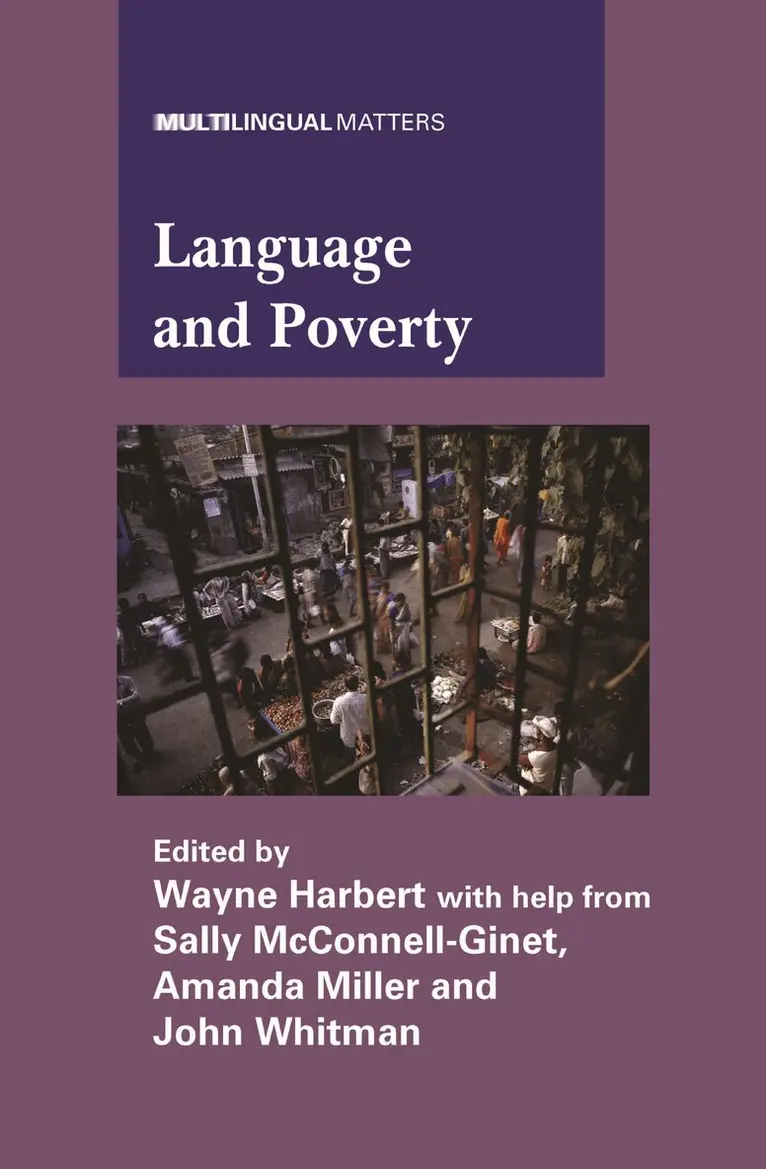
    Language and Poverty

    AvWayne Harbert,Sally McConnell-Ginet

    Häftad, Engelska, 2008

    Del 141 i serien Multilingual Matters

    415 kr

    Beställningsvara. Skickas inom 5-8 vardagar. Fri frakt över 249 kr.

    Beskrivning

    This book explores the bidirectional relationship between language and poverty, from the perspectives of linguistics, language policy and planning, economics, anthropology, and sociology. On the one hand, poverty affects language survival; in modern times the fundamental determinants of language shift and language death are economic. On the other hand, the languages people speak, or don’t speak, can influence their economic status in substantial ways, limiting or facilitating access to jobs and education and full participation in the functions of the society. The issues encompassed by the twin themes of the volume have assumed growing significance in an era of increasing globalization and accelerating change in economies, technologies and traditional social structures. They are of practical concern to people in a wide range of disciplines and professions, including politicians, educators, social workers, language planners, and others who work and live in multilingual contexts.

    Produktinformation

    • Utgivningsdatum:2008-12-09
    • Mått:148 x 210 x 13 mm
    • Vikt:315 g
    • Format:Häftad
    • Språk:Engelska
    • Serie:Multilingual Matters
    • Antal sidor:225
    • Förlag:Channel View Publications Ltd
    • ISBN:9781847691194

    Utforska kategorier

    • Sociala och etiska frågor inom Samhälle och politik
    • Språkvetenskap och lingvistik inom Språk och ordböcker

    Mer om författaren

    Wayne Harbert is Professor of Linguistics, Cornell University. In addition to his research on the Germanic languages, he teaches Welsh and Scottish Gaelic, as well as courses on minority languages and linguistics.Sally McConnell-Ginet, Professor Emerita of Linguistics at Cornell University, has taught and done research in formal semantics/pragmatics and in language and gender. She is Past President of the Linguistic Society of America.Amanda Miller, Assistant Professor of Linguistics at Cornell University, works on the phonetics and phonology of endangered Southern African Khoesan languages. She undertakes linguistic field work in Namibia, Botswana and South Africa.John Whitman, Professor and Chair of Linguistics at Cornell University, works on syntactic variation and language change. His research includes work with endangered minority languages of Japan (Ryûkyûan), Korea (Kyeongsang-do dialect), and the People’s Republic of China (Tibetan, Bai).

    Recensioner i media

    This is a fascinating volume. As far as I know, it is the first comprehensive collection on this important subject. The authors are well known experts in their disciplines and are able to contribute numerous important insights on the complex interactions between language choices, material poverty and economic disruption.

    Innehållsförteckning

    • Chapter 1. Introduction - Wayne Harbert, Sally McConnell-Ginet, Amanda Miller and John WhitmanSection I: Poverty as a Factor in Language Maintenance and Language DeathChapter 2. Poverty as a Factor in Language Maintenance and Language Death: Some Case Studies from Africa - Herman BatiboChapter 3. Language Diversity and Poverty in Africa - Matthias BrenzingerSection II: Language as a Determinant of Access to ResourcesChapter 4. The Impact of the Hegemony of English on Access to and Quality of Education with Special Reference to South Africa - Neville AlexanderChapter 5. Econolinguistics in the USA - John BaughChapter 6. Where in the World is US Spanish? - Ofelia Garcia and Leah MasonChapter 7. Perpetuating Inequality: Language Disadvantage and Capability Deprivation of Tribal Mother Tongue Speakers in India - Ajit MohantySection III: Language and Poverty: A Cross-disciplinary PerspectiveChapter 8. Biodiversity, Linguistic Diversity and Poverty: Some Global Patterns and Missing Links - Suzanne RomaineChapter 9. Language and Poverty: Measurement, Determinants and Policy Responses - François VaillancourtChapter 10. Losing their Names: Native Languages, Identity and the State - Peter WhiteleySection IV: Language, Poverty and the Role of the LinguistChapter 11. The Role of the Linguist in Language Maintenance and Revitalization: Documentation, Training and Materials Development - Lenore Grenoble, Keren Rice and Norvin RichardsChapter 12. Preserving Digital Language Materials: Some Considerations - Helen Aristar-DryConclusion