
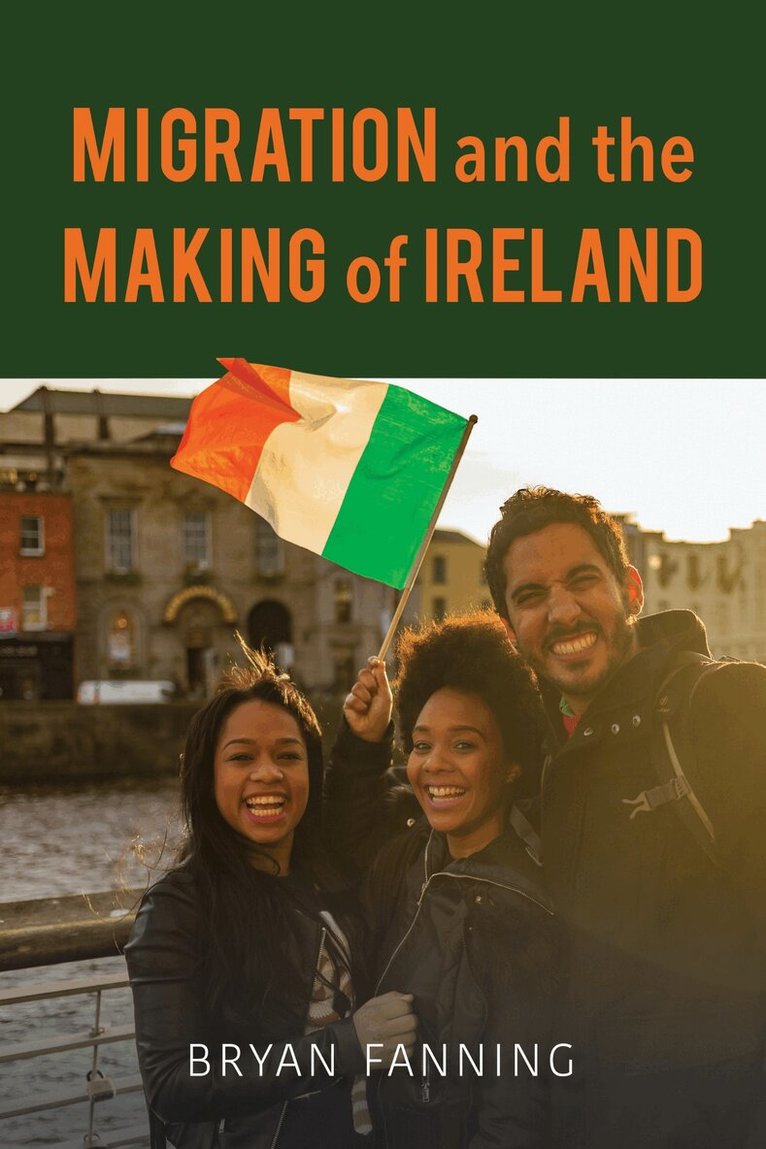
Migration and the Making of Ireland
Häftad, Engelska, 2018
283 kr
Beställningsvara. Skickas inom 11-20 vardagar. Fri frakt över 249 kr.
Fler format och utgåvor
Beskrivning
Migration and the Making of Ireland richly explores accounts of migrant experiences across more than four centuries. The motivations that drove migration to Ireland and emigration from Ireland since the Plantation of Ulster are assessed. Political, economic and legal circumstances that made emigration and immigration possible or necessary are considered. Commonalities and differences across space and time between the experiences of incoming and outgoing migrants, with a strong emphasis on the recent waves of immigration that are re-shaping twenty-first century Ireland, are deeply explored. Early chapters examine the experiences of seventeenth-century settlers together with the experiences of those who left Ireland, eighteenth-century German Palatine immigrants, Jews who arrived during the late nineteenth century, the experiences of recent African, Polish and Muslim immigrants and many other groups. In each case, later chapters look at broader trends are illustrated with examples of the experiences of individuals and families who have journeyed to and from Ireland. Several cross-cutting themes are organically addressed throughout the book, including the role of family and communities in shaping decisions to migrate; experiences of emigration and immigration; the role of law as it relates to freedom of movement, rights to work and citizenship entitlements; and economic factors that influence decisions to migrate. Migration and the Making of Ireland is a landmark contribution to our understanding of modern Ireland and will be essential reading for anybody seeking to understand the diversity of twenty-first century Irish society.
Produktinformation
Utforska kategorier
Mer om författaren
Recensioner i media
Innehållsförteckning
Hoppa över listan

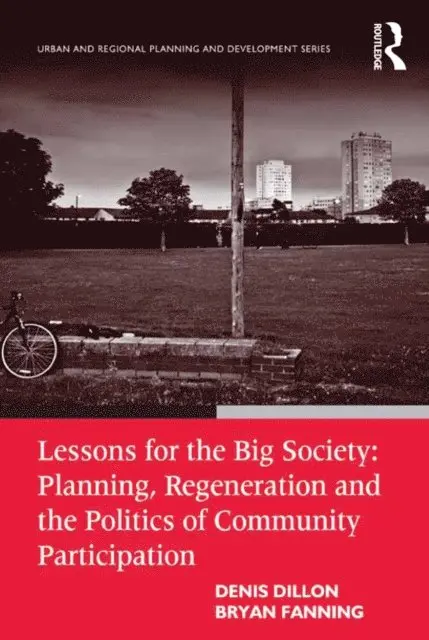
Mer från samma författare
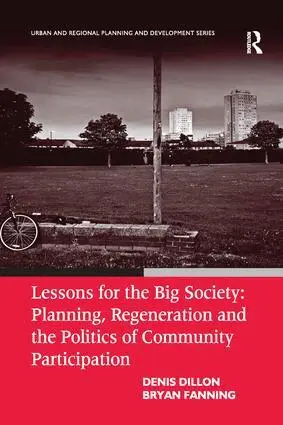
Lessons for the Big Society: Planning, Regeneration and the Politics of Community Participation
Denis Dillon, Bryan Fanning
Häftad, 2016
839 kr
Lessons for the Big Society: Planning, Regeneration and the Politics of Community Participation
Bryan Fanning, Denis Dillon
E-bok
2016983 kr
Lessons for the Big Society: Planning, Regeneration and the Politics of Community Participation
Bryan Fanning, Denis Dillon
E-bok
2016983 kr
Hoppa över listan
Du kanske också är intresserad av
- Nyhet
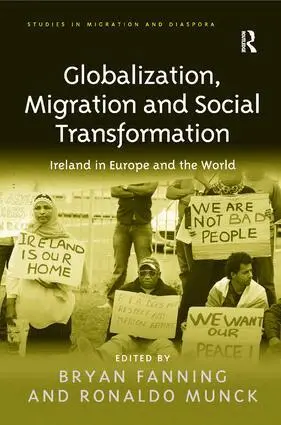
Globalization, Migration and Social Transformation
Bryan Fanning, Ronaldo Munck
Inbunden, 2011
2 473 kr
Theorising Irish Social Policy
Bryan Fanning, Patricia Kennedy, Gabriel Kiely, Suzanne Quin
Häftad, 2004
370 kr