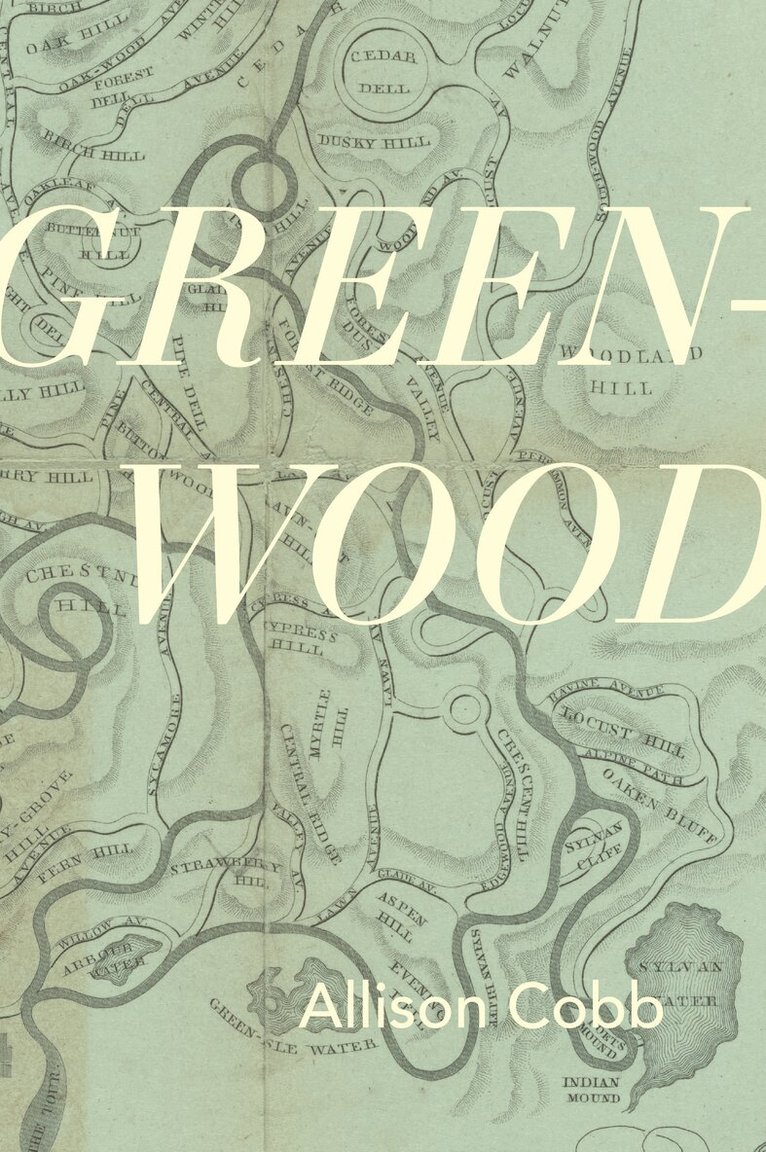
“A gorgeous, subtle, idiosyncratic gem.”—Dominique Browning, The New York Times"From the ashes of war, human remains, 9/11, and the clear cutting of America’s once-expansive Eastern forests, Allison Cobb creates Green-Wood: a cultural biography of Brooklyn’s Green-Wood cemetery, a historic landmark founded in 1838."—Tracy Zeman, Kenyon Review"Sometimes scary, always subtle and deepening, Green-Wood is one kind of necessary writing for this moment, a guide to losses that might help us understand what to do now."—Dan Alter, Heavy Feather Review"The leafy [Green-Wood] cemetery through which Cobb walks in the years after 9/11, during the ensuing wars in the Middle East, during her mother’s cancer treatments, and during her own treatments for infertility, does indeed serve as the ground on which public and private histories are founded, the ground of her historical identity as a United States citizen in the twenty-first century. 'I walk against the backdrop of war,' she writes, 'the toppling of the Hussein statue, declaration of end of hostilities. Continued bombings. names of dead in the paper.' Yet Cobb complicates the traditional patriarchal view of the earth’s humanizing work by contextualizing it within the high price the earth pays for its unpaid and often unsung cultural labor: 'I walk by bulldozers, mowers, pesticide sprayers with yellow warning placards: keep out for 24 hours.’ Alert to the fact that earth’s metaphysical role in western culture has for many centuries been coextensive with the role it has played in capitalism, industrialization, imperialism, and globalization, Green-Wood never pretends that the terms that make us human do not hold the humus hostage."—Brian Teare"Green-Wood is a must read for anybody who likes to wander through cemeteries. The book teaches and delights just like the Horatian platitude says Poetry should do. Though it is not confined to Poetry, it is also Essay and the juiciest tidbits from History and Botany. I feel like Emerson having his revelation under the pine trees, that everything is connected, and it is. We knew it already but it’s still revelatory as Allison Cobb gives us Emerson’s eye to see ‘a navy in an acorn.’ Karl Marx says that to be radical is to go to the root of the matter, and that is what Allison Cobb has done in her book."—Julian Talamentez Brolaski