• Fri frakt över 249 kr
  • •
  • Snabba leveranser
  • •
  • Billiga böcker
Kundservice

Du är på sajten för privatpersoner.

Företag, bibliotek eller offentlig verksamhet?

Du handlar på classic.bokus.com, där alla dina funktioner finns intakta.
Till classic.bokus.com
Bokus logotyp. Gå till startsidan.
  • Erbjudanden
  • Student
  • Topplistor
  • Barn & ungdom
  • Bokus Play
  • E-böcker
  • Ljudböcker
  • Pocketböcker
  • Spel och pussel

5% studentrabatt – använd koden KURSBOK27 →

Sidfot

Mina sidor

    Hjälp

    • Kundservice
    • Vanliga frågor och svar
    • Frakt och leverans
    • Retur vid ångerrätt
    • Reklamera vara
    • Betalning
    • Köpvillkor
    • Allmänna villkor
    • Information om webbplatsens tillgänglighet

    Om Bokus

    • Om oss
    • Pressrum
    • För studenter
    • För företag
    • För bibliotek och offentlig verksamhet
    • För leverantörer
    • Hållbarhet

    Populärt

    • Aktuella erbjudanden
    • Presentkort
    • Studentlitteratur
    • Nya böcker
    • Topplistor
    • Signerade böcker
    • Engelska böcker

    Inspiration

    • Boktips
    • BookTok
    • Barnbokskaraktärer
    • Populära författare
    Logotyp för Bokus
    Följ oss på Facebook (extern länk)Följ oss på Instagram (extern länk)Följ oss på YouTube (extern länk)Följ oss på TikTok (extern länk)
    bokus @ CookiesAnpassa cookiesIntegritetspolicyKöpvillkor
    Till Citymail hemsida (extern länk)Till Budbee hemsida (extern länk)Till Postnord hemsida (extern länk)Till Schenker hemsida (extern länk)Till Early Bird hemsida (extern länk)Till Walleys hemsida (extern länk)
    1. Ekonomi och Ledarskap
    2. Nationalekonomi
    3. Internationell ekonomi

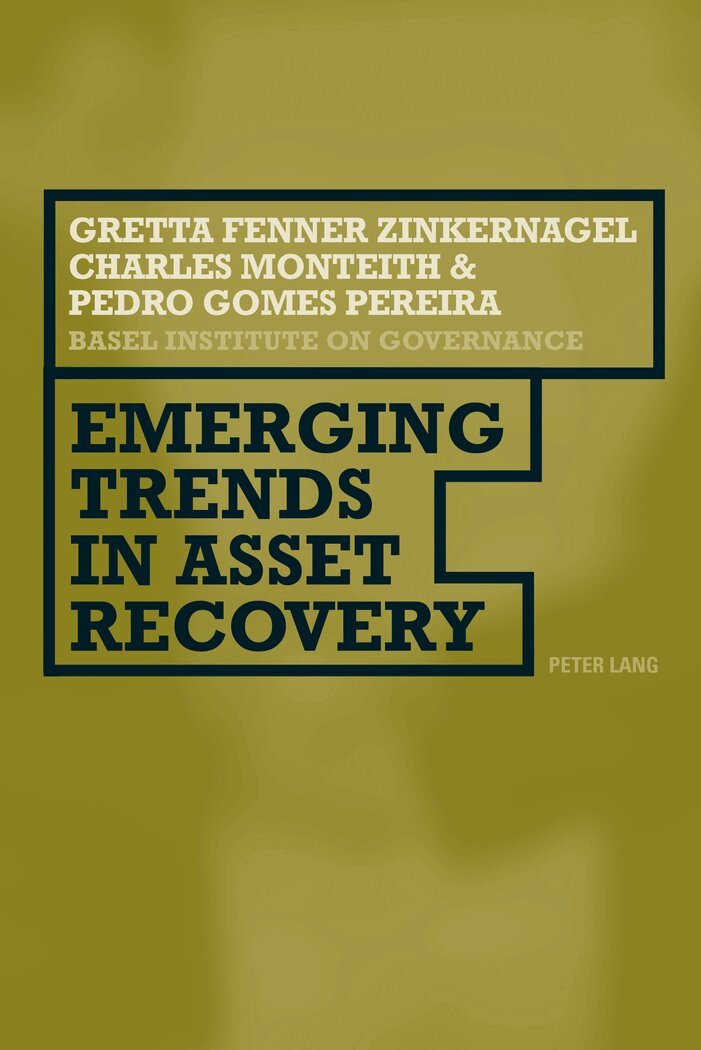
    Emerging Trends in Asset Recovery

    AvGretta Fenner-Zinkernagel,Charles Monteith

    Häftad, Engelska, 2013

    960 kr

    Beställningsvara. Skickas inom 5-8 vardagar. Fri frakt över 249 kr.

    Beskrivning

    Street protests in the ‘Arab Spring’ countries have illustrated that public demand for recovering stolen assets has grown exponentially, as have expectations by concerned populations and governments. From a topic discussed in expert forums, it has thus become a topic of the people. The question is: Have practitioners and policy makers delivered on these expectations?Clearly, since the ratification of the UN Convention against Corruption (UNCAC) ten years ago, much progress has been made in streamlining respective legal and institutional frameworks. On the other hand, we also find that practical successes on the ground remain few and far apart, and largely limited to a handful of countries.This book asks why and, through the voice of renowned practitioners from a broad range of affected countries, analyses challenges that remain, identifies new stumbling blocks that have cropped up, and discusses practical solutions that are being tested with a view to overcoming these.The book is published by the Basel Institute on Governance’s International Centre for Asset Recovery (ICAR).

    Produktinformation

    • Utgivningsdatum:2013-10-07
    • Mått:150 x 225 x 22 mm
    • Vikt:560 g
    • Format:Häftad
    • Språk:Engelska
    • Antal sidor:356
    • Förlag:Peter Lang AG, Internationaler Verlag der Wissenschaften
    • ISBN:9783034313087

    Utforska kategorier

    • Internationell ekonomi inom Ekonomi och Ledarskap
    • Konstitution: stat och regering inom Samhälle och politik
    • Offentlig förvaltning inom Samhälle och politik

    Mer om författaren

    Gretta Fenner Zinkernagel is the Managing Director of the Basel Institute on Governance and Director of its International Centre for Asset Recovery (ICAR).Charles Monteith is the Head of Legal and Case Consultancy at ICAR. He is a lawyer by training.Pedro Gomes Pereira is Senior Asset Recovery Specialist within ICAR‘s Legal and Case Consultancy division. He is a lawyer by training.

    Innehållsförteckning

    • Contents: Arnold Hottinger: Two years later: The Arab revolutions in transition – A. Saad/U. Feller/M. Frey/K. Shah/Ch. Welsh: Recovering stolen assets: The Egyptian perspective – Frederic Raffray: The rule of law and ‘Tommy Suharto’ - son of (former) President Suharto – Maria Schnebli: Lessons learned from the past: Today’s response from requested countries – Jason Sharman: Shell companies and asset recovery: Piercing the corporate veil – Markus E. Schulz: Beneficial ownership: The private sector perspective – Melis Mambetzhanov: Money laundering, corruption and the collapse of kleptocracies – Silvio Antonio Marques: Political immunities: Obstacles in the fight against corruption – Rudolf Wyss: Proactive cooperation within the mutual legal assistance procedure – Marcus Davies: Asset recovery: An ongoing dialogue – Olivier Longchamp/Mark Herkenrath: Money laundering, liability and sanctions for financial intermediaries - the issue of having the assets of politically exposed persons in Switzerland – Till Förster: Between restoration, adaptation and appropriation: Governance in post-conflict Côte d’Ivoire – Jesse Mwangi Wachanga: Hurdles in asset recovery and fighting corruption by developing countries: The Kenya experience – Dimitri Vlassis/Dorothee Gottwald/Ji Won Park: Chapter V of UNCAC: Five years on experiences, obstacles and reforms on asset recovery – Rita Adam/Valentin Zellweger: The proposed Swiss comprehensive act on asset recovery – Charles Monteith: Case and investigation strategy – Phil Mason: Being Janus: A donor agency’s approach to asset recovery – Daniel Thelesklaf/Amar Salihodzic: The role of financial intelligence units in fighting corruption and asset recovery – Phyllis Atkinson: Asset tracing – Richard E. Messick: How financial disclosure laws help in the recovery of stolen assets – L. Muzila/T. Berger/M. Mathias/M. Morales Illicit enrichment: An emerging tool in the asset recovery process – Charles Monteith: Non-conviction based forfeiture – Ronald Víquez Solís: Corruption and social damage in Costa Rica – Oscar Solorzano/Pedro Gomes Pereira: The Swiss plea-bargaining practice and asset recovery: The Alstom case – Nuria García Sanz/Manuel Ollé Sesé: Political corruption and human rights in Equatorial Guinea.