• Fri frakt över 249 kr
  • •
  • Snabba leveranser
  • •
  • Billiga böcker
Kundservice

Du är på sajten för privatpersoner.

Företag, bibliotek eller offentlig verksamhet?

Du handlar på classic.bokus.com, där alla dina funktioner finns intakta.
Till classic.bokus.com
Bokus logotyp. Gå till startsidan.
  • Erbjudanden
  • Nyheter
  • Student
  • Topplistor
  • Barn & ungdom
  • Bokus Play
  • E-böcker
  • Pocketböcker
  • Spel & pussel

10% rabatt på allt med kod: NYSTART10 →

Sidfot

Mina sidor

    Hjälp

    • Kundservice
    • Vanliga frågor och svar
    • Frakt och leverans
    • Retur vid ångerrätt
    • Reklamera vara
    • Betalning
    • Köpvillkor
    • Allmänna villkor
    • Information om webbplatsens tillgänglighet

    Om Bokus

    • Om oss
    • Pressrum
    • För studenter
    • För företag
    • För bibliotek och offentlig verksamhet
    • För leverantörer
    • Hållbarhet

    Populärt

    • Aktuella erbjudanden
    • Presentkort
    • Studentlitteratur
    • Nya böcker
    • Topplistor
    • Signerade böcker
    • Engelska böcker

    Inspiration

    • Boktips
    • BookTok
    • Populära bokserier
    • Barnbokskaraktärer
    • Populära författare
    Logotyp för Bokus
    Följ oss på Facebook (extern länk)Följ oss på Instagram (extern länk)Följ oss på YouTube (extern länk)Följ oss på TikTok (extern länk)
    bokus @ CookiesAnpassa cookiesIntegritetspolicyKöpvillkor
    Till Citymail hemsida (extern länk)Till Budbee hemsida (extern länk)Till Postnord hemsida (extern länk)Till Schenker hemsida (extern länk)Till Early Bird hemsida (extern länk)Till Walleys hemsida (extern länk)
    1. Naturvetenskap och teknik
    2. Geovetenskap
    3. Miljövetenskap och miljöpolitik

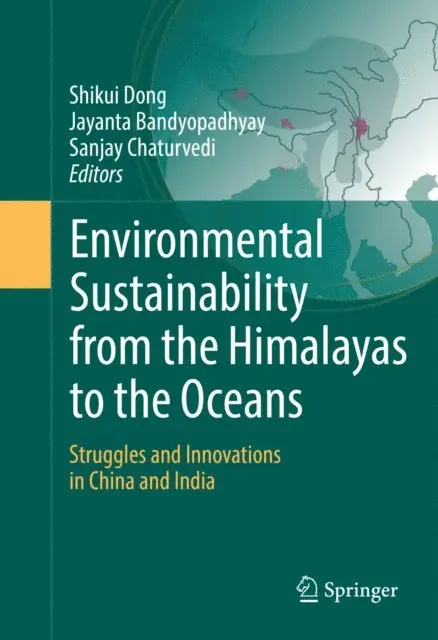
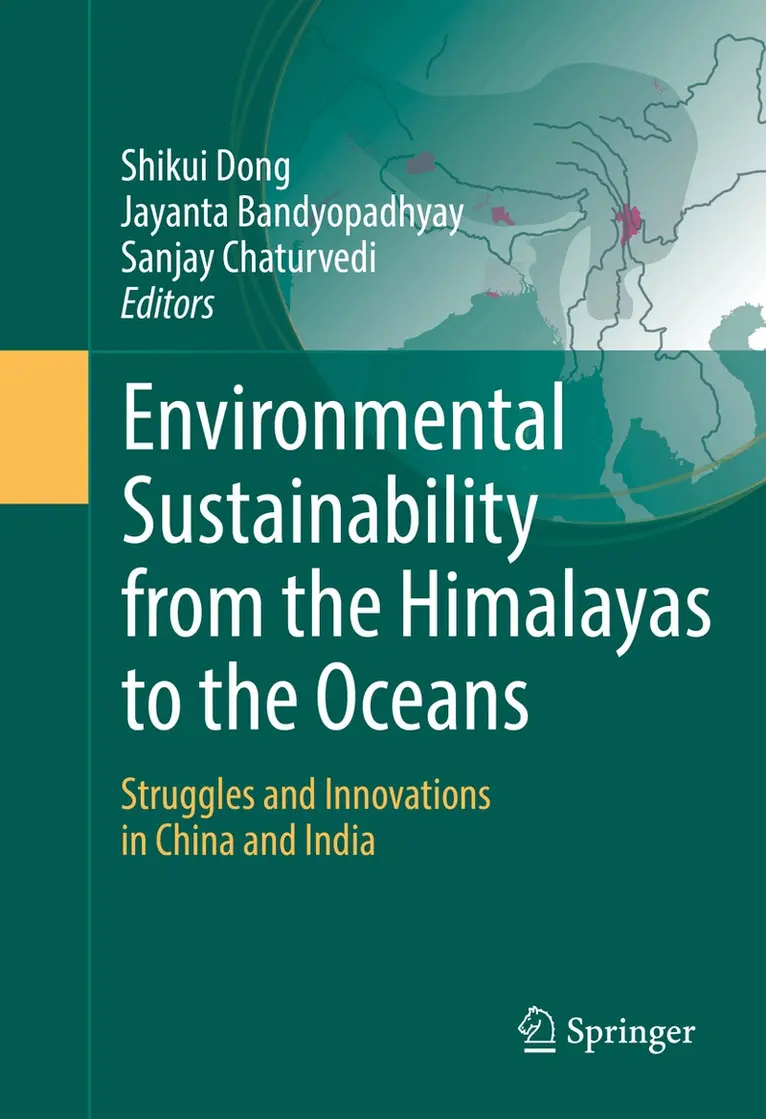
    Environmental Sustainability from the Himalayas to the Oceans

    Struggles and Innovations in China and India

    AvShikui Dong,Jayanta Bandyopadhyay

    Häftad, Engelska, 2018

    1 518 kr

    Beställningsvara. Skickas inom 10-15 vardagar. Fri frakt över 249 kr.

    Beskrivning

    The book is written in the backdrop of the environmental impacts of and future requirements from the natural environment for rapid economic growth that has characterized recent economic history of China and India, especially over the past few decades. The environmental impacts of such rapid economic changes have been, more frequently than otherwise, degrading in character. Environmental impacts of economic activities create degraded natural ecosystems by over utilization of nature’s provisioning ecosystem services (from Himalaya to the Ocean), as well, by the use of the natural environment as sink for dumping of unmarketable products or unused inputs of economic activities. Such processes affect wide range of ecosystem processes on which the natural environment including human population depend on. Critical perspectives cast by various chapters in this book draw attention to the various ways in which space and power interact to produce diverse geographiesof sustainability in a globalizing world. They also address the questions such as who decides what kind of a spatial arrangement of political power is needed for sustaining the environment. Who stands to gain (or lose) what, when, where, and why from certain geographical areas being demarcated as ecologically unique, fragile and vulnerable environments? Whose needs and values are being catered to by a given ecosystem service? What is the scope for critical inquiry into the ways in which the environment is imagined, represented and resisted in both geopolitical struggles and everyday life? The book provides insights to both academics from diverse disciplines and policy makers, civil society actors interested in mutual exchange of knowledge between China and India.

    Produktinformation

    • Utgivningsdatum:2018-07-13
    • Mått:155 x 235 x 16 mm
    • Vikt:429 g
    • Format:Häftad
    • Språk:Engelska
    • Antal sidor:258
    • Förlag:Springer International Publishing AG
    • ISBN:9783319829661

    Utforska kategorier

    • Miljövetenskap och miljöpolitik inom Naturvetenskap och teknik
    • Geografi inom Naturvetenskap och teknik

    Mer om författaren

    Shikui Dong is a full professor at Beijing Normal University, China and an adjunct professor at Cornell University, USA. A Fellow with the India China Institute at The New School, New York(2010-2012) and a Fellow with Asia Scholarship Foundation (2006-2008; 2009-2010), his research focuses on highland ecosystem restoration, highland resource management and sustainable development, and coupled human-natural systems in environmental protection.Jayanta Bandyopadhyay is an author and expert on environmental policy. He is a former Professor at the Indian Institute of Management in Calcutta and former Visiting Professor at the Jawaharlal Nehru University in New Delhi. He is an adviser to the Water Diplomacy Program at the Tufts University, Medford MA USA.Sanjay Chaturvedi is Professor of Political Science at Panjab University in Chandigarh, India. He was a Fellow of the India-China Institute (2010-2012) at the New School, New York (USA) and Visiting Senior Research Fellow at the Institute of Southeast Asian Studies (ISEAS), Singapore, from 2010-2012. He is an Associate Fellow of Asia Society, New York and Associate of Indo-Pacific Governance Research Centre at The Adelaide University.

    Recensioner i media

    “This timely volume is informed and motivated by China’s and India’s emergence as ‘Planetary Powers’ in the twenty-first century. … the chapters are written in a prospective tone: what can be done to achieve a better, environmentally sustainable future. The result is a volume full of hope, respectful of local conditions, and energized by the possibilities of bottom-up solutions. … This book is a welcome contribution that helps us understand elements of that process.” (Arunabh Ghosh, Pacific Affairs, Vol. 92 (3), 2019)

    Innehållsförteckning

    • CHAPTER 1: INTRODUCTION.- CHAPTER 2: Environmental Struggles and Innovations in China: A Historical Perspective.- CHAPTER 3: Environmental Struggles and Innovations in India: A Historical Perspective.- CHAPTER 4: Himalayan Rivers: Struggles and Policy Innovation.- CHAPTER 5: Himalayan Grasslands: Indigenous Knowledge and Institutions for Social Innovation.- CHAPTER 6: Environmental Grassroots: Partnerships for Social Innovation.- CHAPTER 7: Coastal Mangrove Forests: Geopolitics and Social Innovation.- CHAPTER 8: Designing Delta Interactions for Social Innovation.- CHAPTER 9: Conclusion.