Shikui Dong - Böcker
Visar alla böcker från författaren Shikui Dong. Handla med fri frakt och snabb leverans.
8 produkter
8 produkter
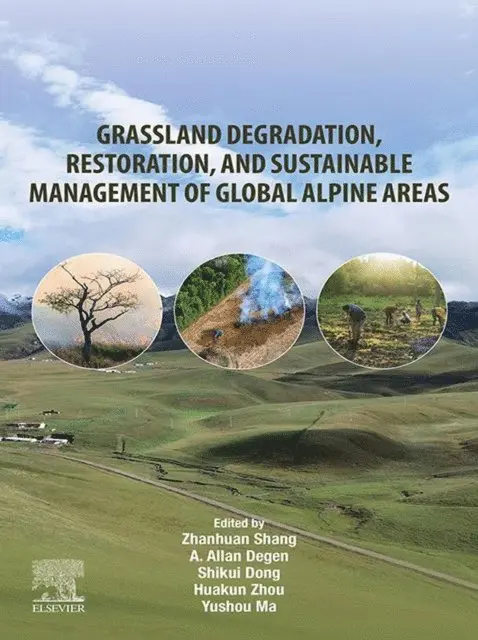
Grassland Degradation, Restoration, and Sustainable Management of Global Alpine Areas
Häftad, Engelska, 2024
1 739 kr
Skickas inom 7-10 vardagar
Grassland Degradation, Restoration and Sustainable Management of Global Alpine Area involves the stripping and regeneration of the grassland's mattic epipedon. The stripping of the mattic epipedon is a unique phenomenon on the global alpine area, which has left many unanswered questions. Is stripping degradation an inherent, inevitable feature of the alpine grassland ecosystem? Is it an avoidable occurrence? Why is ecological restoration of stripped degraded grassland extremely difficult? Does restoration rely on reconstructing the grassland's mattic epipedon? Or can it be done in another way? How can sustainable ecological restoration be achieved?Frontline researchers in global alpine area have used observational evidence from field studies to respond to these questions and to present a comprehensive picture of the problems and drivers of grassland degradation. The climate-environment interaction mechanism of grassland degradation is revealed by the holistic approach in this book. Ecological restoration is discussed through social and economic participation, and past and present restoration actions are analyzed from the perspective of traditional culture and ecological ethics. The future sustainable management of grassland under climate change and social and economic development trend is also covered. This book will alert people to the dangers of degradation and to the difficulties encountered in ecological restoration.Thoroughly presents the processes of grassland degradation from the novel viewpoint of the stripping of mattic epipedonFeatures the most recent studies to provide new research evidence for long-term grassland restoration efforts on the global alpine areaContains in-depth analysis of the processes, mechanisms, and drivers of grassland degradation.Discusses the restoration of degraded grasslands using restoration theory and technologies
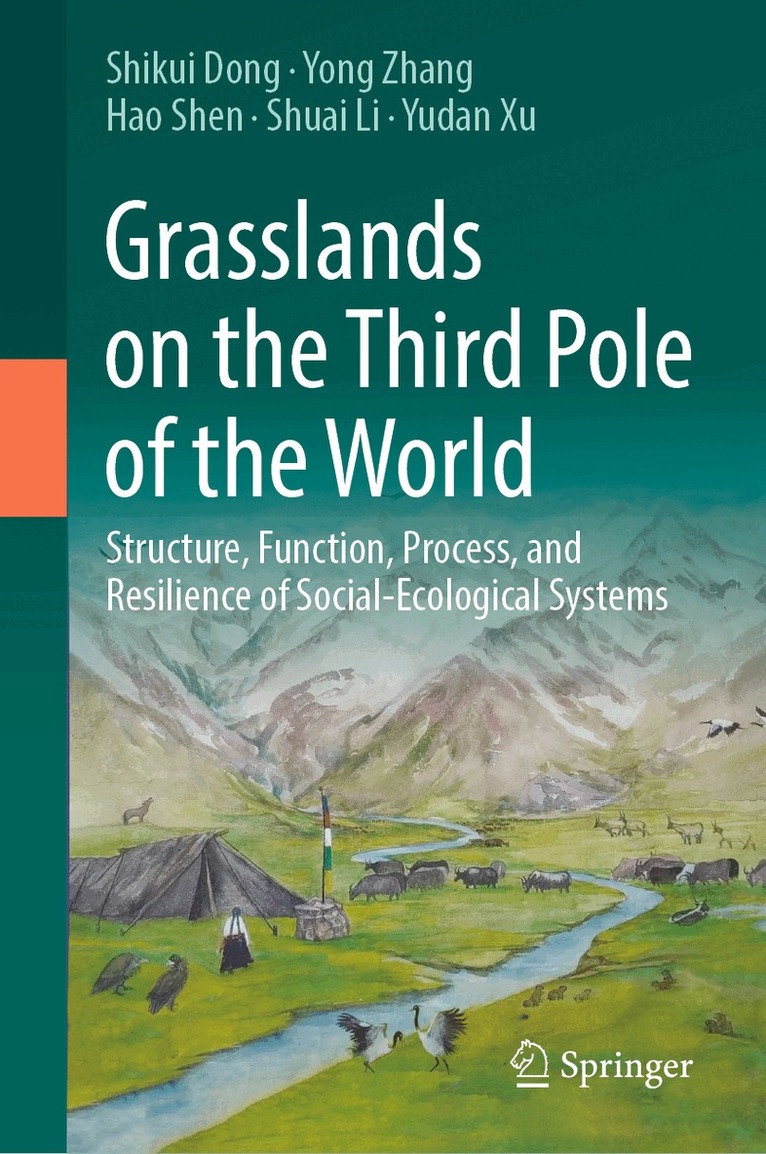
Grasslands on the Third Pole of the World
Structure, Function, Process, and Resilience of Social-Ecological Systems
Inbunden, Engelska, 2023
1 690 kr
Skickas inom 10-15 vardagar
This book comprehensively covers the topics of origin and distribution, evolution and types, regional and global importance, biodiversity conservation, plant-soil interfaces, ecosystem functions and services, social-ecological systems, climate change adaptations, land degradation and restoration, grazing management and pastoral production, and sustainable future of the grasslands on the Qinghai-Tibetan Plateau (QTP), which is a globally unique eco-region called the "Roof of the World" because of its high elevation, “Third Pole on Earth" because of its alpine environment and the "Water Tower in Asia" because of its headwater location. The grassland ecosystem covers above 60% of QTP, which is about 2.5 million km2, 1/4 of Chinese total territorial lands.The grassland ecosystem of the QTP (the Third Pole) is an important part of the palaearctic region, which features alpine cover and low oxygen. The Third Pole's grasslands not only provide important ecosystem functions such as biodiversity conservation, carbon storage, water resource regulation, climate control, and natural disaster mitigation at a global scale, but also provide critical ecosystem services such as pastoral production, cultural inheritance, and tourism and recreation at local and regional scales.The purposes of this monograph are to address the following questions: (1) What are the special features of the Third Pole's grasslands? (2) How have climate changes and human activities changed the structures and functions of the Third Pole's grasslands? (3) How can we cope with land degradation and climate change through innovative restoration and protective actions for Third Pole's grasslands? And (4) How can we promote the sustainable development of social-ecological systems of the Third Pole's grasslands through best management practices including grazing. The goal of this book is to attract the attention of international audiences to realize the importance of the Third Pole’s grasslands, and to call for the actions of global communities to effectively protect and sustainably use the Third Pole's grasslands. This book can be served as textbooks, teaching materials and documentaries for different audiences. The target audiences include students, teachers, researchers, policy makers, planners, government officials, and NGOs in agricultural, environmental and natural resources sectors.
Grasslands on the Third Pole of the World
Structure, Function, Process, and Resilience of Social-Ecological Systems
Häftad, Engelska, 2024
1 682 kr
Skickas inom 10-15 vardagar
This book comprehensively covers the topics of origin and distribution, evolution and types, regional and global importance, biodiversity conservation, plant-soil interfaces, ecosystem functions and services, social-ecological systems, climate change adaptations, land degradation and restoration, grazing management and pastoral production, and sustainable future of the grasslands on the Qinghai-Tibetan Plateau (QTP), which is a globally unique eco-region called the "Roof of the World" because of its high elevation, “Third Pole on Earth" because of its alpine environment and the "Water Tower in Asia" because of its headwater location. The grassland ecosystem covers above 60% of QTP, which is about 2.5 million km2, 1/4 of Chinese total territorial lands.The grassland ecosystem of the QTP (the Third Pole) is an important part of the palaearctic region, which features alpine cover and low oxygen. The Third Pole's grasslands not only provide important ecosystem functions such as biodiversity conservation, carbon storage, water resource regulation, climate control, and natural disaster mitigation at a global scale, but also provide critical ecosystem services such as pastoral production, cultural inheritance, and tourism and recreation at local and regional scales.The purposes of this monograph are to address the following questions: (1) What are the special features of the Third Pole's grasslands? (2) How have climate changes and human activities changed the structures and functions of the Third Pole's grasslands? (3) How can we cope with land degradation and climate change through innovative restoration and protective actions for Third Pole's grasslands? And (4) How can we promote the sustainable development of social-ecological systems of the Third Pole's grasslands through best management practices including grazing. The goal of this book is to attract the attention of international audiences to realize the importance of the Third Pole’s grasslands, and to call for the actions of global communities to effectively protect and sustainably use the Third Pole's grasslands. This book can be served as textbooks, teaching materials and documentaries for different audiences. The target audiences include students, teachers, researchers, policy makers, planners, government officials, and NGOs in agricultural, environmental and natural resources sectors.
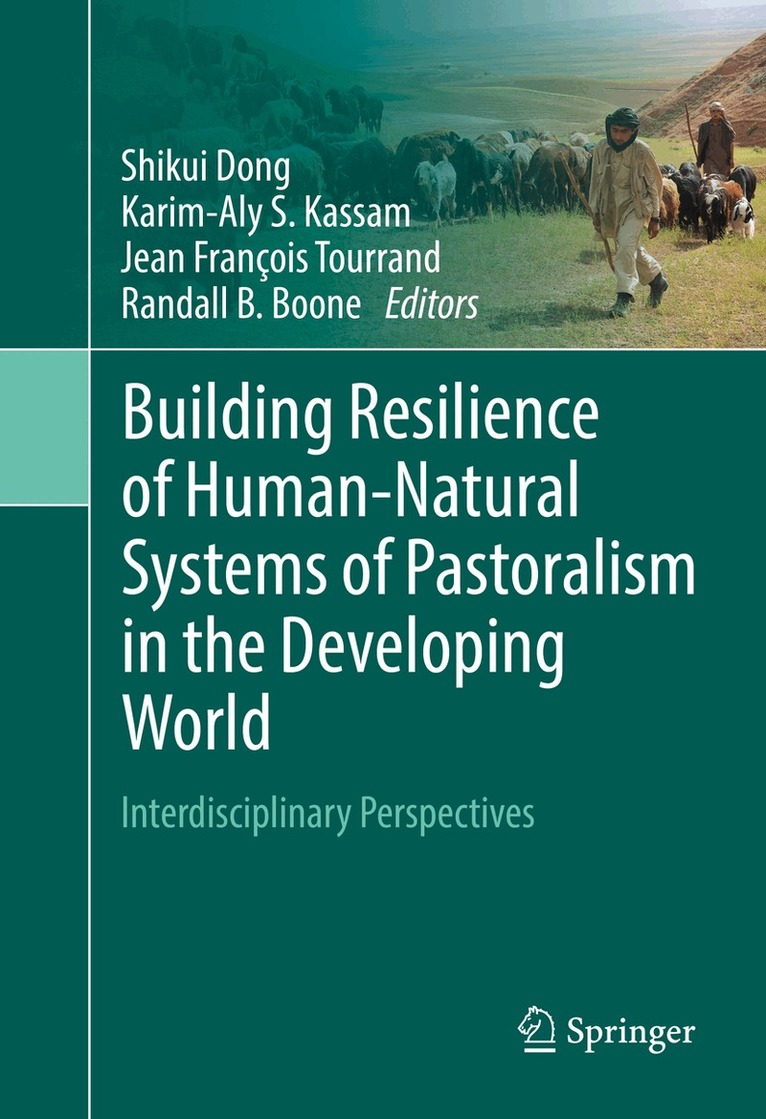
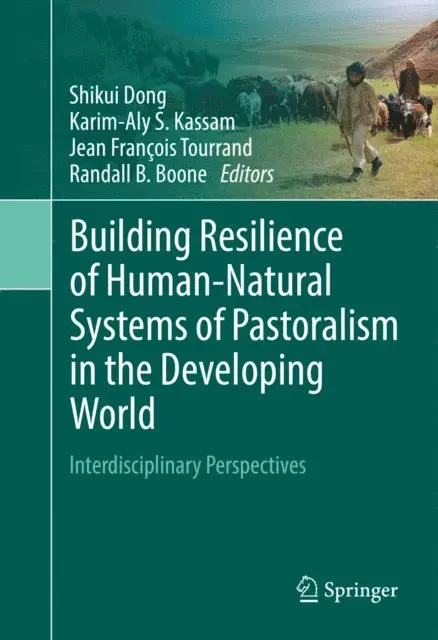
Building Resilience of Human-Natural Systems of Pastoralism in the Developing World
Interdisciplinary Perspectives
Inbunden, Engelska, 2016
1 458 kr
Skickas inom 10-15 vardagar
This edited volume summarizes information about the situational context, threats, problems, challenges and solutions for sustainable pastoralism at a global scale. The book has four goals. The first goal is to summarize the information about the history, distribution and patterns of pastoralism and to identify the importance of pastoralism from social, economic and environmental perspectives. The results of an empirical investigation of the environmental and socio-economic implications of pastoralism in representative pastoral regions in the world are also incorporated.The second goal is to argue that breaking coupled human-natural systems of pastoralism leads to degradation of pastoral ecosystems and to create an analysis framework to assess the vulnerability of worldwide pastoralism. Our analysis framework provides approaches to help comprehensively understand the transitions and the impacts of human-natural systems in the pastoral regions in the world.The third goal is to identify the successful models in promoting coupled human-natural systems of pastoralism, and to learn lessons of breaking coupled human-cultural pastoralism systems through examining the representative cases in regions including Central Asia, Southern and Eastern Asia, Northern and Eastern Africa, the European Alps and South America.The fourth goal is to identify the strategies to build the resilience of the coupled human-natural systems of pastoralism worldwide. We hope that our book can facilitate the further examination of sustainable development of coupled human-natural systems of pastoralism by providing the summaries of existing data and information related to the pastoralism development, and by offering a framework for better understanding and analysis of their social, economic and environmental implications.
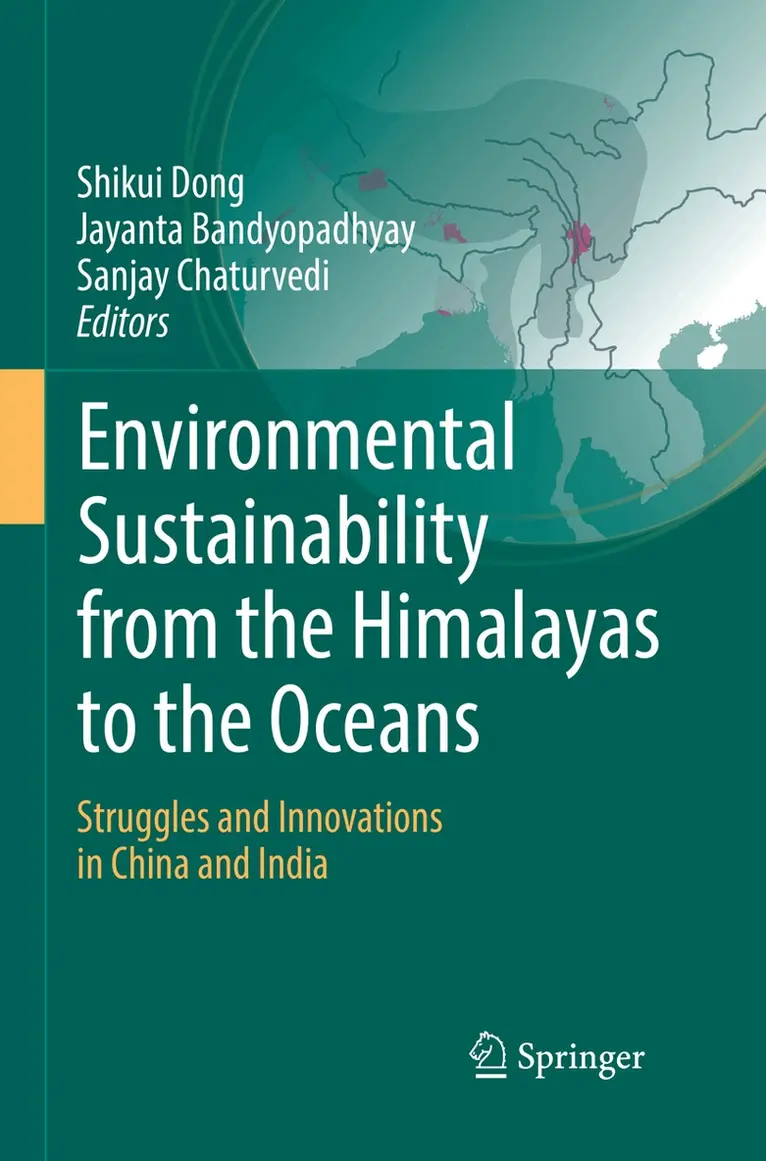
Environmental Sustainability from the Himalayas to the Oceans
Struggles and Innovations in China and India
Inbunden, Engelska, 2017
1 479 kr
Skickas inom 10-15 vardagar
The book is written in the backdrop of the environmental impacts of and future requirements from the natural environment for rapid economic growth that has characterized recent economic history of China and India, especially over the past few decades. The environmental impacts of such rapid economic changes have been, more frequently than otherwise, degrading in character. Environmental impacts of economic activities create degraded natural ecosystems by over utilization of nature’s provisioning ecosystem services (from Himalaya to the Ocean), as well, by the use of the natural environment as sink for dumping of unmarketable products or unused inputs of economic activities. Such processes affect wide range of ecosystem processes on which the natural environment including human population depend on. Critical perspectives cast by various chapters in this book draw attention to the various ways in which space and power interact to produce diverse geographiesof sustainability in a globalizing world. They also address the questions such as who decides what kind of a spatial arrangement of political power is needed for sustaining the environment. Who stands to gain (or lose) what, when, where, and why from certain geographical areas being demarcated as ecologically unique, fragile and vulnerable environments? Whose needs and values are being catered to by a given ecosystem service? What is the scope for critical inquiry into the ways in which the environment is imagined, represented and resisted in both geopolitical struggles and everyday life? The book provides insights to both academics from diverse disciplines and policy makers, civil society actors interested in mutual exchange of knowledge between China and India.
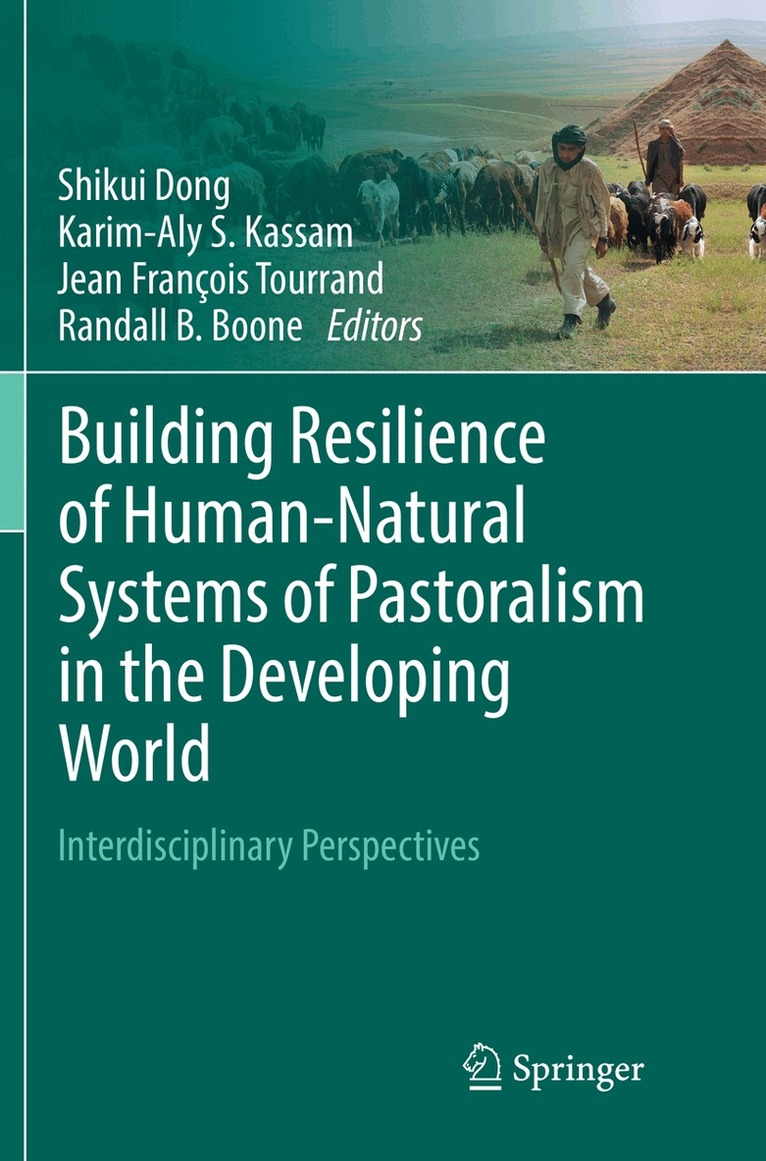
Building Resilience of Human-Natural Systems of Pastoralism in the Developing World
Interdisciplinary Perspectives
Häftad, Engelska, 2018
1 458 kr
Skickas inom 10-15 vardagar
This edited volume summarizes information about the situational context, threats, problems, challenges and solutions for sustainable pastoralism at a global scale. The book has four goals. The first goal is to summarize the information about the history, distribution and patterns of pastoralism and to identify the importance of pastoralism from social, economic and environmental perspectives. The results of an empirical investigation of the environmental and socio-economic implications of pastoralism in representative pastoral regions in the world are also incorporated.The second goal is to argue that breaking coupled human-natural systems of pastoralism leads to degradation of pastoral ecosystems and to create an analysis framework to assess the vulnerability of worldwide pastoralism. Our analysis framework provides approaches to help comprehensively understand the transitions and the impacts of human-natural systems in the pastoral regions in the world.The third goal is to identify the successful models in promoting coupled human-natural systems of pastoralism, and to learn lessons of breaking coupled human-cultural pastoralism systems through examining the representative cases in regions including Central Asia, Southern and Eastern Asia, Northern and Eastern Africa, the European Alps and South America.The fourth goal is to identify the strategies to build the resilience of the coupled human-natural systems of pastoralism worldwide. We hope that our book can facilitate the further examination of sustainable development of coupled human-natural systems of pastoralism by providing the summaries of existing data and information related to the pastoralism development, and by offering a framework for better understanding and analysis of their social, economic and environmental implications.
Environmental Sustainability from the Himalayas to the Oceans
Struggles and Innovations in China and India
Häftad, Engelska, 2018
1 479 kr
Skickas inom 10-15 vardagar
The book is written in the backdrop of the environmental impacts of and future requirements from the natural environment for rapid economic growth that has characterized recent economic history of China and India, especially over the past few decades.
Large Dam Dilemma
An Exploration of the Impacts of Hydro Projects on People and the Environment in China
Häftad, Engelska, 2013
538 kr
Skickas inom 10-15 vardagar
Large dam construction has significant environmental and social impacts at different scales. As the largest developing country in the world, China has built about half of the world’s large dams, and more are expected to be built over the next two decades to meet the country’s rapidly growing demand for energy. This book summarizes and updates information about the history, distribution, functions, and impacts of large dams, both globally and at China’s national level. It then addresses the environmental and social-economic impacts of large dams in China with particular emphasis on the impacts of large dams on relocated people and associated compensation policies. Lastly, it introduces an integrated ecological and socio-economic study conducted in areas affected by dams along the Upper Mekong River, China. This book has the following three goals.The first goal is to summarize and update information on large dams globally and at China’s national level (Ch. 2). We examine large dam problems from different perspectives, ranging from their spatial and temporal distributions and their environmental and social impacts, to discussions and debates centered on them. We also incorporate the results of an empirical investigation of the environmental and socio-economic impacts of large dams on the Upper Mekong River, China, and draw conclusions out of the analysis (Chs.3 & 4).Our second goal is to provide an analysis framework to help understand the environmental and social-economic impacts of dam construction and the resulting environmental degradations and social inequities at different scales (Chs.3 & 4), as well as to offer recommendations for mitigating these impacts within China’s socio-political context (Ch. 5). The significant environmental effects resulting from dam construction include damage to ecological integrity and loss of biological diversity. The most significant social consequences brought by dam projects are theirnegative impacts on relocated people. Our analysis framework provides approaches to help comprehensively understand these impacts.Our third goal is to provide clues and suggestions for further studies of large dam problems both globally and in China (Ch. 5). The construction of large dams is proceeding rapidly in different parts of the world despite the heated debates on whether they should be built at all. The decision-making process related to building large dams involves considerations of economic viability, environmental sustainability, and social equity. Therefore, interdisciplinary collaborations are required in large dam research and development projects in order to reconcile the interests of different stakeholders and avoid harming ecosystems, biodiversity, and human welfare. Overall, we hope our book facilitates future examinations of large dams by providing summaries of existing data and research related to large dams, and offering a framework for better understanding and analyzing their environmental and social impacts.