Häftad, Engelska, 2019
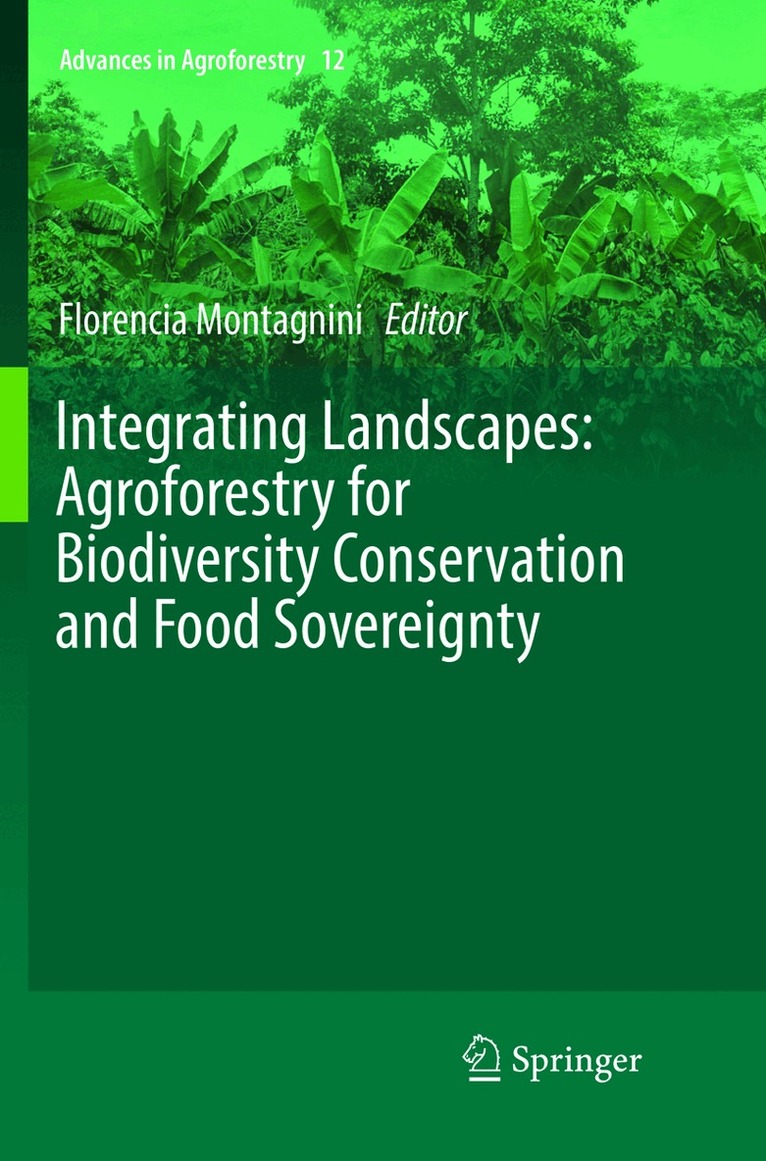
Integrating Landscapes: Agroforestry for Biodiversity Conservation and Food Sovereignty
3317 kr
Beställningsvara. Skickas inom 11-20 vardagar. Fri frakt över 249 kr.
Beskrivning
Agroforestry systems (AFS) are becoming increasingly relevant worldwide as society has come to recognize their multiple roles and services: biodiversity conservation, carbon sequestration, adaptation and mitigation of climate change, restoration of degraded ecosystems, and tools for rural development. This book summarizes advances in agroforestry research and practice and raises questions as to the effectiveness of AFS to solve the development and environmental challenges the world presents us today. Currently AFS are considered to be a land use that can achieve a compromise among productive and environmental functions. Apparently, AFS can play a significant role in rural development even in the most challenging socioeconomic and ecological conditions, but still there is a lot of work to do to reach these goals. Considerable funding is spent in projects directed to enhancing productivity and sustainability of smallholders forestry and agroforestry practices. These projectsand programs face many questions and challenges related to the integration of traditional knowledge to promote the most suitable systems for each situation; access to markets for AFS products, and scaling up of successful AFS. These complex questions need innovative approaches from varying perspectives and knowledge bases. This book gathers fresh and novel contributions from a set of Yale University researchers and associates who intend to provide alternative and sometimes departing insights into these pressing questions. The book focuses on the functions that AFS can provide when well designed and implemented: their role in rural development as they can improve food security and sovereignty and contribute to provision of energy needs to the smallholders; and their environmental functions: contribution to biodiversity conservation, to increased connectivity of fragmented landscapes, and adaptation and mitigation of climate change. The chapters present conceptual aspects and case studies ranging from traditional to more modern approaches, from tropical as well as from temperate regions of the world, with examples of the AFS functions mentioned above.
Produktinformation
- Utgivningsdatum: 2019-06-04
- Mått: 155 x 235 x undefined mm
- Vikt: 785 g
- Format: Häftad
- Språk: Engelska
- Serie: Advances in Agroforestry
- Antal sidor: 501
- Förlag: Springer International Publishing AG
- ISBN: 9783319887654
Utforska kategorier
Betyg & recensioner
0 recensioner
Inga recensioner tillgängliga.