• Fri frakt över 249 kr
  • •
  • Snabba leveranser
  • •
  • Billiga böcker
Kundservice

Du är på sajten för privatpersoner.

Företag, bibliotek eller offentlig verksamhet?

Du handlar på classic.bokus.com, där alla dina funktioner finns intakta.
Till classic.bokus.com
Bokus logotyp. Gå till startsidan.
  • Erbjudanden
  • Student
  • Topplistor
  • Barn & ungdom
  • Bokus Play
  • E-böcker
  • Ljudböcker
  • Pocketböcker
  • Spel & pussel

Upp till 25% på utvalda nyheter →

Sidfot

Mina sidor

    Hjälp

    • Kundservice
    • Vanliga frågor och svar
    • Frakt och leverans
    • Retur vid ångerrätt
    • Reklamera vara
    • Betalning
    • Köpvillkor
    • Allmänna villkor
    • Information om webbplatsens tillgänglighet

    Om Bokus

    • Om oss
    • Pressrum
    • För studenter
    • För företag
    • För bibliotek och offentlig verksamhet
    • För leverantörer
    • Hållbarhet

    Populärt

    • Aktuella erbjudanden
    • Presentkort
    • Studentlitteratur
    • Nya böcker
    • Topplistor
    • Signerade böcker
    • Engelska böcker

    Inspiration

    • Boktips
    • BookTok
    • Populära bokserier
    • Barnbokskaraktärer
    • Populära författare
    Logotyp för Bokus
    Följ oss på Facebook (extern länk)Följ oss på Instagram (extern länk)Följ oss på YouTube (extern länk)Följ oss på TikTok (extern länk)
    bokus @ CookiesAnpassa cookiesIntegritetspolicyKöpvillkor
    Till Citymail hemsida (extern länk)Till Budbee hemsida (extern länk)Till Postnord hemsida (extern länk)Till Schenker hemsida (extern länk)Till Early Bird hemsida (extern länk)Till Walleys hemsida (extern länk)
    1. Naturvetenskap och teknik
    2. Geovetenskap
    3. Miljövetenskap och miljöpolitik

    Biodiversity and Ecosystem Function

    AvErnst-Detlef Schulze,Harold A. Mooney

    Häftad, Engelska, 1994

    Del i serien Springer Study Edition

    547 kr

    Beställningsvara. Skickas inom 10-15 vardagar. Fri frakt över 249 kr.

    Beskrivning

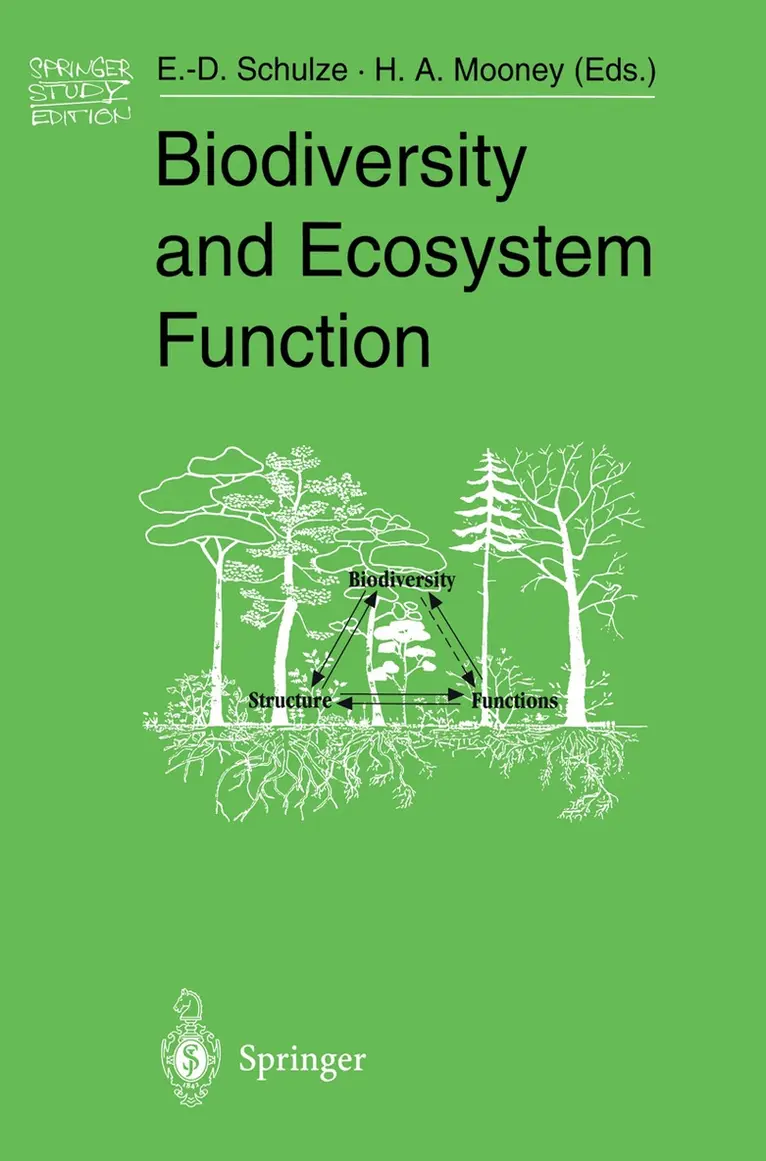
    The biota of the earth is being altered at an unprecedented rate. We are witnessing wholesale exchanges of organisms among geographic areas that were once totally biologically isolated. We are seeing massive changes in landscape use that are creating even more abundant succes­ sional patches, reductions in population sizes, and in the worst cases, losses of species. There are many reasons for concern about these trends. One is that we unfortunately do not know in detail the conse­ quences of these massive alterations in terms of how the biosphere as a whole operates or even, for that matter, the functioning of localized ecosystems. We do know that the biosphere interacts strongly with the atmospheric composition, contributing to potential climate change. We also know that changes in vegetative cover greatly influence the hydrology and biochemistry ofa site or region. Our knowledge is weak in important details, however. How are the many services that ecosystems provide to humanity altered by modifications of ecosystem composition? Stated in another way, what is the role of individual species in ecosystem function? We are observing the selective as well as wholesale alteration in the composition of ecosystems. Do these alterations matter in respect to how ecosystems operate and provide services? This book represents the initial probing of this central ques­ tion. It will be followed by other volumes in this series examining in depth the functional role of biodiversity in various ecosystems of the world.

    Produktinformation

    • Utgivningsdatum:1994-07-26
    • Mått:155 x 235 x 30 mm
    • Vikt:832 g
    • Format:Häftad
    • Språk:Engelska
    • Serie:Springer Study Edition
    • Antal sidor:525
    • Upplaga:1994
    • Förlag:Springer-Verlag Berlin and Heidelberg GmbH & Co. KG
    • ISBN:9783540581031

    Utforska kategorier

    • Miljövetenskap och miljöpolitik inom Naturvetenskap och teknik

    Innehållsförteckning

    • Section A: Ecosystem Function.- 1 Biological Diversity and Terrestrial Ecosystem Biogeochemistry.- 2 Biodiversity and Ecosystem Function in Agricultural Systems.- 3 Biodiversity and Interactions Within Pelagic Nutrient Cycling and Productivity.- Section B: Functional Groups.- 4 Functional Groups of Microorganisms.- 5 Plant Traits and Adaptive Strategies: Their Role in Ecosystem Function.- 6 Scaling from Species to Vegetation: The Usefulness of Functional Groups.- Section C: Species Interaction.- 7 Evolution of Functional Groups in Basidiomycetes (Fungi).- 8 The Role of Parasites in Plant Populations and Communities.- 9 Plant-Microbe Mutualisms and Community Structure.- 10 The Evolution of Interactions and Diversity in Plant- Insect Systems: The Urophora-Eurytoma Food Web in Galls on Palearctic Cardueae.- Section D: Community Interactions.- 11 Keystone Species.- 12 Redundancy in Ecosystems.- 13 How Many Species Are Required for a Functional Ecosystem?.- 14 Rare and Common Plants in Ecosystems, with Special Reference to the South-west Australian Flora.- 15 Community Diversity and Succession: The Roles of Competition, Dispersal, and Habitat Modification.- Section E: Ecosystem Integrity.- 16 Biodiversity and the Balance of Nature.- 17 Biodiversity and Function of Grazing Ecosystems.- 18 Resource Supply and Disturbance as Controls over Present and Future Plant Diversity.- 19 Ecosystem Stability, Competition, and Nutrient Cycling.- 20 Modelling Biodiversity: Latitudinal Gradient of Forest Species Diversity.- 21 Functional Aspects of Landscape Diversity: A Bavarian Example.- Section F: Industrial Analogy and Policy.- 22 Biodiversity Issues in Computing: A Study of Networked Computer Viruses.- 23 Biodiversity and Policy Decisions.- 24 Ecosystem Function of Biodiversity: A Summary.- Species Index.