
Global Climate Change and Human Impacts on Forest Ecosystems
Postglacial Development, Present Situation and Future Trends in Central Europe
1 106 kr
Beställningsvara. Skickas inom 10-15 vardagar. Fri frakt över 249 kr.
Beskrivning
The inclusion of forests as potential biological sinks in the Kyoto Protocol to the United Nations Framework Convention on Climate Change (UNFCCC) in 1997 has attracted international attention and again has put scientific and political focus on the world's forests, regarding their state and development. The international discus sion induced by the Kyoto Protocol has clearly shown that not only the tropical rain forests are endangered by man's activities, but also that the forest ecosystems of boreal, temperate, mediterranean and subtropical regions have been drastically modified. Deforestation on a large scale, burning, over-exploitation, and the degra dation of the biological diversity are well-known symptoms in forests all over the world. This negative development happens in spite of the already existing knowledge of the benefits of forests on global energy and water regimes, the biogeochemical cycling of carbon and other elements as well as on the biological and cultural diversity. The reasons why man does not take care of forests properly are manifold and complex and there is no easy solution how to change the existing negative trends. One reason that makes it so difficult to assess the impacts of human activity on the future development of forests is the large time scale in which forests react, ranging from decades to centuries.
Produktinformation
Utforska kategorier
Recensioner i media
Innehållsförteckning
Hoppa över listan

Mer från samma serie
Del 223
Del 169
North American Temperate Deciduous Forest Responses to Changing Precipitation Regimes
Paul Hanson, Stan D. Wullschleger
Inbunden, 2003
1 106 kr
Del 174
Pollination Ecology and the Rain Forest
David Roubik, Shoko Sakai, Abg Abdul Hamid
Inbunden, 2005
1 655 kr
History of Atmospheric CO2 and Its Effects on Plants, Animals, and Ecosystems
James R. Ehleringer, Thure Cerling, M. Denise Dearing
Inbunden, 2005
2 205 kr
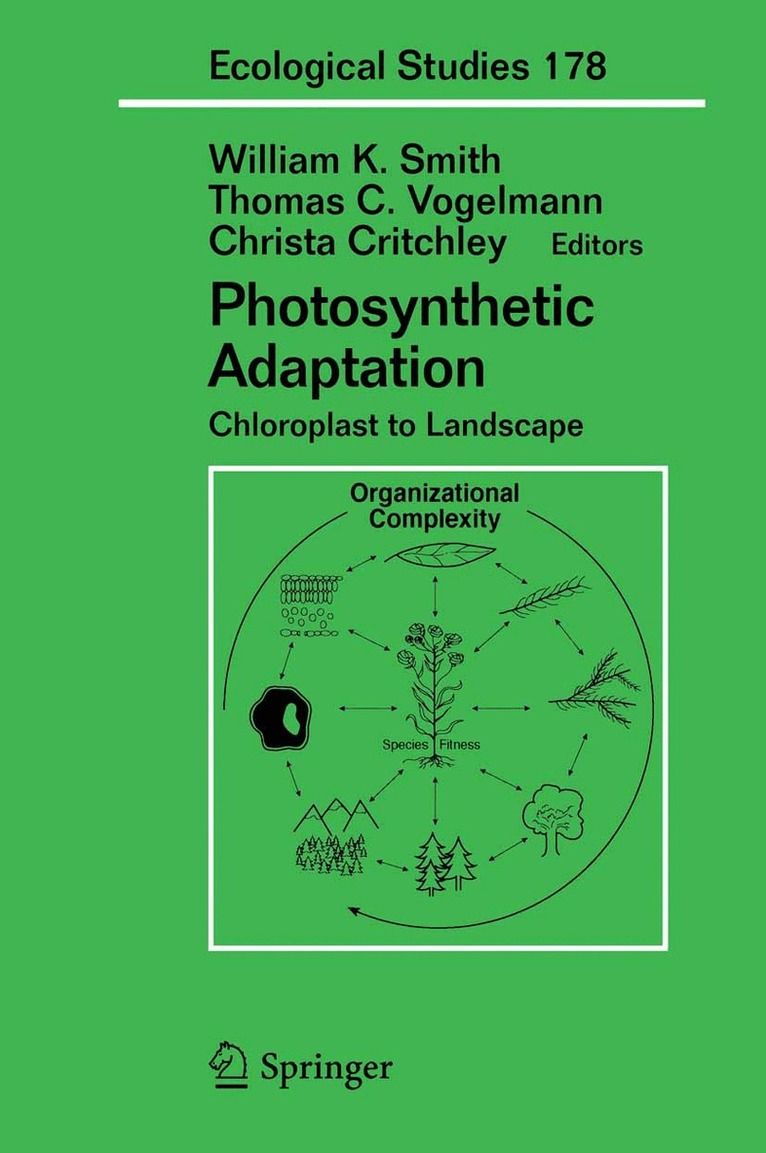
Photosynthetic Adaptation
William K Smith, Thomas C. Vogelmann, Christa Critchley
Inbunden, 2004
2 205 kr
Del 196
Hoppa över listan



Du kanske också är intresserad av
Del 165
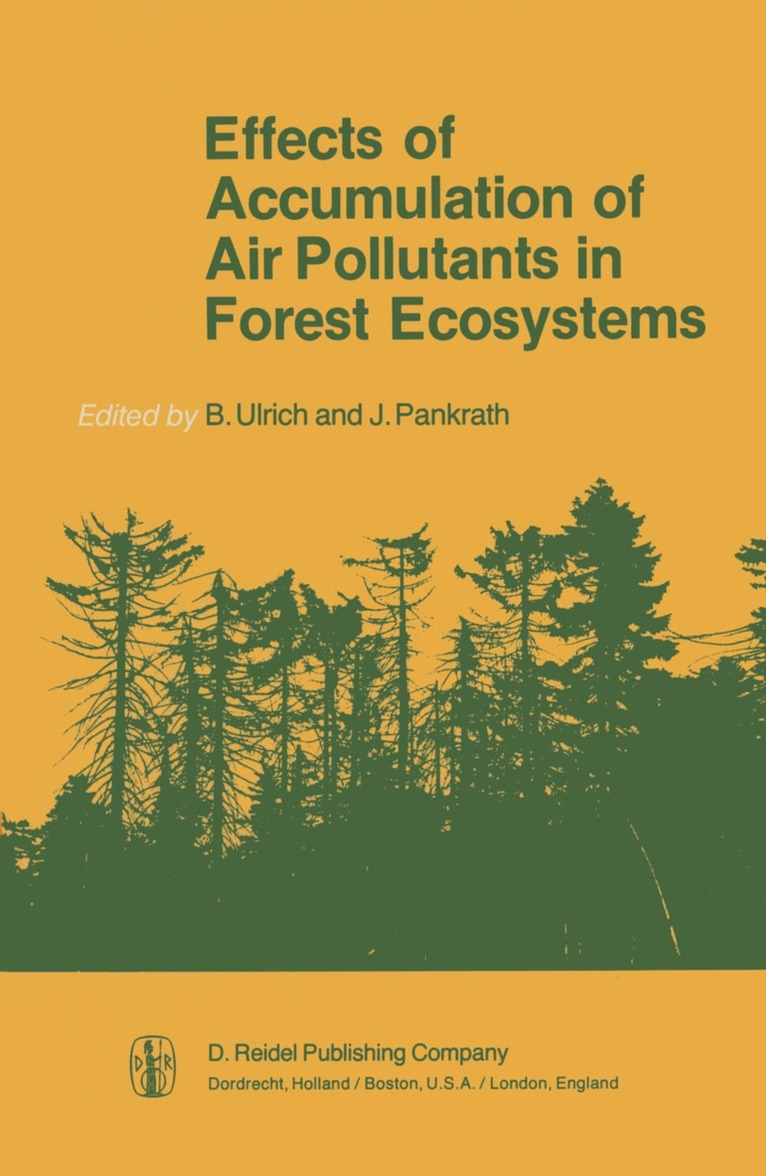
Effects of Accumulation of Air Pollutants in Forest Ecosystems
B. Ulrich, J. Pankrath
Inbunden, 1983
1 655 kr
Del 33
Effects of Accumulation of Air Pollutants in Forest Ecosystems
J. Pankrath, B. Ulrich
E-bok
20122 065 kr
Effects of Accumulation of Air Pollutants in Forest Ecosystems
B. Ulrich, J. Pankrath
Häftad, 2011
1 655 kr