• Fri frakt över 249 kr
  • •
  • Snabba leveranser
  • •
  • Billiga böcker
Kundservice

Du är på sajten för privatpersoner.

Företag, bibliotek eller offentlig verksamhet?

Du handlar på classic.bokus.com, där alla dina funktioner finns intakta.
Till classic.bokus.com
Bokus logotyp. Gå till startsidan.
  • Erbjudanden
  • Nyheter
  • Student
  • Topplistor
  • Barn & ungdom
  • Bokus Play
  • E-böcker
  • Pocketböcker
  • Spel & pussel

10% rabatt på allt med kod: NYSTART10 →

Sidfot

Mina sidor

    Hjälp

    • Kundservice
    • Vanliga frågor och svar
    • Frakt och leverans
    • Retur vid ångerrätt
    • Reklamera vara
    • Betalning
    • Köpvillkor
    • Allmänna villkor
    • Information om webbplatsens tillgänglighet

    Om Bokus

    • Om oss
    • Pressrum
    • För studenter
    • För företag
    • För bibliotek och offentlig verksamhet
    • För leverantörer
    • Hållbarhet

    Populärt

    • Aktuella erbjudanden
    • Presentkort
    • Studentlitteratur
    • Nya böcker
    • Topplistor
    • Signerade böcker
    • Engelska böcker

    Inspiration

    • Boktips
    • BookTok
    • Populära bokserier
    • Barnbokskaraktärer
    • Populära författare
    Logotyp för Bokus
    Följ oss på Facebook (extern länk)Följ oss på Instagram (extern länk)Följ oss på YouTube (extern länk)Följ oss på TikTok (extern länk)
    bokus @ CookiesAnpassa cookiesIntegritetspolicyKöpvillkor
    Till Citymail hemsida (extern länk)Till Budbee hemsida (extern länk)Till Postnord hemsida (extern länk)Till Schenker hemsida (extern länk)Till Early Bird hemsida (extern länk)Till Walleys hemsida (extern länk)
    1. Juridik
    2. Internationell rätt
    3. Folkrätt

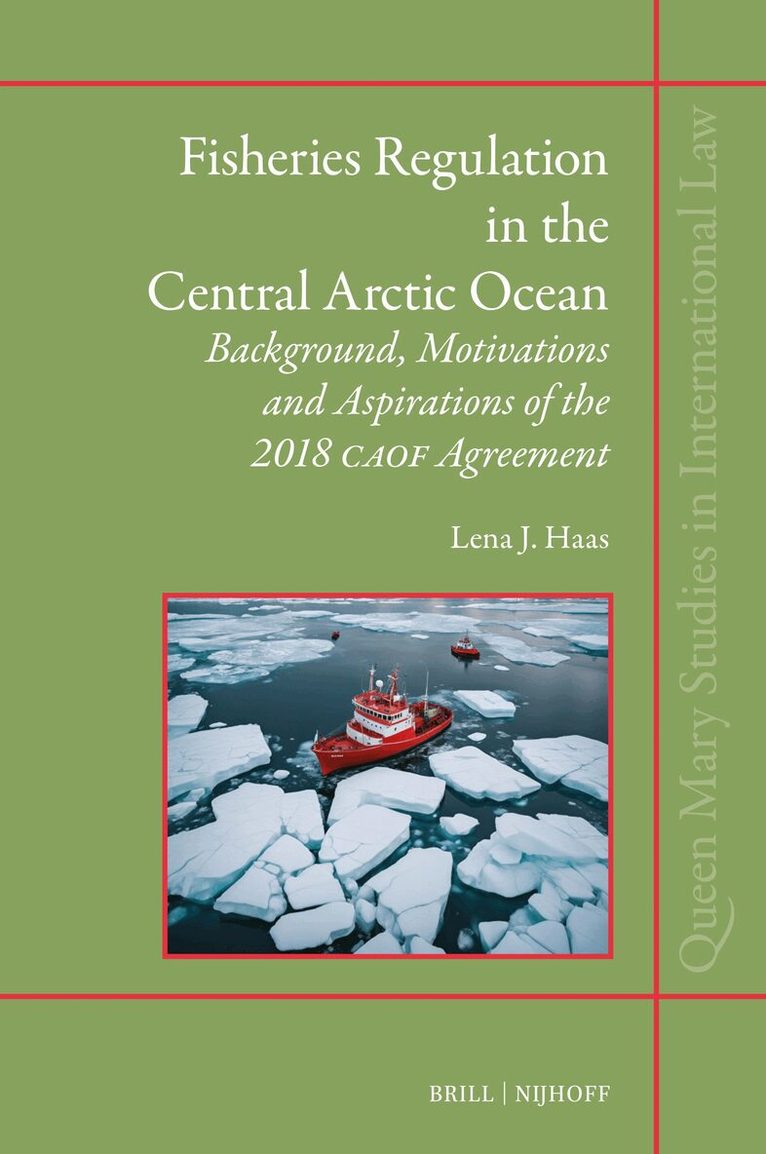
    Fisheries Regulation in the Central Arctic Ocean

    Background, Motivations and Aspirations of the 2018 CAOF Agreement

    AvLena J. Haas

    Inbunden, Engelska, 2025

    Del 56 i serien Queen Mary Studies in International Law

    2 702 kr

    Beställningsvara. Skickas inom 3-6 vardagar. Fri frakt över 249 kr.

    Beskrivning

    The 2018 Agreement to Prevent Unregulated High Seas Fisheries in the Central Arctic Ocean (CAOF Agreement) is a unique international treaty. It sets up conditions for potential future (commercial) fisheries in the central Arctic Ocean, furthered by climate change, until ecosystem dynamics are well understood. As a product of balancing interests of various stakeholders after a multi-year drafting process, the agreement protects both fish stocks and the environment. Based on international maritime law, scientific research and principles of international environmental law, such as the precautionary approach, it sets a precedent for future fisheries agreements.

    Produktinformation

    • Utgivningsdatum:2025-01-09
    • Mått:155 x 235 x 31 mm
    • Vikt:805 g
    • Format:Inbunden
    • Språk:Engelska
    • Serie:Queen Mary Studies in International Law
    • Antal sidor:382
    • Förlag:Brill
    • ISBN:9789004700666

    Utforska kategorier

    • Folkrätt inom Juridik
    • Miljö-, transport- och planeringsrätt inom Juridik

    Mer om författaren

    Lena J. Haas, Ph.D. (2023), University of the Bundeswehr Munich, is a Munich lawyer with a profound background in international law, honed through academic studies and accompanying activities. Passionate about environmental issues, she has developed a deep understanding of the interdependence of politics, law and the environment.

    Innehållsförteckning

    • PrefaceList of FiguresAbbreviationsText of the Agreement and Outline of Provisions1 Introduction2 The Area: Characteristics and Challenges1 Definition of the Arctic2 Definition of the Arctic Ocean3 Agreement Area4 Climatic and Ecological Conditions and Developments4.1 Arctic Climate4.1.1 General Remarks4.1.2 Warming4.1.3 Melting Ice4.1.4 Ecological Changes in Food Web and Environment in the Arctic Marine Area4.2 Arctic Fisheries4.2.1 Current Status of Fish Stocks and Fisheries in the Central Arctic Ocean4.2.2 General Changes for Fish Stocks Resulting from Climate Change4.2.3 Introduction of Non-indigenous Species4.2.4 Fish in the Sense of the caof Agreement4.2.5 Fishing in the Sense of the caof Agreement4.3 Further Developments in the Arctic5 Summary3 Foundations and Political Drivers of the caof Agreement1 Motivations for the caof Agreement2 Drafting History and Framework Conditions3 Participation in the caof Agreement3.1 The Club within the Club: Leading Role of the Arctic Five3.2 Accession of States4 Diversity of Interests4.1 Interests of caof Agreement Participants: Political Positions and National Approaches4.2 Position of Arctic Communities and Indigenous Peoples4.2.1 Exceptional Situation of Arctic Residents4.2.2 Participation of Arctic Residents4.2.3 Specific Rights of Local and Arctic Residents4.3 Interests of Non-participants to the caof Agreement5 Summary4 Managing (Arctic) Fisheries: Interplay of Law and Governance1 Legal Regime Concerning Fisheries in the cao1.1 International Treaties1.1.1 United Nations Convention on the Law of the Sea1.1.2 United Nations Fish Stocks Agreement1.1.3 fao Compliance Agreement1.1.4 Agreement on Port State Measures1.2 Customary International Law Standards1.2.1 Freedom of the High Seas1.2.2 Duty to Cooperate1.3 Non-binding Soft Law Instruments1.3.1 International Maritime Organization Guidelines and Polar Code1.3.2 Arctic Environmental Protection Strategy and Arctic Council Instruments1.3.3 fao Code of Conduct and Related Soft-Law Instruments1.4 Environmental Legal Standards1.4.1 Convention on Biological Diversity1.4.2 Convention on the Conservation of Migratory Species of Wild Animals1.4.3 Convention on International Trade in Endangered Species of Wild Fauna and Flora1.4.4 2030 Agenda and Sustainable Development Goals1.4.5 United Nations Framework Convention on Climate Change, Kyoto Protocol and Paris Agreement2 Additional Cooperative Arctic Mechanisms3 Possibilities and Approaches of Governance in Fisheries3.1 Unilateral vs. Multilateral Approach3.2 Multilateral Governance Systems in Fisheries: Regional Fishery Bodies3.3 Classification of the caof Agreement4 Summary5 Substantive Standards and Principles of Fisheries Management in the cao1 Scientific Research1.1 Significance of Scientific Research in Fisheries Management1.2 Basis of Scientific Research Activities under the caof Agreement1.3 Joint Program of Scientific Research and Monitoring1.3.1 Outline of the Program1.3.2 Data Sharing Protocol1.4 Joint Scientific Meetings1.5 Marine Scientific Research under unclos1.6 Supplementary Research Activities in the Marine Arctic1.6.1 National Research Activities1.6.2 Cooperative Research Activities1.6.3 Additional Research Programs2 Principles of Fisheries Management2.1 Sustainable Development2.1.1 Precautionary Approach2.1.2 Ecosystem Approach2.2 Duty to Cooperate2.2.1 Development and Definition of the Duty to Cooperate2.2.2 Implementation in the caof Agreement2.3 Decision-Making Procedures2.3.1 Development and Definition of Efficient Decision-Making Procedures2.3.2 Implementation in the caof Agreement2.4 Compliance and Dispute Settlement2.4.1 Compliance and Enforcement2.4.2 Dispute Settlement2.5 Compatibility of the caof Agreement with Existing Regulations2.5.1 Compatibility of the caof Agreement with the Existing Legal Framework in the cao2.5.2 Compatibility of Conservation and Management Measures within and beyond Areas under National Jurisdiction2.6 Lessons Learned from Common Problems in Fisheries Management3 Summary6 Interim Conservation and Management Measures under the caof Agreement1 Measures regarding Commercial Fishing1.1 Commercial Fishing as a Management and Conservation Measure Authorised by a Newly Established rfb1.2 Commercial Fishing as a Management and Conservation Measure Authorised by Existing rfb s1.2.1 Joint Norwegian-Russian Fisheries Commission1.2.2 North Atlantic Salmon Conservation Organization1.2.3 North-East Atlantic Fisheries Commission1.2.4 Species-Specific rfb s1.3 Commercial Fishing as an Interim Measure under the caof Agreement as Decided by the Parties2 Measures regarding Non-commercial Fishing2.1 Fishing for Scientific Purposes2.2 Exploratory Fishing3 Duration of Interim Measures and of the caof Agreement4 Review of the caof Agreement5 Possible Transition to a New Agreement6 Suggested Subsequent Measures7 Summary7 Current Developments8 Conclusion1 The caof Agreement: A Fisheries Management Approach to a Unique Scenario2 Implications for Public International Law: New Fisheries Management Standard and the End of the High Seas?2.1 Evolvement of a New International Standard for rfb s?2.2 The End of Grotius’ Freedom of the High Seas?BibliographyIndex