Häftad, Engelska, 2010
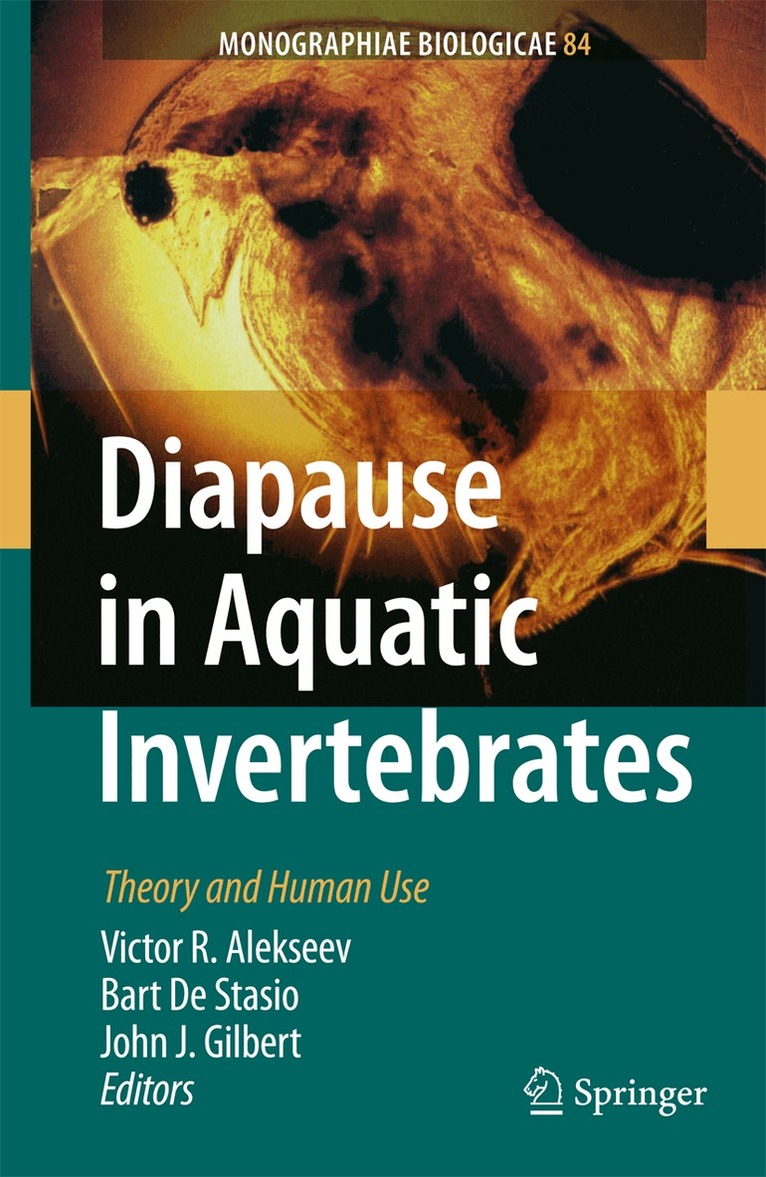
Diapause in Aquatic Invertebrates
Av Victor R. Alekseev, Bart De Stasio, John J. Gilbert
1663 kr
Skickas inom 10-15 vardagar
Beskrivning
Dormancy is a suspension of the vital functions in an organism to overcome harsh environmental conditions, and sometimes can last for centuries. It is a widespread adaptation in many phyla, ranging from bacteria to vertebrates, and may exert a great influence on aquatic communities.Contributors to this new book are leaders in the field of diapause studies, and many authors were participants at a recent workshop on diapause in aquatic invertebrates (Pallanza, Italy 2003). The book consists of two major parts, as indicated in its title: Phenomenology of diapause and significance of this adaptation in scientific and practical uses. Application to newly developing areas such as cultivation of live food, like rotifers or Artemia, in modern aquaculture is covered, as are aspects of diapause that promote the colonization of new environments by facilitating the passive transport of resting stages of invasive species. Creation of artificial ecosystems outside of the Earth’s biosphere using dormant propagules becomes an actual possibility as humankind develops plans to colonize our nearest planets. Also, studies on the vertical distribution of resting stages in undisturbed sediment cores yield important ecological and evolutionary information useful in investigations of past environments.Throughout the book properties of diapause and individual peculiarities of this ancient and well-developed adaptive phenomenon are regarded in evolutionarily distant groups such as Rotifers, Crustaceans and Insects.
Produktinformation
- Utgivningsdatum: 2010-11-23
- Mått: 155 x 235 x 16 mm
- Vikt: 429 g
- Format: Häftad
- Språk: Engelska
- Antal sidor: 260
- Förlag: Springer
- Serie: Monographiae Biologicae
- ISBN: 9789048174256
Utforska kategorier
Betyg & recensioner
0 recensioner
Inga recensioner tillgängliga.