• Fri frakt över 249 kr
  • •
  • Snabba leveranser
  • •
  • Billiga böcker
Kundservice

Du är på sajten för privatpersoner.

Företag, bibliotek eller offentlig verksamhet?

Du handlar på classic.bokus.com, där alla dina funktioner finns intakta.
Till classic.bokus.com
Bokus logotyp. Gå till startsidan.
  • Erbjudanden
  • Student
  • Topplistor
  • Barn & ungdom
  • Bokus Play
  • E-böcker
  • Ljudböcker
  • Pocketböcker
  • Spel och pussel

5% studentrabatt – använd koden KURSBOK27 →

Sidfot

Mina sidor

    Hjälp

    • Kundservice
    • Vanliga frågor och svar
    • Frakt och leverans
    • Retur vid ångerrätt
    • Reklamera vara
    • Betalning
    • Köpvillkor
    • Allmänna villkor
    • Information om webbplatsens tillgänglighet

    Om Bokus

    • Om oss
    • Pressrum
    • För studenter
    • För företag
    • För bibliotek och offentlig verksamhet
    • För leverantörer
    • Hållbarhet

    Populärt

    • Aktuella erbjudanden
    • Presentkort
    • Studentlitteratur
    • Nya böcker
    • Topplistor
    • Signerade böcker
    • Engelska böcker

    Inspiration

    • Boktips
    • BookTok
    • Barnbokskaraktärer
    • Populära författare
    Logotyp för Bokus
    Följ oss på Facebook (extern länk)Följ oss på Instagram (extern länk)Följ oss på YouTube (extern länk)Följ oss på TikTok (extern länk)
    bokus @ CookiesAnpassa cookiesIntegritetspolicyKöpvillkor
    Till Citymail hemsida (extern länk)Till Budbee hemsida (extern länk)Till Postnord hemsida (extern länk)Till Schenker hemsida (extern länk)Till Early Bird hemsida (extern länk)Till Walleys hemsida (extern länk)
    1. Filosofi och religion
    2. Religion och tro
    3. Islam
    4. Koranen

    Being Muslim in Indonesia

    Religiosity, Politics and Cultural Diversity in Bima

    AvMuhammad Sila

    Häftad, Engelska, 2021

    Del i serien Debates on Islam & Society

    742 kr

    Beställningsvara. Skickas inom 5-8 vardagar. Fri frakt över 249 kr.

    Beskrivning

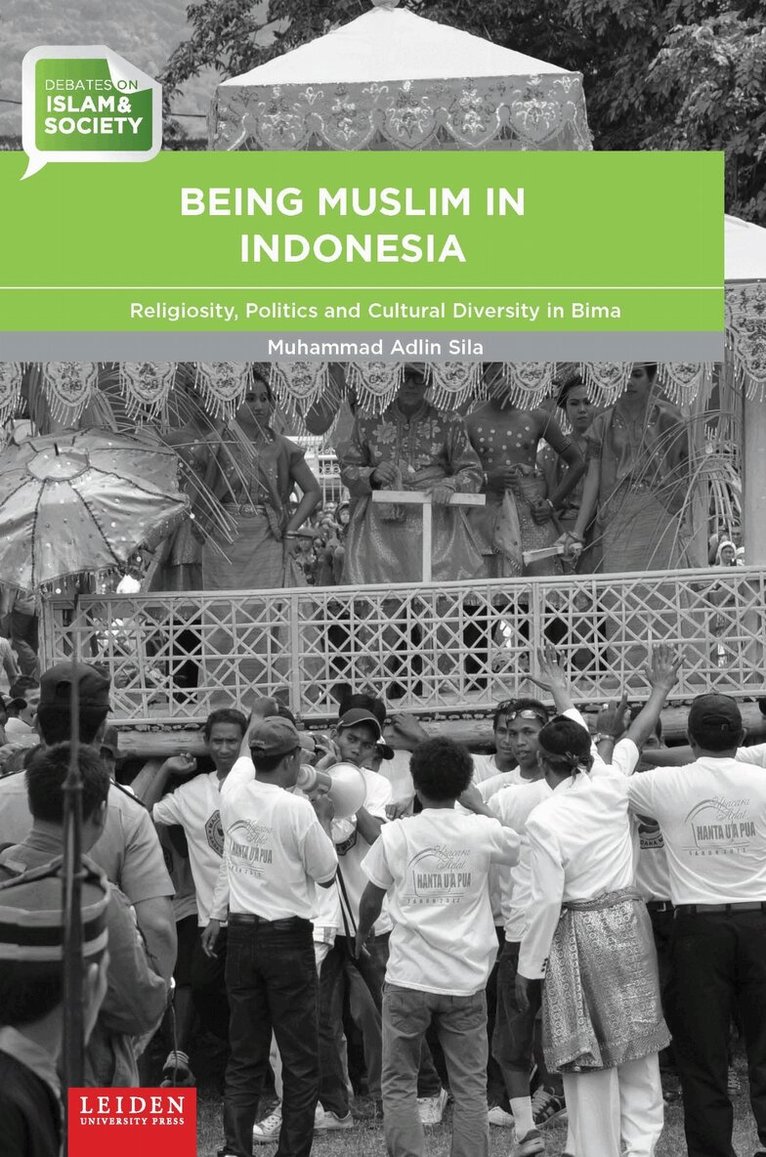
    How Muslims in Indonesia consider their religious practices, politics and culture as Islamic is described in this volume. By examining the various ways Bima Muslims constitute their Islamic identities and agencies through rituals and festivals, this book argues that religious practice is still vigorous in present Bima. It explores the reproduction of religious meanings among various local Muslims and the differences between social groups. Islam is represented as divided between the traditionalist Muslims and the reformist Muslims, between the royal family and the ordinary Muslims, and between Muslim clerics and lay people. Consequently, there is no single picture of Islam. As Bima Muslims construe their Islam in response to their surroundings, what it means to be a Muslim is constantly being negotiated. The complexity of religious life has been a result of the duality of socio-political settings in Bima which stems from the early period of the Islamization of Bima to the present.

    Produktinformation

    • Utgivningsdatum:2021-03-06
    • Mått:156 x 234 x undefined mm
    • Format:Häftad
    • Språk:Engelska
    • Serie:Debates on Islam & Society
    • Antal sidor:250
    • Förlag:Leiden University Press
    • ISBN:9789087283629

    Utforska kategorier

    • Koranen inom Filosofi och religion

    Mer om författaren

    Muhammad Adlin Sila is currently working at Indonesia's Ministry of Religious Affairs (MoRA) and is a lecturer at the State Islamic University of Syarif Hidayatullah, Jakarta. His research focuses mainly on social anthropology and religious studies.

    Recensioner i media

    “I think the work is a valuable book with a wealth of new and as yet unrecorded information on Islam as practiced in Bima, obtained from fieldwork. One of the interesting things it shows is that the commonly accepted dichotomy between traditionalist Muslims (organized in the Nadlatul Ulama) on the one hand and the reformist Muslims (organized in the Muhammadiyah) is not fully tenable and that the boundaries between these two orientations within Islam are actually blurred, e.g. in the sensitive issue of traditional healing. The part on the Hanta Ua Pua Festival shows in an interesting way how religion is linked to the peculiar traditional dual power structure in Bima. All in all, this is the best book on Islam in everyday life in Bima, which I know of.”

    Innehållsförteckning

    • List of Illustrations Preface Acknowledgement Notes on Transliteration and Style Chapter One Introduction 1.1. Why Bima Is Important? 1.2. Sultan and Raja Bicara: Dyadic Leadership 1.3. Being Muslim as a Social Phenomenon 1.4. Outline of the Book Chapter Two Background of Study 2.1 . Previous Studies on Islam and Muslims in Bima 2.2 . Methodological and Theoretical Framework 2.3 . Bima as a Study Site The people The place 2.4 . Choosing the Field 2.5 . Methods of Collecting Data Chapter Three Hanta Ua Pua: Delivering Betel and Accepting Islam 3.1. The Historical Accounts of the Festival 3.2. Dato di Banda and Kampung Melayu 3.3. The Celebration of the Prophet Muhammad's Birthday 3.4. Mawlid Texts: the many versions of written words praising the Prophet 3.5. The Festival of Hanta Ua Pua 3.6. Majelis Hadat Dana Mbojo and Hanta Ua Pua: the politics of festival 3.7. The local dimension of the NU and Muhammadiyah in Bima 3.8. Conclusion Chapter Four Imam and Royal Mosque 1.1. Imam and Sultan 1.2. Imam and Royal Foundation 1.3. Everyday Rituals among Muslims 1.4. Social Dimension of Ritual Prayers 1.5. Accommodation during Ramadan Ritual Prayers 1.6. The Festival of Breaking the Fast: Idul Fitri 1.7. Friday Congregational Prayers: regional bylaws and politics of ritual 1.8. Conclusion Chapter Five Sando and Spirt Possession: Engaging with the spirit and healing the sick 5.1. Sando, Spirit Possession and Spirit Mediumship 5.2. The Local Belief in Supernatural Beings and the Types of Illness 5.3. Religious Reformism in the Belief in Ancestral pirits: From parafu ro pambora to padasa 5.4. The Power of Water and the Qur'anic Verses in Healing Rituals 5.5. Being Submissive and Healing the Sick with the Help of God: karana ala 5.6. Protecting the Village, Asking for Salvation: doa dana 5.7. Healing Practice and Its Relationship to Islamic Mysticism 5.8. Fitua, Silsilah and the Seven Grade (Martabat Tujuh) 5.9. Conclusion Chapter Six Life-cycle Rituals: Praying from unborn to birth and becoming Muslim 6.1. Concepts of Solidarity in Lifetime Rituals 6.2. Ritual for a Pregnant Mother 6.3. Birth Delivery Ritual 6.4. Hair-shaving and Name-giving 6.5. Circumcision 6.6. Complete Qur'an Recital and Veiling 6.7. Conclusion Chapter Seven Life-cycle Rituals: Marriage and Death, Getting Together in Joy and Sadness 7.1. Village Gatherings 7.2. Marriage Ceremony 7.3. Bride-service at Prospective In-laws' Residence 7.4. Marriage Payment Delivery 7.5. Henna Night 7.6. Marriage Contract Ceremony 7.7. Commemoration of the Deceased 7.8. Feasting and Praying for the Deceased 7.9. Conclusion Chapter Eight Concluding Remarks 8.1. Religiosity 8.2. Politics 8.3. Cultural Diversity 8.4. Conclusion Notes Appendices Glossary Bibliography Index