Inbunden, Engelska, 2014
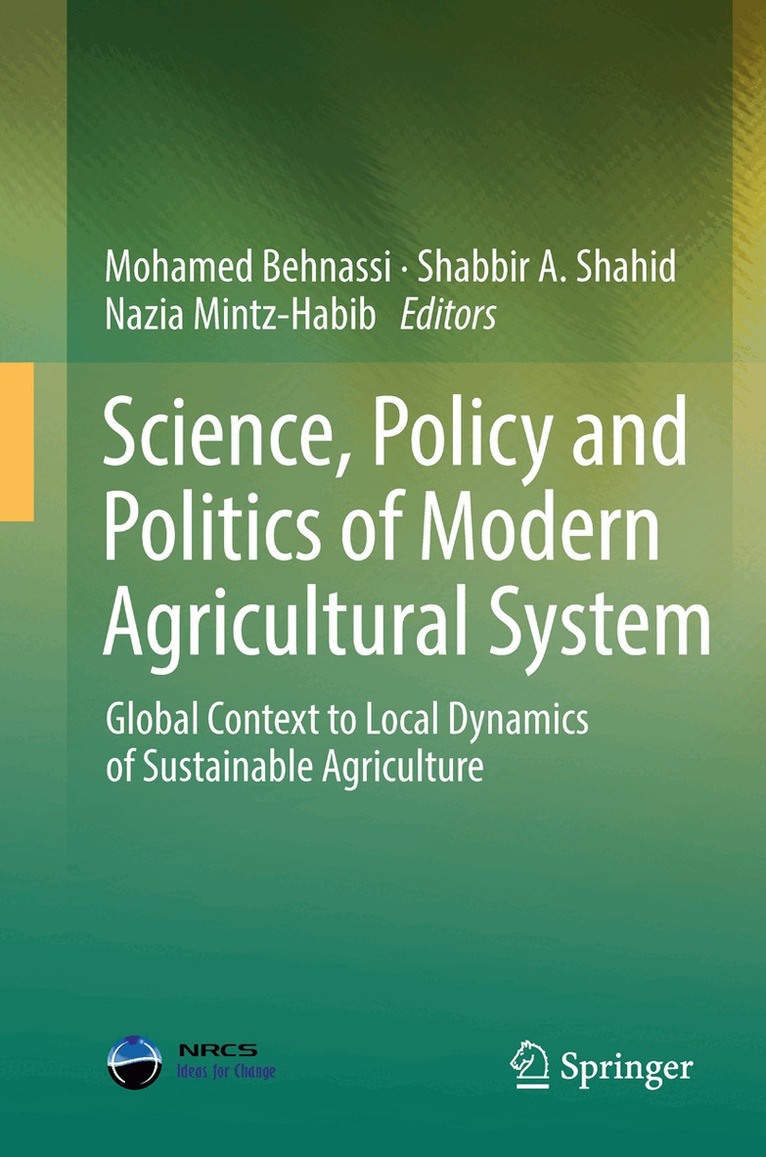
Science, Policy and Politics of Modern Agricultural System
Av Mohamed Behnassi, Shabbir A. Shahid, Nazia Mintz-Habib
1098 kr
Beställningsvara. Skickas inom 10-15 vardagar. Fri frakt över 249 kr.
Beskrivning
This book arises from a 2011 international conference entitled Climate Change, Agri-Food, Fisheries and Ecosystems: Reinventing Research, Innovation, and Policy Agendas for an Environmentally and Socially-Balanced Growth (ICCAFFE2011), organized by the North-South Center for Social Sciences (NRCS) in collaboration with the Deutsche Gesellschaft für Internationale Zusammenarbeit (GIZ) GmbH, Germany and the Institute for Research and Development (IRD), France. Coverage focuses on the agricultural sector and helps improve understanding of the relationships between agriculture and the environment and between human communities and nature, so as to sustainably manage agricultural development. The contributors analyze the interdependence between sustainable agricultural development and environmental, economic and social dynamics; assess the impacts of soil degradation on agricultural productivity; present ways to enhance livestock production and recommend mechanisms for managing links between agro-biodiversity, climate change and livelihoods. Part I examines sustainable agriculture development and environmental, economic and social dynamics, addressing topics such as global climate change, agriculture and challenges including socio-economic factors, adaptation, poverty reduction and water management. Part II covers the impacts of soil degradation on agricultural productivity and discusses the use of expert systems to assess and manage degraded lands, agricultural productivity, land suitability and rehabilitation. Part III focuses on livestock production enhancements, such as feed resources and supplemental feeds for animals and capacity building for women in dairy management. Part IV shares the outcomes of research in agro-biodiversity, climate change and livelihoods, addressing topics such as co-management of forests, carbon consumption models, biodiversity conservation and carbon sequestration and scarce mangrove forests. Current environmental and agro-ecologicalresearch focuses on understanding the cause-consequence relationships between specific agricultural practices and land use and the responses at different levels of ecosystems. This book is intended to contribute to this discussion.
Produktinformation
- Utgivningsdatum: 2014-01-22
- Mått: 155 x 235 x 20 mm
- Vikt: 774 g
- Format: Inbunden
- Språk: Engelska
- Antal sidor: 380
- Upplaga: 2014
- Förlag: Springer
- ISBN: 9789400779563
Utforska kategorier
Betyg & recensioner
0 recensioner
Inga recensioner tillgängliga.