Agronomi
165 kr
237 kr
Skickas inom 3-6 vardagar
479 kr
Skickas inom 10-15 vardagar
257 kr
Skickas inom 7-10 vardagar
990 kr
Skickas inom 7-10 vardagar
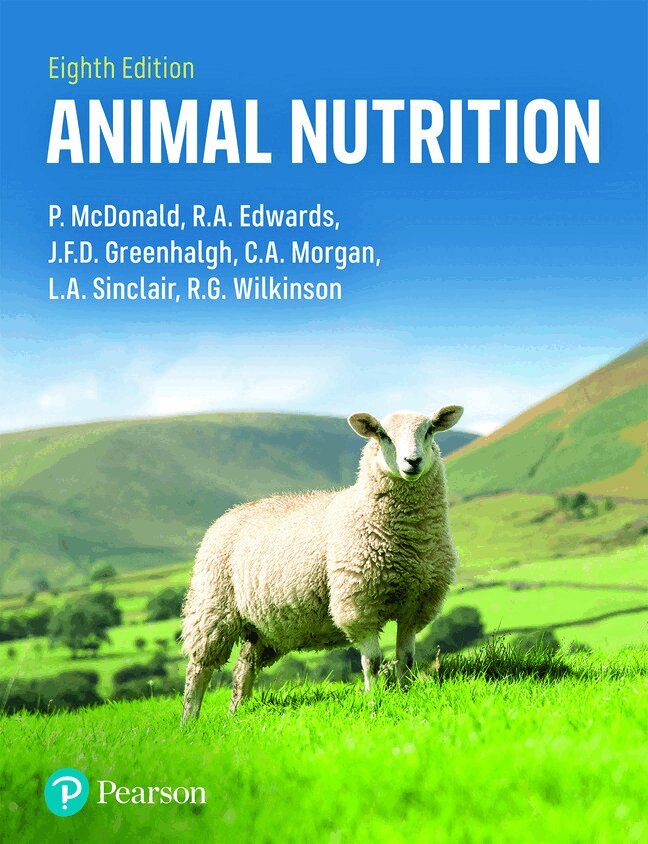
The latest edition of Animal Nutrition has been updated thoroughly to provide a clear and comprehensive introduction to the science and practice of animal nutrition. This classic, market-leading text is a trusted resource for undergraduates studying Animal Science, Veterinary Science, Agriculture, Biology and Biochemistry. It is supported by key experimental evidence throughout about modern advancements in animal food nourishment, composition of foods and feeding standards for dairy and beef cattle, sheep, pigs and poultry, horses, and cats and dogs.
It is split into six main sections covering: The components of food; The digestion and metabolism of nutrients; Quantifying the nutrient content of foods: digestibility, energy and protein values; The nutrient requirements of animals; The nutritional characteristics of foods; and Animal products and human nutrition. Quantitative aspects of the subject are clearly explained and illustrated by worked examples. Problems have been added to all chapters to aid student learning and the appendices include solutions to all chapter-end numeric questions.
This edition includes nutritional topics related to molecular biology, the environment, and companion animals - dog and cat nutrition has been expanded. Under nutrient requirements of animals, usage of novel foods such as insects has also been added. Chapter-end summaries and questions allow students to recap and test their knowledge of the chapter topic.
565 kr
Skickas inom 10-15 vardagar
Att bruka men inte äga : arrende och annan nyttjanderätt till mark i svenskt jordbruk från medeltid till idag
285 kr
Skickas inom 7-10 vardagar
238 kr
Skickas inom 5-8 vardagar
167 kr
Skickas inom 5-8 vardagar
402 kr
Skickas inom 5-8 vardagar
563 kr
Skickas inom 10-15 vardagar
1 035 kr
Skickas inom 10-15 vardagar
2 207 kr
Skickas inom 3-6 vardagar
Publisher's Note: Products purchased from Third Party sellers are not guaranteed by the publisher for quality, authenticity, or access to any online entitlements included with the product.
Maximize productivity while minimizing environmental impact
Develop sustainable products, energy sources, and processes using the concepts and methods contained in this interdisciplinary resource. Biosystems Engineering discusses how to effectively merge solid design techniques with biology and the applied sciences.
Featuring chapters by experts in each field, this authoritative guide explains how to analyze genetic data, design ecosystem models, implement conservation strategies, harness biofuels, and ensure food safety. Full coverage of transgenetic wood production, package engineering, supercritical fluid extraction, and agricultural land management is included.
Discover how to:
Use microarray technology to classify genes and construct databasesBuild mathematical models and computer simulations of ecosystemsCreate bio-oils and carbon-neutral transportation fuels using pyrolisisSynthesize biodiesel and ethanol from vegetable oil and animal fatPurify and enrich biotechnological products with bioseparationDevelop modified woods and herbicide-resistant crops using transgeneticsExtract antioxidants, supercritical fluids, and bioregulators from plantsDeploy ecologically sound fertilizing, composting, and harvesting methods2 351 kr
Skickas inom 10-15 vardagar
Applications of Genetic and Genomic Research in Cereals covers new techniques for practical breeding, also discussing genetic and genomic approaches for improving special traits. Additional sections cover drought tolerance, biotic stress, biomass production, the impact of modern techniques on practical breeding, hybrid breeding, genetic diversity, and genomic selection. Written by an international team of top academics and edited by an expert in the field, this book will be of value to academics working in the agricultural sciences and essential reading for professionals working in plant breeding.
Provides in-depth and comprehensive coverage of a rapidly developing field Presents techniques used in genetic and genomics research, with coverage of genotyping, gene cloning, genome editing and engineering and phenotyping in various cereals Includes the latest genetic and genomic approaches for improving special traits - drought tolerance, biotic stress and biomass production Covers breeding practices, with chapters on the genetic diversity of wheat, hybrid breeding and the potential of rye and barley crops1 450 kr
Skickas inom 10-15 vardagar
The coverage of the subject is divided into four sections
The plant cell-describing both molecular components and function Primary metabolism-including the pathways of carbohydrate, lipid, nitrogen, nucleic acid and protein metabolism as well as gene regulation Special metabolism-chapters on phenolics, isoprenoids and secondary nitrogen compounds The plant and the environment-discussions of pathology, ecology and biotechnology at the molecular level1 134 kr
Skickas inom 10-15 vardagar
1 871 kr
Skickas inom 10-15 vardagar
As the oldest and largest human intervention in nature, the science of agriculture is one of the most intensely studied practices. From manipulation of plant gene structure to the use of plants for bioenergy, biotechnology interventions in plant and agricultural science have been rapidly developing over the past ten years with immense forward leaps on an annual basis.
This book begins by laying the foundations for plant biotechnology by outlining the biological aspects including gene structure and expression, and the basic procedures in plant biotechnology of genomics, metabolomics, transcriptomics and proteomics. It then focuses on a discussion of the impacts of biotechnology on plant breeding technologies and germplasm sustainability. The role of biotechnology in the improvement of agricultural traits, production of industrial products and pharmaceuticals as well as biomaterials and biomass provide a historical perspective and a look to the future. Sections addressing intellectual property rights and sociological and food safety issues round out the holistic discussion of this important topic.
Includes specific emphasis on the inter-relationships between basic plant biotechnologies and applied agricultural applications, and the way they contribute to each other Provides an updated review of the major plant biotechnology procedures and techniques, their impact on novel agricultural development and crop plant improvement Takes a broad view of the topic with discussions of practices in many countries1 257 kr
Skickas inom 10-15 vardagar
Understanding the causes and contributing factors leading to outbreaks of food-borne illness associated with contamination of fresh produce is a worldwide challenge for everyone from the growers of fresh-cut produce through the entire production and delivery process. The premise of The Produce Contamination Problem is that when human pathogen contamination of fresh produce occurs, it is extremely difficult to reduce pathogen levels sufficiently to assure microbiological safety with the currently available technologies. A wiser strategy would be to avoid crop production conditions that result in microbial contamination to start.
These critical, problem-oriented chapters have been written by researchers active in the areas of food safety and microbial contamination during production, harvesting, packing and fresh-cut processing of horticultural crops, and were designed to provide methods of contamination avoidance. Coverage includes policy and practices in the United States, Mexico and Central America, Europe, and Japan.
Addresses food-borne contaminations from a prevention view, providing proactive solutions to the problems Covers core sources of contamination and methods for identifying those sources Includes best practice and regulatory information1 257 kr
Skickas inom 10-15 vardagar
1 257 kr
Skickas inom 10-15 vardagar
764 kr
Skickas inom 10-15 vardagar
Biotechnology and Plant Breeding includes critical discussions of the newest and most important applications of biotechnology in plant breeding, covering key topics such as biometry applied to molecular analysis of genetic diversity, genetically modified plants, and more. This work goes beyond recombinant DNA technology to bring together key information and references on new biotech tools for cultivar development, such as double-haploids, molecular markers, and genome-wide selection, among others.
It is increasingly challenging for plant breeders and agricultural systems to supply enough food, feed, fiber and biofuel for the global population. As plant breeding evolves and becomes increasingly sophisticated, a staggering volume of genetic data is now generated. Biotechnology and Plant Breeding helps researchers and students become familiar with how the vast amounts of genetic data are generated, stored, analyzed and applied.
This practical resource integrates information about plant breeding into the context of modern science, and assists with training for plant breeders including those scientists who have a good understanding of molecular biology/biotechnology and need to learn the art and practice of plant breeding. Plant biologists, breeding technicians, agronomists, seed technologists, students, and any researcher interested in biotechnologies applied to plant breeding will find this work an essential tool and reference for the field.
Presents in-depth but easy-to-understand coverage of topics, so plant breeders can readily comprehend them and apply them to their breeding programs Includes chapters that address the already developed and optimized biotechnologies for cultivar development, with real-world application for users Features contributions by authors with several years of experience in their areas of expertise344 kr
Skickas inom 10-15 vardagar
Advances in Agronomy
2 053 kr
Skickas inom 10-15 vardagar
Advances in Agronomy
2 053 kr
Skickas inom 10-15 vardagar
536 kr
Skickas inom 10-15 vardagar
Six Chemicals That Changed Agriculture is a scientific look at how the chemicals used in today's food production were developed, evaluated, and came to be in wide-spread use. From fertilizers to pest management, antibiotics to DNA, chemicals have transformed the way our food is grown, protected, and processed.
Agriculture is the world's most important environment interaction, the essential human activity, and an increasingly controversial activity because of its use and presumed misuse of chemistry. The major characteristics of US agriculture for at least the last six decades have been rising productivity, declining number of mid-size farms, increasing farm size, an increasing percentage of farm production on fewer, large farms, increasing dependence of chemical technology and more developmental research being done by the agricultural chemical industry rather than by independent land-grant universities. Another equally important feature of modern agriculture is wide-spread suspicion of its technology by the public. The book will recount examples of this suspicion related to specific chemicals and present the essence of the suspicion and its results.
Offers an historical analysis of the discovery and development some aspects of the chemistry of modern agriculture Addresses the advantages, disadvantages, desirable and undesirable results of the use of each of the chosen chemicals and compares and contrasts the real and frequently assumed problems of their use Provides valuable insights into the history and application of these focused chemicals, enabling readers to apply the lessons to new agricultural chemical developments668 kr
Skickas inom 10-15 vardagar
Genetic Enhancement of Rabi Sorghum - Adapting the Indian Durras presents both the historical background and the recent research done in breeding this important world crop for more global production. Its chapters cover topics in origin and taxonomy, morphology and breeding behavior, genetics, and cytogenetics, also looking at production, nutrition, and alternate uses.
The durra race is Ethiopian in origin and its introgression with wild forms permitted adaptation to drier conditions. These have migrated and adapted to the currently known crop that is cultivated in the winter season and commonly called rabi sorghums.
Grown under receding soil moisture conditions, rabi sorghums have tolerance to abiotic stresses apart from biotic stresses, unlike the rainy sorghums that are grown widely in the world. However, they must be more resilient to rapid changes in climate, for example. The variability from winter sorghums is being introgressed into rainy sorghums.
With the yield plateaus reached and sorghum gaining importance as a food crop, this book will be of importance to those studying durras and their breeding.
Presents both the historical background and most recent research done in breeding rabi sorghum for more global production Provides information on the adaptation of the crop and the ways it has migrated to the currently known crop, which is cultivated in winter season and commonly called as rabi sorghum Explores strategies for resilience as the crop must be prepared to withstand rapid and varying changes in climateAdvances in Agronomy
2 053 kr
Skickas inom 10-15 vardagar
Advances in Agronomy continues to be recognized as a leading reference and a first-rate source for the latest research in agronomy. Each volume contains an eclectic group of reviews by leading scientists throughout the world.
As always, the subjects covered are varied and exemplary of the myriad of subject matter dealt with by this long-running serial.
Timely and state-of-the-art reviews Distinguished, well recognized authors A venerable and iconic review series Timely publication of submitted reviewsSecondary Endosymbioses
2 267 kr
Skickas inom 10-15 vardagar
Secondary Endosymbioses, Volume 84, the latest release in the Advances in Botanical Research series, summarizes eight major groups possessing complex plastids, including heterokonts, dinoflagellates, apicomplexans, chromerids, haptophytes, cryptophytes, euglenophytes and chlorarachniophytes. Updates to this new volume include sections on the Evolution of secondary plastid-bearing organisms, Primary plastids of Archeaplastida, Secondary plastids of heterokonts (diatoms), Secondary and tertiary plastids of dinoflagellates, Apicoplasts, Secondary plastids of chromerids, Secondary Plastids of haptophytes, Secondary Plastids of cryptophytes, Secondary Plastids of euglenids, and Secondary Plastids of chlorarachinophytes.
Through an examination on how plastids evolved by multiple endosymbiotic events, this book discusses how diverse and abundant organisms harbor complex plastids.
Presents the latest release in the Advances in Botanical Research series Ideal resource for post-graduates and researchers in the plant sciences, including botany, plant biochemistry, plant pathology and plant physiology Contains contributions from internationally recognized authorities in their respective fields1 462 kr
Skickas inom 10-15 vardagar
Chitosan in the Preservation of Agricultural Commodities presents a cohesive overview of research topics regarding the production and characterization of chitosan, the development of coatings and fi lms, its functional properties, and antimicrobial potential of this compound on economically important agricultural commodities. It includes the modes of action from a physiological, enzymatic, and molecular perspective, and evaluations of the activity of chitosan nanocomposites and nanoparticles in biological models.
The first section deals with the chemical characteristics and functional properties of chitosan and new chitosan-based biomaterials intended for food preservation. The second section covers various aspects of the control achieved by chitosan on different microorganisms affecting various horticultural commodities, grains, and ornamentals, and its modes of action. The third section explores enzymatic and gene expression induction by chitosan application on fruit and vegetables; the fourth section offers insight on the use of chitosan nanocomposites in biological models associated with food conservation and control of microorganisms.
Analyzes chitosan chemical and functional properties Explores obtaining, characterizing, and developing chitosan coatings and fi lms for agricultural use Presents functional properties, antimicrobial potential, and modes of action of chitosan from a physiological, enzymatic, and molecular perspective Includes biological models of the activity of chitosan nanocomposites and nanoparticlesAdvances in Agronomy
2 053 kr
Skickas inom 10-15 vardagar
Advances in Agronomy continues to be recognized as a leading reference and a first-rate source for the latest research in agronomy. Each volume contains an eclectic group of reviews by leading scientists throughout the world.
As always, the subjects covered are varied and exemplary of the myriad of subject matter dealt with by this long-running serial.
Timely and state-of-the-art reviews Distinguished, well recognized authors A venerable and iconic review series Timely publication of submitted reviews