Bob Fischer – författare
572 kr
Skickas inom 10-15 vardagar
949 kr
Skickas inom 5-8 vardagar
897 kr
Läs direkt efter köp
855 kr
Läs direkt efter köp
434 kr
Skickas inom 5-8 vardagar
602 kr
Läs direkt efter köp
580 kr
Läs direkt efter köp
2 195 kr
Skickas inom 10-15 vardagar
797 kr
Läs direkt efter köp
Intensive animal agriculture wrongs many, many animals. Philosophers have argued, on this basis, that most people in wealthy Western contexts are morally obligated to avoid animal products. This book explains why the author thinks that’s mistaken. He reaches this negative conclusion by contending that the major arguments for veganism fail: they don’t establish the right sort of connection between producing and eating animal-based foods. Moreover, if they didn’t have this problem, then they would have other ones: we wouldn’t be obliged to abstain from all animal products, but to eat strange things instead—e.g., roadkill, insects, and things left in dumpsters. On his view, although we have a collective obligation not to farm animals, there is no specific diet that most individuals ought to have. Nevertheless, he does think that some people are obligated to be vegans, but that’s because they’ve joined a movement, or formed a practical identity, that requires that sacrifice. This book argues that there are good reasons to make such a move, albeit not ones strong enough to show that everyone must do likewise.
797 kr
Läs direkt efter köp
Intensive animal agriculture wrongs many, many animals. Philosophers have argued, on this basis, that most people in wealthy Western contexts are morally obligated to avoid animal products. This book explains why the author thinks that’s mistaken. He reaches this negative conclusion by contending that the major arguments for veganism fail: they don’t establish the right sort of connection between producing and eating animal-based foods. Moreover, if they didn’t have this problem, then they would have other ones: we wouldn’t be obliged to abstain from all animal products, but to eat strange things instead—e.g., roadkill, insects, and things left in dumpsters. On his view, although we have a collective obligation not to farm animals, there is no specific diet that most individuals ought to have. Nevertheless, he does think that some people are obligated to be vegans, but that’s because they’ve joined a movement, or formed a practical identity, that requires that sacrifice. This book argues that there are good reasons to make such a move, albeit not ones strong enough to show that everyone must do likewise.
521 kr
Läs direkt efter köp
Philosophers Bob Fischer and Anja Jauernig agree that human society often treats animals in indefensible ways and that all animals morally matter; they disagree on whether humans and animals morally matter equally. In What Do We Owe Other Animals?: A Debate, Fischer and Jauernig square off over this central question in animal ethics. Jauernig defends the view that all living beings morally matter equally and are owed compassion, on account of which we are also obligated to adopt a vegan diet. Fischer denies that we have an obligation to become vegans, and argues for the position that humans morally matter more than all other living creatures.
The two authors each offer a clear, well-developed opening statement, a direct response to the other’s statement, and then a response to the other’s response. Along the way, they explore central questions, like: What kind of beings matter morally? What kind of obligations do we have towards other animals? How demanding can we reasonably expect these obligations to be? Do our individual consumer choices, such as the choice to purchase factory-farmed animal products, make a difference to the wellbeing of animals? The debate is helpfully framed by introductions and conclusions to each of the major parts and by smaller introductions to each of the sub-sections. A Foreword by Dustin Crummett sets the context for the debate within a larger discussion of sentience, moral standing, reason-guided compassion, and the larger field of animal ethics.
Key Features
Showcases the presentation and defense of two points of view on the moral worth of non-human animals Provides frequent summaries of previously covered material Includes a topically-organized list of Further Readings and a Glossary of all specialized vocabulary521 kr
Läs direkt efter köp
Philosophers Bob Fischer and Anja Jauernig agree that human society often treats animals in indefensible ways and that all animals morally matter; they disagree on whether humans and animals morally matter equally. In What Do We Owe Other Animals?: A Debate, Fischer and Jauernig square off over this central question in animal ethics. Jauernig defends the view that all living beings morally matter equally and are owed compassion, on account of which we are also obligated to adopt a vegan diet. Fischer denies that we have an obligation to become vegans, and argues for the position that humans morally matter more than all other living creatures.
The two authors each offer a clear, well-developed opening statement, a direct response to the other’s statement, and then a response to the other’s response. Along the way, they explore central questions, like: What kind of beings matter morally? What kind of obligations do we have towards other animals? How demanding can we reasonably expect these obligations to be? Do our individual consumer choices, such as the choice to purchase factory-farmed animal products, make a difference to the wellbeing of animals? The debate is helpfully framed by introductions and conclusions to each of the major parts and by smaller introductions to each of the sub-sections. A Foreword by Dustin Crummett sets the context for the debate within a larger discussion of sentience, moral standing, reason-guided compassion, and the larger field of animal ethics.
Key Features
Showcases the presentation and defense of two points of view on the moral worth of non-human animals Provides frequent summaries of previously covered material Includes a topically-organized list of Further Readings and a Glossary of all specialized vocabulary657 kr
Skickas inom 10-15 vardagar
685 kr
Skickas inom 10-15 vardagar
445 kr
Skickas inom 10-15 vardagar
2 198 kr
Skickas inom 10-15 vardagar
2 306 kr
Kommande
630 kr
Kommande
1 419 kr
Skickas inom 5-8 vardagar
1 633 kr
Läs direkt efter köp
A systematic account of the ethical issues related to wildlife management and conservation
Wildlife Ethics is the first systematic, book-length discussion of the ethics of wildlife conservation and management, and examines the key ethical questions and controversies. Tackling both theory and practice, the text is divided into two parts. The first describes key concepts, ethical theories, and management models relating to wildlife; the second puts these concepts, theories, and models to work, illustrating their significance through detailed case studies on controversies in wildlife management and conservation.
The book explores pressing topics including human responsibilities due to climate change, tradeoffs when managing zoonotic disease risks, the ethics of the wildlife trade, culling non-native species, indigenous wildlife use, and zoo-based conservation programs. Readers are encouraged to explore different ways of valuing wild animals and their practical implications.
This essential text:
Explains and explores relationships between valuing biodiversity, human utility, ecosystems, species, and animal welfare Describes established approaches to wildlife management, such as sustainable use, and emerging concepts, such as compassionate conservation Discusses key ethical theories, including utilitarianism, ecocentrism, and animal rights Offers a practical model of how to analyze ethical issues in wildlife management and conservationWildlife Ethics: The Ethics of Wildlife Management and Conservation is an accessible introduction to complex ethical issues, making the book an important resource for students in fields such as conservation biology, ecology, environmental science and policy, game management, public health and veterinary medicine. It will also be an invaluable tool for wildlife managers, conservationists, One Health practitioners, practicing veterinarians and animal rehabilitation staff, contemporary wildlife professionals and other stakeholders.
1 678 kr
Läs direkt efter köp
A systematic account of the ethical issues related to wildlife management and conservation
Wildlife Ethics is the first systematic, book-length discussion of the ethics of wildlife conservation and management, and examines the key ethical questions and controversies. Tackling both theory and practice, the text is divided into two parts. The first describes key concepts, ethical theories, and management models relating to wildlife; the second puts these concepts, theories, and models to work, illustrating their significance through detailed case studies on controversies in wildlife management and conservation.
The book explores pressing topics including human responsibilities due to climate change, tradeoffs when managing zoonotic disease risks, the ethics of the wildlife trade, culling non-native species, indigenous wildlife use, and zoo-based conservation programs. Readers are encouraged to explore different ways of valuing wild animals and their practical implications.
This essential text:
Explains and explores relationships between valuing biodiversity, human utility, ecosystems, species, and animal welfare Describes established approaches to wildlife management, such as sustainable use, and emerging concepts, such as compassionate conservation Discusses key ethical theories, including utilitarianism, ecocentrism, and animal rights Offers a practical model of how to analyze ethical issues in wildlife management and conservationWildlife Ethics: The Ethics of Wildlife Management and Conservation is an accessible introduction to complex ethical issues, making the book an important resource for students in fields such as conservation biology, ecology, environmental science and policy, game management, public health and veterinary medicine. It will also be an invaluable tool for wildlife managers, conservationists, One Health practitioners, practicing veterinarians and animal rehabilitation staff, contemporary wildlife professionals and other stakeholders.
3 470 kr
Skickas inom 10-15 vardagar
2 198 kr
Skickas inom 10-15 vardagar
673 kr
Läs direkt efter köp
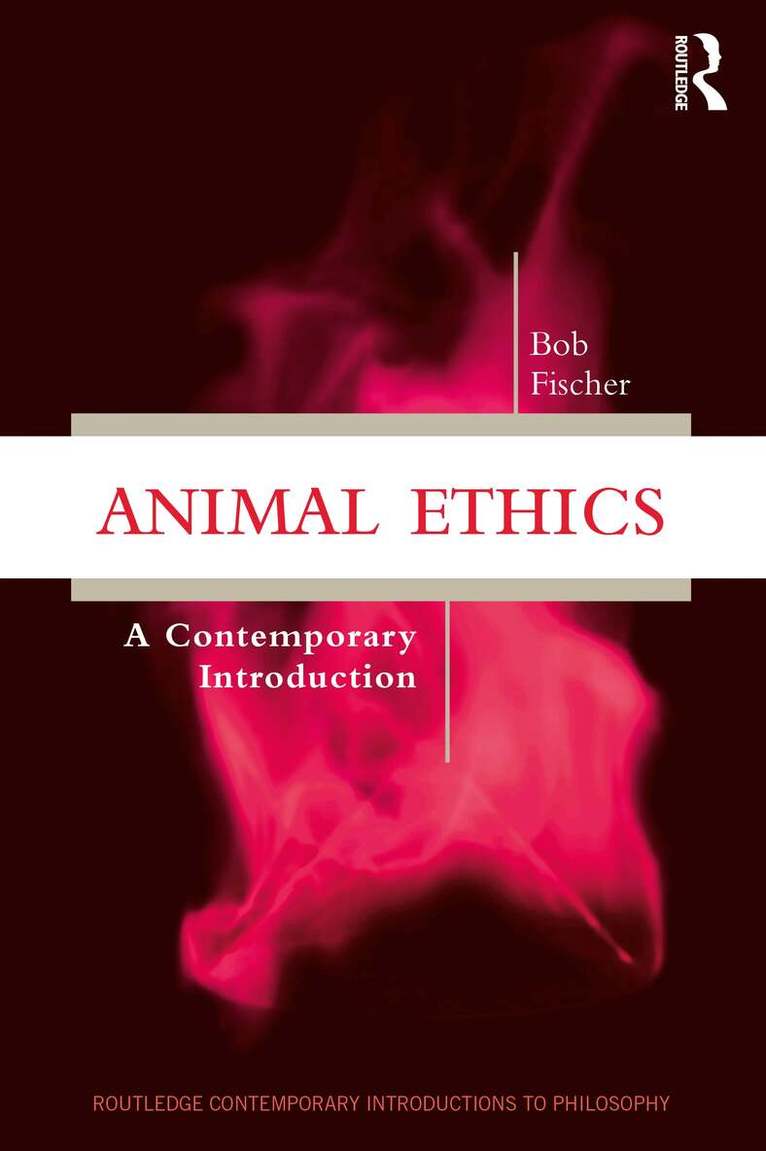
There are many introductions to the animal ethics literature. There aren’t many introductions to the practice of doing animal ethics. Bob Fischer’s Animal Ethics: A Contemporary Introduction fills that gap, offering an accessible model of how animal ethics can be done today. The book takes up classic issues, such as the ethics of eating meat and experimenting on animals, but tackles them in an empirically informed and nuanced way. It also covers a range of relatively neglected issues in animal ethics, such as the possibility of insect sentience and the ethics of dealing with pests. Finally, the book doesn’t assess every current practice using standard ethical theories, but tries to evaluate some of them using the moral frameworks endorsed by those involved. So, for instance, there is a chapter on the way that animal care and use committees try to justify some of the educational uses of animals, and the chapter on zoos considers the way that international zoological societies justify compromising animal welfare. The book wraps up with a discussion of the future of animal ethics. Each chapter opens with a helpful initial overview of the chapter and ends with a list of suggested readings to help students go further on their own.
Key Features
Covers animal ethics from an empirically informed perspective, bringing philosophy into conversation with key issues in animal science, conservation biology, economics, ethology, and legal studies, among other fields
Provides ample coverage of the most salient current topics, including, for example:
Debates about which animals are sentient
The suffering of wild animals
Research ethics
The boundaries of activism
Avoids suggesting that animal ethics is simply the practice of applying the right general theory to a problem, instead allowing readers to first work out the specific costs and benefits of making ethical decisions
Impresses upon the reader the need for her to work out for herself the best way forward with difficult ethical issues, suggesting that progress can indeed be made
Includes summaries and recommended readings at the end of each chapter
673 kr
Läs direkt efter köp
There are many introductions to the animal ethics literature. There aren’t many introductions to the practice of doing animal ethics. Bob Fischer’s Animal Ethics: A Contemporary Introduction fills that gap, offering an accessible model of how animal ethics can be done today. The book takes up classic issues, such as the ethics of eating meat and experimenting on animals, but tackles them in an empirically informed and nuanced way. It also covers a range of relatively neglected issues in animal ethics, such as the possibility of insect sentience and the ethics of dealing with pests. Finally, the book doesn’t assess every current practice using standard ethical theories, but tries to evaluate some of them using the moral frameworks endorsed by those involved. So, for instance, there is a chapter on the way that animal care and use committees try to justify some of the educational uses of animals, and the chapter on zoos considers the way that international zoological societies justify compromising animal welfare. The book wraps up with a discussion of the future of animal ethics. Each chapter opens with a helpful initial overview of the chapter and ends with a list of suggested readings to help students go further on their own.
Key Features
Covers animal ethics from an empirically informed perspective, bringing philosophy into conversation with key issues in animal science, conservation biology, economics, ethology, and legal studies, among other fields
Provides ample coverage of the most salient current topics, including, for example:
Debates about which animals are sentient
The suffering of wild animals
Research ethics
The boundaries of activism
Avoids suggesting that animal ethics is simply the practice of applying the right general theory to a problem, instead allowing readers to first work out the specific costs and benefits of making ethical decisions
Impresses upon the reader the need for her to work out for herself the best way forward with difficult ethical issues, suggesting that progress can indeed be made
Includes summaries and recommended readings at the end of each chapter
743 kr
Läs direkt efter köp
There isn’t one conversation about animal ethics. Instead, there are several important ones that are scattered across many disciplines.This volume both surveys the field of animal ethics and draws professional philosophers, graduate students, and undergraduates more deeply into the discussions that are happening outside of philosophy departments. To that end, the volume contains more nonphilosophers than philosophers, explicitly inviting scholars from other fields—such as animal science, ecology, economics, psychology, law, environmental science, and applied biology, among others—to bring their own disciplinary resources to bear on matters that affect animals.
The Routledge Handbook of Animal Ethics is composed of 44 chapters, all appearing in print here for the first time, and organized into the following six sections:
I. Thinking About Animals
II. Animal Agriculture and Hunting
III. Animal Research and Genetic Engineering
IV. Companion Animals
V. Wild Animals: Conservation, Management, and Ethics
VI. Animal Activism
The chapters are brief, and they have been written in a way that is accessible to serious undergraduate students, regardless of their field of study. The volume covers everything from animal cognition to the state of current fisheries, from genetic modification to intersection animal activism. It is a resource designed for anyone interested in the moral issues that emerge from human interactions with animals.
807 kr
Läs direkt efter köp
There isn’t one conversation about animal ethics. Instead, there are several important ones that are scattered across many disciplines.This volume both surveys the field of animal ethics and draws professional philosophers, graduate students, and undergraduates more deeply into the discussions that are happening outside of philosophy departments. To that end, the volume contains more nonphilosophers than philosophers, explicitly inviting scholars from other fields—such as animal science, ecology, economics, psychology, law, environmental science, and applied biology, among others—to bring their own disciplinary resources to bear on matters that affect animals.
The Routledge Handbook of Animal Ethics is composed of 44 chapters, all appearing in print here for the first time, and organized into the following six sections:
I. Thinking About Animals
II. Animal Agriculture and Hunting
III. Animal Research and Genetic Engineering
IV. Companion Animals
V. Wild Animals: Conservation, Management, and Ethics
VI. Animal Activism
The chapters are brief, and they have been written in a way that is accessible to serious undergraduate students, regardless of their field of study. The volume covers everything from animal cognition to the state of current fisheries, from genetic modification to intersection animal activism. It is a resource designed for anyone interested in the moral issues that emerge from human interactions with animals.
152 kr
Skickas inom 5-8 vardagar
1 192 kr
Skickas inom 10-15 vardagar
1 575 kr
Läs direkt efter köp