Clare Palmer - Böcker
Visar alla böcker från författaren Clare Palmer. Handla med fri frakt och snabb leverans.
11 produkter
11 produkter
712 kr
Skickas inom 5-8 vardagar
In this study, Clare Palmer challenges the popular conception that process thinking offers an unambiguously positive contribution to the philosophical debate on environmental ethics. She critically examines the approach to ethics which may be derived from the work of process thinkers such as A. N. Whitehead and Charles Hartshorne, pointing out questions about justice and respect for individual integrity which are raised. With these questions in mind, she compares process ethics to a variety of other forms of environmental ethics, as well as deep ecology. This comparative study reveals a number of difficulties associated with process thinking about the environment. Although some reformulations of process philosophy in the light of these difficulties are offered, the author suggests that a question mark should remain over the contribution which process philosophy can make to environmental ethics.
1 835 kr
Skickas inom 3-6 vardagar
It is widely agreed that because animals feel pain we should not make them suffer gratuitously. Some ethical theories go even further: because of the capacities that they possess, animals have the right not to be harmed or killed. These views concern what not to do to animals, but we also face questions about when we should, and should not, assist animals that are hungry or distressed. Should we feed a starving stray kitten? And if so, does this commit us, if we are to be consistent, to feeding wild animals during a hard winter? In this controversial book, Clare Palmer advances a theory that claims, with respect to assisting animals, that what is owed to one is not necessarily owed to all, even if animals share similar psychological capacities. Context, history, and relation can be critical ethical factors. If animals live independently in the wild, their fate is not any of our moral business. Yet if humans create dependent animals, or destroy their habitats, we may have a responsibility to assist them. Such arguments are familiar in human cases-we think that parents have special obligations to their children, for example, or that some groups owe reparations to others.Palmer develops such relational concerns in the context of wild animals, domesticated animals, and urban scavengers, arguing that different contexts can create different moral relationships.
519 kr
Skickas inom 3-6 vardagar
It is widely agreed that because animals feel pain we should not make them suffer gratuitously. Some ethical theories go even further: because of the capacities that they possess, animals have the right not to be harmed or killed. These views concern what not to do to animals, but we also face questions about when we should, and should not, assist animals that are hungry or distressed. Should we feed a starving stray kitten? And if so, does this commit us, if we are to be consistent, to feeding wild animals during a hard winter? In this controversial book, Clare Palmer advances a theory that claims, with respect to assisting animals, that what is owed to one is not necessarily owed to all, even if animals share similar psychological capacities. Context, history, and relation can be critical ethical factors. If animals live independently in the wild, their fate is not any of our moral business. Yet if humans create dependent animals, or destroy their habitats, we may have a responsibility to assist them. Such arguments are familiar in human cases-we think that parents have special obligations to their children, for example, or that some groups owe reparations to others.Palmer develops such relational concerns in the context of wild animals, domesticated animals, and urban scavengers, arguing that different contexts can create different moral relationships.
14 762 kr
Skickas inom 7-10 vardagar
This collection gathers classic, influential, and important papers in environmental philosophy from the late 1960s and early 1970s (when academic environmental philosophy began to coalesce) to the present. The volumes explore environmental ethics, epistemological, metaphysical, and comparative worldview questions raised by environmental concerns. The set also represents a genuinely global and international focus.The set includes a full index and new introductions by the editors.
3 373 kr
Tillfälligt slut
Do animals have moral rights? If so, which ones? How does this affect our thinking about agriculture and experimentation? If animals have moral rights, should they be protected by law? These are some of the questions addressed in this collection, which contains more than 30 papers spanning nearly 40 years of debates about animal rights. It includes work by leading advocates of animal rights both in philosophy and law, as well as contributions by those resolutely opposed to the very idea of animal rights. A substantial Introduction surveys key arguments in the area and puts the papers in context.
742 kr
Skickas inom 10-15 vardagar
Is the environment purely a resource for meeting human needs, or does it have value in itself? Should it be protected only to the extent that such protection benefits mankind? This text examines issues such as these in order to illuminate a range of environmental and ethical perspectives which are present in everyday life. The text examines 20 environmental issues and presents biographical sketches of key individuals who have explored the values and concerns underlying those issues. A concise chronology of the development of environmental ethics codes adopted as law in the USA, and by the public and private sectors. The A-Z entries address ethical devates in a wide variety of subject areas, including: agriculture, atmospheric pollution, deforestation, ecosystems, energy, future generations, Gaia, genetic engineering, hunting and fishing, marine pollution, nuclear power/weapons, population, poverty, resource depletion, species extinction, tourism, transport, waste, and the wilderness.
512 kr
Skickas inom 7-10 vardagar
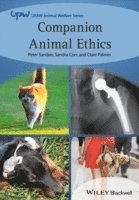
Companion Animal Ethics explores the important ethical questions and problems that arise as a result of humans keeping animals as companions. The first comprehensive book dedicated to ethical and welfare concerns surrounding companion animalsScholarly but still written in an accessible and engaging styleConsiders the idea of animal companionship and why it should matter ethicallyExplores problems associated with animals sharing human lifestyles and homes, such as obesity, behavior issues, selective breeding, over-treatment, abandonment, euthanasia and environmental impactsOffers insights into practical ways of improving ethical standards relating to animal companions
1 174 kr
Skickas inom 7-10 vardagar
Wildlife Ethics A systematic account of the ethical issues related to wildlife management and conservation Wildlife Ethics is the first systematic, book-length discussion of the ethics of wildlife conservation and management, and examines the key ethical questions and controversies. Tackling both theory and practice, the text is divided into two parts. The first describes key concepts, ethical theories, and management models relating to wildlife; the second puts these concepts, theories, and models to work, illustrating their significance through detailed case studies on controversies in wildlife management and conservation. The book explores pressing topics including human responsibilities due to climate change, tradeoffs when managing zoonotic disease risks, the ethics of the wildlife trade, culling non-native species, indigenous wildlife use, and zoo-based conservation programs. Readers are encouraged to explore different ways of valuing wild animals and their practical implications. This essential text: Explains and explores relationships between valuing biodiversity, human utility, ecosystems, species, and animal welfareDescribes established approaches to wildlife management, such as sustainable use, and emerging concepts, such as compassionate conservationDiscusses key ethical theories, including utilitarianism, ecocentrism, and animal rightsOffers a practical model of how to analyze ethical issues in wildlife management and conservationWildlife Ethics: The Ethics of Wildlife Management and Conservation is an accessible introduction to complex ethical issues, making the book an important resource for students in fields such as conservation biology, ecology, environmental science and policy, game management, public health and veterinary medicine. It will also be an invaluable tool for wildlife managers, conservationists, One Health practitioners, practicing veterinarians and animal rehabilitation staff, contemporary wildlife professionals and other stakeholders.
1 960 kr
Skickas inom 5-8 vardagar
This collection explores a wide variety of questions, both of a theoretical and a practical nature, raised by teaching environmental ethics. The essays consider general issues, such as the place of environmental advocacy in the environmental ethics classroom; using outdoor environments to prompt reflection on environmental ethics; and handling student responses, such as pessimism that may emerge from teaching environmental ethics. The essays also consider practical issues, including successfully teaching environmental ethics to students without a background in philosophy; promoting the development of interdisciplinarity; useful ways to structure syllabi; and teaching and learning techniques. This book will be particularly useful to anyone teaching environmental ethics or environmental studies, or interested in the theoretical issues that teaching environmental ethics raises.
Linking Ecology and Ethics for a Changing World
Values, Philosophy, and Action
Inbunden, Engelska, 2014
2 624 kr
Skickas inom 10-15 vardagar
To comprehensively address the complexities of current socio-ecological problems involved in global environmental change, it is indispiseble to achieve an integration of ecological understanding and ethical values. Contemporary science proposes an inclusive ecosystem concept that recognizes humans as components. Contemporary environmental ethics includes eco-social justice and the realization that as important as biodiversity is cultural diversity, inter-cultural, inter-institutional, and international collaboration requiring a novel approach known as biocultural conservation. Right action in confronting the challenges of the 21st century requires science and ethics to be seamlessly integrated. This book resulted from the 14th Cary Conference that brought together leading scholars and practitioners in ecology and environmental philosophy to discuss core terminologies, methods, questions, and practical frameworks for long-term socio-ecological research, education, and decision making.
2 624 kr
Skickas inom 10-15 vardagar
To comprehensively address the complexities of current socio-ecological problems involved in global environmental change, it is indispiseble to achieve an integration of ecological understanding and ethical values. Contemporary science proposes an inclusive ecosystem concept that recognizes humans as components. Contemporary environmental ethics includes eco-social justice and the realization that as important as biodiversity is cultural diversity, inter-cultural, inter-institutional, and international collaboration requiring a novel approach known as biocultural conservation. Right action in confronting the challenges of the 21st century requires science and ethics to be seamlessly integrated. This book resulted from the 14th Cary Conference that brought together leading scholars and practitioners in ecology and environmental philosophy to discuss core terminologies, methods, questions, and practical frameworks for long-term socio-ecological research, education, and decision making.