Anja Jauernig - Böcker
Visar alla böcker från författaren Anja Jauernig. Handla med fri frakt och snabb leverans.
3 produkter
3 produkter
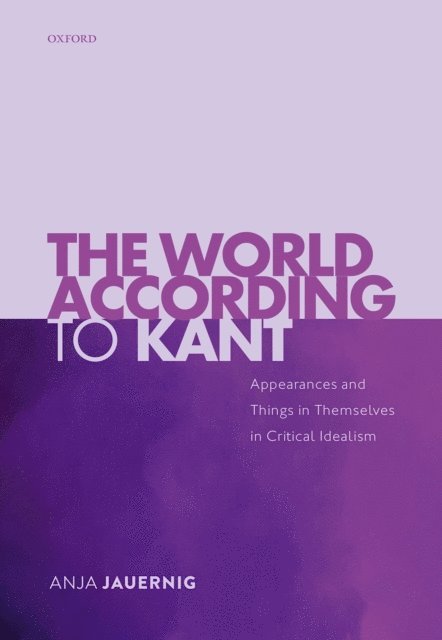
The World According to Kant
Appearances and Things in Themselves in Critical Idealism
Inbunden, Engelska, 2021
1 688 kr
Skickas inom 5-8 vardagar
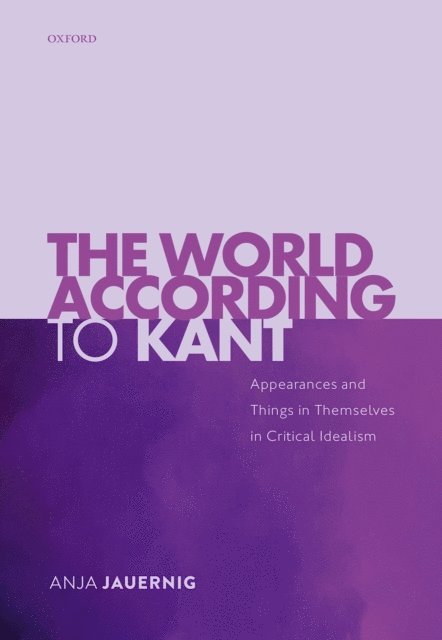
The world, according to Kant, is made up of two levels of reality: the transcendental and the empirical. The transcendental level is a mind-independent level at which things in themselves exist. The empirical level is a fully mind-dependent level at which appearances exist, which are intentional objects of experience. The distinction between appearances and things in themselves lies at the heart of Kant's critical philosophy and has been the focus of fierce debate among scholars for over two hundred years. Anja Jauernig offers this interpretation of Kant's critical idealism as an ontological position, which comprises transcendental idealism, empirical realism, and a number of other basic ontological theses, as developed in the Critique of Pure Reason and associated texts.In this interpretation Kant is a genuine idealist about empirical objects, empirical minds, and space and time. Yet in contrast to other intentional objects, appearances genuinely exist, which is due to both the special character of experience compared to other kinds of representations such as illusions or dreams, and to the grounding of appearances in things themselves. This is why Kant can also be considered a genuine realist about empirical objects, empirical minds, and space and time. This book spells out Kant's case for critical idealism thus understood, pinpoints the differences between critical idealism and ordinary idealism, and clarifies the relation between Kant's conception of things in themselves and the conception of things in themselves by other philosophers, in particular Kant's Leibniz-Wolffian predecessors.
429 kr
Skickas inom 10-15 vardagar
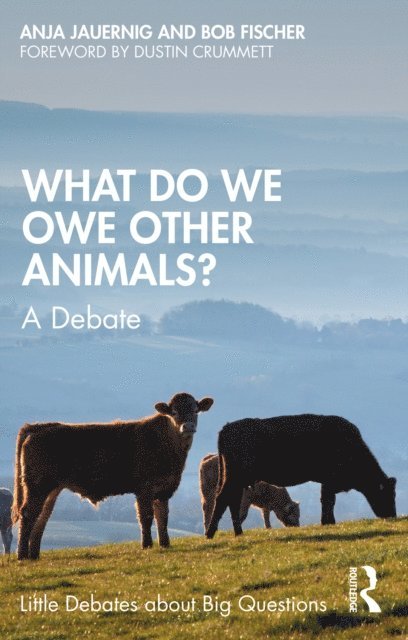
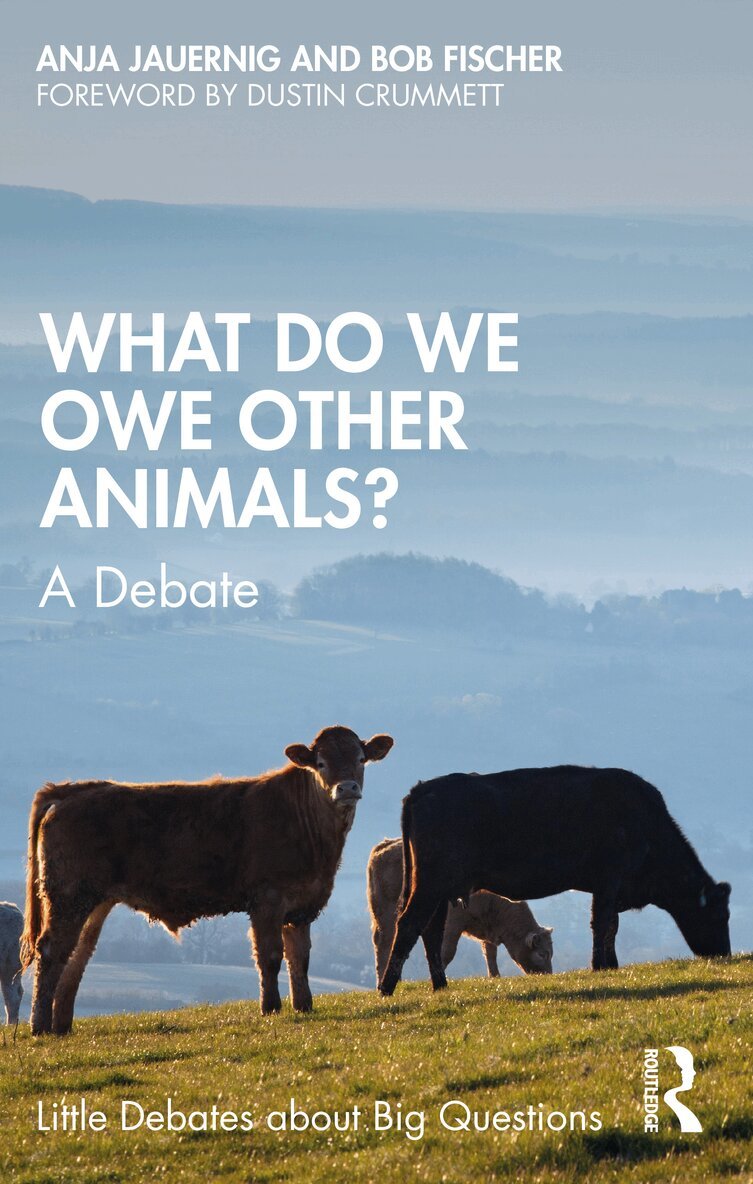
Philosophers Bob Fischer and Anja Jauernig agree that human society often treats animals in indefensible ways and that all animals morally matter; they disagree on whether humans and animals morally matter equally. In What Do We Owe Other Animals?: A Debate, Fischer and Jauernig square off over this central question in animal ethics. Jauernig defends the view that all living beings morally matter equally and are owed compassion, on account of which we are also obligated to adopt a vegan diet. Fischer denies that we have an obligation to become vegans, and argues for the position that humans morally matter more than all other living creatures.The two authors each offer a clear, well-developed opening statement, a direct response to the other’s statement, and then a response to the other’s response. Along the way, they explore central questions, like: What kind of beings matter morally? What kind of obligations do we have towards other animals? How demanding can we reasonably expect these obligations to be? Do our individual consumer choices, such as the choice to purchase factory-farmed animal products, make a difference to the wellbeing of animals? The debate is helpfully framed by introductions and conclusions to each of the major parts and by smaller introductions to each of the sub-sections. A Foreword by Dustin Crummett sets the context for the debate within a larger discussion of sentience, moral standing, reason-guided compassion, and the larger field of animal ethics.Key FeaturesShowcases the presentation and defense of two points of view on the moral worth of non-human animalsProvides frequent summaries of previously covered materialIncludes a topically-organized list of Further Readings and a Glossary of all specialized vocabulary
2 098 kr
Skickas inom 10-15 vardagar
Philosophers Bob Fischer and Anja Jauernig agree that human society often treats animals in indefensible ways and that all animals morally matter; they disagree on whether humans and animals morally matter equally. In What Do We Owe Other Animals?: A Debate, Fischer and Jauernig square off over this central question in animal ethics. Jauernig defends the view that all living beings morally matter equally and are owed compassion, on account of which we are also obligated to adopt a vegan diet. Fischer denies that we have an obligation to become vegans, and argues for the position that humans morally matter more than all other living creatures.The two authors each offer a clear, well-developed opening statement, a direct response to the other’s statement, and then a response to the other’s response. Along the way, they explore central questions, like: What kind of beings matter morally? What kind of obligations do we have towards other animals? How demanding can we reasonably expect these obligations to be? Do our individual consumer choices, such as the choice to purchase factory-farmed animal products, make a difference to the wellbeing of animals? The debate is helpfully framed by introductions and conclusions to each of the major parts and by smaller introductions to each of the sub-sections. A Foreword by Dustin Crummett sets the context for the debate within a larger discussion of sentience, moral standing, reason-guided compassion, and the larger field of animal ethics.Key FeaturesShowcases the presentation and defense of two points of view on the moral worth of non-human animalsProvides frequent summaries of previously covered materialIncludes a topically-organized list of Further Readings and a Glossary of all specialized vocabulary