David R. Montgomery - Böcker
Visar alla böcker från författaren David R. Montgomery. Handla med fri frakt och snabb leverans.
10 produkter
10 produkter
775 kr
Skickas inom 3-6 vardagar
The recent listing of Pacific salmon under the Endangered Species Act has led to substantial interest in the scientific basis for river restoration in the Pacific Northwest. Millions of dollars in state and federal funding have been programmed for habitat restoration efforts to stem the decline of salmon populations in the region. This volume addresses the need for a solid understanding of fluvial processes and aquatic ecology in order to predict both river and salmonid response to restoration projects.In the Pacific Northwest, as in most regions of the United States, we are still learning about the processes that create habitat and river structure, how those processes influence aquatic ecosystems, and how to gauge the response of river systems to both land-use changes and restoration efforts. River systems are still responding to historic changes, and degraded habitat may not be restored successfully if natural conditions are not well understood, particularly if massive changes in watershed hydrology or other processes are the root cause. These issues faced in the development of regional river restoration programs are by no means unique to the Northwest, and so the initiation of a regional program of river restoration provides an opportunity to evaluate the state of river restoration in general.The eighteen chapters of Restoration of Puget Sound Rivers--presented by the region’s experts at a symposium of the Society for Ecological Restoration--examine geological and geomorphological controls on river and stream characteristics and dynamics, biological aspects of river systems in the region, and the application of fluvial geomorphology, civil engineering, riparian ecology, and aquatic ecology in efforts to restore Puget Sound Rivers.This volume will be of interest to geomorphologists, aquatic biologists, civil engineers, planners, and all those interested in the interface of science and policy in addressing one of the fundamental environmental challenges of the twenty-first century.
329 kr
Tillfälligt slut
333 kr
Skickas inom 3-6 vardagar
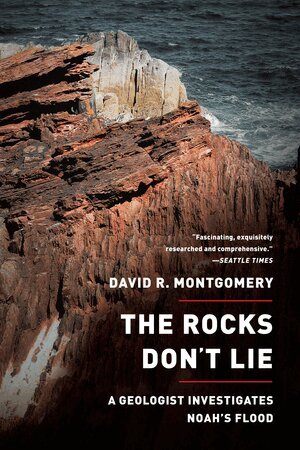
In Tibet, geologist David R.Montgomery heard a local story about a great flood that bore a strikingsimilarity to Noah’s Flood. Intrigued, Montgomery began investigating theworld’s flood stories and—drawing from historic works by theologians, naturalphilosophers, and scientists—discovered the counterintuitive role Noah’s Floodplayed in the development of both geology and creationism. Steno, thegrandfather of geology, even invoked the Flood in laying geology’s foundingprinciples based on his observations of northern Italian landscapes. Centurieslater, the founders of modern creationism based their irrational view of aglobal flood on a perceptive critique of geology. With an explorer’s eye and arefreshing approach to both faith and science, Montgomery takes readers on ajourney across landscapes and cultures. In the process we discover the illusivenature of truth, whether viewed through the lens of science or religion, andhow it changed through history and continues changing, even today.
173 kr
Skickas inom 7-10 vardagar
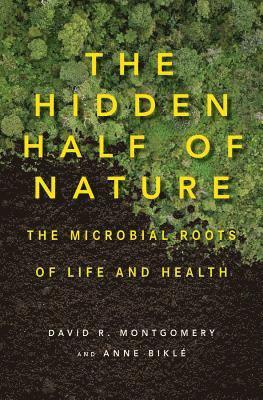
Our world is built on an invisible one we are barely beginning to understand. In The Hidden Half of Nature, geologist David R. Montgomery and biologist Anne Biklé argue that Earth’s smallest creatures—microbes—could fundamentally change how we grow food, what we eat and how we practise medicine.The Hidden Half of Nature shares Montgomery and Biklé’s efforts to turn a barren patch of ground into a flourishing garden, and Biklé’s struggle with cancer. Taking readers deep into the science and history of agriculture and immunology, they show that microbes can provide powerful solutions to the problems plaguing modern agriculture as well as our own bodies. A spellbinding story, The Hidden Half of Nature reveals how we can restore fertility to the land and defeat chronic diseases.
173 kr
Skickas inom 7-10 vardagar
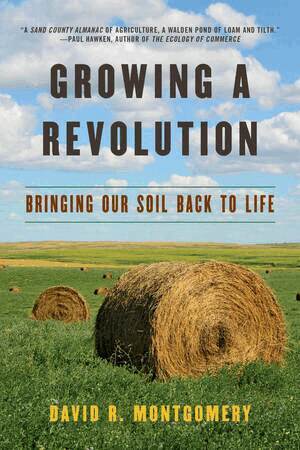
Since the dawn of agriculture, great civilizations have sunk into poverty after destroying their once fertile land. Today, few people realise how close we are to the same fate if we don’t take action. In Growing a Revolution, David R. Montgomery leads us on a journey through history and around the world to see how innovative farmers ditch the plough, mulch cover crops and adopt complex rotations to restore the soil, finding the foundation for the next agricultural revolution: a soil health revolution.Cutting through the debates about conventional versus organic agriculture, Montgomery shows how new regenerative methods heal damaged environments and improve farmers’ bottom lines. Ancient wisdom merges with modern science and Growing a Revolution shows how agriculture can help solve modern environmental woes.
204 kr
Skickas inom 7-10 vardagar
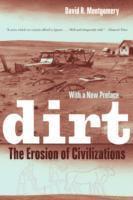
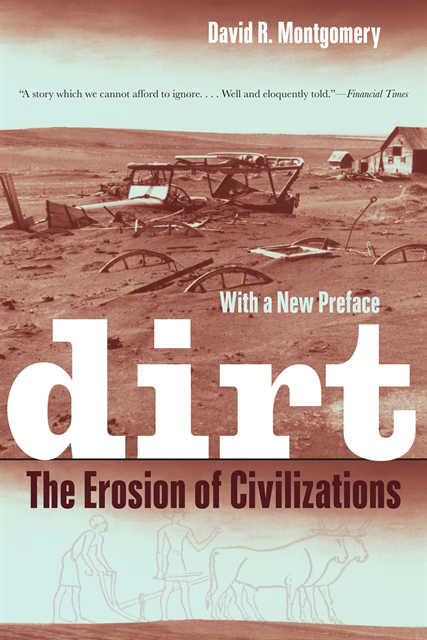
Dirt, soil, call it what you want - it's everywhere we go. It is the root of our existence, supporting our feet, our farms, and our cities. This fascinating yet disquieting book finds, however, that we are running out of dirt, and it's no laughing matter. An engaging natural and cultural history of soil that sweeps from ancient civilizations to modern times, "Dirt: The Erosion of Civilizations" explores the compelling idea that we are - and have long been - using up Earth's soil. Once bare of protective vegetation and exposed to wind and rain, cultivated soils erode bit by bit, slowly enough to be ignored in a single lifetime but fast enough over centuries to limit the lifespan of civilizations. A rich mix of history, archaeology and geology, "Dirt" traces the role of soil use and abuse in the history of Mesopotamia, Ancient Greece, the Roman Empire, China, European colonialism, Central America, and the American push westward. We see how soil has shaped us and we have shaped soil - as society after society has risen, prospered, and plowed through a natural endowment of fertile dirt. David R.Montgomery sees in the recent rise of organic and no-till farming the hope for a new agricultural revolution that might help us avoid the fate of previous civilizations.
269 kr
Skickas inom 7-10 vardagar
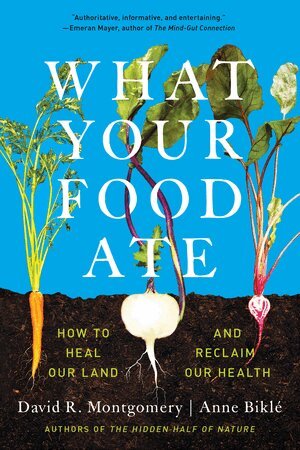
We know that our diet influences our health. But is there more to the adage “you are what you eat?” Connecting the dots from agriculture to medicine, geologist David R. Montgomery and biologist Anne Biklé argue we overlook the other half of a healthy diet: how we grow our food.Journeying from research labs to the fields of regenerative farmers, they uncover scientific and historical evidence for how farming practices—so often disruptive to microbial partnerships—influence soil health and shape the types and amounts of health-promoting minerals, fats and phytochemicals in our crops, meat and dairy—and thus ourselves. Understanding these connections has profound implications for what we eat and how we grow it, now and in the future. A capstone work from lauded authors, What Your Food Ate is a story both sobering and inspiring: what’s good for the soil is good for us, too.
1 934 kr
Skickas inom 7-10 vardagar
More than ever, students are thinking about their choices in a changing environment. Environmental Science and Sustainability gives students a scientific understanding of the environment while helping them practice decision-making. The Second Edition now integrates the role environmental justice plays in decisions, and new insights gained from the pandemic and IPCC Sixth Assessment. The Norton Illumine Ebook, InQuizitive, and What Would You Do? decision-making activities build a learning pathway of interactive reading and practice at one low price.
182 kr
Skickas inom 7-10 vardagar
We know that our diet influences our health. But is there more to the adage “you are what you eat?” Connecting the dots from agriculture to medicine, geologist David R. Montgomery and biologist Anne Biklé argue we overlook the other half of a healthy diet: how we grow our food.Journeying from research labs to the fields of regenerative farmers, they uncover scientific and historical evidence for how farming practices—so often disruptive to microbial partnerships—influence soil health and shape the types and amounts of health-promoting minerals, fats and phytochemicals in our crops, meat and dairy—and thus ourselves. Understanding these connections has profound implications for what we eat and how we grow it, now and in the future. A capstone work from lauded authors, What Your Food Ate is a story both sobering and inspiring: what’s good for the soil is good for us, too.
309 kr
Kommande
A century of conventional farming has left our planet with sick soil, accelerating the interlinked crises of food security, biodiversity loss, water pollution, and climate change. In ReGen, David R. Montgomery lays out a practical and productive vision for recovering soil health and safeguarding the future of food. The answer: soil-building regenerative farming. In exploring this much-needed turning point for agriculture, Montgomery marshals more than a decade of research, interviewing innovative farmers and seeing firsthand how they restored degraded farms around the world. ReGen breaks down common myths around conventional and organic farming, animal agriculture, and plant-based diets to frame ten policy recommendations for sustainably nourishing the world. As Montgomery shows, reducing tillage, laying off synthetic fertilizers and pesticides, growing a diversity of crops, and getting livestock back on the land can reverse centuries of soil degradation and harvest nutrient-dense food. Succinct, accessible, and urgent, ReGen points the way to a healthier, more resilient world.