• Fri frakt över 249 kr
  • •
  • Snabba leveranser
  • •
  • Billiga böcker
Kundservice

Du är på sajten för privatpersoner.

Företag, bibliotek eller offentlig verksamhet?

Du handlar på classic.bokus.com, där alla dina funktioner finns intakta.
Till classic.bokus.com
Bokus logotyp. Gå till startsidan.
  • Erbjudanden
  • Student
  • Topplistor
  • Barn & ungdom
  • Bokus Play
  • E-böcker
  • Ljudböcker
  • Pocketböcker
  • Spel och pussel

Pocketfynda! Hundratals böcker för 49 kr/st →

Sidfot

Mina sidor

    Hjälp

    • Kundservice
    • Vanliga frågor och svar
    • Frakt och leverans
    • Retur vid ångerrätt
    • Reklamera vara
    • Betalning
    • Köpvillkor
    • Allmänna villkor
    • Information om webbplatsens tillgänglighet

    Om Bokus

    • Om oss
    • Pressrum
    • För studenter
    • För företag
    • För bibliotek och offentlig verksamhet
    • För leverantörer
    • Hållbarhet

    Populärt

    • Aktuella erbjudanden
    • Presentkort
    • Studentlitteratur
    • Nya böcker
    • Topplistor
    • Signerade böcker
    • Engelska böcker

    Inspiration

    • Boktips
    • BookTok
    • Barnbokskaraktärer
    • Populära författare
    Logotyp för Bokus
    Följ oss på Facebook (extern länk)Följ oss på Instagram (extern länk)Följ oss på YouTube (extern länk)Följ oss på TikTok (extern länk)
    bokus @ CookiesAnpassa cookiesIntegritetspolicyKöpvillkor
    Till Citymail hemsida (extern länk)Till Budbee hemsida (extern länk)Till Postnord hemsida (extern länk)Till Schenker hemsida (extern länk)Till Early Bird hemsida (extern länk)Till Walleys hemsida (extern länk)
    1. Kultur
    2. Arkitektur

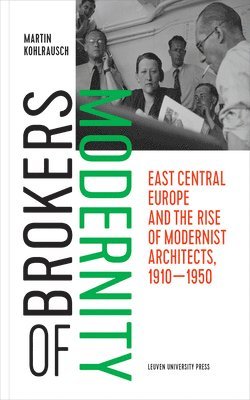
    Brokers of Modernity

    East Central Europe and the Rise of Modernist Architects, 1910-1950

    AvMartin Kohlrausch

    Häftad, Engelska, 2019

    575 kr

    Beställningsvara. Skickas inom 3-6 vardagar. Fri frakt över 249 kr.

    Fler format och utgåvor

    Inbunden

    386 kr

    Beskrivning

    The story of modernist architects in East Central Europe The first half of the twentieth century witnessed the rise of modernist architects. Brokers of Modernity reveals how East Central Europe turned into one of the pre-eminent testing grounds of the new belief system of modernism. By combining the internationalism of the CIAM organization and the modernising aspirations of the new states built after 1918, the reach of modernist architects extended far beyond their established fields. Yet, these architects paid a price when Europe’s age of extremes intensified. Mainly drawing on Polish, but also wider Central and Eastern European cases, this book delivers a pioneering study of the dynamics of modernist architects as a group, including how they became qualified, how they organized, communicated and attempted to live the modernist lifestyle themselves. In doing so, Brokers of Modernity raises questions concerning collective work in general and also invites us to examine the social role of architects today.Ebook available in Open Access.This publication is GPRC-labeled (Guaranteed Peer-Reviewed Content).

    Produktinformation

    • Utgivningsdatum:2019-03-11
    • Mått:170 x 230 x 23 mm
    • Vikt:740 g
    • Format:Häftad
    • Språk:Engelska
    • Antal sidor:400
    • Förlag:Leuven University Press
    • ISBN:9789462701724

    Utforska kategorier

    • Arkitektur inom Kultur
    • Arkitekturhistoria inom Kultur

    Mer om författaren

    Martin Kohlrausch is professor of European Political History and head of the research unit Modernity and Society at the KU Leuven.

    Recensioner i media

    Martin Kohlrausch manages sensibly more than to rewrite the history of Eastern Modernism into the frame of the wider history of modernism. It is his bias and his attachment to the personal narrative of the Syrkus couple, the anecdotes and intimate correspondence between the members of the CIAM, along with the numerous references to cinematography and the literature of the region that turn Brokers of Modernity from an immense research work into a history of Modernism rewritten from an Eastern perspective, proving that not all that is solid melts into air.Ilinca Pop, studies in History and Theory of Architecture, no. 7 (2019): 251-254. https://sita.uauim.ro/article/7-pop-martin-kohlrausch-brokers-of

    Innehållsförteckning

    • Note on Translation Abbreviations Introduction Brokers of Modernity Why Modernist Architects? Modernist Architects and Modernity Thematic and Temporal Structures 1. Modernity in Eastern Europe – East European Modernism? The European East – Sketches of a Projection screen East Central Europe – A Space of Crisis? The Post-Monarchic State and the Legacy of the War Eastern Modernity Conclusion 2. Architects as Experts of the Social: A new Type entering the European Scene New Tasks for Architects Architects and the Rise of the Modern Expert Training Modern Architects The Rise of Scientific Urbanism and the Self-Empowerment of Architects The Lure of the Machine Themes of Change – Architecture as Technology: Rationalization, Planning, and Technocracy 89 Conclusion 3. Organising New Architectural Goals Organising Architects in a New State Architecture in a New Key – the CIAM Self-empowerment – the CIAM and its Polish Group CIAM-Universalism or Eastern Fast-track? The CIAM-Ost Realizers – the WSM as Interface Conclusion 4. Communicating Social Change through Architecture The Spatial Structure of the New Discourse on Architecture The Abstract Heritage of the First World War and the Logic of the Media Architectural Journals and Books as Architectural Programme Travelling, Gathering, Thinking Alike: Architects as Modern Men Communicating Problems and Solutions via Language and Exhibitions Conclusion Gallery with Plates5. Materialising the International Agenda: Warszawa Funkcjonalna The CIAM IV Moment – Politics Coming in Realising the Novel: The Functionalist Laboratory of Zlín The Idea of the Functional City Warszawa Funkcjonalna Conclusion 6. Under Pressure: Modernist Architects and the Rise of Political Extremes Questioned Loyalties and Strained International Exchange Continuity and Rupture – the Onslaught on Warsaw Personal Toll and Collaboration Windows of Opportunity: Warsaw as a Post-catastrophic City Old Bonds and new Attention: Warsaw as a Realized Utopia? 2 Conclusion Epilogue Acknowledgements Notes Bibliography Illustration Credits Index