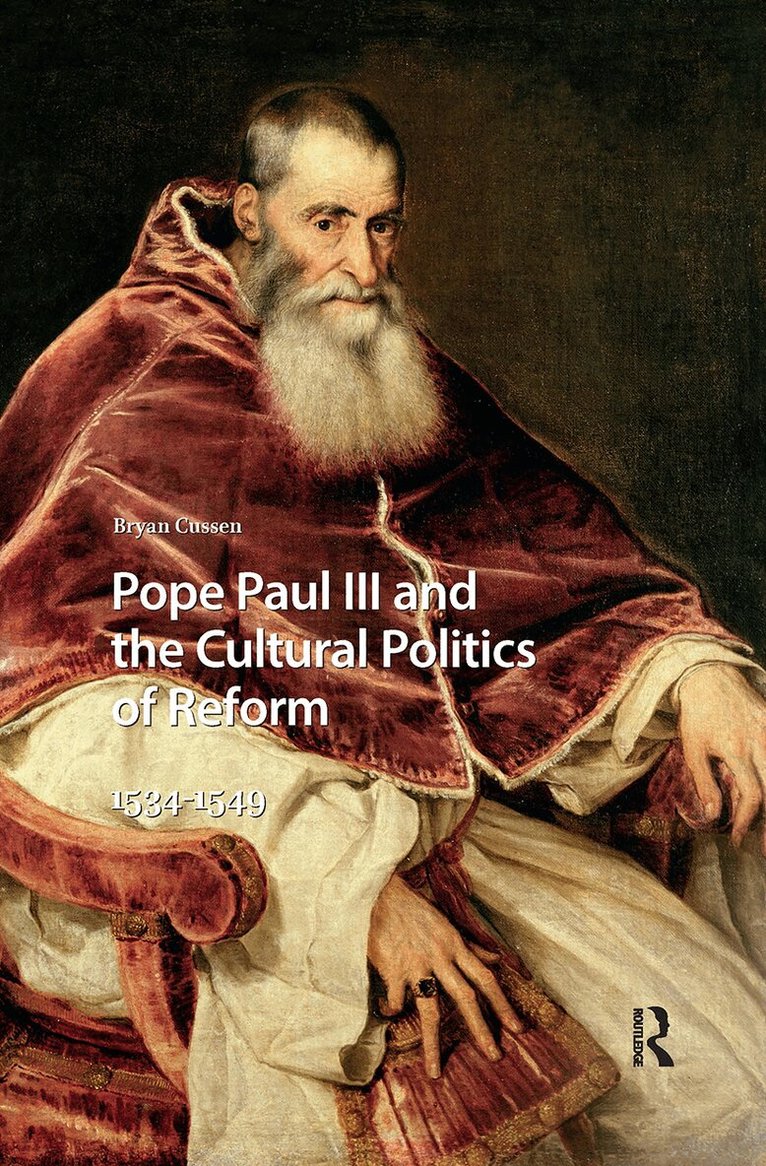
When Paul III was elected in 1534, hopes arose across Christendom that this pope would at last reform and reunite the Church. During his fifteen-year reign, though, Paul's engagement with reform was complex and contentious. This study makes a provocative case that Paul called the Council of Trent to contain reform rather than promote it.
Bryan Cussen is a Research Associate in the Centre for Medieval and Renaissance Studies at Monash University.
Recensioner i media
"Cussen’s tome provides a much-needed biography of Paul III by examining the extant sources related to his life and pontificate. [...] Cussen has done the field a service by providing an assessable account of Paul III’s pontificate."- John M. Hunt, Renaissance and Reformation, 43.4 (Fall 2021) "[...] building on familiar terrain, Cussen has given us a stimulating work that seeks to reframe how we interpret Paul III and church reform at the end of the Renaissance. It should stimulate much discussion and debate among scholars and students of the Renaissance papacy and Catholic Reform." - Paul Flemer, Renaissance Quarterly, Vol. 75, Iss. 3
Innehållsförteckning
Acknowledgements List of Abbreviations Note on Transcriptions Note on Money Introduction Chapter 1 Humanism and Honour in the Making of Alessandro Farnese Chapter 2 Pathways to Honour Chapter 3 Tradition and Reform Chapter 4 The Consilium and Reform Constrained Chapter 5 Pax et Concordia - Politics and Reform Chapter 6 The Ottoman Threat Chapter 7 The Council of Trent Chapter 8 Reform in the Twilight Years Index