Inbunden, Engelska, 2026
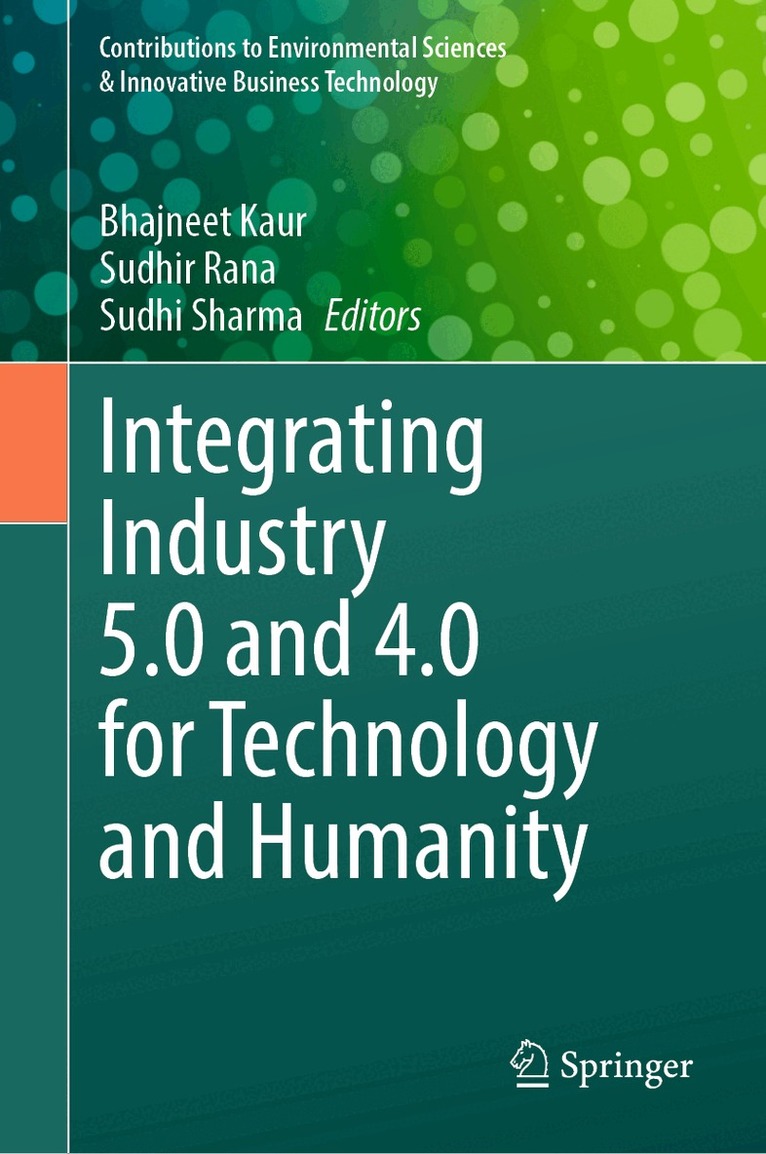
Integrating Industry 5.0 and 4.0 for Technology and Humanity
Av Bhajneet Kaur, Sudhir Rana, Sudhi Sharma
1530 kr
Beställningsvara. Skickas inom 10-15 vardagar. Fri frakt över 249 kr.
Beskrivning
This book facilitates the innovation and ecosystems to encourage partnerships between companies, academia, and governments, which foster a collaborative approach to integrating Industry 5.0 principles into Industry 4.0 frameworks. The volume also focuses on human-technology synergy to make machines more autonomous, intelligent, and responsive to the needs, preferences, and well-being of human workers.The integration of Industry 5.0 into Industry 4.0 is based on three leading characteristics of Industry 5.0: human-centricity, sustainability, and resiliency. A human-centered industry prioritizes the needs and interests of workers in the production process. Instead of focusing on what workers can do with new technology, Industry 5.0 emphasizes how technology can serve and benefit workers. While robots excel in precision and tireless work, they lack the ability to think critically and creatively as their human counterparts have. A sustainable industry enables businesses to minimize their environmental footprint by adopting circular economy practices. Other sustainability initiatives include reducing energy use, cutting greenhouse gas emissions, minimizing waste, and preventing the depletion and degradation of natural resources. A resilient industry features industrial production that is highly robust and resistant to disruptions, capable of supporting critical infrastructure during crises. The COVID-19 pandemic exposed weaknesses in industrial systems and underscored the need for greater agility and resilience in supply chains and other manufacturing processes. Industry 5.0 acknowledges the potential of industry to fulfill societal objectives beyond just employment and economic growth. It envisions industry as a resilient source of prosperity that respects the environmental limits of our planet, while prioritizing the well-being of workers within the production process.
Produktinformation
- Utgivningsdatum: 2026-09-20
- Mått: 155 x 235 x 19 mm
- Vikt: 472 g
- Format: Inbunden
- Språk: Engelska
- Serie: Contributions to Environmental Sciences & Innovative Business Technology
- Antal sidor: 214
- Förlag: Springer Verlag, Singapore
- ISBN: 9789819217793
Utforska kategorier
Betyg & recensioner
0 recensioner
Inga recensioner tillgängliga.