• Fri frakt över 249 kr
  • •
  • Snabba leveranser
  • •
  • Billiga böcker
Kundservice

Du är på sajten för privatpersoner.

Företag, bibliotek eller offentlig verksamhet?

Du handlar på classic.bokus.com, där alla dina funktioner finns intakta.
Till classic.bokus.com
Bokus logotyp. Gå till startsidan.
  • Erbjudanden
  • Nyheter
  • Student
  • Topplistor
  • Barn & ungdom
  • Bokus Play
  • E-böcker
  • Pocketböcker
  • Spel & pussel

10% rabatt på allt med kod NYSTART10 →

Sidfot

Mina sidor

    Hjälp

    • Kundservice
    • Vanliga frågor och svar
    • Frakt och leverans
    • Retur vid ångerrätt
    • Reklamera vara
    • Betalning
    • Köpvillkor
    • Allmänna villkor
    • Information om webbplatsens tillgänglighet

    Om Bokus

    • Om oss
    • Pressrum
    • För studenter
    • För företag
    • För bibliotek och offentlig verksamhet
    • För leverantörer
    • Hållbarhet

    Populärt

    • Aktuella erbjudanden
    • Presentkort
    • Studentlitteratur
    • Nya böcker
    • Topplistor
    • Signerade böcker
    • Engelska böcker

    Inspiration

    • Boktips
    • BookTok
    • Populära bokserier
    • Barnbokskaraktärer
    • Populära författare
    Logotyp för Bokus
    Följ oss på Facebook (extern länk)Följ oss på Instagram (extern länk)Följ oss på YouTube (extern länk)Följ oss på TikTok (extern länk)
    bokus @ CookiesAnpassa cookiesIntegritetspolicyKöpvillkor
    Till Citymail hemsida (extern länk)Till Budbee hemsida (extern länk)Till Postnord hemsida (extern länk)Till Schenker hemsida (extern länk)Till Early Bird hemsida (extern länk)Till Walleys hemsida (extern länk)
    1. Naturvetenskap och teknik
    2. Matematik och naturvetenskap
    3. Biologi
    4. Biovetenskap

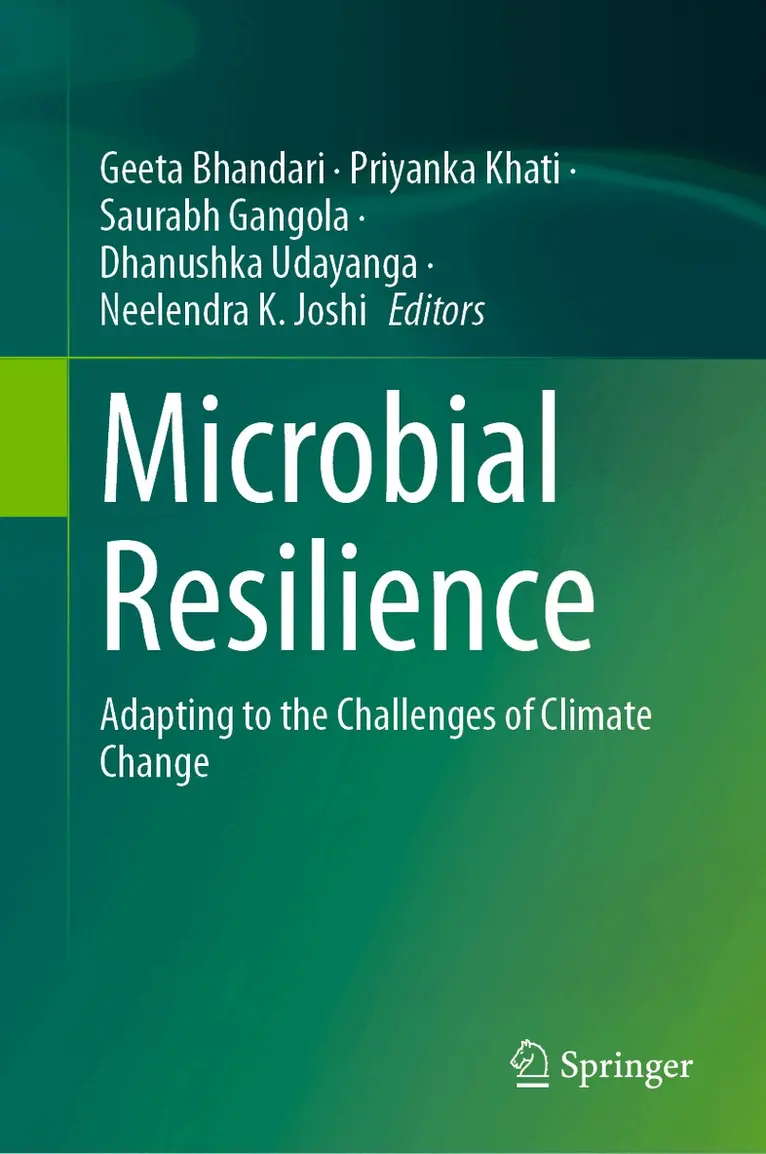
    Microbial Resilience

    Adapting to the Challenges of Climate Change

    AvGeeta Bhandari,Priyanka Khati

    Inbunden, Engelska, 2026

    2 162 kr

    Beställningsvara. Skickas inom 10-15 vardagar. Fri frakt över 249 kr.

    Beskrivning

    The book is a comprehensive resource that explores the critical relationship between microorganisms and a changing climate. It examines how shifting environmental conditions—such as rising temperatures, altered precipitation, and ocean acidification—impact microbial communities and their essential roles in ecosystems. The book also highlights the remarkable ways microbes adapt to these changes, from genetic and physiological shifts to ecological adjustments.Through chapters covering diverse topics like microbial contributions to greenhouse gases, soil carbon sequestration, responses to extreme weather, and bioremediation strategies, this book offers both theoretical insights and practical solutions. It is an invaluable resource for environmental scientists, microbiologists, climate researchers, advanced students, and policymakers seeking to understand and address the role of microbes in the global climate crisis.

    Produktinformation

    • Utgivningsdatum:2026-05-29
    • Mått:155 x 235 x 27 mm
    • Vikt:756 g
    • Format:Inbunden
    • Språk:Engelska
    • Antal sidor:379
    • Förlag:Springer Verlag, Singapore
    • ISBN:9789819588824

    Utforska kategorier

    • Biovetenskap inom Naturvetenskap och teknik
    • Biologi inom Naturvetenskap och teknik
    • Miljövetenskap och miljöpolitik inom Naturvetenskap och teknik

    Mer om författaren

    1. Dr. Geeta BhandariDr. Geeta Bhandari is currently an Assistant Professor at Swami Rama Himalayan University, Dehradun, Uttarakhand, India. She has over a decade of experience in teaching and research, focusing on innovative solutions to environmental challenges.2. Dr. Priyanka KhatiDr. Priyanka Khati is a Scientist at the Indian Council of Agricultural Research-Vivekananda Parvatiya Krishi Anusandhan Sansthan (ICAR-VPKAS), Almora, Uttarakhand, India. She specializes in agricultural microbiology with a focus on bioinoculants, nanotechnology applications, and stress-alleviation mechanisms in crops.3. Dr. Saurabh GangolaDr. Saurabh Gangola is an Assistant Professor in the Department of Microbiology at Graphic Era University, Dehradun, India. With more than six years of experience, his research focuses on environmental microbiology, specifically biodegradation and bioremediation of pollutants such as pesticides, dyes, and heavy metals.4. Professor Dhanushka UdayangaProfessor Dhanushka Udayanga is a faculty member at the Department of Applied Sciences, Sri Lanka Institute of Information Technology (SLIIT), Malabe, Sri Lanka specializing in biotechnology and mycology. His research delves into molecular systematics and fungal applications in agriculture and environmental science.5. Dr. Neelendra K. JoshiDr. Neelendra K. Joshi is an Associate Professor at the University of Arkansas, Fayetteville, USA, where he focuses on pesticide toxicology, biodiversity, and conservation of beneficial species.

    Innehållsförteckning

    • Chapter 1. The Intersection of Microbiology and Climate Change.- Chapter 2. Microbial Contributions to Greenhouse Gas Emissions.- Chapter 3. Impact of Temperature Changes on Microbial Metabolism.- Chapter 4. Adaptations to the Extremes: Survival Mechanisms of Microbes in Heat and Cold Environments.- Chapter 5. Microbial Resilience — Adapting to the Challenges of Climate Change.- Chapter 6. Effect of Soil moisture on microbial communities.- Chapter 7. Microbial Response to Shift in Nutrient Availability.- Chapter 8.  Symbiotic Relationships: Microbes and Plants in a Changing Climate.- Chapter 9. Microbial Ecology of Extreme Weather Events.- Chapter 10. Microbial diversity of warming World.- Chapter 11. Pathogenic Microbes and Climate Change: Emerging Risks.- Chapter 12. Microbial Adaptation Strategies in relation to Climate Change: Genetic and Phenotypic Changes.- Chapter 13. Bioremediation and Climate Change: Microbial Strategies for Environmental Clean-up.- Chapter 14. Microbial Resource Management for Climate Change Mitigation.- Chapter 15. Leveraging Cyanobacteria for Alleviating Climate Change induced Abiotic Stress in crop plants.- Chapter 16. Nitrogen cycle dynamics under changing climatic conditions: The impact of microbes.