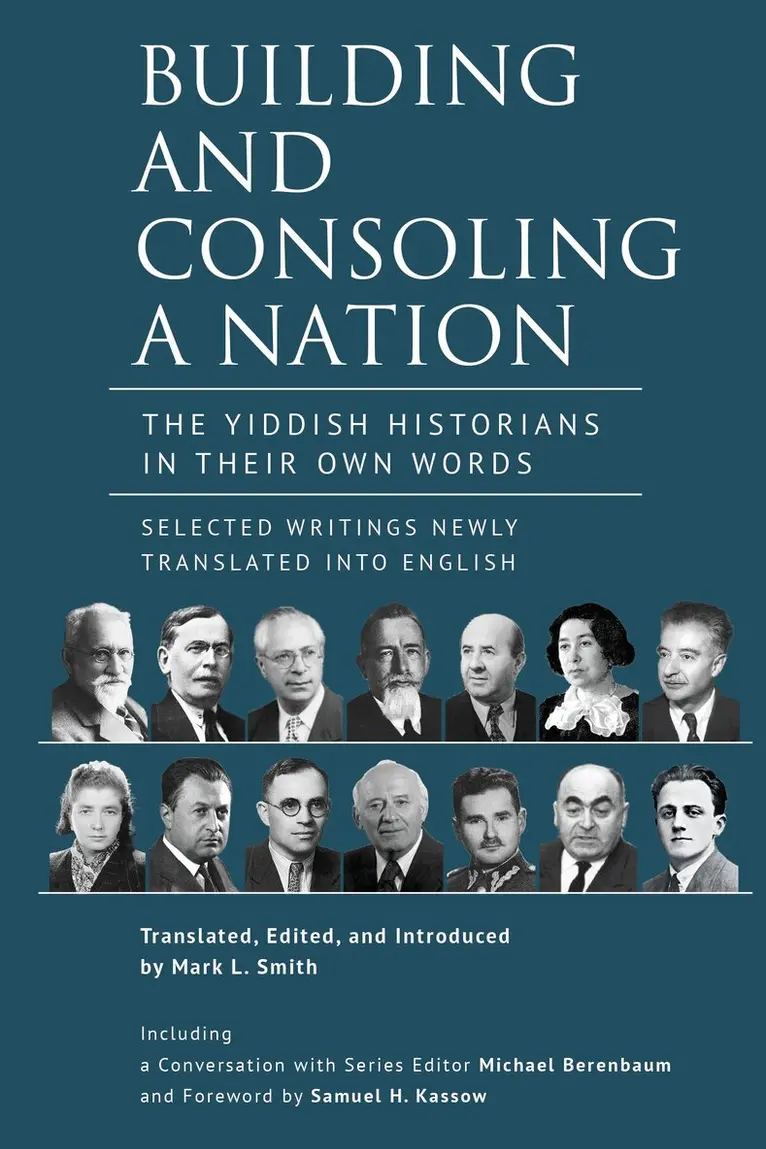
Building and Consoling a Nation
The Yiddish Historians in Their Own Words. Selected Writings Newly Translated into English
927 kr
Skickas . Fri frakt över 249 kr.
Beskrivning
Produktinformation
- Utgivningsdatum:2026-02-05
- Mått:155 x 233 x 30 mm
- Vikt:820 g
- Format:Inbunden
- Språk:Engelska
- Antal sidor:436
- Förlag:Academic Studies Press
- Medarbetare:SamuelH. Kassow
- ISBN:9798897831289
- Översättare:Mark L Smith
Utforska kategorier
Mer om författaren
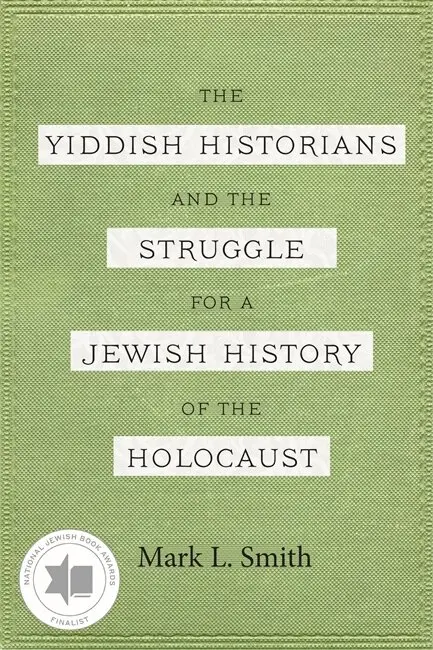
Mark L. Smith is the author of The Yiddish Historians and the Struggle for a Jewish History of the Holocaust (2019, National Jewish Book Award finalist). He is Resident Scholar at American Jewish University and has taught Jewish history at UCLA, his alma mater. He writes and lectures on Eastern European Jewish history, with emphasis on Holocaust historiography and Yiddish scholarly writing.
Recensioner i media
“Historian Mark L. Smith has done us a tremendous service by introducing English-language readers to a “lost continent” of scholarship about eastern European Jewry by eastern European Jews themselves and written in their mother tongue. Not only does the book definitively lay to rest myths about Yiddish as a language only for the uneducated. His expert translations of works by seminal historians, linguists, and literary scholars are accompanied by indispensable introductory essays. Together, they convey the fusion of high caliber scholarship and intimacy with its audience that is the hallmark of the best in Yiddish scholarship.” —Kalman Weiser, York University, Toronto"This volume's selections provide a roadmap for how to think through today’s political and cultural challenges by rooting them in past experience. Though its focus is on 'the Yiddish historians,' its voices ring prophetic, showing how intellectuals imagined Yiddish futurities. Smith's careful archeology of ideas demonstrates that without Yiddish we miss a great deal."—Justin Cammy, Professor of Jewish Studies and Comparative Literature, Smith College"Building and Consoling a Nation is a landmark anthology that highlights one of the most vibrant but neglected chapters of Jewish intellectual history: the modern Yiddish historians. Bringing together forty-nine newly translated works by thirty-six writers, ranging from prewar nation-builders to survivor-scholars of the Holocaust, this volume reveals an extraordinary scholarly tradition that sought to write the Jewish past in the everyday language of the Jewish people.With clarity, elegance, and deep contextual knowledge, Mark L. Smith recovers a body of historical writing that shaped how Jews understood themselves in the twentieth century. These historians documented autonomous communal structures, the texture of Jewish daily life, interethnic relations, literary creativity, and educational ideals across centuries. Their authors include canonical figures such as Dubnow, Mahler, and Ringelblum alongside lesser-known historians whose work, untranslated until now, offers fresh insight into understudied aspects of Jewish history. Roughly half the selections concern the Holocaust and show Yiddish historians grappling with catastrophe through the same methods they brought to earlier periods, insisting on the continuity of Jewish social, cultural, and spiritual life even amid destruction. Collectively, these writings illuminate the distinctive priorities of Yiddish scholarship: an insistence on cultural vitality, communal agency, and the lived experience of ordinary Jews.Building and Consoling a Nation will play a vital role in restoring an entire historiographical tradition to the writing of Jewish history and will serve as an indispensable resource for scholars of Jewish history, Yiddish literature, and Holocaust studies."—Avinoam J. Patt, Professor of Holocaust Studies, New York University
Innehållsförteckning
- Note on Languages and Usage ForewordSamuel H. KassowIntroduction to the Yiddish Historians and Their WorkMark L. SmithPart OneJewish Autonomy1 Autonomy in Jewish Historyby Simon Dubnow, 1934 2 The Jewish Parliament in Lithuania and Belorussia in Its Legislative Activity, 1623–1721 by Israel Sosis, 19283 A Budget of the Council of the Four Lands in 1726by Raphael Mahler, 1940 4 The Financial Collapse of the Central and Provincial Autonomy of the Jews in Old-Time Poland, 1650–1764by Ignacy Schiper, 19325 The Central Representative Bodies of the Jews in the Grand Duchy of Warsaw, 1807–1816by Artur Eisenbach, 19386 The Warsaw Kehila under the Leadership of Dr. Ludwik Natanson, 1871–1896by Jacob Shatzky, 19537 Jewish “Autonomy”: The Nazi-Imposed Jewish Councilsby Isaiah Trunk, 1949Part TwoOn the Jewish Street8 Yiddish Theater in the German and Slavic Ghettos during the Sixteenth Centuryby Ignacy Schiper, 19279 The Structure of the Jewish Guilds in Poland, Lithuania, and Belarus in the Seventeenth and Eighteenth Centuries by Mark Wischnitzer, 192810 Two Communities in One City: The Jews of Lemberg from Medieval to Modern Timesby Meir Balaban, 193011 The Young Historians Circle in Warsaw, 1923–1939 by Raphael Mahler, 196712 Varied Were the Ways (of Jewish Resistance against the Nazis)by Mark Dworzecki, 194613 The Wooden Synagogues in Poland before the Holocaust by Rachel Wischnitzer, 196214 The Soup Kitchen and the Yiddish Theater in the Warsaw Ghetto by Rachel Auerbach, 1977Part ThreeIn the Non-Jewish World15 Jewish-Christian Relations in Płock in the Sixteenth and Seventeenth Centuries by Isaiah Trunk, 193816 What Types of Taxes Did the Jews of Lublin Pay in the Former Independent Poland?by Bela Mandelsberg, 193017 Jewish Home Industry in Old-Time Poland by Emanuel Ringelblum, 193518 The “New Settlements” in 1808: How Belorussian Jews Responded to the First Order to Settle in Agricultural Colonies in Russian Ukraine by Simon Dubnow, 193219 Jewish Cantonists—Young Boys Recruited for Military Service in Tsarist Russia, 1828–1956by Saul Ginsburg, 193320 Antisemitism and Pogroms in Ukraine, 1917–1918: On the History of Ukrainian-Jewish Relations by Elias Tcherikower, 192321 On the Causes of Jewish Defenselessness against the Nazis and the Strength of Jewish Resistance by Isaiah Trunk, 1953Part FourYiddish Literature22 The Brantshpigl (Burning Mirror), 1596—The Encyclopedia of the Jewish Woman in the Seventeenth Century by Maks Erik, 192623 On the Sources of the Mayse-bukh (Book of Stories), 1602by Israel Zinberg, 192624 Three Hundred Years of the Tsene-rene (Bible Stories for Women), 1616by Jacob Shatzky, 192825 The Tales of Rabbi Nachman of Bratslav (1815): Hasidism and Yiddish Literary Creativity by Shmuel Niger, 1932 26 On the History of Yiddish Literature in the Nineteenth Century: Haskalah Period by Meir Wiener, 193927 Four Unknown Yiddish Plays from the Mid-Nineteenth Century by Max Weinreich, 193028 Yiddish Literature under Nazi Occupation by Nachman Blumental, 1946Part FivePress, Post, Communications29 Life and Language as Reflected by Yiddish Testimony in the Responsa Literature from the Beginning of the Fifteenth to the End of the Seventeenth Century by Zalman Rubashov, 1929 30 The Jewish Postal Service in Tsarist Russia during the Early Nineteenth Century by Saul Ginsburg, 193231 The First Yiddish Newspaper in the Russian Empire, Kol mevaser, and Its Time, 1862–72by Israel Zinberg, 191332 The Attitude toward Yiddish of the Russian Authorities in Vilna during the 1860s: On the History of Yiddish Bookselling in Vilna by Pinchas Kon, 192933. Ghettos and Concentration Camps Seeking Contacts: A Chapter of Jewish Resistance by Mark Dworzecki, 1949 34 Unknown Letters by Zelig Kalmanovich in the Vilna Ghetto to Isaac Giterman in the Warsaw Ghetto by Joseph Kermish, 198335 Inscriptions on Walls, Sacred Texts, and Other Books during the Holocaust by Nachman Blumental, 1966Part SixEducation36 Joseph Perl as a Pedagogical Leader and His School in Tarnopol 125 Years after Its Founding by Philip Friedman, 194037 Yehuda-Leib Gordon as a Fighter for the Haskalah in Jewish Schools in Lithuania in the Mid-Nineteenth Century by Nadzieja Jaffe, 1938 38 The Rise of Yiddish Secular Schools in Poland during World War Iby Chaim-Solomon Kazdan, 1947 39 Jewish Schools in the Vilna Ghetto as Spiritual Resistance by Mark Dworzecki, 194840 The Jewish Vocational and Higher School System in the Warsaw Ghetto, 1940–42by Esther Goldhar-Mark, 194941 The School System and Education for Holocaust Survivors in the Displaced Persons Camps in Germany by Philip Friedman, 1948 42 Four Years of the Chair for Holocaust Studies, Bar-Ilan University, Israel by Mark Dworzecki, 1963Part SevenBook Reviews43 The History of the Jews in Russia (1914) Reviewed by Zelig Kalmanovich44 Saul Ginsburg. Historical Works (1937)Reviewed by Moyshe Shalit 45 Isaiah Trunk. The History of the Jews in Płock (1939) Reviewed by A. Valdman 46 Jacob Shatzky. In the Shadow of the Past (1947) Reviewed by Samuel Rollansky47 Philip Friedman. Auschwitz (1950)Reviewed by Julien Hirshaut48 Mark Dworzecki. White Nights and Black Days: Jewish Camps in Estonia (1970)Reviewed by Israel Kaplan 49 Nachman Blumental. Words and Sayings from the Holocaust Period (1981)Reviewed by David Shtokfish
Du kanske också är intresserad av
Yiddish Historians and the Struggle for a Jewish History of the Holocaust
Mark L. Smith
999 kr
- Nyhet
Hjärnans akilleshälar : hur din hjärna lurar dig, och vad du kan göra åt det
Anders Hansen
289 kr
- Signerad!
- -30%
- Signerad!
- Nyhet
- -22%
- -30%