
Häftad, Engelska, 2023
254 kr
Skickas inom 5-8 vardagar
254 kr
Skickas inom 5-8 vardagar
169 kr
Skickas inom 3-6 vardagar
148 kr
Skickas inom 5-8 vardagar
188 kr
Skickas inom 5-8 vardagar
183 kr
Skickas inom 3-6 vardagar
207 kr
Skickas inom 5-8 vardagar
159 kr
Skickas inom 3-6 vardagar
356 kr
Skickas inom 5-8 vardagar
182 kr
Skickas inom 5-8 vardagar
200 kr
Skickas inom 5-8 vardagar
356 kr
Skickas inom 5-8 vardagar
296 kr
Skickas inom 5-8 vardagar
11 kr
Läs direkt efter köp
154 kr
Läs direkt efter köp
216 kr
Skickas inom 5-8 vardagar
334 kr
Skickas inom 5-8 vardagar
229 kr
Läs direkt efter köp
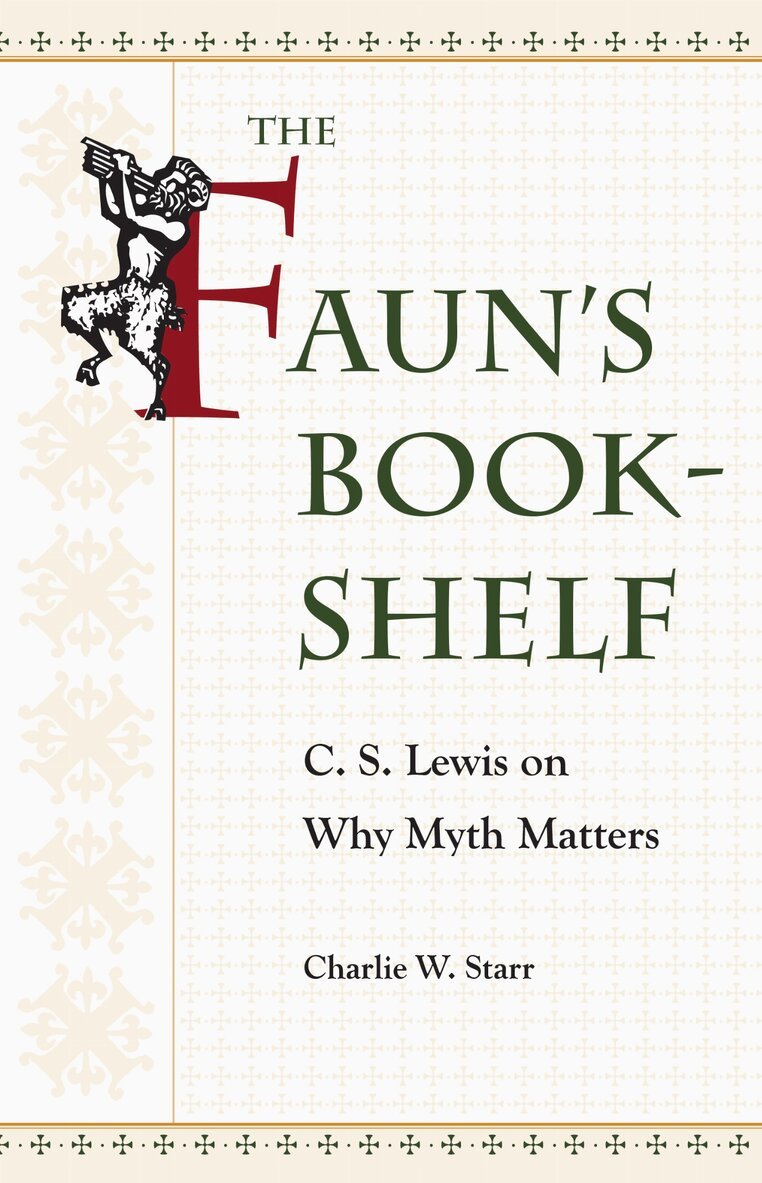
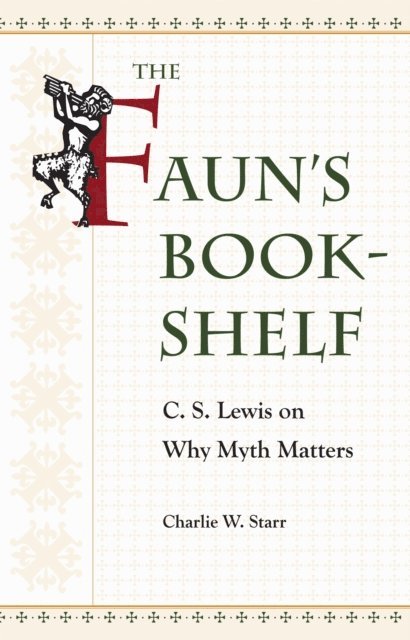
While visiting with Mr. Tumnus in The Lion, the Witch and the Wardrobe, Lucy Pevensie notices a bookshelf filled with such titles as Nymphs and Their Ways and Is Man a Myth? Be- ginning with these imaginary texts, Charlie W. Starr offers a comprehensive study of C. S. Lewis’s theory of myth, including his views on Greek and Norse mythology, the origins of myth, and the implications of myth on thought, art, gender, theology, and literary and linguistic theory. For Lewis, myth represents an ancient mode of thought focused in the imagination—a mode that became the key that ultimately brought Lewis to his belief in Jesus Christ as the myth become fact.
Beginning with a fThe Faun’s Bookshelf goes on to discuss the many books Lewis imagined throughout his writings—books whose titles he made up but never wrote. It also presents the sylvan myths central to the first two book titles in Mr. Tumnus’s library, including explorations of the relation- ship between myth and reality, the spiritual significance of natural conservation, and the spiritual and incarnational qualities of gender.
Starr then turns to the definition of myth, the literary qualities of myth, the mythic nature inherent in divine glory, humanity’s destiny to embrace (or reject) that glory, and a deeper exploration of the epistemological ramifications of myth in relation to meaning, imagination, reason, and truth.
224 kr
Läs direkt efter köp
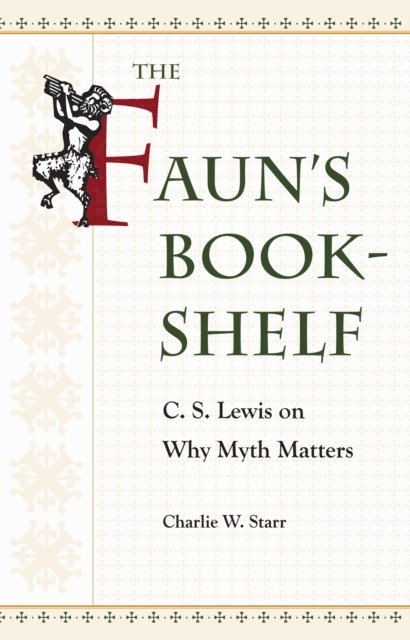
While visiting with Mr. Tumnus in The Lion, the Witch and the Wardrobe, Lucy Pevensie notices a bookshelf filled with such titles as Nymphs and Their Ways and Is Man a Myth? Be- ginning with these imaginary texts, Charlie W. Starr offers a comprehensive study of C. S. Lewis’s theory of myth, including his views on Greek and Norse mythology, the origins of myth, and the implications of myth on thought, art, gender, theology, and literary and linguistic theory. For Lewis, myth represents an ancient mode of thought focused in the imagination—a mode that became the key that ultimately brought Lewis to his belief in Jesus Christ as the myth become fact.
Beginning with a fThe Faun’s Bookshelf goes on to discuss the many books Lewis imagined throughout his writings—books whose titles he made up but never wrote. It also presents the sylvan myths central to the first two book titles in Mr. Tumnus’s library, including explorations of the relation- ship between myth and reality, the spiritual significance of natural conservation, and the spiritual and incarnational qualities of gender.
Starr then turns to the definition of myth, the literary qualities of myth, the mythic nature inherent in divine glory, humanity’s destiny to embrace (or reject) that glory, and a deeper exploration of the epistemological ramifications of myth in relation to meaning, imagination, reason, and truth.
228 kr
Skickas inom 3-6 vardagar
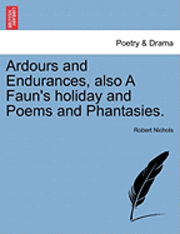
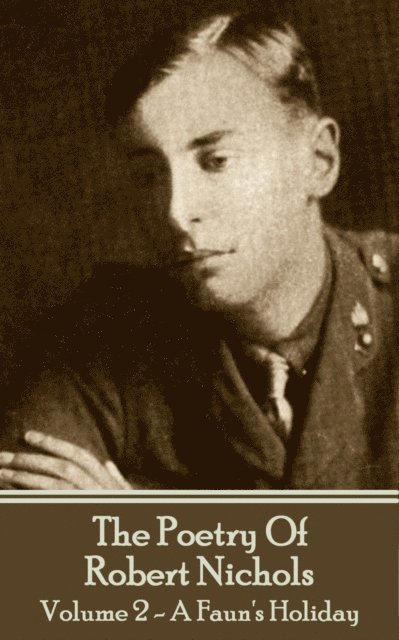
Robert Malise Bowyer Nichols was born in September 1893. Robert was educated at Winchester College and then Trinity College, Oxford. In September 1914 with the shadow of the Great War covering Europe he enlisted, despite poor health, with the Field Artillery. He trained for a year and reached the front line just before the beginning of the Battle of Loos in September 1915. He was also to serve at the Battle of the Somme as an artillery officer in 1916, after suffering from shell shock he was invalided back to England. Taking up service with The British Ministry of Labour and the Ministry of Information he began to write more avidly. As one of the War’s surviving poets he was able to also give his work a depth and reflection that many of his other fallen contemporaries were not able too. He also began to give readings of his poems as well as tours in America. Robert also wrote four plays and two novels as well as several further volumes of poetry. Now rightly regarded as one of the pre-eminent War Poets his poetry is richly rewarding, filled with vivid descriptions and emotions of the human suffering during war. It’s end brought him together with Nancy Cunard who was the inspiration for his next book Aurelia (1920). He was in Tokyo from 1921 to 1924 teaching English Literature and from 1924 to 1926 Hollywood beckoned. In 1928 his play, Wings Over Europe, foretelling the splitting of the atom was a success in New York. In 1933-4 he was in Austria and Germany, his long weekly letters to Henry Head, the neurologist under whose care he had been for shell-shock, give a graphic eye-witness account of the rise of Hitler. By the end of the 1930’s he was living in the South of France, his emotional and financial affairs in turmoil. With occupation of France by German and Vichy forces he was on the last ship to carry British refugees from the Cote d’Azur. Robert Nichols died on December 17th 1944. He is buried at St Mary''s, in Lawford, Essex. Here we publish ‘A Faun’s Holiday’.
292 kr
Skickas inom 3-6 vardagar
166 kr
Skickas inom 3-6 vardagar
120 kr
Läs direkt efter köp
202 kr
Skickas inom 3-6 vardagar
62 kr
Läs direkt efter köp
254 kr
Skickas inom 3-6 vardagar
44 kr
Läs direkt efter köp
23 kr
Läs direkt efter köp
130 kr
Skickas inom 5-8 vardagar
162 kr
Läs direkt efter köp
17 kr
Lyssna direkt efter köp