Nichols - Böcker
Visar alla böcker från författaren Nichols. Handla med fri frakt och snabb leverans.
8 produkter
8 produkter
4 160 kr
Skickas inom 3-6 vardagar
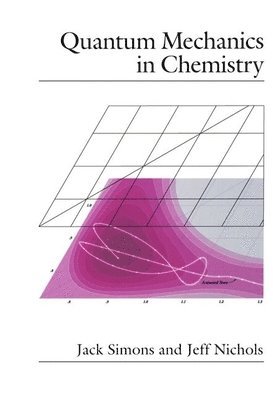
This text offers an introduction to the fundamentals of quantum mechanics as they apply to chemistry. The second part of the book provides introductions to molecular spectroscopy, chemical dynamics, and computational chemistry applied to the treatment of electronic structures of atoms, molecules, radicals, and ions.
536 kr
Skickas inom 5-8 vardagar
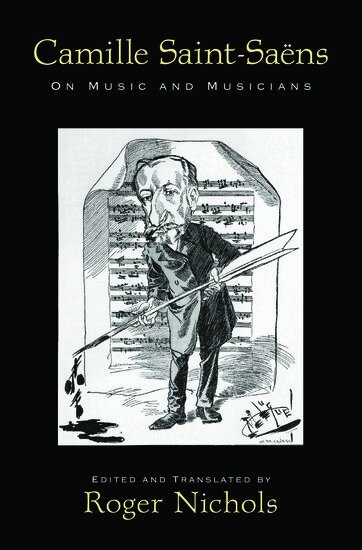
Camille Saint-Saëns is a memorable figure not only for his successes as a composer of choral and orchestral works, and the eternally popular opera Samson et Dalila, but also because he was a keen observer of the musical culture in which he lived. A composer of vast intelligence and erudition, Saint-Saëns was at the same time one of the foremost writers on music in his day.From Wagner, Liszt and Debussy to Milhaud and Stravinsky, Saint-Saëns was at the center of the elite musical and cultural fin de siècle and early 20th Century world. He championed Schumann and Wagner in France at a period when these composers were regarded as dangerous subversives whose music should be kept well away from the impressionable student. Yet Saint-Saëns himself had no aspirations to being a revolutionary, and his appreciation of Wagner the composer was tempered by his reservations over Wagner the philosopher and dramatist, suspicious as he was of what he called the Germanic preoccupation with going beyond reality. Whether defending Meyerbeer against charges of facility or Berlioz against those who questioned his harmonic grasp, Saint-Saëns was always his own man: in both cases, he claimed, it was not the absence of faults but the presence of virtues that distinguishes the good composer. Saint-Saëns's writings provide a well-argued counter-discourse to the strong modernist music critics who rallied around Debussy and Ravel during the fin de siècle. And above all, they demonstrate a brilliantly sharp and active brain, expressing itself through prose of a Classical purity and balance, enlivened throughout with flashes of wit and, at times, of sheer malice. In this generously annotated volume, renowned scholar, seasoned translator and radio broadcaster Roger Nichols brings some of the composer's most striking and evocative writings brilliantly to life in English translation, many for the first time. Nichols has carefully chosen these selections for their intrinsic interest as historical documents to create a well-balanced and engaging view of the man, the music, and the age.
1 064 kr
Skickas inom 10-15 vardagar
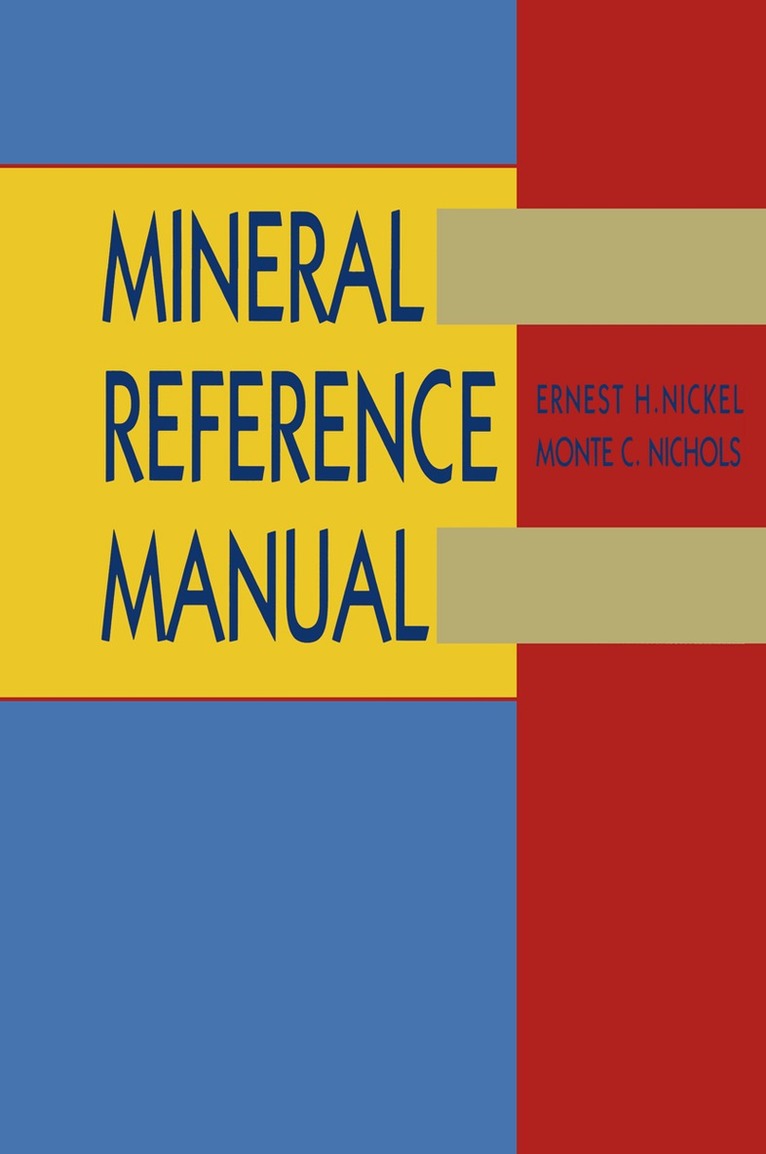
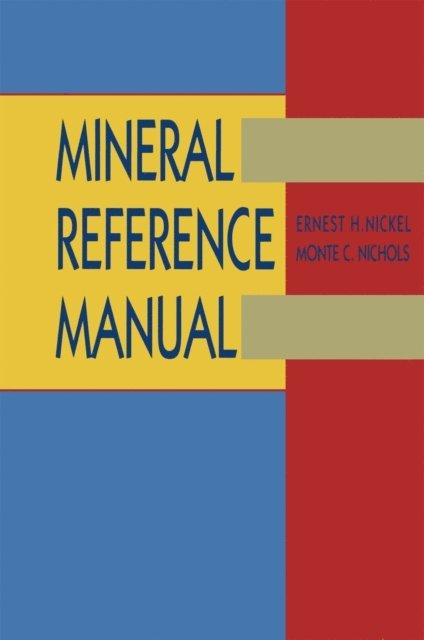
of a Roman numeral, an alphabetic character and an Arabic numeral. This designation constitutes the classification symbol based on the system in Mineralogische Tabellen by Hugo Strunz (a summary is shown in Appendix A). The Roman numeral and alphabetical character divide the minerals into broad groups based mainly on chemistry, with the silicate subdivision based on silicate polymerization. The Arabic numeral specifies the group to which a particular mineral belongs; a group is defined mainly on the basis of crystallographic similarities, but minerals with similar chemical compositions are sometimes included in the group even though they do not exhibit crystallographic affinities with other members of the class. The next entry gives the name of the author of the mineral and the date of its introduction into the literature. In some cases where a mineral has been redescribed or the name has been changed from the original, this entry will reflect the person and time when this was done. This is followed by a reference to what we have tried to make the latest, or most authoritative, literature report. We have attempted to include at least one reference for each species. If there is a second reference following the first, it will be a reference to the determination of the crystal structure. The abbreviations used in the references are given in Appendix B. The final entry, when present, gives the names of similar or related minerals and is preceded by the deSignation "See also" .
1 064 kr
Skickas inom 10-15 vardagar
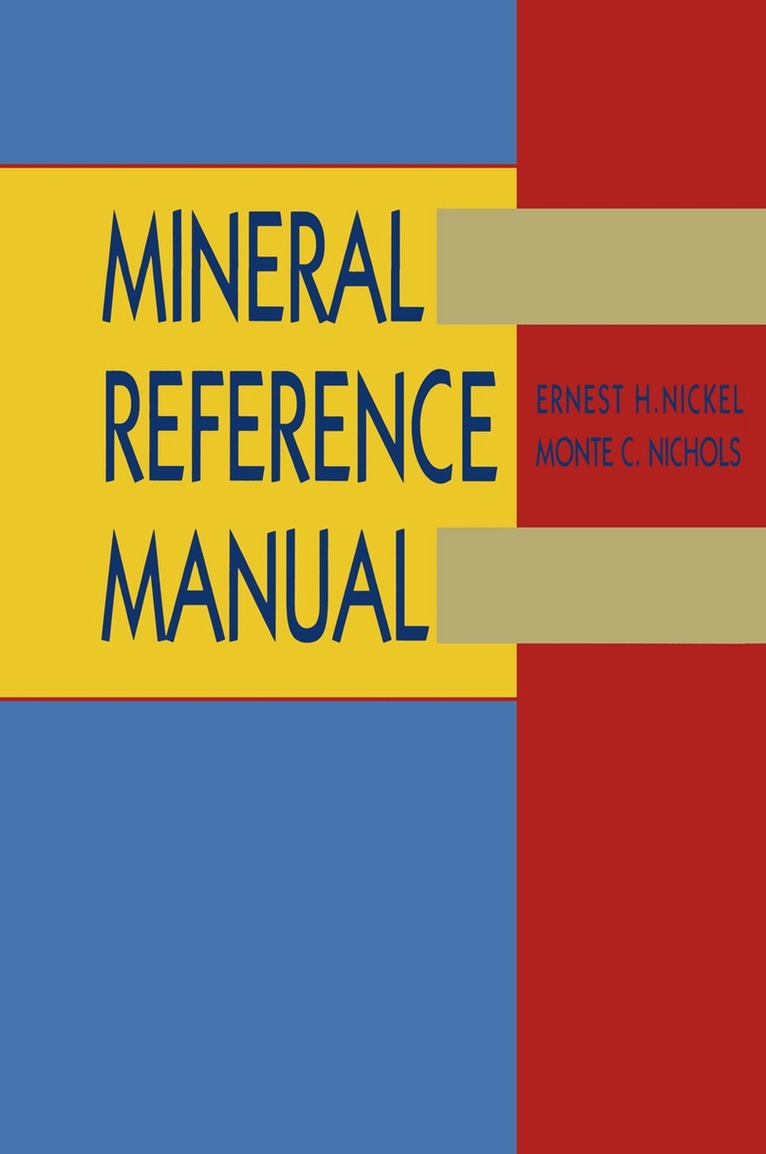
of a Roman numeral, an alphabetic character and an Arabic numeral. This designation constitutes the classification symbol based on the system in Mineralogische Tabellen by Hugo Strunz (a summary is shown in Appendix A). The Roman numeral and alphabetical character divide the minerals into broad groups based mainly on chemistry, with the silicate subdivision based on silicate polymerization. The Arabic numeral specifies the group to which a particular mineral belongs; a group is defined mainly on the basis of crystallographic similarities, but minerals with similar chemical compositions are sometimes included in the group even though they do not exhibit crystallographic affinities with other members of the class. The next entry gives the name of the author of the mineral and the date of its introduction into the literature. In some cases where a mineral has been redescribed or the name has been changed from the original, this entry will reflect the person and time when this was done. This is followed by a reference to what we have tried to make the latest, or most authoritative, literature report. We have attempted to include at least one reference for each species. If there is a second reference following the first, it will be a reference to the determination of the crystal structure. The abbreviations used in the references are given in Appendix B. The final entry, when present, gives the names of similar or related minerals and is preceded by the deSignation "See also" .
215 kr
Skickas inom 5-8 vardagar
229 kr
Skickas inom 3-6 vardagar
243 kr
Skickas inom 5-8 vardagar
139 kr
Skickas inom 5-8 vardagar