Visar resultat för..."Krigets offer"
Sökningen "Krigets offer Tommy Schinkler" gav inga träffar.11 produkter
11 produkter
535 kr
Skickas inom 10-15 vardagar
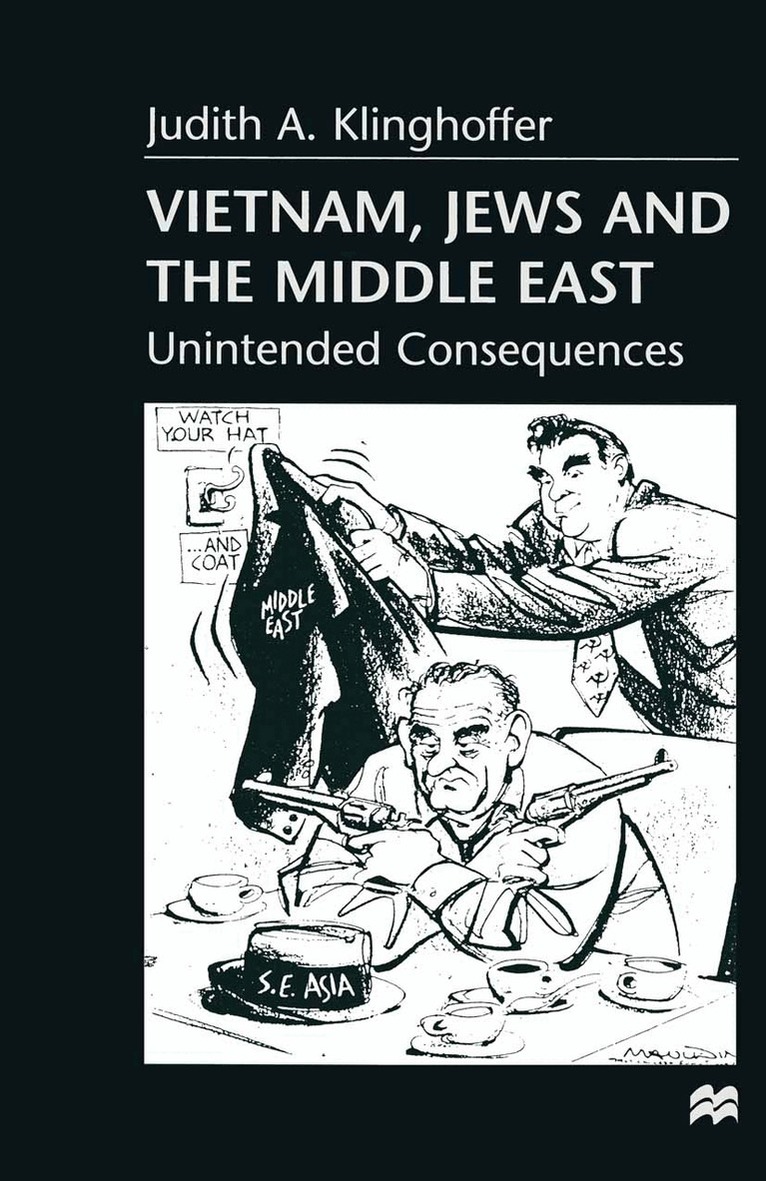
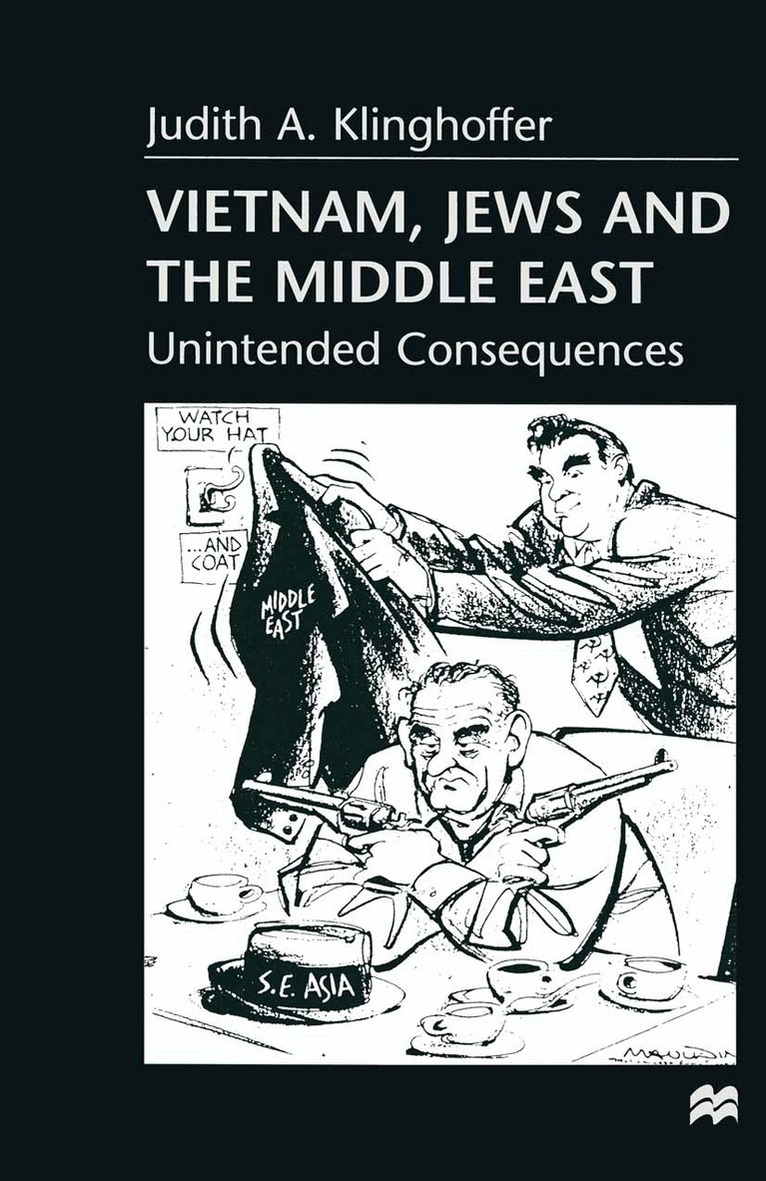
In 1967 Moscow created a Middle Eastern crisis in response to Washington's escalation in Vietnam. America's Asian focus had left her Atlantic flank vulnerable to Soviet penetration. Israel refused to plant her flag in Saigon, American rabbis led the peace movement and the President threatened to withdraw his support for Israel. The Palestinians embarked on a Vietnamese inspired 'people's war' and Moscow interpreted Israeli retaliation as support for US policy in Vietnam. The Six Day War turned Israel into a Soviet nuclear target and transformed some liberals into Neo-Conservatives.
535 kr
Skickas inom 10-15 vardagar
In 1967 Moscow created a Middle Eastern crisis in response to Washington's escalation in Vietnam. Israel refused to plant her flag in Saigon, American rabbis led the peace movement and the President threatened to withdraw his support for Israel.
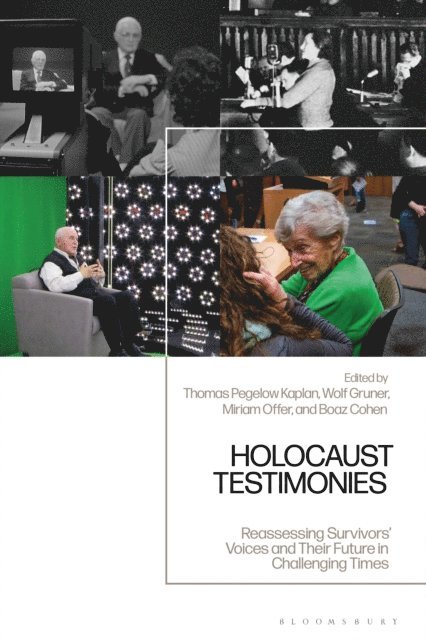
Holocaust Testimonies
Reassessing Survivors' Voices and Their Future in Challenging Times
Inbunden, Engelska, 2025
1 184 kr
Skickas inom 10-15 vardagar
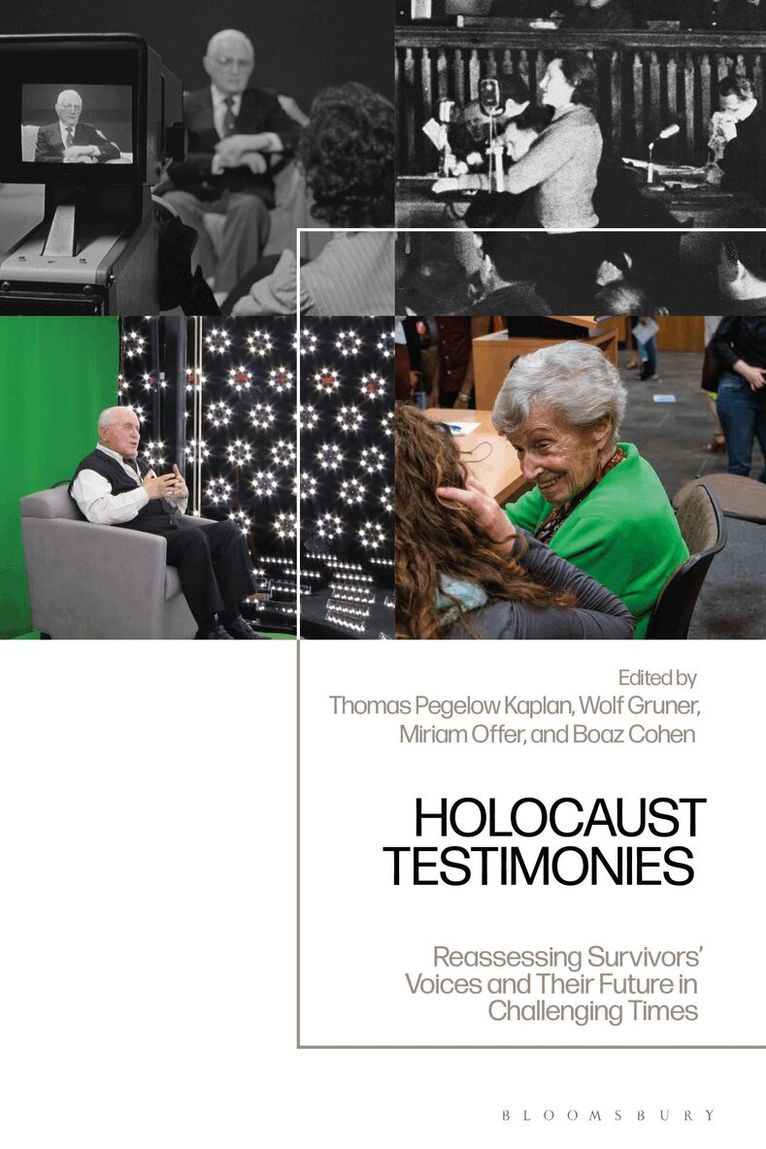
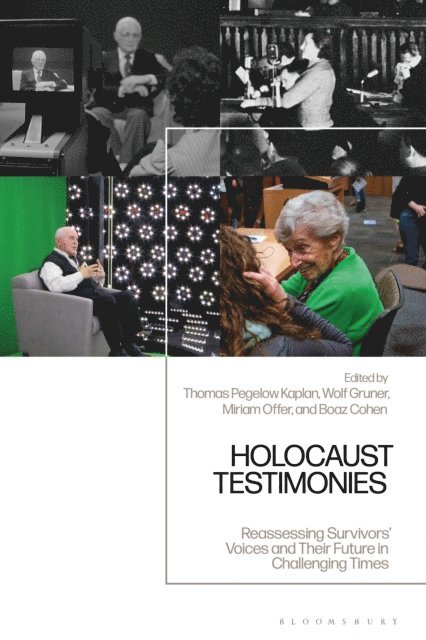
Close to a time when there will be no more survivors to speak about their suffering, this innovative study takes much-needed stock of the past, present and future of Holocaust testimony. Drawing from a vast range of witness accounts – including a never-before-published survivor interview – and carefully situating analysis within broader historical and political discourses, this international team of scholars address many pertinent issues of testimony in the post-witness age. These include: questions of representation and testimony form; memory politics and the role of the witness; the legacy of the Holocaust and impact on future generations; the digital turn and issues of access; and gender and testimony in the wake of #MeToo. Stressing the importance of re-assessing, re-contextualizing, and re-presenting testimonies, these essays make a powerful case for the ongoing centrality of witnesses and witnessing in Holocaust research, education and memory. In doing so, Holocaust Testimonies skillfully paves the way for future research with survivor testimonies.
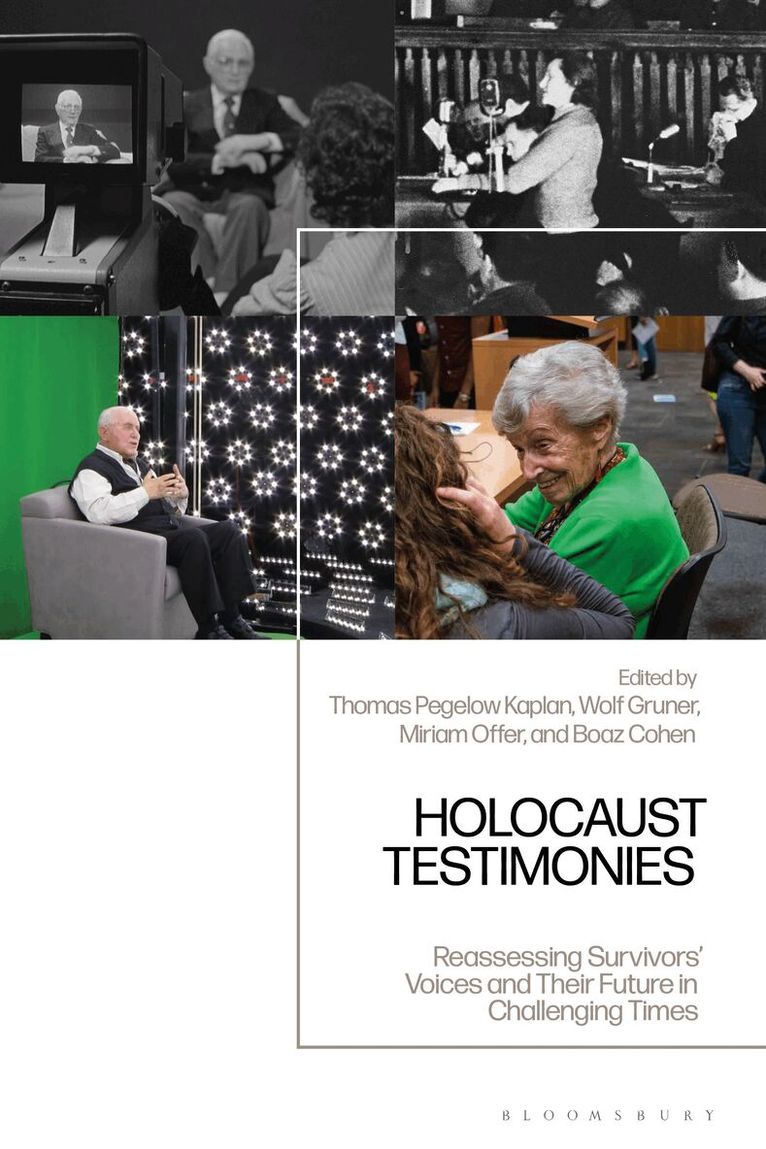
Holocaust Testimonies
Reassessing Survivors' Voices and Their Future in Challenging Times
Häftad, Engelska, 2026
496 kr
Kommande
Close to a time when there will be no more survivors to speak about their suffering, this innovative study takes much-needed stock of the past, present and future of Holocaust testimony. Drawing from a vast range of witness accounts – including a never-before-published survivor interview – and carefully situating analysis within broader historical and political discourses, this international team of scholars address many pertinent issues of testimony in the post-witness age. These include: questions of representation and testimony form; memory politics and the role of the witness; the legacy of the Holocaust and impact on future generations; the digital turn and issues of access; and gender and testimony in the wake of #MeToo. Stressing the importance of re-assessing, re-contextualizing, and re-presenting testimonies, these essays make a powerful case for the ongoing centrality of witnesses and witnessing in Holocaust research, education and memory. In doing so, Holocaust Testimonies skillfully paves the way for future research with survivor testimonies.
112 kr
Skickas inom 5-8 vardagar
140 kr
Skickas inom 5-8 vardagar
2 322 kr
Skickas inom 10-15 vardagar
The main tide of international relations scholarship on the first years after World War II sweeps toward Cold War accounts. These have emphasized the United States and USSR in a context of geopolitical rivalry, with concomitant attention upon the bristling security state. Historians have also extensively analyzed the creation of an economic order (Bretton Woods), mainly designed by Americans and tailored to their interests, but resisted by peoples residing outside of North America, Western Europe, and Japan. This scholarship, centered on the Cold War as vortex and a reconfigured world economy, is rife with contending schools of interpretation and, bolstered by troves of declassified archival documents, will support investigations and writing into the future.By contrast, this book examines a past that ran concurrent with the Cold War and interacted with it, but which usefully can also be read as separable: Washington in the first years after World War II, and in response to that conflagration, sought to redesign international society. That society was then, and remains, an admittedly amorphous thing. Yet it has always had a tangible aspect, drawing self-regarding states into occasional cooperation, mediated by treaties, laws, norms, diplomatic customs, and transnational institutions. The U.S.-led attempt during the first postwar years to salvage international society focused on the United Nations Relief and Rehabilitation Administration, the Acheson–Lilienthal plan to contain the atomic arms race, the Nuremberg and Tokyo tribunals to force Axis leaders to account, the 1948 Genocide Convention, the 1948 Universal Declaration of Human Rights, and the founding of the United Nations. None of these initiatives was transformative, not individually or collectively. Yet they had an ameliorative effect, traces of which have touched the twenty-first century—in struggles to curb the proliferation of nuclear weapons, bring war criminals to justice, create laws supportive of human rights, and maintain an aspirational United Nations, still striving to retain meaningfulness amid world hazards. Together these partially realized innovations and frameworks constitute, if nothing else, a point of moral reference, much needed as the border between war and peace has become blurred and the consequences of a return to unrestraint must be harrowing.
653 kr
Skickas inom 10-15 vardagar
The main tide of international relations scholarship on the first years after World War II sweeps toward Cold War accounts. These have emphasized the United States and USSR in a context of geopolitical rivalry, with concomitant attention upon the bristling security state. Historians have also extensively analyzed the creation of an economic order (Bretton Woods), mainly designed by Americans and tailored to their interests, but resisted by peoples residing outside of North America, Western Europe, and Japan. This scholarship, centered on the Cold War as vortex and a reconfigured world economy, is rife with contending schools of interpretation and, bolstered by troves of declassified archival documents, will support investigations and writing into the future.By contrast, this book examines a past that ran concurrent with the Cold War and interacted with it, but which usefully can also be read as separable: Washington in the first years after World War II, and in response to that conflagration, sought to redesign international society. That society was then, and remains, an admittedly amorphous thing. Yet it has always had a tangible aspect, drawing self-regarding states into occasional cooperation, mediated by treaties, laws, norms, diplomatic customs, and transnational institutions. The U.S.-led attempt during the first postwar years to salvage international society focused on the United Nations Relief and Rehabilitation Administration, the Acheson–Lilienthal plan to contain the atomic arms race, the Nuremberg and Tokyo tribunals to force Axis leaders to account, the 1948 Genocide Convention, the 1948 Universal Declaration of Human Rights, and the founding of the United Nations. None of these initiatives was transformative, not individually or collectively. Yet they had an ameliorative effect, traces of which have touched the twenty-first century—in struggles to curb the proliferation of nuclear weapons, bring war criminals to justice, create laws supportive of human rights, and maintain an aspirational United Nations, still striving to retain meaningfulness amid world hazards. Together these partially realized innovations and frameworks constitute, if nothing else, a point of moral reference, much needed as the border between war and peace has become blurred and the consequences of a return to unrestraint must be harrowing.
Allies at the End of Empire
Loyalists, Nationalists and the Cold War, 1945-76
Inbunden, Engelska, 2017
2 187 kr
Skickas inom 10-15 vardagar
The wars of decolonization fought by European colonial powers after 1945 had their origins in the fraught history of imperial domination, but were framed and shaped by the emerging politics of the Cold War. In all the counter-insurgencies mounted against armed nationalist risings in this period, the European colonial powers employed locally recruited militias – styled as ‘loyalists’ – to fight their ‘dirty wars’. These loyalist histories have been neglected in the nationalist narratives that have dominated the post-decolonization landscape, and this book offers the first comparative assessment of the role played by these allies at the end of empire. Their experience illuminates the deeper ambiguities of the decolonization story: some loyalists were subjected to vengeful violence at liberation; others actually claimed the victory for themselves and seized control of the emergent state; while others still maintained a role as fighting units into the Cold War. The overlap between the history of decolonization and the emergence of the Cold War is a central theme in the studies presented here. The collection discusses the categorization of these ‘irregular auxiliary’ forces after 1945, and presents seven case studies from five European colonialisms, covering nine former colonies – Portugal (Angola), the Netherlands (Indonesia), France (Algeria), Belgium (Congo) and Britain (Cyprus, Kenya, Aden, South Yemen and Oman). This book was originally published as a special issue of the International History Review.
Presidential Rhetoric from Wilson to Obama
Constructing crises, fast and slow
Inbunden, Engelska, 2014
1 373 kr
Skickas inom 10-15 vardagar
Over the past century, presidential constructions of crises have spurred recurring redefinitions of U.S. interests, as crusading advance has alternated with realist retrenchment. For example, Harry Truman and George W. Bush constructed crises that justified liberal crusades in the Cold War and War on Terror. In turn, each was followed by realist successors, as Dwight Eisenhower and Barack Obama limited U.S. commitments, but then struggled to maintain popular support.To make sense of such dynamics, this book synthesizes constructivist and historical institutionalist insights regarding the ideational overreactions that spur shifts across crusading excesses and realist counter-reactions. Widmaier juxtaposes what Daniel Kahneman terms the initial "fast thinking" popular constructions of crises that justify liberal crusades, the "slow thinking" intellectual conversion of such views in realist adjustments, and the tensions that can lead to renewed crises. This book also traces these dynamics historically across five periods – as Wilson’s overreach limited Franklin Roosevelt to a reactive pragmatism, as Truman’s Cold War crusading incited Eisenhower’s restraint, as Kennedy-Johnson Vietnam-era crusading led to Nixon’s revived realism, as Reagan’s idealism yielded to a Bush-Clinton pragmatism, and as George W. Bush’s crusading was followed by Obama’s restraint. Widmaier concludes by addressing theoretical debates over punctuated change, historical debates over the scope for consensus, and policy debates over populist or intellectual excesses.This work will be of great interest to students and scholars of U.S. Foreign Policy
459 kr
Skickas inom 5-8 vardagar
Letar du efter digitala böcker?
E-böcker och ljudböcker handlar du än så länge på vår tidigare sajt.