
Alicia H. Munnell - Böcker
Visar alla böcker från författaren Alicia H. Munnell. Handla med fri frakt och snabb leverans.
9 produkter
9 produkter
410 kr
Skickas inom 5-8 vardagar
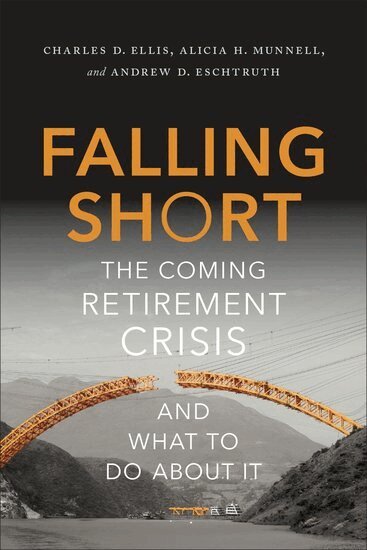
The United States faces a serious retirement challenge. Many of today's workers will lack the resources to retire at traditional ages and maintain their pre-retirement standard of living. It can be difficult for workers to make informed decisions about their retirements now based on the abundance of confusing and sometimes misleading information put forth by the media and other individuals. For this reason, Charles D. Ellis, Alicia H. Munnell, and Andrew D. Eschtruth have written this highly-accessible guide for individuals wondering what to expect when they reach retirement age and what they can be doing now to best prepare for their future. Falling Short is grounded in academic research yet written in an accessible style for anyone concerned about their future retirement. The authors provide both a vivid picture of the retirement risks facing all Americans and a short list of practical solutions that build on our existing retirement system. The book offers the necessary context for understanding the nature and size of the retirement income shortfall, which is caused by both increasing income needs---due to longer lifespans and rising health costs---and decreasing support from Social Security and employer-sponsored pension plans. The authors give specific advice for what Americans must do now to avoid crisis in retirement; namely, people must work longer and save more. Individuals should plan to stay in the labor force until age 70 and keep their skills up-to-date, and the government should emphasize that retiring at 70 provides the largest monthly Social Security check. Social Security's long-term finances must be shored up so that it remains the foundation of the retirement system. All employers with a 401(k) plan should be required to automatically enroll their workers, increase worker contribution rates over time, and use low-cost index funds as a default investment option. A separate solution is needed for the half of the workforce that lacks even 401(k) coverage; all uncovered workers need an easy and automatic retirement saving option. Finally, individuals should not ignore what is often their largest asset---their house---as a potential source of support for retirement; home equity can be tapped through downsizing or a reverse mortgage. Acting on these solutions now will greatly improve the prospects of a secure retirement for today's workers.
2 498 kr
Skickas inom 5-8 vardagar
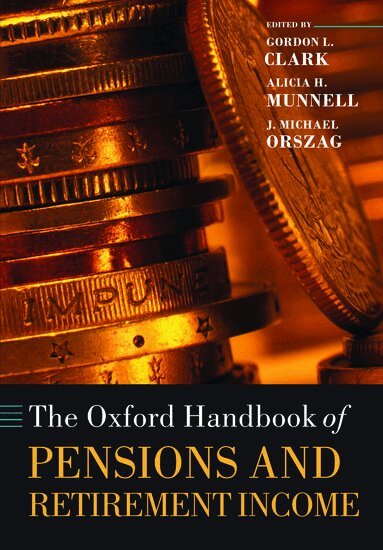
The Oxford Handbook of Pensions and Retirement Income is the only comprehensive review available of the latest research, policy-related tools, analytical methods and techniques, and major theoretical frameworks and principles of pension and retirement income. Featuring over forty contributions from leading academic and professional experts, the handbook draws on research from a range of academic disciplines to reflect on the implications for current and future provision of pension and retirement income of demographic ageing, the changing financial circumstances of nation states, and globalization. An indispensable desk reference for researchers and practitioners in the area, it is also essential for policymakers and those with broad interests which include this very important area.Contributors:William C. Apgar, Camila Arza, Anthony Asher, Vickie L. Bajtelsmit, Armando Barrientos, Rob Bauer, Gary Burtless, John Y. Campbell, Gordon L. Clark, Adam Creighton, E Philip Davis, Johan J. De Deken, Zhu Xiao Di, Richard Disney, Bernhard Ebbinghaus, Robin Ellison, Ewald Engelen, Gosta Esping-Andersen, Teresa Ghilarducci, Tryggvi Thor Herbertsson, Roy P.M.M. Hoevenaars, Tony Hope, Yu-Wei Hu, Paul Johnson, André Laboul, Florence Legros, David McCarthy, Warren McGillivray, Carmelo Mesa-Lago, Marilyn Moon, Alicia H. Munnell, John Myles, David Neumark, Naohiro Ogawa, J. Michael Orszag, Hanam S. Phang, John Piggott, Eduard Ponds, James Poterba, Neha Sand, Steven Sass, Julian Savulescu, Tom B.M. Steenkamp, Annika Sundén, Noriyuki Takayama, Patricia Thane, Ian Tonks, Bart van Riel, Steven F. Venti, Luis M. Viceira, Noel Whiteside, Geoffrey Whittington, David A. Wise, and Juan Yermo.
354 kr
Skickas inom 10-15 vardagar
In his 1998 State of the Union address, President Clinton challenged Americans to a public debate about how to fix the long-term financial problems of Social Security. This annual volume of the National Academy of Social Insurance provides a framework for that debate. Competing reform proposals reflect contrasting views about the nature of the Social Security problem and how to solve it. This book examines issues about privatization, national savings and economic growth, the political risks and realities in reforms, lessons from private pensions developments in the United States, and the efforts of other advanced industrial countries to adapt their old-age pensions to an aging population. It also poses philosophical arguments about collective versus individual responsibility and the implications of market risks and political risks for stable and secure retirement income policy. The contributors are Theo Angelis, Michael J. Boskin, Peter A. Diamond, John Geanakoplos, Hugh Heclo, Karen C. Holden, Howell Jackson, Olivia Mitchell, Dallas L. Salisbury, Lawrence H. Thompson, Kent Weaver, and Stephen P. Zeldes. Copublished with the National Academy of Social Insurance
296 kr
Skickas inom 10-15 vardagar
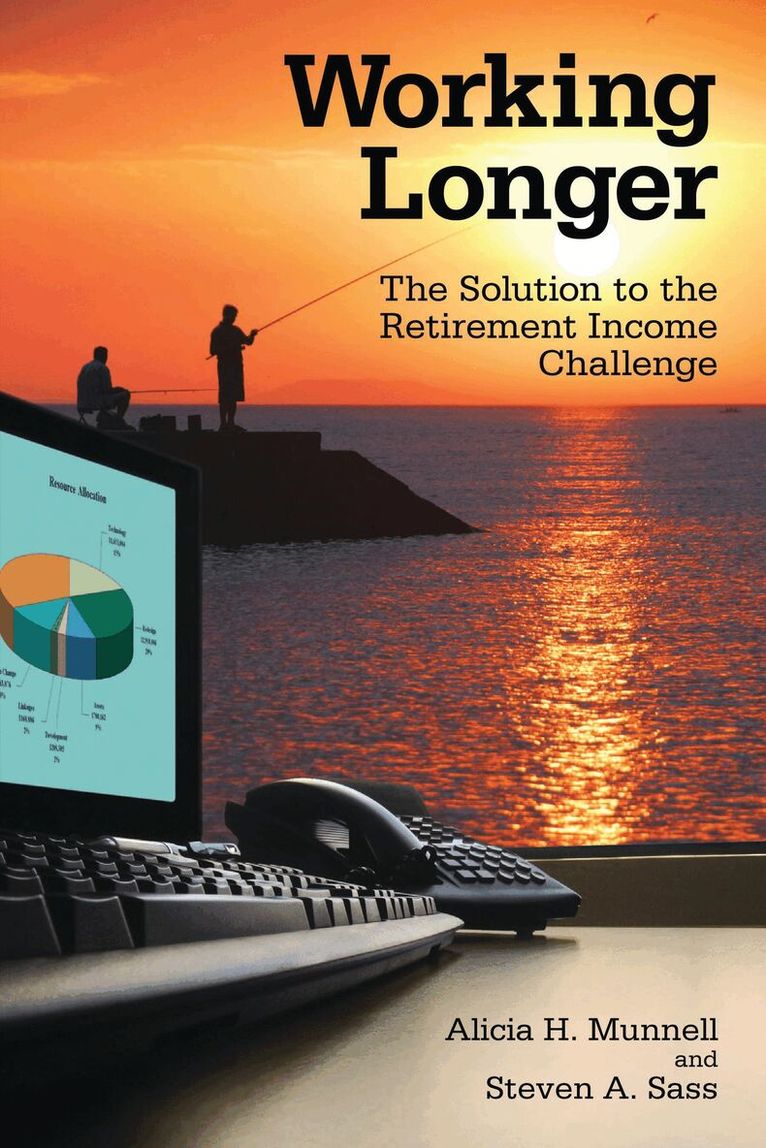
Daily headlines warn American workers that their retirement years may be far from golden. The main components of the retirement income systemSocial Security and employer-provided pensions and health insuranceare in decline while the amount of income needed for a comfortable retirement continues to rise.In Working Longer, Alicia Munnell and Steven Sass suggest a simple solution to this problem: postponing retirement by two to four years. By following their advice, the average worker retiring in 2030 can be as well off as today's retirees. Implementing this solution on a national scale, however, may not be simple.Working Longer investigates the prospects for moving the average retirement age from 63, the current figure, to 66. Munnell and Sass ask whether future generations will be healthy enough to work beyond the current retirement age and whether older men and women want to work. They examine companies' incentives to employ older works and ask what government can do to promote continued participation in the workforce. Finally, they consider the challenge of ensuring a secure retirement for low-wage workers and those who are unable to continue to work.The retirement system faces very real challenges. But together, workers, employers, and the government can keep this vital piece of the American dream alive.
434 kr
Skickas inom 10-15 vardagar
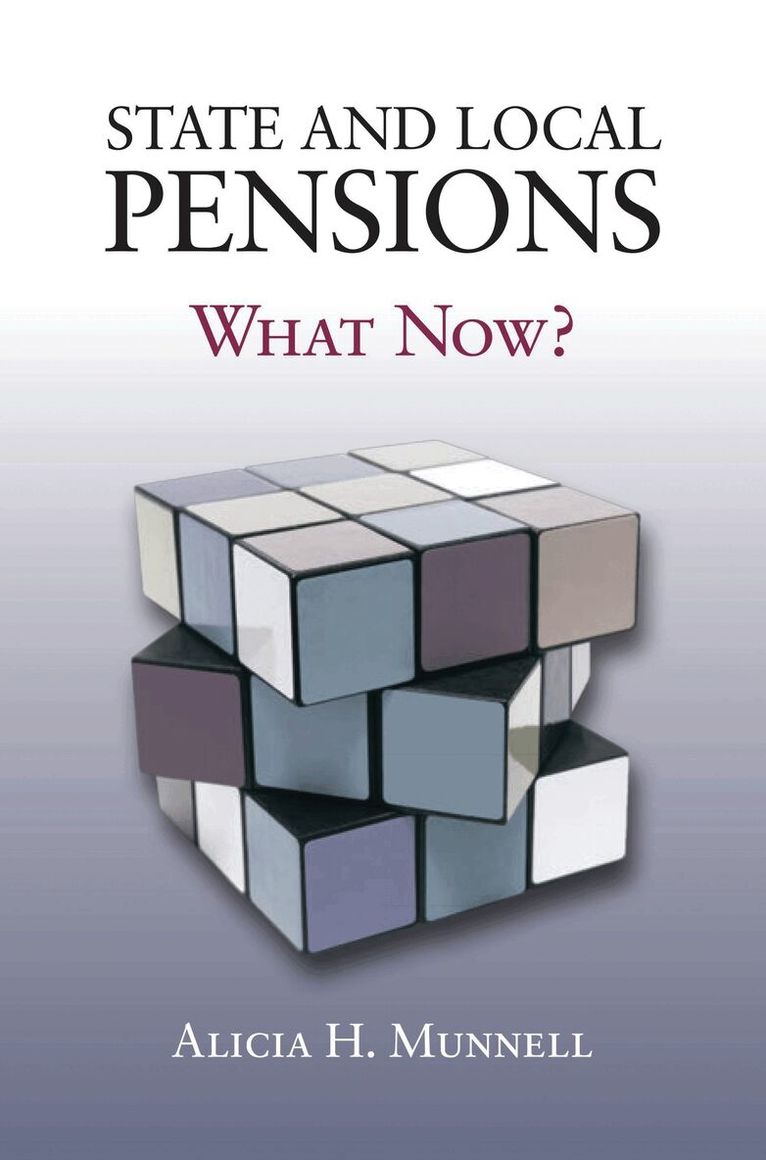
In the wake of the financial crisis and Great Recession, the health of state and local pension plans has emerged as a front burner policy issue. Elected officials, academic experts, and the media alike have pointed to funding shortfalls with alarm, expressing concern that pension promises are unsustainable or will squeeze out other pressing government priorities. A few local governments have even filed for bankruptcy, with pensions cited as a major cause.Alicia H. Munnell draws on both her practical experience and her research to provide a broad perspective on the challenge of state and local pensions. She shows that the story is big and complicated and cannot be viewed through a narrow prism such as accounting methods or the role of unions.By examining the diversity of the public plan universe, Munnell debunks the notion that all plans are in trouble. In fact, she finds that while a few plans are basket cases, many are functioning reasonably well.Munnell's analysis concludes that the plans in serious trouble need a major overhaul. But even the relatively healthy plans face three challenges ahead: an excessive concentration of plan assets in equities; the risk that steep benefit cuts for new hires will harm workforce quality; and the constraints plans face in adjusting future benefits for current employees. Here, Munnell proposes solutions that preserve the main strengths of state and local pensions while promoting needed reforms.
365 kr
Skickas inom 10-15 vardagar
Despite the recent downturn in the stock market, the 1990s boom and the shift to defined contribution plans mean that more individuals will have significant wealth upon retirement. How they use that wealth will determine not only their own well-being, but also the living standards of their children, the resources available to philanthropies, and the level of investment capital in the economy. This volume explores the reasons why people save, how they decide to allocate their wealth once they retire, and how givers select their beneficiaries. It also assesses the extent to which the estate tax and annuitization of retirement wealth affects the amount and nature of wealth transfers. Finally, it looks at the impact of wealth transfersfirst on the amount of aggregate saving and capital accumulation, and then on the distribution of wealth among households. Several conclusions emerge. First, gifts and bequests are important; they may account for about half of total wealth in America. Second, rich people make most of the wealth transfers. They are thoughtful about how much they pay in taxes and how they dispose of their wealth. They care about philanthropic causes and view their charitable contributions as more than a way to avoid paying estate taxes. Third, most nonrich people probably have some lexicographic preferences about the disposition of their wealth; they want to ensure they have adequate resources to take care of their own needs, and if money is left over, they would like it to go to their children. Fourth, little support has emerged for the pure altruistic model of bequests. Fifth, institutions matter. In the case of the rich, the estate tax probably reduces saving and increases bequests to charity. In the case of the nonrich, the shift to defined contribution plans will at a minimum mean that they have more wealth in their hands when they die, and therefore they will leave larger accidental bequests. It might also increase their interest in lea
269 kr
Skickas inom 10-15 vardagar
This book, part of the Studies in Social Economics series, examines old age pensions in the United States. Alicia H. Munnell explores the factors that have influenced the growth of private pension plans.
261 kr
Skickas inom 10-15 vardagar
From a modest beginning in 1935 to an income replacement scheme for workers in commerce and industry, the social security system has grown to cover 90 percent of working Americans. It now pays $78 billion a year in benefits and is obligated to pay $4 trillion in future retirement benefits to workers now covered. With a projected tax rate of 30 percent of gross wages by the year 2050 to meet its obligations under current law, the system, in the author's words, is at ""the most crucial juncture of its forty-year life.""This comprehensive review and analysis, the thirteenth in the Brookings series of Studies in Social Economics, discusses social security in relation to other sources of retirement income and clarifies its financing problem, benefit structure, and ambivalent goals. It deals with two main financing questions. First, will the payroll tax yield the revenue needed to pay benefits as the retired population rises as a fraction of the working population? Second, is the regressive social security tax really the best source of revenue for a system with welfare components such as the minimum benefit and dependents' benefits? Though such benefits are viewed as progressive, they are not paid according to need. They meet neither the income redistribution requirements nor the individual equity goals of the social security program. The author provides a comprehensive account of the benefit structure and clarifies its relation not only to the basic goals of social security but also to the country's three-tiered system of income security. She offers recommendations for eliminating ""an irrational and correctable feature of the benefit formula,"" for lowering the dependency ratio, and, most important, for a definition of goals.
296 kr
Skickas inom 10-15 vardagar
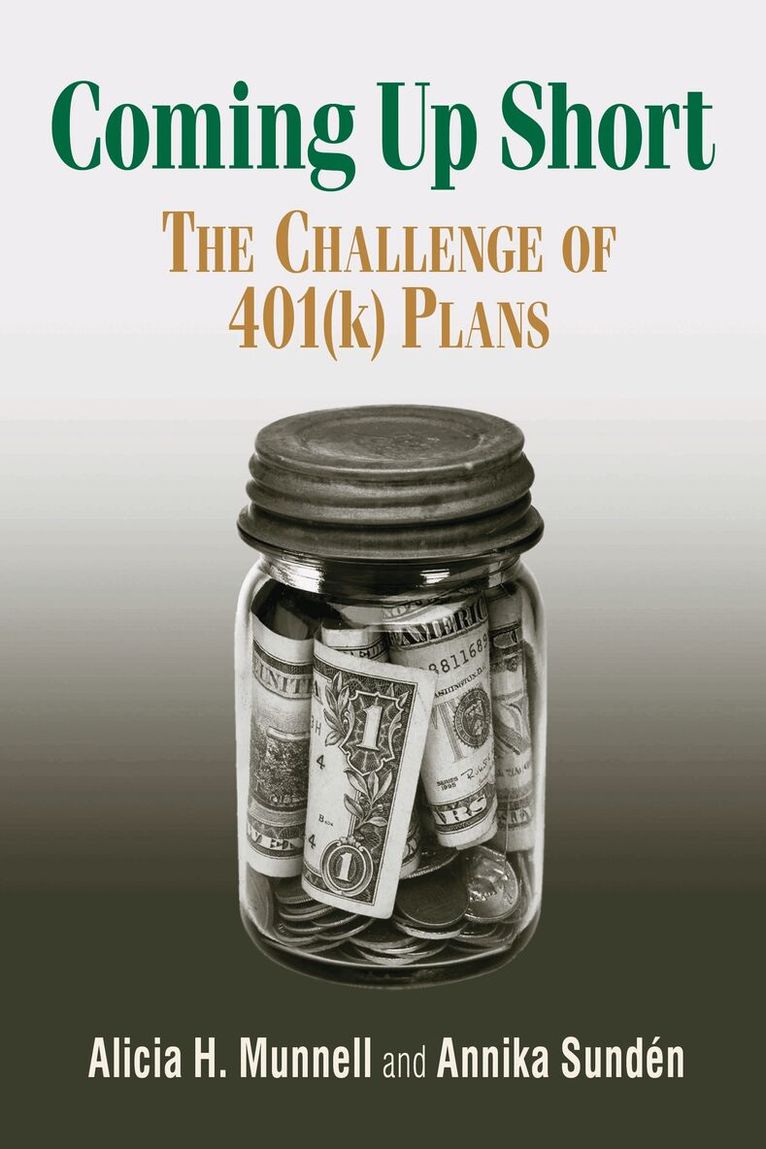
As the baby boom begins to withdraw from the labor force, ensuring a secure retirement income becomes an increasingly important issue, the number of people over age 65 is expected to double by 2030. That trend will continue, accompanied by worries about stock market volatility, corporate malfeasance, a rapidly changing economy, and the viability of Social Security. In Coming Up Short, two experts on retirement policy analyze 401(k) plans, the fastest-growing type of employer-sponsored pensions and a vital source of retirement income for the American middle class. Alicia Munnell and Annika Sunden chronicle the development of 401(k) plans, now the dominant form of private pensions. In accessible language, they explain how such plans work and discuss their popularity. For employees, these plans are appealing becuase they have more control over their own retirement funds, and the plans are portable. For employers, the plans are generally less costly than defined benefit plans. Despite those advantages, there are some significant downsides to 401(k) plans. These plans shift all the risk and responsibility to employees, who must decide whether to join, how much to contribute, how to invest, whether to ""cash out"" when changing jobs, and how to manage their nest egg in retirement. These are difficult decisions, and while in theory 401(k)s could be an effective savings vehicle for retirement, in practice many people make mistakes at every step along the way. Com ing Up Short discusses why these mistakes are made and proposes various reforms to ensure that the aging population will have adequate retirement income. Comprehensive and up-to-date, Coming Up Short is an essential resource on 401(k) plans for financial service professionals, policymakers, academics, and individuals planning for their own retirement.