
B. Delmon - Böcker
Visar alla böcker från författaren B. Delmon. Handla med fri frakt och snabb leverans.
5 produkter
5 produkter
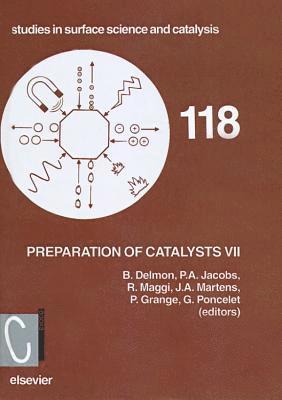
Del 118 - Studies in Surface Science and Catalysis
Preparation of Catalysts VII
Inbunden, Engelska, 1998
1 837 kr
Skickas inom 7-10 vardagar
The proceedings of the VIIth International Symposium on the Scientific Bases for the Preparation of Heterogeneous Catalysts, are in line with the general scope of this series of events. Emphasis in all Symposia has been on the scientific aspects of the preparation of new and industrial catalysts, or on new methods of preparation, rather than on the catalytic reactions in which such solids are ultimately used. In the present context, the catalytic event itself has only been considered as another, though often decisive, method of catalyst characterization.
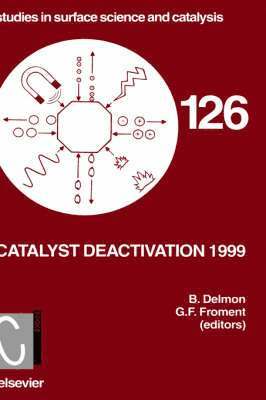
Del 126 - Studies in Surface Science and Catalysis
Catalyst Deactivation 1999
Inbunden, Engelska, 1999
2 489 kr
Skickas inom 5-8 vardagar
Studies in catalyst deactivation play a major role in the identification of the real catalytic system, in particular, the structure and texture of the solid, which is often in a metastable state, as it is operated in the industrial reactor. These studies also allow the identification of the experimental conditions which preserve this active and selective state. This is crucial for a real understanding of catalysts and catalysis. Another area of catalytic science concerns reactions kinetics, which, if properly determined, are of paramount importance in the elucidation of mechanisms. The behavior of the kinetics during aging and deactivation and an accurate modeling of the evolution of activity and selectivity are essential information for the process performance. These are just two typical examples, but quite generally, the science of catalyst deactivation is going to be more oriented to fundamental issues.
538 kr
Skickas inom 10-15 vardagar
Proceedings of the workshop, Interfaces in New Materials, held in Louvain-la-Neuve, Belgium, 19-20 November 1990
2 110 kr
Skickas inom 10-15 vardagar
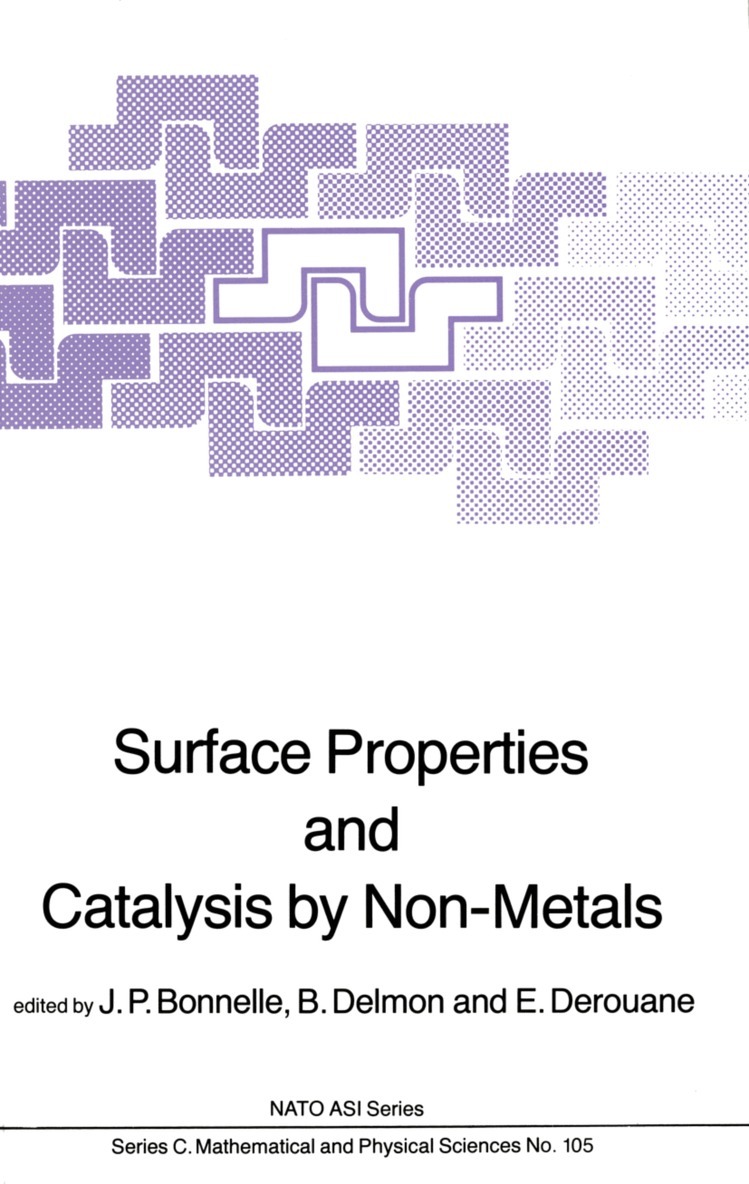
In the field of heterogeneous catalysis. it is convenient to distinguish. in a perfectly unjustified and over··simplified way. bet:leen metal catalysts. 2nd the other catalysts. The fj.J"st are easy to define : they are those in which a reduced metal is the active phase. It is thus easy to circumscribe. by exclusion, the other class namely the "non-metals". We have adopted this definition for the sake of our colleagues working on catalysis by metals, and to avoid a lengthy title like "sm' face pl"operties and catalysts by transi tion metal oxides. sulftdes, carbides, nitriles, etc. Defined in this manner, non-metal catalysts represented, in 1980, 84 wt. % of the industrial heterogeneous catalysts. To be more specific, this proportion corresponds to catalysts which, under the working conditions in the industrial ?lant. contain their catalytically active metallic elements in a non-reduced state. It should however be recalled that most metal catalysts are supported on oxides, which, often, repl'esent over 90% (sometimes 99.4% in the case of the platinum reforming catalysts) of the total weight.
2 110 kr
Skickas inom 10-15 vardagar
In the field of heterogeneous catalysis. it is convenient to distinguish. in a perfectly unjustified and over··simplified way. bet:leen metal catalysts. 2nd the other catalysts. The fj.J"st are easy to define : they are those in which a reduced metal is the active phase. It is thus easy to circumscribe. by exclusion, the other class namely the "non-metals". We have adopted this definition for the sake of our colleagues working on catalysis by metals, and to avoid a lengthy title like "sm' face pl"operties and catalysts by transi tion metal oxides. sulftdes, carbides, nitriles, etc. Defined in this manner, non-metal catalysts represented, in 1980, 84 wt. % of the industrial heterogeneous catalysts. To be more specific, this proportion corresponds to catalysts which, under the working conditions in the industrial ?lant. contain their catalytically active metallic elements in a non-reduced state. It should however be recalled that most metal catalysts are supported on oxides, which, often, repl'esent over 90% (sometimes 99.4% in the case of the platinum reforming catalysts) of the total weight.