
Cathrine Hasse – författare
Visar alla böcker från författaren Cathrine Hasse. Handla med fri frakt och snabb leverans.
9 produkter
9 produkter

2 113 kr
Skickas inom 10-15 vardagar
Whilst most research concentrates on the imagined future of robotics, this book brings together a group of international researchers to explore the different ways that robots and humans engage with one another at this point in history. Robotic design is advancing at an incredible pace, and consequently the role of robots has expanded beyond mechanical work in the industrial sector to the social and domestic environment. From kitchen table pets in the shape of dinosaurs or baby seals, to robot arms that assist with eating, to self-driving cars, this book explores the psychological impact of robotic engagement, especially in domestic settings. Each chapter explores a different aspect of humanoid robotics, for example, the relationship between robotics and gender, citizenship, moral agency, ethics, inequality, and psychological development, as well as exploring the growing role of robots in education, care work, and intimate relationships.Drawing on research from across the fields of psychology, anthropology, and philosophy, this ground-breaking volume discusses the emerging social side of robotics. By examining our relationship with robots now, this book offers a new and innovative opportunity for understanding our future with robots and robotic culture. Designing Robots, Designing Humans will be interest to researchers of artificial intelligence and humanoid robotics, as well as researchers from cognitive and social psychology, philosophy, computer science, anthropology, linguistics, and engineering backgrounds.

632 kr
Skickas inom 10-15 vardagar
Whilst most research concentrates on the imagined future of robotics, this book brings together a group of international researchers to explore the different ways that robots and humans engage with one another at this point in history. Robotic design is advancing at an incredible pace, and consequently the role of robots has expanded beyond mechanical work in the industrial sector to the social and domestic environment. From kitchen table pets in the shape of dinosaurs or baby seals, to robot arms that assist with eating, to self-driving cars, this book explores the psychological impact of robotic engagement, especially in domestic settings. Each chapter explores a different aspect of humanoid robotics, for example, the relationship between robotics and gender, citizenship, moral agency, ethics, inequality, and psychological development, as well as exploring the growing role of robots in education, care work, and intimate relationships.Drawing on research from across the fields of psychology, anthropology, and philosophy, this ground-breaking volume discusses the emerging social side of robotics. By examining our relationship with robots now, this book offers a new and innovative opportunity for understanding our future with robots and robotic culture. Designing Robots, Designing Humans will be interest to researchers of artificial intelligence and humanoid robotics, as well as researchers from cognitive and social psychology, philosophy, computer science, anthropology, linguistics, and engineering backgrounds.

Posthumanist Learning
What Robots and Cyborgs Teach us About Being Ultra-social
Inbunden, Engelska, 2020
2 176 kr
Skickas inom 10-15 vardagar
In this text Hasse presents a new, inclusive, posthuman learning theory, designed to keep up with the transformations of human learning resulting from new technological experiences, as well as considering the expanding role of cyborg devices and robots in learning. This ground-breaking book draws on research from across psychology, education, and anthropology to present a truly interdisciplinary examination of the relationship between technology, learning and humanity. Posthumanism questions the self-evident status of human beings by exploring how technology is changing what can be categorised as "human". In this book, the author applies a posthumanist lens to traditional learning theory, challenging conventional understanding of what a human learner is, and considering how technological advances are changing how we think about this question. Throughout the book Hasse uses vignettes of her own research and that of other prominent academics to exemplify what technology can tell us about how we learn and how this can be observed in real-life settings.Posthumanist Learning is essential reading for students and researchers of posthumanism and learning theory from a variety of backgrounds, including psychology, education, anthropology, robotics and philosophy.

Posthumanist Learning
What Robots and Cyborgs Teach us About Being Ultra-social
Häftad, Engelska, 2020
707 kr
Skickas inom 10-15 vardagar
In this text Hasse presents a new, inclusive, posthuman learning theory, designed to keep up with the transformations of human learning resulting from new technological experiences, as well as considering the expanding role of cyborg devices and robots in learning. This ground-breaking book draws on research from across psychology, education, and anthropology to present a truly interdisciplinary examination of the relationship between technology, learning and humanity. Posthumanism questions the self-evident status of human beings by exploring how technology is changing what can be categorised as "human". In this book, the author applies a posthumanist lens to traditional learning theory, challenging conventional understanding of what a human learner is, and considering how technological advances are changing how we think about this question. Throughout the book Hasse uses vignettes of her own research and that of other prominent academics to exemplify what technology can tell us about how we learn and how this can be observed in real-life settings.Posthumanist Learning is essential reading for students and researchers of posthumanism and learning theory from a variety of backgrounds, including psychology, education, anthropology, robotics and philosophy.
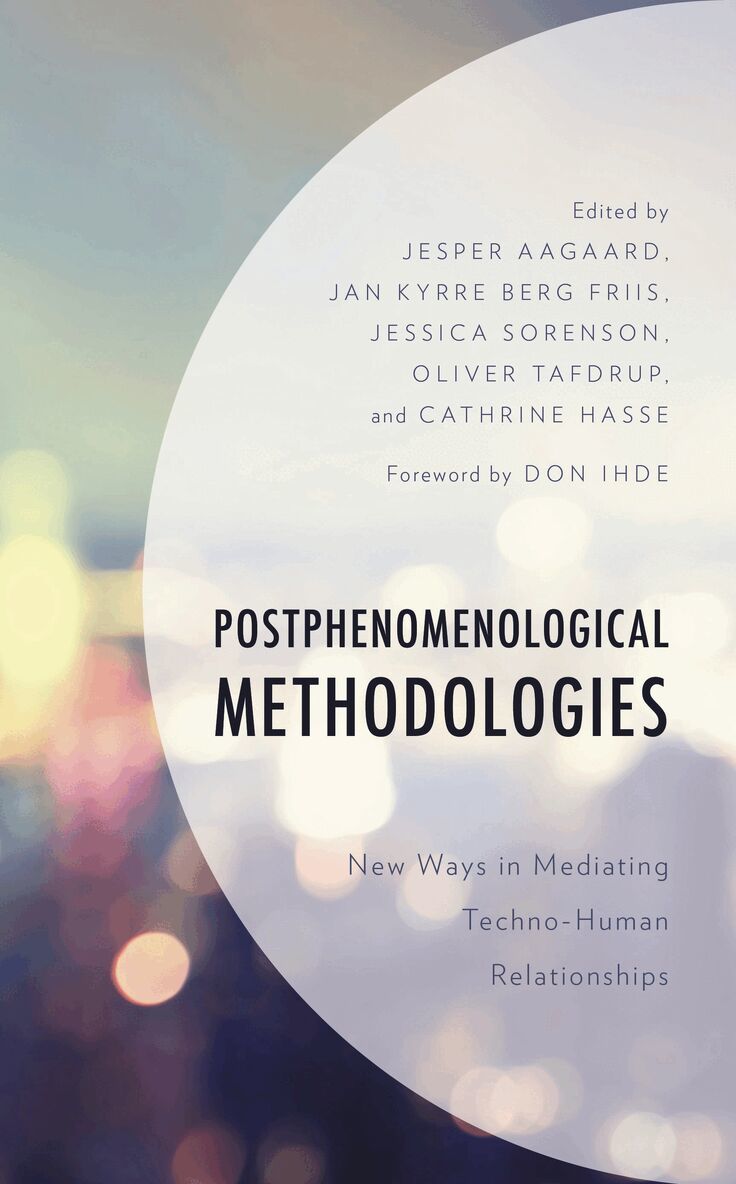
Postphenomenological Methodologies
New Ways in Mediating Techno-Human Relationships
Inbunden, Engelska, 2018
1 305 kr
Skickas inom 10-15 vardagar
This edited volume is the first publication to tackle the issue of researching human-technology relations from a methodological postphenomenological perspective. While the ‘traditional’ phenomenology of the 20th century, with figures like Husserl, Heidegger and Merleau-Ponty, provided valuable insights into the formal structures of essence, being and embodiment, etc. their mode of philosophizing mostly involved abstract ‘pure’ thinking. Although rooted in this tradition, the postphenomenological approach to the study of human-technology relations emphasizes the “empirical turn” and interdisciplinary work in the field of philosophy – and reaches out to other disciplines like anthropology, education, media studies, and science and technology studies (STS).The contributors discuss what it means for the field of postphenomenology to be empirically based and what kind of methodology is required in order for researchers to go out and study human-technology relations in this perspective. In many disciplines, methodology refers to the analytical approach taken – e.g. the analytical concepts you employ to make an analysis; in postphenomenology, these might include concepts such as multistability, variation, or mediation. In a discipline like anthropology, it also refers to reflections over the methods researchers use to approach an empirical field. Methods can include interviews of different kinds, participant observations, surveys, and auto-ethnography. Furthermore, methodology can include ethical issues tied to doing research in an empirical field. These practical aspects are not separate from, but rather connected to, theoretical approaches. This book ties together the methods, ethics, and theories of postphenomenology in a groundbreaking volume on methodology. With postphenomenological studies of education, digital media, biohacking, health, robotics, and skateboarding as points of reference, the authors of this volume, in twelve chapters, provide new perspectives on what a comprehensive postphenomenological research methodology must consist of.
1 237 kr
Skickas inom 10-15 vardagar
This book has one explicit purpose: to present a new theory of cultural learning in organisations which combines practice-based learning with cultural models - a cognitive anthropological schema theory of taken-for-granted connections - tied to the everyday meaningful use of artefacts.
1 237 kr
Skickas inom 10-15 vardagar
This book has one explicit purpose: to present a new theory of cultural learning in organisations which combines practice-based learning with cultural models - a cognitive anthropological schema theory of taken-for-granted connections - tied to the everyday meaningful use of artefacts.

1 906 kr
Skickas inom 10-15 vardagar
This Handbook offers an overview of the thriving and diverse field of anthropological studies of technology. It features 39 original chapters, each reviewing the state of the art of current research and enlivening the field of study through ethnographic analysis of human-technology interfaces, forms of social organisation, technological practices and/or systems of belief and meaning in different parts of the world.The Handbook is organised around some of the most important characteristics of anthropological studies of technology today: the diverse knowledge practices that technologies involve and on which they depend; the communities, collectives, and categories that emerge around technologies; anthropology’s contribution to proliferating debates on ethics, values, and morality in relation to technology; and infrastructures that highlight how all technologies are embedded in broader political economies and socio-historical processes that shape and often reinforce inequality and discrimination while also generating diversity. All chapters share a commitment to human experiences, embodiments, practices, and materialities in the daily lives of those people and institutions involved in the development, manufacturing, deployment, and/or use of particular technologies.Chapters 11 and 31 are available open access under a Creative Commons Attribution 4.0 International License via link.springer.com.

1 906 kr
Skickas inom 10-15 vardagar
This Handbook offers an overview of the thriving and diverse field of anthropological studies of technology. It features 39 original chapters, each reviewing the state of the art of current research and enlivening the field of study through ethnographic analysis of human-technology interfaces, forms of social organisation, technological practices and/or systems of belief and meaning in different parts of the world.The Handbook is organised around some of the most important characteristics of anthropological studies of technology today: the diverse knowledge practices that technologies involve and on which they depend; the communities, collectives, and categories that emerge around technologies; anthropology’s contribution to proliferating debates on ethics, values, and morality in relation to technology; and infrastructures that highlight how all technologies are embedded in broader political economies and socio-historical processes that shape and often reinforce inequality and discrimination while also generating diversity. All chapters share a commitment to human experiences, embodiments, practices, and materialities in the daily lives of those people and institutions involved in the development, manufacturing, deployment, and/or use of particular technologies.Chapters 11 and 31 are available open access under a Creative Commons Attribution 4.0 International License via link.springer.com.