• Fri frakt över 249 kr
  • •
  • Snabba leveranser
  • •
  • Billiga böcker
Kundservice

Du är på sajten för privatpersoner.

Företag, bibliotek eller offentlig verksamhet?

Du handlar på classic.bokus.com, där alla dina funktioner finns intakta.
Till classic.bokus.com
Bokus logotyp. Gå till startsidan.
  • Erbjudanden
  • Nyheter
  • Student
  • Topplistor
  • Barn & ungdom
  • Bokus Play
  • E-böcker
  • Pocketböcker
  • Spel & pussel

10% rabatt på allt med kod: NYSTART10 →

Sidfot

Mina sidor

    Hjälp

    • Kundservice
    • Vanliga frågor och svar
    • Frakt och leverans
    • Retur vid ångerrätt
    • Reklamera vara
    • Betalning
    • Köpvillkor
    • Allmänna villkor
    • Information om webbplatsens tillgänglighet

    Om Bokus

    • Om oss
    • Pressrum
    • För studenter
    • För företag
    • För bibliotek och offentlig verksamhet
    • För leverantörer
    • Hållbarhet

    Populärt

    • Aktuella erbjudanden
    • Presentkort
    • Studentlitteratur
    • Nya böcker
    • Topplistor
    • Signerade böcker
    • Engelska böcker

    Inspiration

    • Boktips
    • BookTok
    • Populära bokserier
    • Barnbokskaraktärer
    • Populära författare
    Logotyp för Bokus
    Följ oss på Facebook (extern länk)Följ oss på Instagram (extern länk)Följ oss på YouTube (extern länk)Följ oss på TikTok (extern länk)
    bokus @ CookiesAnpassa cookiesIntegritetspolicyKöpvillkor
    Till Citymail hemsida (extern länk)Till Budbee hemsida (extern länk)Till Postnord hemsida (extern länk)Till Schenker hemsida (extern länk)Till Early Bird hemsida (extern länk)Till Walleys hemsida (extern länk)
    1. Språk och ordböcker
    2. Språkundervisning och språkinlärning

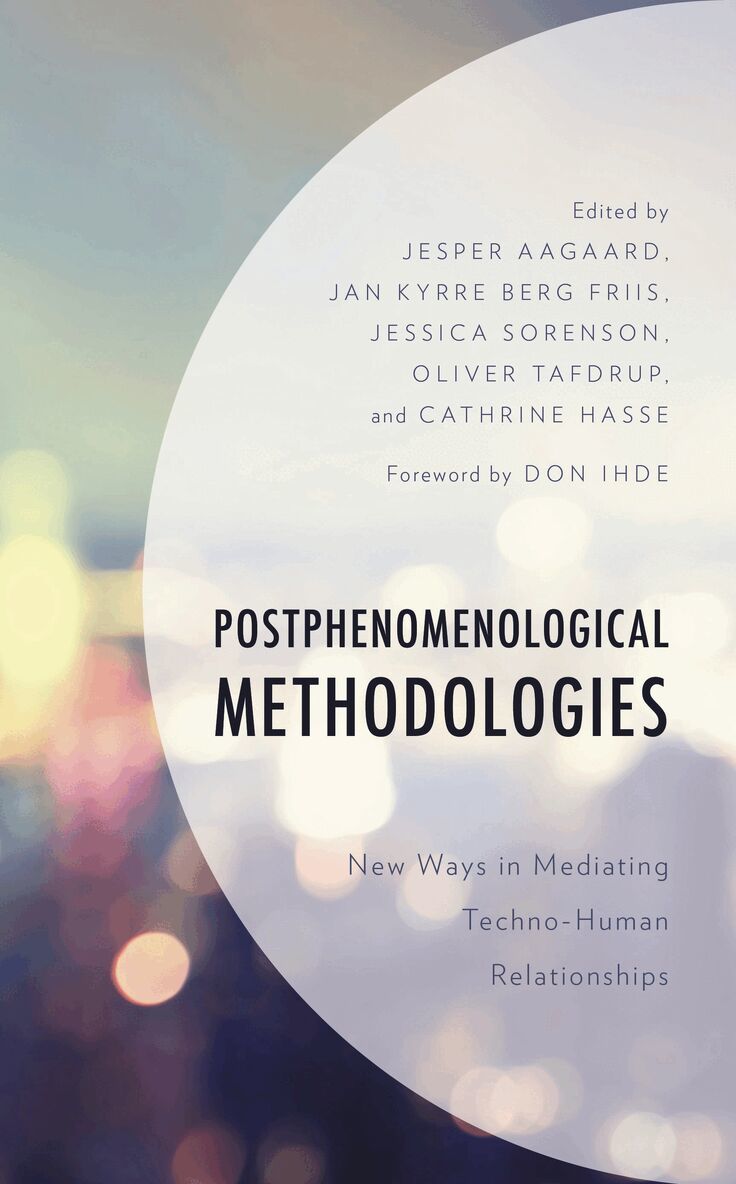
    Postphenomenological Methodologies

    New Ways in Mediating Techno-Human Relationships

    AvJesper Aagaard,Jan Kyrre Berg Friis

    Inbunden, Engelska, 2018

    Del i serien Postphenomenology and the Philosophy of Technology

    1 355 kr

    Beställningsvara. Skickas inom 10-15 vardagar. Fri frakt över 249 kr.

    Beskrivning

    This edited volume is the first publication to tackle the issue of researching human-technology relations from a methodological postphenomenological perspective. While the ‘traditional’ phenomenology of the 20th century, with figures like Husserl, Heidegger and Merleau-Ponty, provided valuable insights into the formal structures of essence, being and embodiment, etc. their mode of philosophizing mostly involved abstract ‘pure’ thinking. Although rooted in this tradition, the postphenomenological approach to the study of human-technology relations emphasizes the “empirical turn” and interdisciplinary work in the field of philosophy – and reaches out to other disciplines like anthropology, education, media studies, and science and technology studies (STS).The contributors discuss what it means for the field of postphenomenology to be empirically based and what kind of methodology is required in order for researchers to go out and study human-technology relations in this perspective. In many disciplines, methodology refers to the analytical approach taken – e.g. the analytical concepts you employ to make an analysis; in postphenomenology, these might include concepts such as multistability, variation, or mediation. In a discipline like anthropology, it also refers to reflections over the methods researchers use to approach an empirical field. Methods can include interviews of different kinds, participant observations, surveys, and auto-ethnography. Furthermore, methodology can include ethical issues tied to doing research in an empirical field. These practical aspects are not separate from, but rather connected to, theoretical approaches. This book ties together the methods, ethics, and theories of postphenomenology in a groundbreaking volume on methodology. With postphenomenological studies of education, digital media, biohacking, health, robotics, and skateboarding as points of reference, the authors of this volume, in twelve chapters, provide new perspectives on what a comprehensive postphenomenological research methodology must consist of.

    Produktinformation

    • Utgivningsdatum:2018-08-15
    • Mått:161 x 235 x 22 mm
    • Vikt:553 g
    • Format:Inbunden
    • Språk:Engelska
    • Serie:Postphenomenology and the Philosophy of Technology
    • Antal sidor:296
    • Förlag:Bloomsbury Publishing Plc
    • Medarbetare:Don Ihde
    • ISBN:9781498545235

    Utforska kategorier

    • Språkundervisning och språkinlärning inom Språk och ordböcker
    • Material och digital teknik i undervisningen inom Psykologi och pedagogik

    Mer om författaren

    Jesper Aagaard is assistant professor in the Department of Psychology and Behavioral Sciences at Aarhus University.Jan Kyrre Berg Friis is course manager of theory of science at Copenhagen University.Jessica Sorenson is research assistant at the Future, Technology, Culture, and Learning program at Aarhus University.Oliver Tafdrup is doctoral fellow at the Future, Technology, Culture, and Learning program at Aarhus University.Cathrine Hasse is professor of cultural anthropology and learning at Aarhus University.

    Recensioner i media

    This book shows how postphenomenology can significantly contribute to understanding and engaging with many of the technologies shaping our contemporary society, i.e. robotics, self-tracking technologies and educational tools. Combining case studies with thorough methodological reflections, the authors seek to make their postphenomenological research transparent and valuable to other scholars wanting inspiration and hands-on insight on how to do postphenomenological research. The book will be helpful in extending the already strong research community of postphenomenology.

    Innehållsförteckning

    • Foreword – Don IhdeIntroduction – Jesper Aagaard, Jan Kyrre Berg Friis, Oliver Tafdrup & Cathrine HassePart I: Educational TechnologiesChapter 1: Doing Postphenomenology in Education – Catherine Adams and Joni TurvilleChapter 2: Inviting and Interacting: Postphenomenology and the Microsociology of Education – Tobias RöhlChapter 3: Entering the Portal: Media Technologies and Experiential Transportation – Jesper AagaardPart II: Self-Tracking & Imaging TechnologiesChapter 4: Human Technology Relationships in the Digital Age: The Collapse of Metaphore in Biohacking – Moa PetersénChapter 5: Service Interfaces in Human Technology Relations: A Case Study of Self-Tracking Technologies – Fernando SecomandiChapter 6: From Camera Obscura to fMRI: How Brain Imaging Technologies Mediate Free Will – Ciano AydinPart III: Robotic TechnologiesChapter 7: Paleoanthropology and Social Robotics: Old and New Ways in Mediating Alerity Relations – Michael FunkChapter 8: Lost in Tra