
Christine Coussens - Böcker
Visar alla böcker från författaren Christine Coussens. Handla med fri frakt och snabb leverans.
12 produkter
12 produkter
Rebuilding the Unity of Health and the Environment
A New Vision of Environmental Health for the 21st Century
Häftad, Engelska, 2001
354 kr
Tillfälligt slut
This is a summary of the workshop Rebuilding the Unity of Health and the Environment: A New Vision of Environmental Health for the 21st Century. The goal of this workshop was to emphasize the connection between human health and the natural, built, and social environments. This workshop integrated talks from many fields and created a dialogue among various environmental health stakeholders. The language presented in this respect should not be viewed as an endorsement by the Environmental Health Sciences Roundtable or the Institute of Medicine of what action is needed for the future, but rather as an effort to synthesize the various perspectives presented.
450 kr
Tillfälligt slut
The Roundtable on Environmental Health Sciences, Research, and Medicine wanted to address the link between environmental factors and the development of cancer in light of recent advances in genomics. They asked what research tools are needed, how new scientific information can be applied in a timely manner to reduce the burden of cancer, and how this can be flexible enough to treat the individual.
582 kr
Tillfälligt slut
Each year in the United States approximately 440,000 babies are born premature. These infants are at greater risk of death, and are more likely to suffer lifelong medical complications than full-term infants. Clinicians and researchers have made vast improvements in treating preterm birth; however, little success has been attained in understanding and preventing preterm birth. Understanding the complexity of interactions underlying preterm birth will be needed if further gains in outcomes are expected. The Institute of Medicinea (TM)s Roundtable on Environmental Health Sciences, Research, and Medicine sponsored a workshop to understand the biological mechanism of normal labor and delivery, and how environmental influences, as broadly defined, can interact with the processes of normal pregnancy to result in preterm birth. This report is a summary of the main themes presented by the speakers and participants.
354 kr
Tillfälligt slut
Nanotechnology is often described as an emerging technology - one that not only holds promise for society, but also is capable of revolutionizing our approaches to common problems. Nanotechnology is not a completely new field; however, it is only recently that discoveries in this field have advanced so far as to warrant examination of their impact upon the world around us. Nanotechnology has direct beneficial applications for medicine and the environment, but like all technologies it may have unintended effects that can adversely impact the environment, both within the human body and within the natural ecosystem. How does the science move forward in a way that best protects the public and gets health and safety right the first time? Implications of Nanotechnology for Environmental Health Research identifies the areas in which additional research is needed and the processes by which changes can occur.
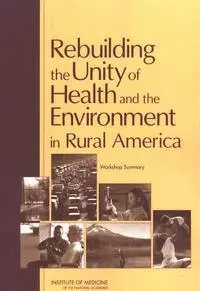
Rebuilding the Unity of Health and the Environment in Rural America
Workshop Summary
Häftad, Engelska, 2006
498 kr
Skickas
Throughout much of its history, the United States was predominantly a rural society. The need to provide sustenance resulted in many people settling in areas where food could be raised for their families. Over the past century, however, a quiet shift from a rural to an urban society occurred, such that by 1920, for the first time, more members of our society lived in urban regions than in rural ones. This was made possible by changing agricultural practices. No longer must individuals raise their own food, and the number of person-hours and acreage required to produce food has steadily been decreasing because of technological advances, according to Roundtable member James Merchant of the University of Iowa. The Institute of Medicine's Roundtable on Environmental Health Science, Research, and Medicine held a regional workshop at the University of Iowa on November 29 and 30, 2004, to look at rural environmental health issues. Iowa, with its expanse of rural land area, growing agribusiness, aging population, and increasing immigrant population, provided an opportunity to explore environmental health in a region of the country that is not as densely populated.As many workshop participants agreed, the shifting agricultural practices as the country progresses from family operations to large-scale corporate farms will have impacts on environmental health. This report describes and summarizes the participants' presentations to the Roundtable members and the discussions that the members had with the presenters and participants at the workshop.
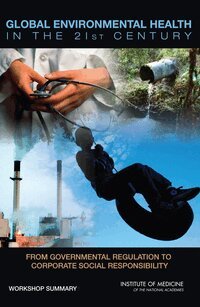
Global Environmental Health in the 21st Century
From Governmental Regulation to Corporate Social Responsibility: Workshop Summary
Häftad, Engelska, 2007
518 kr
Tillfälligt slut
Biological threats like SARS and natural disasters like the tsunami in Indonesia have devastated entire regions, and quickly exhausted budgetary resources. As the field of environmental health continues to evolve, scientists and others must focus on gaining a better understanding of the links between human health and various environmental factors, and on creating new paradigms and partnerships needed to address these complex environmental health challenges facing society. Global Environmental Health in the 21st Century: From Governmental Regulations to Corporate Social Responsibility: Workshop Summary discusses the role of industry in environmental health, examines programs designed to improve the overall state of environmental health, and explores how governmental and corporate entities can collaborate to manage this industry. Stakeholders in both the public and private sectors are looking for viable solutions as the complexity of societal problems and risks associated with management and varying regulatory standards continue to increase.Global Environmental Health in the 21st Century draws critical links and provides insight into the current shape of global environmental health. The book recommends expanding environmental management systems (EMS) to encompass a more extensive global network. It also provides a complete assessment of the benefits and costs resulting from implementation of various environmental management systems.
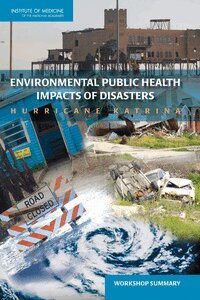
Environmental Public Health Impacts of Disasters
Hurricane Katrina: Workshop Summary
Häftad, Engelska, 2007
349 kr
Tillfälligt slut
Public health officials have the traditional responsibilities of protecting the food supply, safeguarding against communicable disease, and ensuring safe and healthful conditions for the population. Beyond this, public health today is challenged in a way that it has never been before. Starting with the 9/11 terrorist attacks, public health officers have had to spend significant amounts of time addressing the threat of terrorism to human health. Hurricane Katrina was an unprecedented disaster for the United States. During the first weeks, the enormity of the event and the sheer response needs for public health became apparent. The tragic loss of human life overshadowed the ongoing social and economic disruption in a region that was already economically depressed. Hurricane Katrina reemphasized to the public and to policy makers the importance of addressing long-term needs after a disaster.On October 20, 2005, the Institute of Medicine's Roundtable on Environmental Health Sciences, Research, and Medicine held a workshop which convened members of the scientific community to highlight the status of the recovery effort, consider the ongoing challenges in the midst of a disaster, and facilitate scientific dialogue about the impacts of Hurricane Katrina on people's health. Environmental Public Health Impacts of Disasters: Hurricane Katrina is the summary of this workshop. This report will inform the public health, first responder, and scientific communities on how the affected community can be helped in both the midterm and the near future. In addition, the report can provide guidance on how to use the information gathered about environmental health during a disaster to prepare for future events.
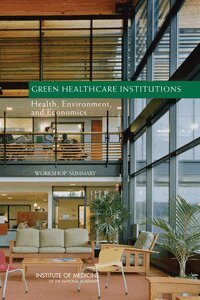
Green Healthcare Institutions
Health, Environment, and Economics: Workshop Summary
Häftad, Engelska, 2007
501 kr
Tillfälligt slut
Green Healthcare Institutions : Health, Environment, and Economics, Workshop Summary is based on the ninth workshop in a series of workshops sponsored by the Roundtable on Environmental Health Sciences, Research, and Medicine since the roundtable began meeting in 1998. When choosing workshops and activities, the roundtable looks for areas of mutual concern and also areas that need further research to develop a strong environmental science background. This workshop focused on the environmental and health impacts related to the design, construction, and operations of healthcare facilities, which are part of one of the largest service industries in the United States. Healthcare institutions are major employers with a considerable role in the community, and it is important to analyze this significant industry. The environment of healthcare facilities is unique; it has multiple stakeholders on both sides, as the givers and the receivers of care. In order to provide optimal care, more research is needed to determine the impacts of the built environment on human health.The scientific evidence for embarking on a green building agenda is not complete, and at present, scientists have limited information. Green Healthcare Institutions : Health, Environment, and Economics, Workshop Summary captures the discussions and presentations by the speakers and participants; they identified the areas in which additional research is needed, the processes by which change can occur, and the gaps in knowledge.
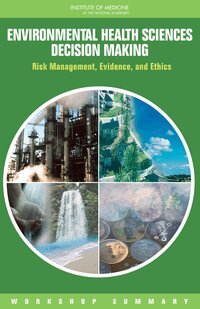
Environmental Health Sciences Decision Making
Risk Management, Evidence, and Ethics: Workshop Summary
Häftad, Engelska, 2009
354 kr
Tillfälligt slut
Environmental health decision making can be a complex undertaking, as there is the need to navigate and find balance among three core elements: science, policy, and the needs of the American public. Policy makers often grapple with how to make appropriate decisions when the research is uncertain. The challenge for the policy maker is to make the right decision with the best available data in a transparent process. The Environmental Health Sciences Decision Making workshop, the first in a series, was convened to inform the Roundtable on Environmental Health Sciences, Research, and Medicine on emerging issues in risk management, "weight of evidence," and ethics that influence environmental health decision making. The workshop, summarized in this volume, included an overview of the principles underlying decision making, the role of evidence and challenges for vulnerable populations, and ethical issues of conflict of interest, scientific integrity, and transparency. The workshop engaged science interest groups, industry, government, and the academic sector.
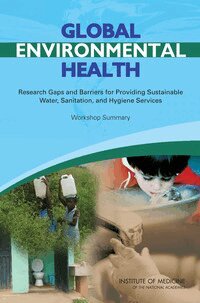
Global Environmental Health
Research Gaps and Barriers for Providing Sustainable Water, Sanitation, and Hygiene Services: Workshop Summary
Häftad, Engelska, 2009
570 kr
Tillfälligt slut
The issues surrounding water services are some of the most critical challenges facing not only the United States, but also the global community today. The Roundtable on Environmental Health Sciences, Research, and Medicine of the Institute of Medicine convened a workshop in October 2007, summarized in this volume, to address objectives related to Sustainable Water, Sanitation, and Hygiene Services. One of the objectives of the workshop was to think about the interdependence of environmental health and human health as connected through water. Organizations cannot discuss water without considering the interrelationship of sanitation and hygiene. It is the convergence of these strategies that promotes healthy outcomes for both individuals and the environment. A second objective of the workshop was to consider how planning, management, and interdisciplinary approaches-including technology, social behavioral issues, gender, health, environment, economic, and political aspects-can be integrated to arrive at sustainable solutions.Many organizations and agencies are trying to forge a path toward sustainable practices in water, but the various sectors utilizing and governing water services are not interconnected. More integration and a greater understanding of holistic approaches are needed.
522 kr
Tillfälligt slut
In 1992 world leaders met at the Earth Summit in Rio de Janeiro to reaffirm the Declaration of the United Nations Conference on the Human Environment that was established on June 16, 1972 in Stockholm. The meeting resulted in the adoption of Agenda 21 by the member states which is a framework for the transition to a more sustainable world. In 2012 the members gathered to assess and reaffirm the importance of progress towards the efforts of Agenda 21. In response to this the Institute of Medicine's (IOM's) Roundtable on Environmental Health Sciences, Research, and Medicine held a workshop to inform the policies that are discussed at the 2012 Earth Summit. The workshop, held in Woods Hole, Massachusetts on July 25-26, 2011, focused on the issue of sustainability and health as well as the linkages that are currently present between the two. The workshop included presentations and discussions which are summarized in Public Health Linkages with Sustainability: Workshop Summary. The report presents how different areas of public health, such as food and water resources, link to sustainability and opportunities or venues that can be examined.
534 kr
Tillfälligt slut
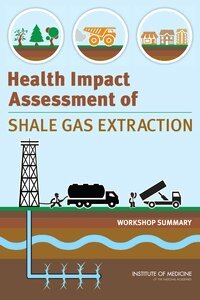
Natural gas extraction from shale formations, which includes hydraulic fracturing, is increasingly in the news as the use of extraction technologies has expanded, rural communities have been transformed seemingly overnight, public awareness has increased, and regulations have been developed. The governmental public health system, which retains primary responsibility for health, was not an early participant in discussions about shale gas extraction; thus public health is lacking critical information about environmental health impacts of these technologies and is limited in its ability to address concerns raised by regulators at the federal and state levels, communities, and workers employed in the shale gas extraction industry. Health Impact Assessment of Shale Gas Extraction is the summary of a workshop convened in 2012 by the Institute of Medicine (IOM) Roundtable on Environmental Health Sciences, Research, and Medicine to discuss the human health impact of shale gas extraction through the lens of a health impact assessment.Eminent scientists, physicians, public health experts, and representatives from government agencies at federal and state levels, from nongovernment organizations, from the business sector, and from interest groups representing the interests of the citizens met to exchange ideas and to inform on hydraulic fracturing as a means of extraction of natural gas. This report examines the state of the science regarding shale gas extraction, the direct and indirect environmental health impacts of shale gas extraction, and the use of health impact assessment as a tool that can help decision makers identify the public health consequences of shale gas extraction.