
Christopher Collins - Böcker
Visar alla böcker från författaren Christopher Collins. Handla med fri frakt och snabb leverans.
17 produkter
17 produkter
1 377 kr
Skickas inom 7-10 vardagar
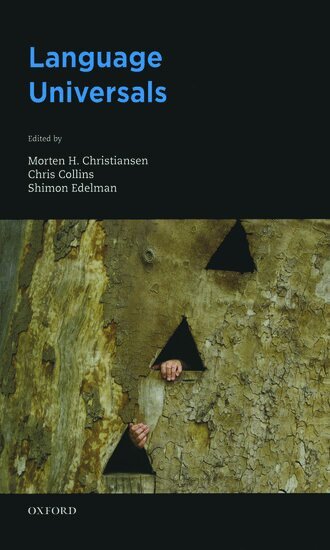
Languages differ from one another in bewildering and seemingly arbitrary ways. For example, in English, the verb precedes the direct object ('understand the proof'), but in Japanese, the direct object comes first. In some languages, such as Mohawk, it is not even possible to establish a basic word order. Nonetheless, languages do share certain regularities in how they are structured and used. The exact nature and extent of these "language universals" has been the focus of much research and is one of the central explanatory goals in the language sciences. During the past 50 years, there has been tremendous progress, a few major conceptual revolutions, and even the emergence of entirely new fields. The wealth of findings and theories offered by the various language-science disciplines has made it more important than ever to work toward an integrated understanding of the nature of human language universals. This book is the first to examine language universals from a cross-disciplinary perspective. It provides new insights into long standing questions such as: What exactly defines the human capacity for language? Are there universal properties of human languages and, if so, what are they? Can all language universals be explained in the same way, or do some universals require different kinds of explanations from others? Language Universals is unique in starting with the assumption that the best way to approach these and related questions is through a dialogue between a wide range of disciplines, including linguistics, cognitive neuroscience, philosophy, computer science and biology.
1 095 kr
Skickas inom 7-10 vardagar
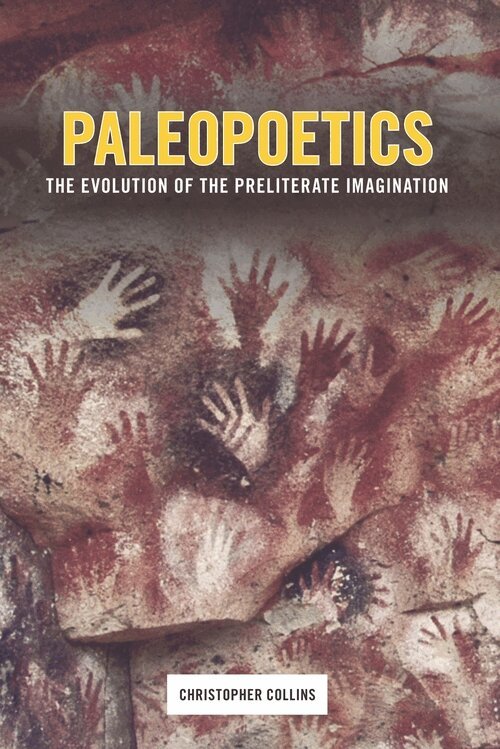
Christopher Collins introduces an exciting new field of research traversing evolutionary biology, anthropology, archaeology, cognitive psychology, linguistics, neuroscience, and literary study. Paleopoetics maps the selective processes that originally shaped the human genus millions of years ago and prepared the human brain to play, imagine, empathize, and engage in fictive thought as mediated by language. A manifestation of the "cognitive turn" in the humanities, Paleopoetics calls for a broader, more integrated interpretation of the reading experience, one that restores our connection to the ancient methods of thought production still resonating within us. Speaking with authority on the scientific aspects of cognitive poetics, Collins proposes reading literature using cognitive skills that predate language and writing. These include the brain's capacity to perceive the visible world, store its images, and retrieve them later to form simulated mental events. Long before humans could share stories through speech, they perceived, remembered, and imagined their own inner narratives.Drawing on a wide range of evidence, Collins builds an evolutionary bridge between humans' development of sensorimotor skills and their achievement of linguistic cognition, bringing current scientific perspective to such issues as the structure of narrative, the distinction between metaphor and metonymy, the relation of rhetoric to poetics, the relevance of performance theory to reading, the difference between orality and writing, and the nature of play and imagination.
279 kr
Skickas inom 7-10 vardagar
Christopher Collins introduces an exciting new field of research traversing evolutionary biology, anthropology, archaeology, cognitive psychology, linguistics, neuroscience, and literary study. Paleopoetics maps the selective processes that originally shaped the human genus millions of years ago and prepared the human brain to play, imagine, empathize, and engage in fictive thought as mediated by language. A manifestation of the "cognitive turn" in the humanities, Paleopoetics calls for a broader, more integrated interpretation of the reading experience, one that restores our connection to the ancient methods of thought production still resonating within us. Speaking with authority on the scientific aspects of cognitive poetics, Collins proposes reading literature using cognitive skills that predate language and writing. These include the brain's capacity to perceive the visible world, store its images, and retrieve them later to form simulated mental events. Long before humans could share stories through speech, they perceived, remembered, and imagined their own inner narratives.Drawing on a wide range of evidence, Collins builds an evolutionary bridge between humans' development of sensorimotor skills and their achievement of linguistic cognition, bringing current scientific perspective to such issues as the structure of narrative, the distinction between metaphor and metonymy, the relation of rhetoric to poetics, the relevance of performance theory to reading, the difference between orality and writing, and the nature of play and imagination.
652 kr
Skickas inom 7-10 vardagar
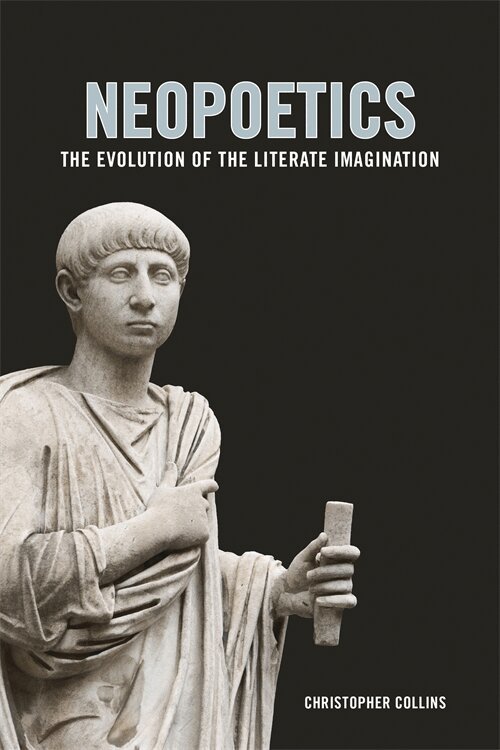
The quest to understand the evolution of the literary mind has become a fertile field of inquiry and speculation for scholars across literary studies and cognitive science. In Paleopoetics, Christopher Collins's acclaimed earlier title, he described how language emerged both as a communicative tool and as a means of fashioning other communicative tools-stories, songs, and rituals. In Neopoetics, Collins turns his attention to the cognitive evolution of the writing-ready brain. Further integrating neuroscience into the popular field of cognitive poetics, he adds empirical depth to our study of literary texts and verbal imagination and offers a whole new way to look at reading, writing, and creative expression. Collins begins Neopoetics with the early use of visual signs, first as reminders of narrative episodes and then as conventional symbols representing actual speech sounds. Next he examines the implications of written texts for the play of the auditory and visual imagination.To exemplify this long transition from oral to literate artistry, Collins examines a wide array of classical texts-from Homer and Hesiod to Plato and Aristotle and from the lyric innovations of Augustan Rome to the inner dialogues of St. Augustine. In this work of "big history," Collins demonstrates how biological and cultural evolution collaborated to shape both literature and the brain we use to read it.
- Nyhet

266 kr
Kommande
The Falklands War is the period of Margaret Thatcher's premiership which still attracts the greatest attention. Mrs. Thatcher's War is a new history of the conflict, not from the military perspective but centrally from hers. The book presents the fullest account to date of the diplomacy before the conflict, the British strategy with Argentina and relationship with American politicians. Chris Collins, the archivist of the Thatcher Foundation with an unsurpassed knowledge of Thatcher's papers, draws on many previously unpublished sources and interviews, including his own conversations with Thatcher in 1992, to create a compelling history of crisis and leadership.
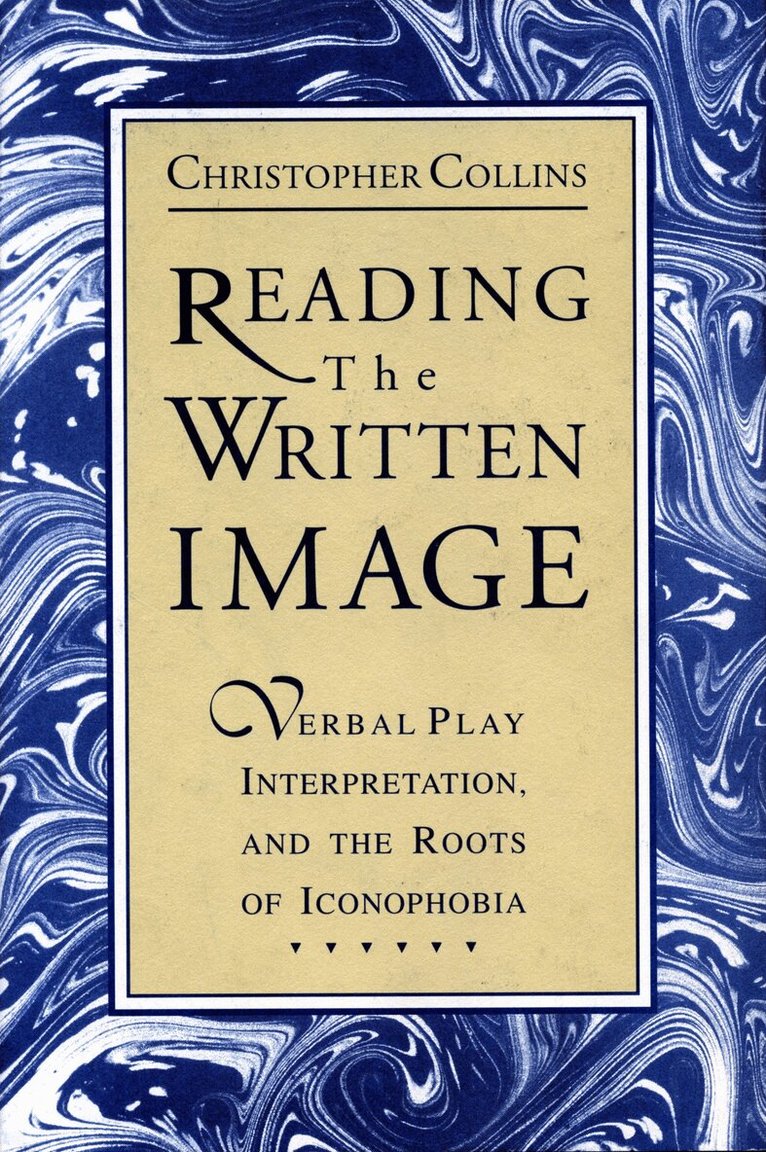
Reading the Written Image
Verbal Play, Interpretation, and the Roots of Iconophobia
Häftad, Engelska, 1991
577 kr
Skickas inom 5-8 vardagar
Reading the Written Image is a study of the imagination as it is prompted by the verbal cues of literature. Since every literary image is also a mental image, a representation of an absent entity, Collins contends that imagination is a poiesis, a making-up, an act of play for both author and reader. The "willing suspension of disbelief," which Coleridge said "constitutes poetic faith," therefore empowers and directs the reader to construct an imagined world in which particular hypotheses are proposed and demonstrated.Although the imagination as a central concept in poetics emerges into critical debate only in the eighteenth century, it has been a crucial issue for over two millennia in religious, philosophical, and political discourse. The two recognized alternative methodologies in the study of literature, the poetic and the hermeneutic, are opposed on the issue of the written image: poets and readers feel free to imagine, while hermeneuts feel obliged to specify the meanings of images and, failing that, to minimize the importance of imagery. Recognizing this problem, Collins proposes that reading written texts be regarded as a performance, a unique kind of play that transposes what had once been an oral-dramatic situation onto an inner, imaginary stage. He applies models drawn from the psychology of play to support his theory that reader response is essentially a poietic response to a rule-governed set of ludic cues.
427 kr
Skickas
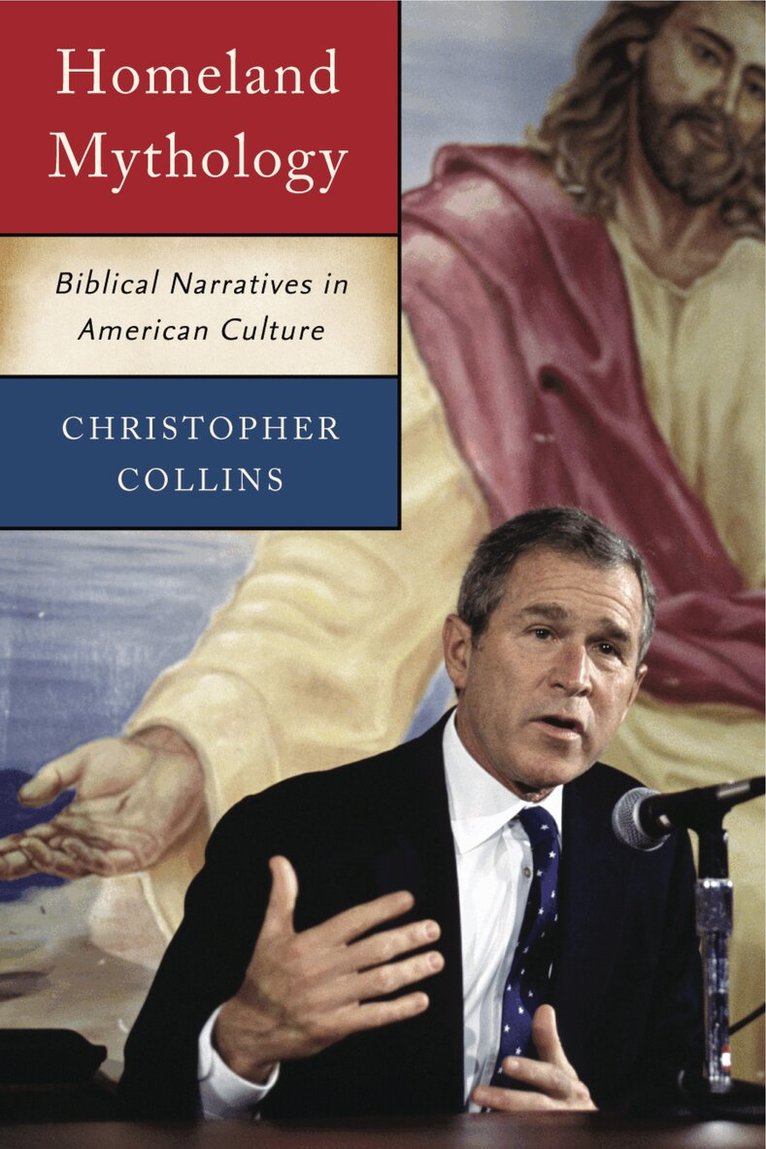
Since 9/11, America has presented itself to the world as a Christianist culture, no less antimodern and nostalgic for an idealized past than its Islamist foes. The master-narrative both sides share might sound like this: Once upon a time, the values of the righteous community coincided with those of the state. Home and land were harmoniously united under God. But through intellectual pride (read: science) and disobedience (read: human rights), this God-blessed homeland was lost and is now worth every drop of blood it takes, ours and others’, to recover.For Americans, the prime source for this once-and-future-kingdom myth is the Bible, with its many narratives of blessings gained, lost, and regained: the garden of Eden, the covenant with Abraham, the bondage in Egypt, the exodus under Moses, the glory of David and Solomon’s realm, the coming of the promised Messiah, his crucifixion, resurrection, and ascension into heaven, his apocalyptic return at the end of history, and his establishment of the earthly kingdom of God. As Homeland Mythology shows, these biblical narratives have, over time, inspired a multitude of nationalist narratives, myths ingeniously spun out to justify a number of decidedly unchristian policies and institutions—from Indian genocide, the slave trade, and the exploitation of immigrant workers to Manifest Destiny, imperial expansionism, and, most recently, preemptive war.On March 25, 2001, George W. Bush shared a bit of political wisdom: “You can fool some of the people all of the time—and those are the ones you have to concentrate on.” The cynical use of religion to cloak criminal behavior is always worth exposing, but why our leaders lie to us is no longer a mystery. What does remain mysterious is why so many of us are disposed to believe their lies. The unexamined issue that this book addresses is, therefore, not the mendacity of the few, but the credulity of the many.
425 kr
Skickas inom 10-15 vardagar
Because every literary image is also a mental image, and because every mental image is a representation of an absent entity, Christopher Collins argues, imagination is a poiesis, a making-up, an act of play for both author and reader. In a book that stands at the intersection of poetic theory and cognitive psychology, Collins considers the processes by which language mediates mental images to make this play possible. The Poetics of the Mind's Eye examines the relation of mind to eye, or of mental imagination to visual perception.This work offers an analysis of the reading act that is at once elegant and profound. It covers an enormous body of material-from contemporary hermeneutics to studies in memory and perception-and applies the resulting observations with brilliance to a range of poetry, ancient and modern.The heart of the study consists of Collins's original delineation and application of six "cognitive modes" of reading: perception, retrospection, assertion, introspection, expectation, and judgment. In addition, Collins considers the impact of the movement from oral to print-literate culture, examines the work of seventeenth- and eighteenth-century empirical philosophers on the nature and power of the imagination, and explores the ways in which nineteenth- and twentieth-century literary theorists, linguists, and psychologists are heirs to this empirical tradition.The Poetics of the Mind's Eye will be of interest to students and scholars of literary theory and criticism.
297 kr
Skickas inom 3-6 vardagar
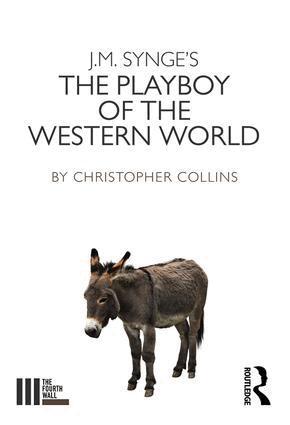
212 kr
Skickas inom 10-15 vardagar
‘I’m thinking this night wasn’t I a foolish fellow not to kill my father in years gone by.’ – Christy MahonOn the first night of J. M. Synge’s The Playboy of the Western World (1907) the audience began protesting in the theatre; by the third night the protests had spilled onto the streets of Dublin. How did one play provoke this? Christopher Collins addresses The Playboy ’s satirical treatment of illusion and realism in light of Ireland’s struggle for independence, as well as Synge’s struggle for artistic expression. By exploring Synge’s unpublished diaries, drafts and notebooks, he seeks to understand how and why the play came to be.This volume invites the reader behind the scenes of this inflammatory play and its first performances, to understand how and why Synge risked everything in the name of art.
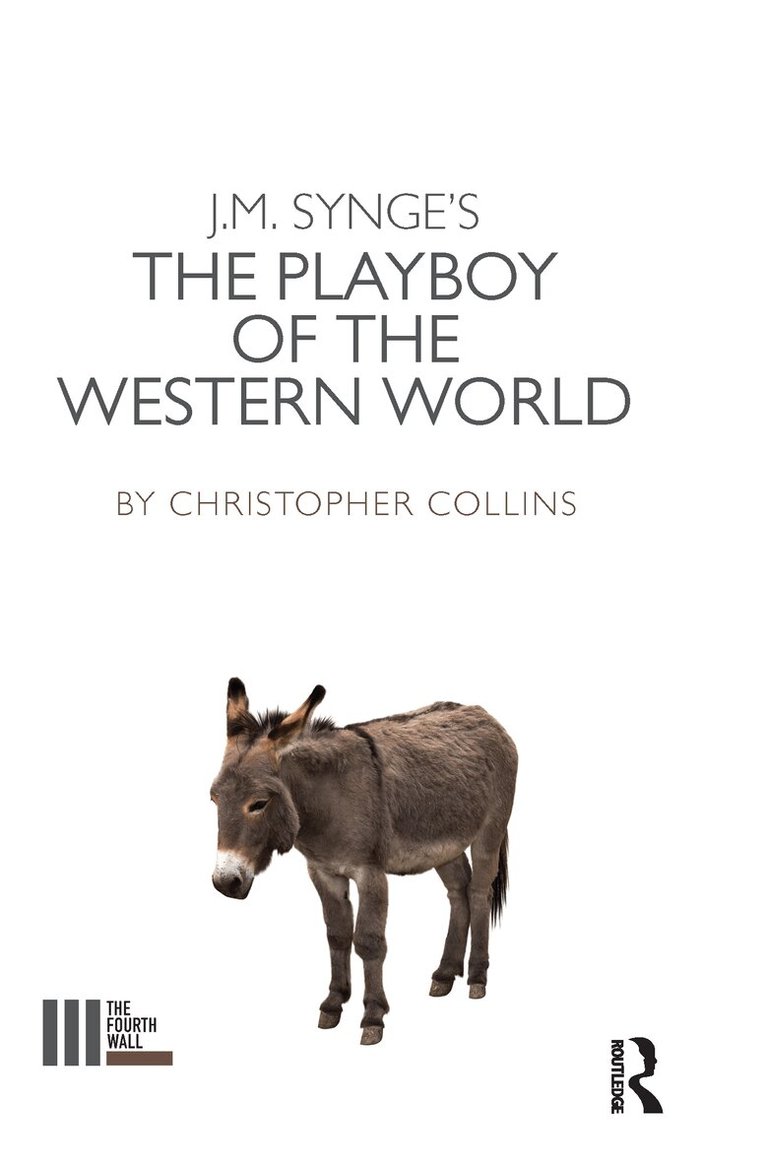
2 285 kr
Tillfälligt slut
I'm thinking this night wasn't I a foolish fellow not to kill my father in years gone by.' – Christy MahonOn the first night of J. M. Synge's The Playboy of the Western World (1907) the audience began protesting in the theatre; by the third night the protests had spilled onto the streets of Dublin. How did one play provoke this? Christopher Collins addresses The Playboy 's satirical treatment of illusion and realism in light of Ireland's struggle for independence, as well as Synge's struggle for artistic expression. By exploring Synge's unpublished diaries, drafts and notebooks, he seeks to understand how and why the play came to be.This volume invites the reader behind the scenes of this inflammatory play and its first performances, to understand how and why Synge risked everything in the name of art.
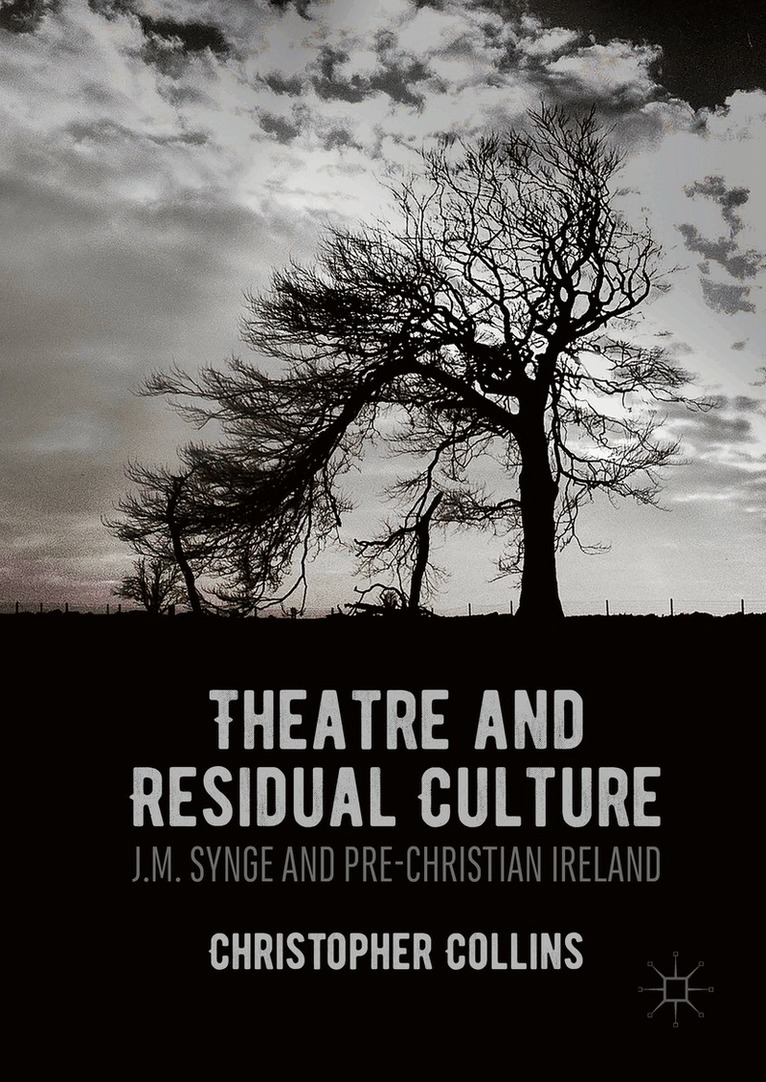
621 kr
Skickas inom 10-15 vardagar
The book draws extensively on Synge’s archive to demonstrate how pre-Christian residual culture informed not just how he wrote and staged pre-Christian beliefs, but also how he thought about an older, almost forgotten culture that Catholic Ireland desperately wanted to forget.
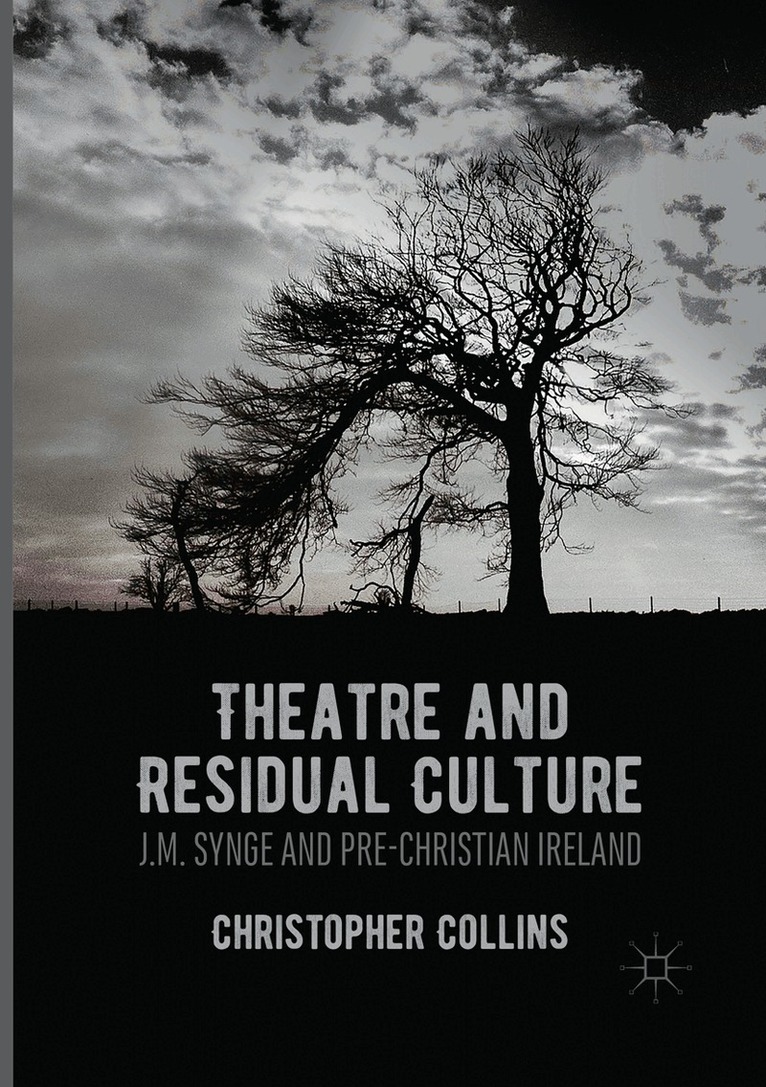
556 kr
Skickas inom 10-15 vardagar
The book draws extensively on Synge’s archive to demonstrate how pre-Christian residual culture informed not just how he wrote and staged pre-Christian beliefs, but also how he thought about an older, almost forgotten culture that Catholic Ireland desperately wanted to forget.
145 kr
Skickas inom 7-10 vardagar
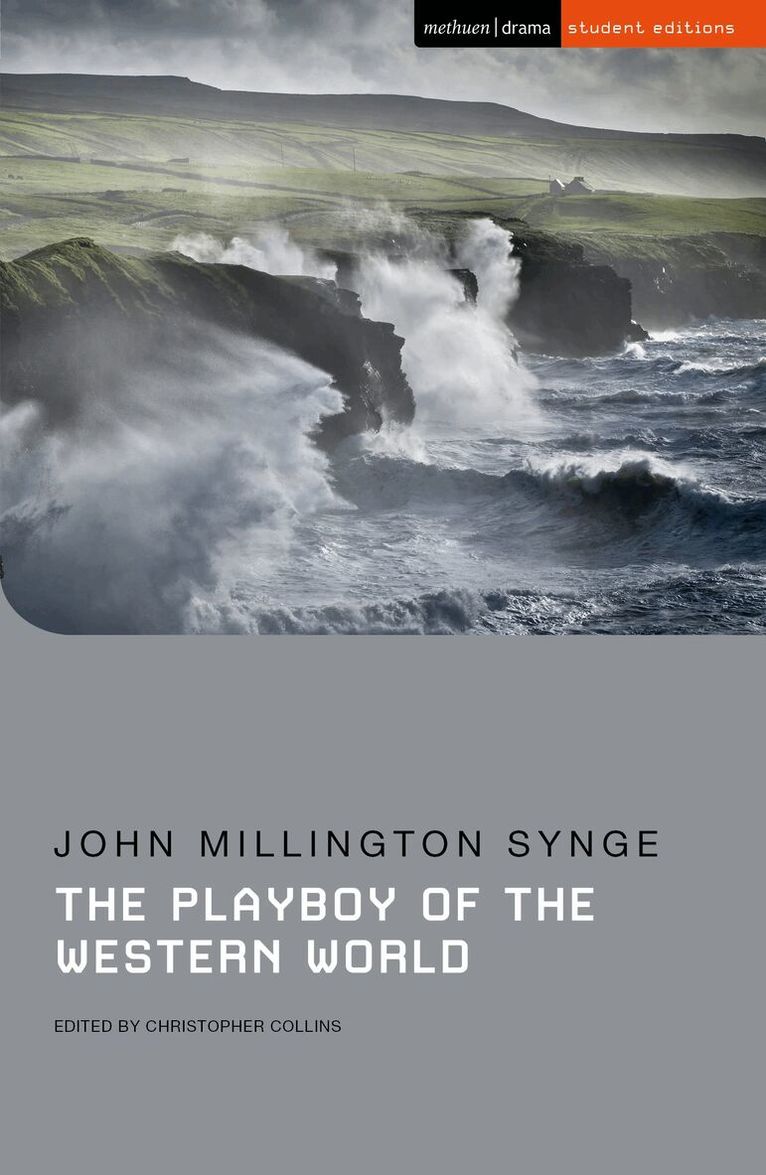
This revised edition of the play is published alongside commentary and notes by Christopher Collins, Assistant Professor of Drama at the University of Nottingham, UK. It includes information for today's students on the play's context; themes; dramatic devices; production history; critical reception; academic debate; and ideas for further study. It also includes interviews with practitioners involved in major recent productions of the play.Described by J.M. Synge as "a comedy, an extravaganza, made to use", The Playboy of the Western World is one of the most iconic plays to have come out of Ireland in the 20th century and is today recognised as a staple of the dramatic canon. It is published as a new Student Edition, which offers a 21st century lens on a play over 100 years old. When it was first performed in 1907 at Dublin's Abbey Theatre, Synge's play provoked uproar and was interrupted more than once by the police. Today, we recognise its importance in making Irish drama the force it became in the early 20th century.
1 665 kr
Skickas inom 7-10 vardagar
No detailed description available for "Evgenij Zamjatin".
uses of observation
A study of correspondential vision in the writings of Emerson, Thoreau and Whitman
Inbunden, Engelska, 1972
1 656 kr
Skickas inom 7-10 vardagar
No detailed description available for "The uses of observation".
174 kr
Skickas inom 5-8 vardagar