
Committee on Radio Frequencies - Böcker
Visar alla böcker från författaren Committee on Radio Frequencies. Handla med fri frakt och snabb leverans.
4 produkter
4 produkter
444 kr
Skickas
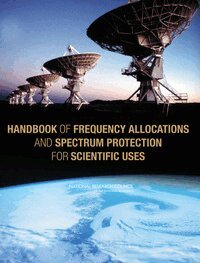
The electromagnetic spectrum is a vital part of our environment. Information encoded in the spectrum of radiation arriving at earth from the universe is the means by which we learn about its workings and origin. Radiation collected from the Earth's land, oceans, biosphere, and atmosphere provide us with much of the data needed to better understand this environment. Wise use of the spectrum is necessary if we are to continue these advances in scientific understanding. To help guide this effort, the NSF and NASA asked the NRC to develop a set of principles for fostering effective allocation and protection of spectral bands for scientific research. This handbook contains practical information in this connection including a description of regulatory bodies and issues, a discussion of the relevant scientific background, a list of science spectrum allocations in the United States, and an analysis of spectrum protection issues.
995 kr
Tillfälligt slut
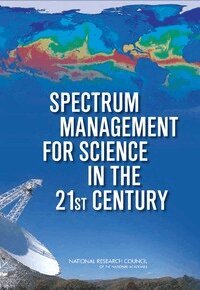
Radio observations of the cosmos are gathered by geoscientists using complex earth-orbiting satellites and ground-based equipment, and by radio astronomers using large ground-based radio telescopes. Signals from natural radio emissions are extremely weak, and the equipment used to measure them is becoming ever-more sophisticated and sensitive. The radio spectrum is also being used by radiating, or "active," services, ranging from aircraft radars to rapidly expanding consumer services such as cellular telephones and wireless internet. These valuable active services transmit radio waves and thereby potentially interfere with the receive-only, or "passive," scientific services. Transmitters for the active services create an artificial "electronic fog" which can cause confusion, and, in severe cases, totally blinds the passive receivers. Both the active and the passive services are increasing their use of the spectrum, and so the potential for interference, already strong, is also increasing. This book addresses the tension between the active services' demand for greater spectrum use and the passive users' need for quiet spectrum.The included recommendations provide a pathway for putting in place the regulatory mechanisms and associated supporting research activities necessary to meet the demands of both users.
Views of the U.S. National Academy of Sciences and National Academy of Engineering on Agenda Items at Issue at the World Radiocommunication Conference 2012
Häftad, Engelska, 2013
356 kr
Tillfälligt slut
The passive, receive-only Radio Astronomy Service (RAS) and the Earth Exploration-Satellite Service (EESS) provide otherwise impossible scientific observations of the Universe and Earth through the use of advanced receiver technology with extreme sensitivity and the employment of complex noise reduction algorithms. Even with such technology, RAS and EESS are quite adversely affected by what most active services would consider low noise levels. To ensure their ability to use the radio spectrum for scientific purposes, scientists must be party to the discussion in the lead-up to the World Radiocommunication Conference (WRC), which will next be held in January and February 2012 in Geneva, Switzerland. By request of the National Science Foundation and the National Aeronautics and Space Administration, the National Research Council was convened to provide guidance to the U.S. spectrum managers and policymakers as they prepare for the WRC in order to protect the scientific exploration of the Earth and Universe using the radio spectrum. While the resulting document is targeted at U.S. agencies, representatives of foreign governments and foreign scientific users will find its contents useful as they plan their own WRC positions.
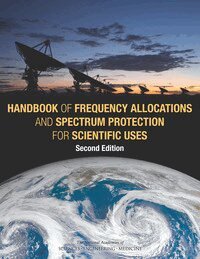
Handbook of Frequency Allocations and Spectrum Protection for Scientific Uses
Second Edition
Häftad, Engelska, 2015
844 kr
Tillfälligt slut
The electromagnetic spectrum is a vital part of our environment. Measures of radio frequency emissions from natural phenomena enable both practical applications, such as weather predictions and studies of the changing of Earth's climate here at home, and reveal the physical properties of cosmic sources. The spectrum is therefore a resource to be used wisely now and to be protected for future generations. Handbook of Frequency Allocations and Spectrum Protection for Scientific Uses: Second Edition sets forth the principles for the allocation and protection of spectral bands for services using the radio spectrum for scientific research. This report describes the radio frequency bands used by scientific services and includes relevant regulatory information and discussion of scientific use of frequency bands. This reference will guide spectrum managers and spectrum regulatory bodies on science issues and serve as a resource to scientists and other spectrum users.