
Dana Lloyd - Böcker
Visar alla böcker från författaren Dana Lloyd. Handla med fri frakt och snabb leverans.
6 produkter
6 produkter
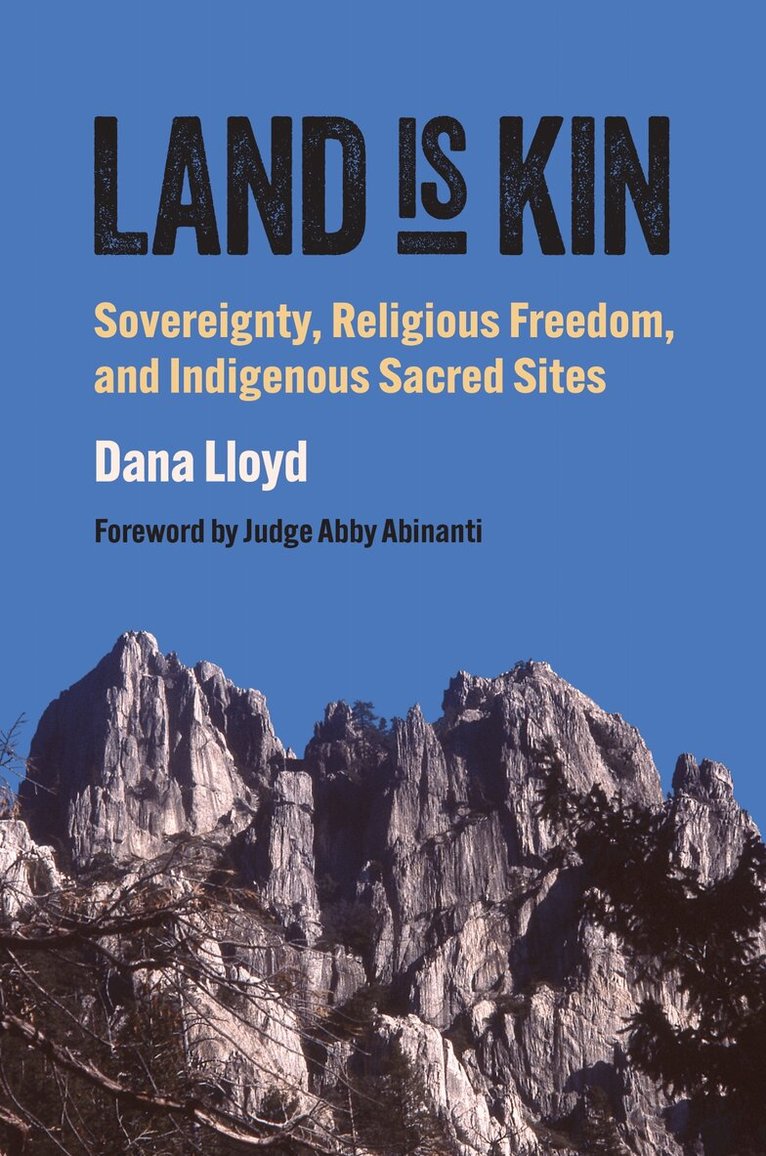
Land Is Kin
Sovereignty, Religious Freedom, and Indigenous Sacred Sites, Foreword by Judge Abby Abinanti
Inbunden, Engelska, 2023
479 kr
Skickas inom 7-10 vardagar
Responding to Vine Deloria, Jr.’s call for all people to “become involved” in the struggle to protect Indigenous sacred sites, Dana Lloyd’s Land Is Kin proposes a rethinking of sacred sites, and a rethinking of even land itself. Deloria suggested using the principle of religious freedom, but this principle has failed Indigenous peoples for decades. Lloyd argues that religious freedom fails Indigenous claimants because settler law creates a tension between two competing rights—one party’s religious freedom and another party’s property rights. In this contest, the right of property will always win.Through an analysis of the 1988 US Supreme Court case Lyng v. Northwest Indian Cemetery Protective Association, which she interprets as a case about sovereignty and the meaning of land, Lloyd proposes a multilayered understanding of land and the different roles it can simultaneously play. Rejecting the binary logic of sacred religion versus secular property, Lloyd uses the legal dispute over the High Country—an area of the Six Rivers National Forest in Northern California sacred to the Yurok, Karuk, and Tolowa Indigenous nations—to show that there are at least five different, but not equally valid, ways to understand land in the Lyng case: home, property, sacred site, wilderness, and kin. To protect the High Country, the Yurok filed a religious freedom lawsuit but then proceeded to describe the land as their home in court. They lobbied for protecting the High Country through a wilderness designation even as they continued to argue that they had been managing it for centuries. They have purchased large parcels of ancestral land and also declare the land their kin, a relationship that ostensibly excludes the possibility of ownership.Land Is Kin demonstrates the complexity of land in contemporary religious, political, and legal discourse. By drawing on Indigenous perspectives on the land as kin, Lloyd points toward a framework that shifts sovereignty away from binary oppositions—between property and sacred site, between the federal government and Native nations—towards seeing the land itself as sovereign.
- Nyhet
519 kr
Skickas inom 3-6 vardagar
Honorable Mention: Best First book in the History of ReligionsResponding to Vine Deloria, Jr.’s call for all people to “become involved” in the struggle to protect Indigenous sacred sites, Dana Lloyd’s Land Is Kin proposes a rethinking of sacred sites, and a rethinking of even land itself. Deloria suggested using the principle of religious freedom, but this principle has failed Indigenous peoples for decades. Lloyd argues that religious freedom fails Indigenous claimants because settler law creates a tension between two competing rights—one party’s religious freedom and another party’s property rights. In this contest, the right of property will always win.Through an analysis of the 1988 US Supreme Court case Lyng v. Northwest Indian Cemetery Protective Association, which she interprets as a case about sovereignty and the meaning of land, Lloyd proposes a multilayered understanding of land and the different roles it can simultaneously play. Rejecting the binary logic of sacred religion versus secular property, Lloyd uses the legal dispute over the High Country—an area of the Six Rivers National Forest in Northern California sacred to the Yurok, Karuk, and Tolowa Indigenous nations—to show that there are at least five different, but not equally valid, ways to understand land in the Lyng case: home, property, sacred site, wilderness, and kin. To protect the High Country, the Yurok filed a religious freedom lawsuit but then proceeded to describe the land as their home in court. They lobbied for protecting the High Country through a wilderness designation even as they continued to argue that they had been managing it for centuries. They have purchased large parcels of ancestral land and also declare the land their kin, a relationship that ostensibly excludes the possibility of ownership.Land Is Kin demonstrates the complexity of land in contemporary religious, political, and legal discourse. By drawing on Indigenous perspectives on the land as kin, Lloyd points toward a framework that shifts sovereignty away from binary oppositions—between property and sacred site, between the federal government and Native nations—towards seeing the land itself as sovereign.
308 kr
Skickas inom 7-10 vardagar
The second volume of American Examples presents nine new essays with fresh multidisciplinary approaches to understanding the place of faith, broadly understood, in America, broadly understood
415 kr
Skickas inom 7-10 vardagar
American Examples: New Conversations about Religion, Volume Three, is the third in a series of annual anthologies produced by the American Examples workshop hosted by the Department of Religious Studies at the University of Alabama. In the latest volume from this innovative academic project, ten topically and methodologically diverse scholars vividly reimagine the meaning and applications of American religious history. These ten chapters use case studies from America, broadly conceived, to ask trenchant theoretical questions that are of interest to scholars and students within and beyond the subfield of American religious history.
588 kr
Kommande
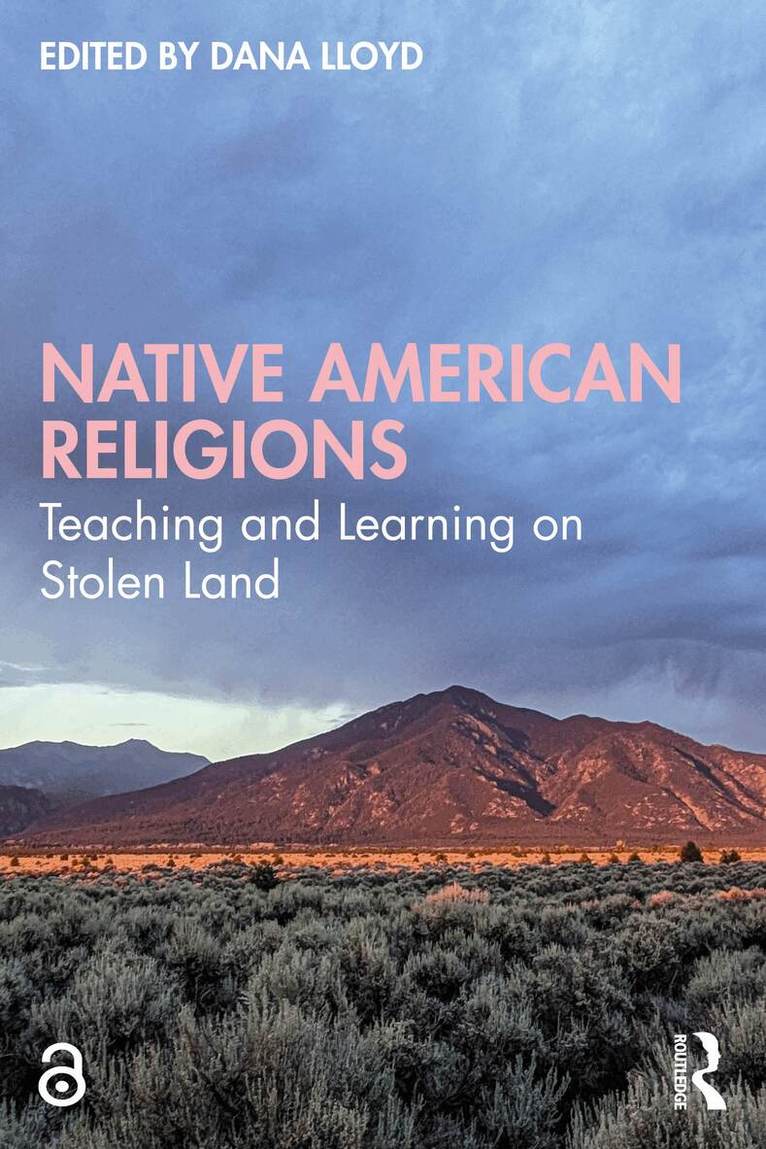
Native American Religions: Teaching and Learning on Stolen Land is an introduction to the religious lives of Native American people in North America. Weaving together historical, ethnographic, theoretical, and legal materials, the book focuses on how religion is politicized in North America in the Native American context. Noting that no Native language actually has a word translatable to “religion,” as the sacred and the secular are not separate spheres in Native traditions, and that religion is a colonial construct, the book adopts theories and methods from Native American and Indigenous Studies to understand Native American and Indigenous religious traditions.Written with the student in mind, this cutting-edge volume brings together 17 Indigenous and non-Indigenous scholars at various career stages to offer a theoretical framework through which to think about the role of religion in U.S.–Native relations alongside real-world case studies. This book introduces students to the histories of Native American peoples, including discussion of Indigenous intellectual traditions, Indigenous sovereignty movements, and practices such as cultural appropriation and land acknowledgement, to make the case that Native American religions are a political phenomenon. With student-friendly pedagogy throughout, including discussion questions and “further resources” lists, it is a must-read for all students and teachers of Native American Religions, Religion in America, or Indigenous Studies.
2 113 kr
Kommande
Native American Religions: Teaching and Learning on Stolen Land is an introduction to the religious lives of Native American people in North America. Weaving together historical, ethnographic, theoretical, and legal materials, the book focuses on how religion is politicized in North America in the Native American context. Noting that no Native language actually has a word translatable to “religion,” as the sacred and the secular are not separate spheres in Native traditions, and that religion is a colonial construct, the book adopts theories and methods from Native American and Indigenous Studies to understand Native American and Indigenous religious traditions.Written with the student in mind, this cutting-edge volume brings together 17 Indigenous and non-Indigenous scholars at various career stages to offer a theoretical framework through which to think about the role of religion in U.S.–Native relations alongside real-world case studies. This book introduces students to the histories of Native American peoples, including discussion of Indigenous intellectual traditions, Indigenous sovereignty movements, and practices such as cultural appropriation and land acknowledgement, to make the case that Native American religions are a political phenomenon. With student-friendly pedagogy throughout, including discussion questions and “further resources” lists, it is a must-read for all students and teachers of Native American Religions, Religion in America, or Indigenous Studies.