• Fri frakt över 249 kr
  • •
  • Snabba leveranser
  • •
  • Billiga böcker
Kundservice

Du är på sajten för privatpersoner.

Företag, bibliotek eller offentlig verksamhet?

Du handlar på classic.bokus.com, där alla dina funktioner finns intakta.
Till classic.bokus.com
Bokus logotyp. Gå till startsidan.
  • Erbjudanden
  • Nyheter
  • Student
  • Topplistor
  • Barn & ungdom
  • Bokus Play
  • E-böcker
  • Pocketböcker
  • Spel & pussel

10% rabatt på allt med kod NYSTART10 →

Sidfot

Mina sidor

    Hjälp

    • Kundservice
    • Vanliga frågor och svar
    • Frakt och leverans
    • Retur vid ångerrätt
    • Reklamera vara
    • Betalning
    • Köpvillkor
    • Allmänna villkor
    • Information om webbplatsens tillgänglighet

    Om Bokus

    • Om oss
    • Pressrum
    • För studenter
    • För företag
    • För bibliotek och offentlig verksamhet
    • För leverantörer
    • Hållbarhet

    Populärt

    • Aktuella erbjudanden
    • Presentkort
    • Studentlitteratur
    • Nya böcker
    • Topplistor
    • Signerade böcker
    • Engelska böcker

    Inspiration

    • Boktips
    • BookTok
    • Populära bokserier
    • Barnbokskaraktärer
    • Populära författare
    Logotyp för Bokus
    Följ oss på Facebook (extern länk)Följ oss på Instagram (extern länk)Följ oss på YouTube (extern länk)Följ oss på TikTok (extern länk)
    bokus @ CookiesAnpassa cookiesIntegritetspolicyKöpvillkor
    Till Citymail hemsida (extern länk)Till Budbee hemsida (extern länk)Till Postnord hemsida (extern länk)Till Schenker hemsida (extern länk)Till Early Bird hemsida (extern länk)Till Walleys hemsida (extern länk)
    1. Juridik
    2. Rättsvetenskap
    3. Rättshistoria

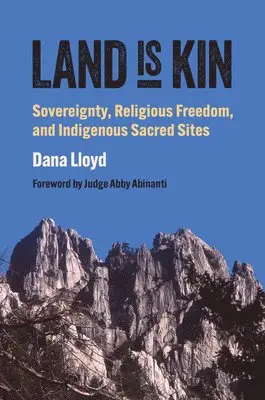
    Land Is Kin

    Sovereignty, Religious Freedom, and Indigenous Sacred Sites

    AvDana Lloyd

    Häftad, Engelska, 2026

    Del i serien Studies in US Religion, Politics, and Law

    302 kr

    Skickas . Fri frakt över 249 kr.

    Fler format och utgåvor

    Inbunden

    500 kr

    E-bok

    387 kr

    Beskrivning

    Honorable Mention: Best First book in the History of ReligionsResponding to Vine Deloria, Jr.’s call for all people to “become involved” in the struggle to protect Indigenous sacred sites, Dana Lloyd’s Land Is Kin proposes a rethinking of sacred sites, and a rethinking of even land itself. Deloria suggested using the principle of religious freedom, but this principle has failed Indigenous peoples for decades. Lloyd argues that religious freedom fails Indigenous claimants because settler law creates a tension between two competing rights—one party’s religious freedom and another party’s property rights. In this contest, the right of property will always win.Through an analysis of the 1988 US Supreme Court case Lyng v. Northwest Indian Cemetery Protective Association, which she interprets as a case about sovereignty and the meaning of land, Lloyd proposes a multilayered understanding of land and the different roles it can simultaneously play. Rejecting the binary logic of sacred religion versus secular property, Lloyd uses the legal dispute over the High Country—an area of the Six Rivers National Forest in Northern California sacred to the Yurok, Karuk, and Tolowa Indigenous nations—to show that there are at least five different, but not equally valid, ways to understand land in the Lyng case: home, property, sacred site, wilderness, and kin. To protect the High Country, the Yurok filed a religious freedom lawsuit but then proceeded to describe the land as their home in court. They lobbied for protecting the High Country through a wilderness designation even as they continued to argue that they had been managing it for centuries. They have purchased large parcels of ancestral land and also declare the land their kin, a relationship that ostensibly excludes the possibility of ownership.Land Is Kin demonstrates the complexity of land in contemporary religious, political, and legal discourse. By drawing on Indigenous perspectives on the land as kin, Lloyd points toward a framework that shifts sovereignty away from binary oppositions—between property and sacred site, between the federal government and Native nations—towards seeing the land itself as sovereign.

    Produktinformation

    • Utgivningsdatum:2026-04-29
    • Mått:152 x 229 x 12 mm
    • Vikt:335 g
    • Format:Häftad
    • Språk:Engelska
    • Serie:Studies in US Religion, Politics, and Law
    • Antal sidor:224
    • Förlag:University Press of Kansas
    • ISBN:9780700641826

    Utforska kategorier

    • Rättshistoria inom Juridik
    • Religion: allmänt inom Filosofi och religion
    • Andra religioner och trosföreställningar inom Filosofi och religion

    Mer om författaren

    Dana Lloyd is assistant professor of Global Interdisciplinary Studies at Villanova University.

    Recensioner i media

    "Land is Kin challenges us with some welcomed, insightful, and, at times, creative analytical work. Scholars of Indigenous religious freedom will recognize the important contributions this book makes to our field."—Journal of Church and State"Despite all the setbacks, the story Lloyd tells in this important book is not one of unremitting gloom. It radiates with the hope of the Indigenous nations who have never stopped fighting for the High Country as both home and kin."—Journal for the Study of Religion, Nature, and Culture"Combining a clear understanding of legal doctrine but embedded in humanities scholarship that emphasises law as storytelling, Land is Kin does not only demonstrate the complexity of land but outlines a potential path forward."—Sydney Law Review"The work is richly insightful, and Lloyd embraces every complexity and potential contradiction in her argument. Land is Kin brilliantly exposes the limits of the First Amendment and calls on future scholars, activists, and allies to think beyond its confines."—Reading Religion"Until the tired and faulty precedent of Lyng is dethroned, Indigenous sacred sites in the United States will continue to suffer the consequences of being treated as mere property. Dana Lloyd challenges this paradigm in Land Is Kin by looking backward and forward, asking how such a problematic framing of sacred land as government property came to be. She explores how this knotty tangle might be undone in a way that foregrounds Indigenous sovereignty, focusing on kinship with the land and the relationship work such intimacy demands. This important book will be compelling to readers across several fields—Native American and Indigenous studies, religious studies, and law—and to communities on the ground seeking fresh insights for gaining protection of their sacred places as relatives."—Greg Johnson, professor, Department of Religious Studies at University of California, Santa Barbara, and author of Sacred Claims: Repatriation and Living Tradition"This book is as refreshing as it is lucid. Where most observers consider a 1988 loss before the Supreme Court to be the end of the story for Native American sacred place protection in the land of religious freedom, Dana Lloyd presses through and beyond the language of religious freedom or wilderness to hear how Yurok, Karuk, and Tolowa peoples themselves assert their rights and responsibilities to land as kin."—Michael McNally, professor of religion, Carleton College, and author of Defend the Sacred: Native American Religious Freedom beyond the First Amendment"Dana Lloyd has written an important book. Ever since the Supreme Court decided the Lyng case in 1988, it has been used to severely limit and almost completely erase Indigenous land-based religious rights. Lloyd provides a new critique and analysis on how to understand and work around Lyng."—Robert J. Miller, coauthor of A Promise Kept: The Muscogee (Creek) Nation and McGirt v. Oklahoma

    Innehållsförteckning

    • AcknowledgmentsForeword by Judge Abby AbinantiIntroduction: The High Country1. Land as Home in the G-O Road Trial2. Land as Property in the Lyng Decision3. Land as Sacred in Justice Brennan’s Dissent4. Land as Wild in the California Wilderness Act5. Land as Kin in the Klamath River ResolutionConclusion: Land as SovereignNotesBibliographyIndex