Studies in US Religion, Politics, and Law – serie
Visar alla böcker i serien Studies in US Religion, Politics, and Law. Handla med fri frakt och snabb leverans.
2 produkter
2 produkter
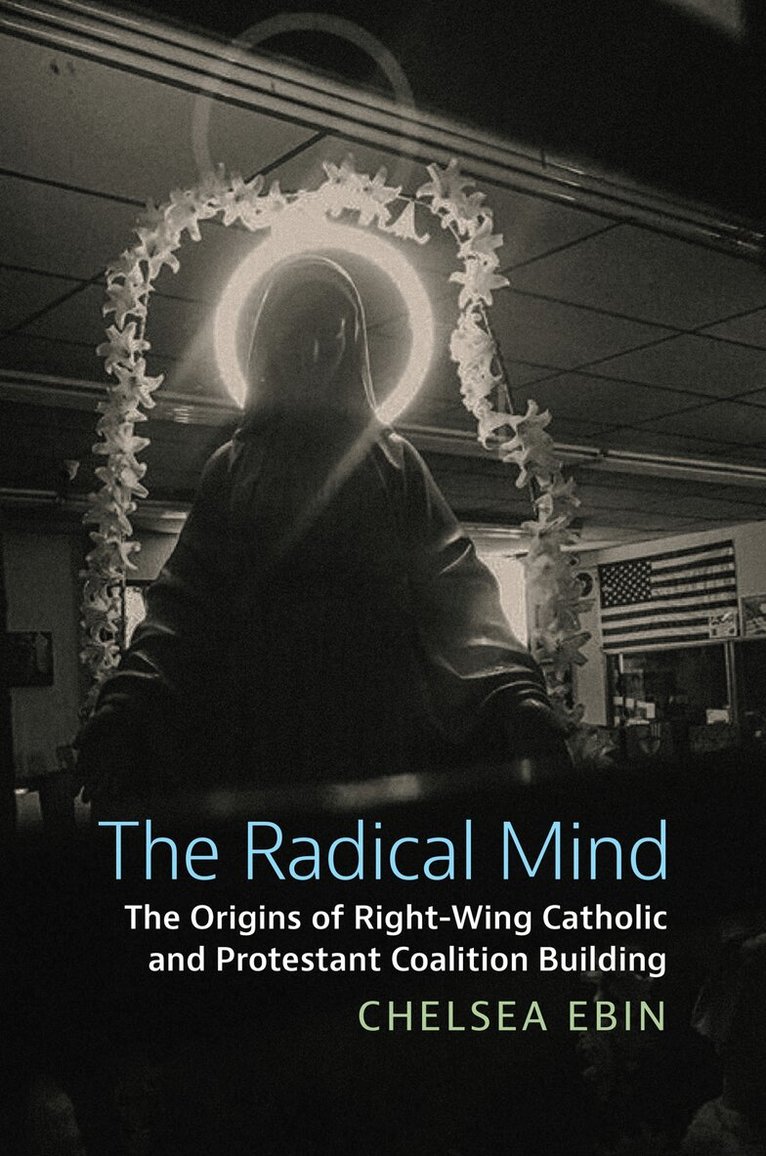
Radical Mind
The Origins of Right-Wing Catholic and Protestant Coalition Building
Inbunden, Engelska, 2024
542 kr
Skickas inom 10-15 vardagar
The Radical Mind is a groundbreaking analysis of the origins of the Christian Right, whose political victories are radically reshaping the landscape of American society. Scholars and the public alike have traditionally regarded the New Right and the Christian Right as separate movements. The New Right is supposedly a secular right-wing operation with purely political goals, while the Christian Right is an evangelical Protestant movement largely motivated by religious convictions. Insofar as both are conservative efforts, most people view them as reactionary and driven by a culture-war backlash against liberal changes to society.Chelsea Ebin’s The Radical Mind aims to overturn this consensus. Through a close analysis of New Right architects Connaught Marshner and Paul Weyrich (who is often seen as secular but was a committed Catholic), this book explores the way conservative Catholics and Protestants overcame their long-standing antipathy to form a political coalition—what Ebin calls the New Christian Right. Drawing on extensive archival research, Ebin shows how the movement’s key architects infused right-wing activism with religion. Rather than working to conserve the past, this book argues that the New Christian Right is fundamentally a forward-looking and proactive movement focused on remaking the political landscape in the United States.The radical aims of the New Christian Right have been obscured by the way they cultivated a shared identity of victimhood and manipulated the discourse about backlash to create a nostalgic idea of the past that they then leveraged to justify their right-wing policy goals. The Catholic-Protestant alliance constructed an imagined past that they projected into the future as their ideal vision of society. Ebin calls this strategy “prefigurative traditionalism”—a paradoxical prefiguring of a manufactured past. Using this tactic, the New Christian Right coalition disguised the radicality of its politics by framing their aims as reactionary and defensive rather than proactive and offensive.An interdisciplinary work informed by the fields of history, religious studies, public law, and American politics, The Radical Mind offers a new and convincing explanation for the recent gains of the Christian Right and the morally supercharged political landscape we face today.
519 kr
Skickas inom 3-6 vardagar
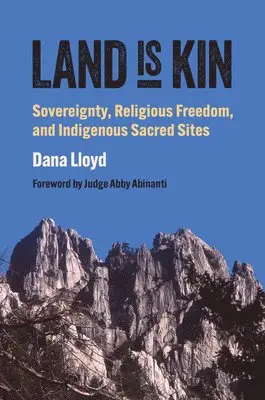
Honorable Mention: Best First book in the History of ReligionsResponding to Vine Deloria, Jr.’s call for all people to “become involved” in the struggle to protect Indigenous sacred sites, Dana Lloyd’s Land Is Kin proposes a rethinking of sacred sites, and a rethinking of even land itself. Deloria suggested using the principle of religious freedom, but this principle has failed Indigenous peoples for decades. Lloyd argues that religious freedom fails Indigenous claimants because settler law creates a tension between two competing rights—one party’s religious freedom and another party’s property rights. In this contest, the right of property will always win.Through an analysis of the 1988 US Supreme Court case Lyng v. Northwest Indian Cemetery Protective Association, which she interprets as a case about sovereignty and the meaning of land, Lloyd proposes a multilayered understanding of land and the different roles it can simultaneously play. Rejecting the binary logic of sacred religion versus secular property, Lloyd uses the legal dispute over the High Country—an area of the Six Rivers National Forest in Northern California sacred to the Yurok, Karuk, and Tolowa Indigenous nations—to show that there are at least five different, but not equally valid, ways to understand land in the Lyng case: home, property, sacred site, wilderness, and kin. To protect the High Country, the Yurok filed a religious freedom lawsuit but then proceeded to describe the land as their home in court. They lobbied for protecting the High Country through a wilderness designation even as they continued to argue that they had been managing it for centuries. They have purchased large parcels of ancestral land and also declare the land their kin, a relationship that ostensibly excludes the possibility of ownership.Land Is Kin demonstrates the complexity of land in contemporary religious, political, and legal discourse. By drawing on Indigenous perspectives on the land as kin, Lloyd points toward a framework that shifts sovereignty away from binary oppositions—between property and sacred site, between the federal government and Native nations—towards seeing the land itself as sovereign.