
Daniel Simberloff - Böcker
Visar alla böcker från författaren Daniel Simberloff. Handla med fri frakt och snabb leverans.
8 produkter
8 produkter
805 kr
Skickas inom 5-8 vardagar
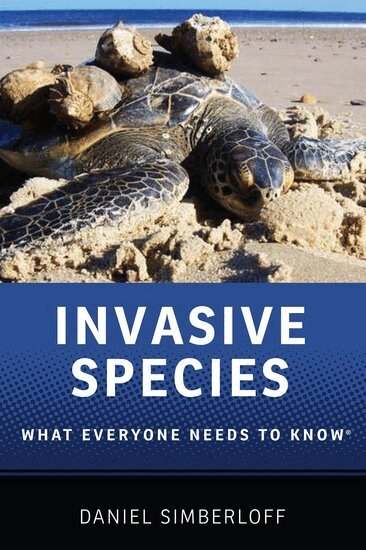
Of the 7,000 estimated non-native species present in North America, approximately 1,000 are invasive. Clearly, invasive species are in the minority, but their small numbers don't keep them from causing billions of dollars in economic and ecological harm each year. Policymakers and ecologists continue to try to figure out which species might be harmful, which invasive species are doing the most damage, and which of these might respond best to eradication efforts. Invasive species reports and case studies are prevalent in political, environmental, and scientific news cycles, and a significant portion of the public is concerned about the issue. In this book, Simberloff will first cover basic topics such as how non-native species are introduced, which areas have incurred the most biological invasions, and how the rates of biological invasions have shifted in recent years. He then moves on to the direct and indirect impacts of the impacts of invasive species on various ecosystems, such as habitat and resource competition, how invasive species transmit pathogens, and how introduced plants and animals can modify a habitat to favor other non-native species. Simberloff's final chapters will discuss the evolution of invasive species, the policies we currently have in place to manage them, and future prospects for controlling their spread. The book will also contain a section dedicated to the more controversial topics surrounding invasive species: invasive natives, useful non-native species, animal rights versus species rights, and non-native species' impacts on the biodiversity of an ecosystem.
118 kr
Skickas inom 5-8 vardagar
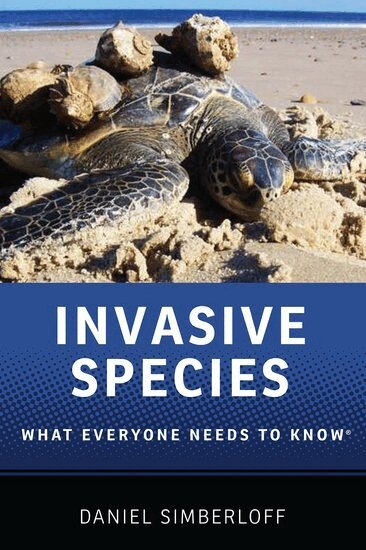
Invasive species come in all sizes, from plant pathogens like the chestnut blight in eastern North America, to the red imported fire ant that has spread throughout the South, the predatory Indian mongoose now found in the Caribbean and Hawaii, and the huge Burmese python populating the Florida swamps. And while many invasive species are safe and even beneficial, the more harmful varieties cost the world economy billions of dollars annually, devastate agriculture, spread painful and even lethal diseases, and otherwise diminish our quality of life in myriad surprising ways. In Invasive Species: What Everyone Needs to Know, award-winning biologist Daniel Simberloff offers a wide-ranging and informative survey that sheds light on virtually every aspect of these biological invaders. Filled with case studies of an astonishing array of invasive species, the book covers such topics as how humans introduce these species-sometimes inadvertently, but often deliberately-the areas that have suffered the most biological invasions, the methods we use to keep our borders safe, the policies we currently have in place to manage these species, and future prospects for controlling their spread. An eminent ecologist, Simberloff analyzes the direct and indirect impacts of invasive species on various ecosystems, such as when non-native species out-compete native species for food or light, describes how invasive species (such as the Asian mosquito that is a vector for West Nile virus, itself an invasive species) transmit pathogens, and explains his acclaimed theory of "invasional meltdown" in which two or more introduced species combine to produce a far more devastating impact than any one of them would have caused alone. The book also discusses the more controversial issues surrounding invasive species and it concludes with suggested readings and a list of related web sites.

487 kr
Skickas inom 7-10 vardagar
A leading biologist offers a comprehensive and accessible history of invasive species science, from its earliest antecedents through its current research foci and controversies. From the arrival of the naval shipworm in the Black Sea in the first millennium BC to the escape of the Burmese python in Florida in 1992, humans have moved species to new locations, deliberately or inadvertently, for thousands of years. Agricultural and environmental impacts of some invasions were evident early, although whether observers recognized that the cause was an introduced species is uncertain. The history of invasion biology truly begins in the sixteenth through eighteenth centuries, when explorers noticed European species on various distant islands and in North America. In the nineteenth century, biogeographers, studying species distributions across the globe, introduced the first native and non-native species categorizations, and prominent researchers like Charles Darwin began to describe the impacts of introduced species. In the nineteenth and twentieth centuries, as humans moved increasing numbers of species across the globe, the advent of modern ecology deepened our understanding of the scope of the problem. In Ecological Explosions, invasive species expert Daniel Simberloff provides a thorough overview of the development of invasion science, from early research—including from the perspectives of leading scientists like Aldo Leopold—to the field’s future. Simberloff explores the work of pioneering ecologists like Charles Elton, antecedents of what became today’s invasion biology, before discussing the field’s true emergence in the 1980s, its explosive methodological and theoretical expansion, its integration with other disciplines, and its increasing visibility, not only within the biological literature but also in government policies across the world in the 1990s. Finally, he investigates current controversies, such as the debate over whether the entire science is xenophobic, and asks how ecosystems might adapt to a rapidly globalizing world and ever-increasing numbers of introduced species—including the joro spider, lionfish, spotted lanternfly, common reed, and Asian carp.
Del 3 - Encyclopedias of the Natural World
Encyclopedia of Biological Invasions
Inbunden, Engelska, 2011
934 kr
Tillfälligt slut
This pioneering encyclopedia illuminates a topic at the forefront of global ecology - biological invasions, or organisms that come to live in the wrong place. Written by leading scientists from around the world, "Encyclopedia of Biological Invasions" addresses all aspects of this subject at a global level - including invasions by animals, plants, fungi, and bacteria - in succinct, alphabetically arranged articles. Scientifically uncompromising, yet clearly written and free of jargon, the volume encompasses fields of study including biology, demography, geography, ecology, evolution, sociology, and natural history. Featuring many cross-references, suggestions for further reading, illustrations, an appendix of the world's worst 100 invasive species, a glossary, and more, this is an essential reference for anyone who needs up-to-date information on this important topic."Encyclopedia of Biological Invasions" features articles on: well-known invasive species such the zebra mussel, chestnut blight, cheatgrass, gypsy moth, Nile perch, giant African snail, and Norway rat; regions with especially large numbers of introduced species including the Great Lakes, Mediterranean Sea, Hawaiian Islands, Australia, and New Zealand; conservation, ecological, economic, and human and animal health impacts of invasions around the world; the processes and pathways involved in invasion; and, management of introduced species.
2 206 kr
Skickas inom 3-6 vardagar
This work is the first to focus systematically on a much-debated topic: the conceptual issues of community ecology, including the nature of evidence in ecology, the role of experiments, attempts to disprove hypotheses, and the value of negative evidence in the discipline. Originally published in 1984. The Princeton Legacy Library uses the latest print-on-demand technology to again make available previously out-of-print books from the distinguished backlist of Princeton University Press. These editions preserve the original texts of these important books while presenting them in durable paperback and hardcover editions. The goal of the Princeton Legacy Library is to vastly increase access to the rich scholarly heritage found in the thousands of books published by Princeton University Press since its founding in 1905.
5 331 kr
Skickas inom 3-6 vardagar
This work is the first to focus systematically on a much-debated topic: the conceptual issues of community ecology, including the nature of evidence in ecology, the role of experiments, attempts to disprove hypotheses, and the value of negative evidence in the discipline. Originally published in 1984. The Princeton Legacy Library uses the latest print-on-demand technology to again make available previously out-of-print books from the distinguished backlist of Princeton University Press. These editions preserve the original texts of these important books while presenting them in durable paperback and hardcover editions. The goal of the Princeton Legacy Library is to vastly increase access to the rich scholarly heritage found in the thousands of books published by Princeton University Press since its founding in 1905.

1 165 kr
Skickas inom 7-10 vardagar
Invasive species have a critical and growing effect upon natural areas. They can modify, degrade, or destroy wildland ecosystem structure and function, and reduce native biodiversity. Landscape-level solutions are needed to address these problems. Conservation biologists seek to limit such damage and restore ecosystems using a variety of approaches. One such approach is biological control: the deliberate importation and establishment of specialized natural enemies, which can address invasive species problems and which should be considered as a possible component of restoration. Biological control can be an effective tool against many invasive insects and plants but it has rarely been successfully employed against other groups. Safety is of paramount concern and requires that the natural enemies used be specialized and that targeted pests be drivers of ecological degradation. While modern approaches allow species to be selected with a high level of security, some risks do remain. However, as in all species introductions, these should be viewed in the context of the risk of failing to reduce the impact of the invasive species.This unique book identifies the balance among these factors to show how biological control can be integrated into ecosystem restoration as practiced by conservation biologists. Jointly developed by conservation biologists and biological control scientists, it contains chapters on matching tools to management goals; tools in action; measuring and evaluating ecological outcomes of biological control introductions; managing conflict over biological control; and includes case studies as well as an ethical framework for integrating biological control and conservation practice.Integrating Biological Control into Conservation Practice is suitable for graduate courses in invasive species management and biological control, as well as for research scientists in government and non-profit conservation organizations.
1 577 kr
Skickas inom 10-15 vardagar
To assess the social processes of globalization that are changing the way in which we co-inhabit the world today, this book invites the reader to essay the diversity of worldviews, with the diversity of ways to sustainably co-inhabit the planet. With a biocultural perspective that highlights planetary ecological and cultural heterogeneity, this book examines three interrelated themes: (1) biocultural homogenization, a global, but little perceived, driver of biological and cultural diversity loss that frequently entail social and environmental injustices; (2) biocultural ethics that considers –ontologically and axiologically– the complex interrelationships between habits, habitats, and co-inhabitants that shape their identity and well-being; (3) biocultural conservation that seeks social and ecological well-being through the conservation of biological and cultural diversity and their interrelationships.