Roy H. May Jr. – författare
Visar alla böcker från författaren Roy H. May Jr.. Handla med fri frakt och snabb leverans.
11 produkter
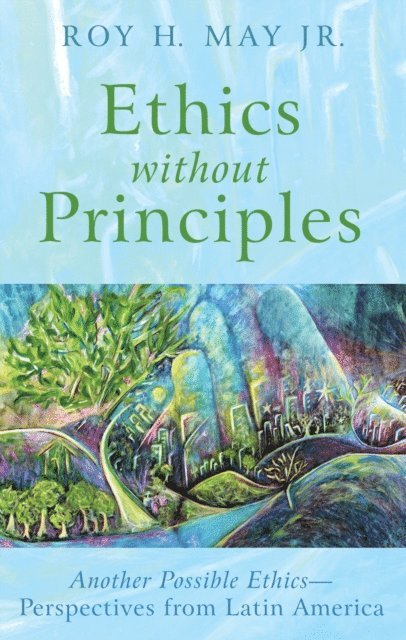
Ethics without Principles
Another Possible Ethics—Perspectives from Latin America
E-bok, 2015
347 kr
Lägg i varukorg
Ethics in the West too often equates morality with universal moral principles, thus imposing lifestyles and moral criteria that do not respect differences and local histories. Even Christianity proposes ethics that is based on eternal, absolute and universal truths or principles, independent of …
Ethics and Spirituality
An Activity Book
E-bok, 2012
208 kr
Lägg i varukorg
Saint Paul declares, Live by the Spirit (Gal 5:6). This means our way of living ought to be guided by the Holy Spirit. Through a series of theoretical reflections, questions, and directed activities, this activity book will help you understand the relationship between spirituality and ethics, …
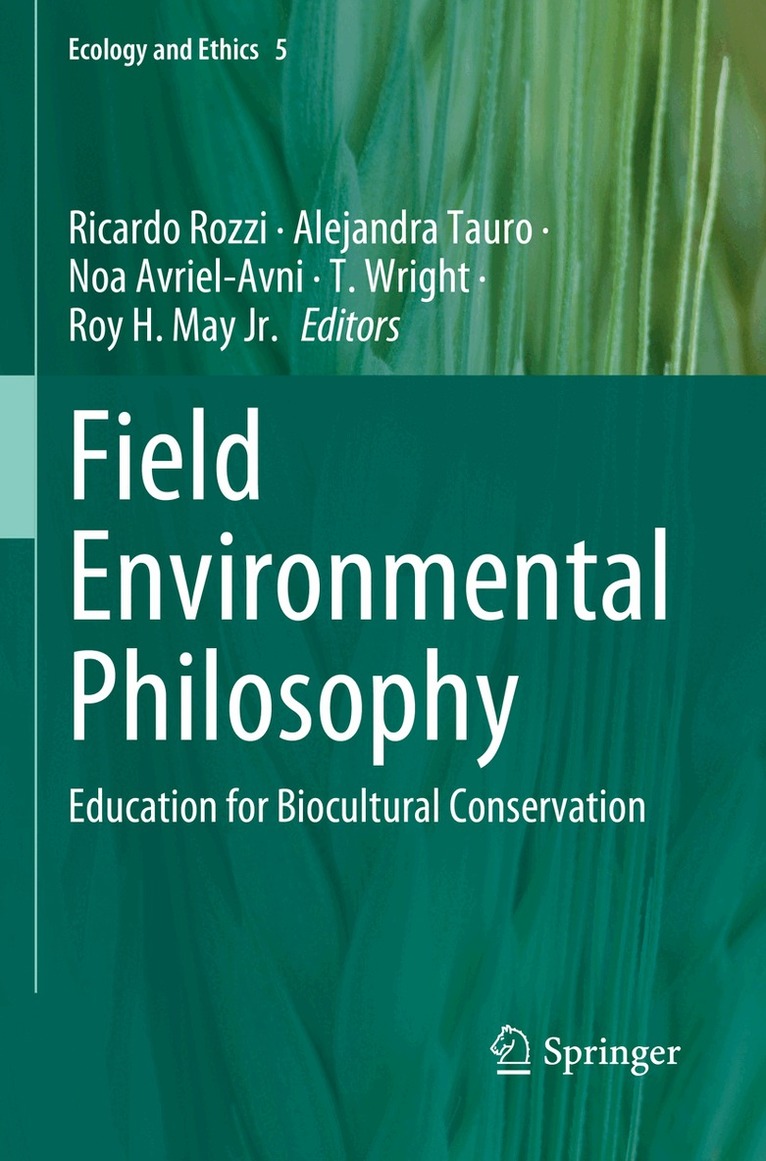
Field Environmental Philosophy
Education for Biocultural Conservation
Av Ricardo Rozzi, Alejandra Tauro m. fl.
Inbunden, 2023
2180 kr
Lägg i varukorg
This fifth volume in the Ecology and Ethics series integrates key concepts of the previous four volumes by addressing biocultural conservation through novel educational methods. In Field Environmental Philosophy (FEP), the authors undertake two complementary tasks. First, they address a problematic …
Field Environmental Philosophy
Education for Biocultural Conservation
Av Roy H. May Jr., T. Wright m. fl.
E-bok, 2023
2925 kr
Lägg i varukorg
This fifth volume in the Ecology and Ethics series integrates key concepts of the previous four volumes by addressing biocultural conservation through novel educational methods. In Field Environmental Philosophy (FEP), the authors undertake two complementary tasks. First, they address a problematic …
Field Environmental Philosophy
Education for Biocultural Conservation
Av Ricardo Rozzi, Alejandra Tauro m. fl.
Häftad, 2024
2180 kr
Lägg i varukorg
This fifth volume in the Ecology and Ethics series integrates key concepts of the previous four volumes by addressing biocultural conservation through novel educational methods. In Field Environmental Philosophy (FEP), the authors undertake two complementary tasks. First, they address a problematic …
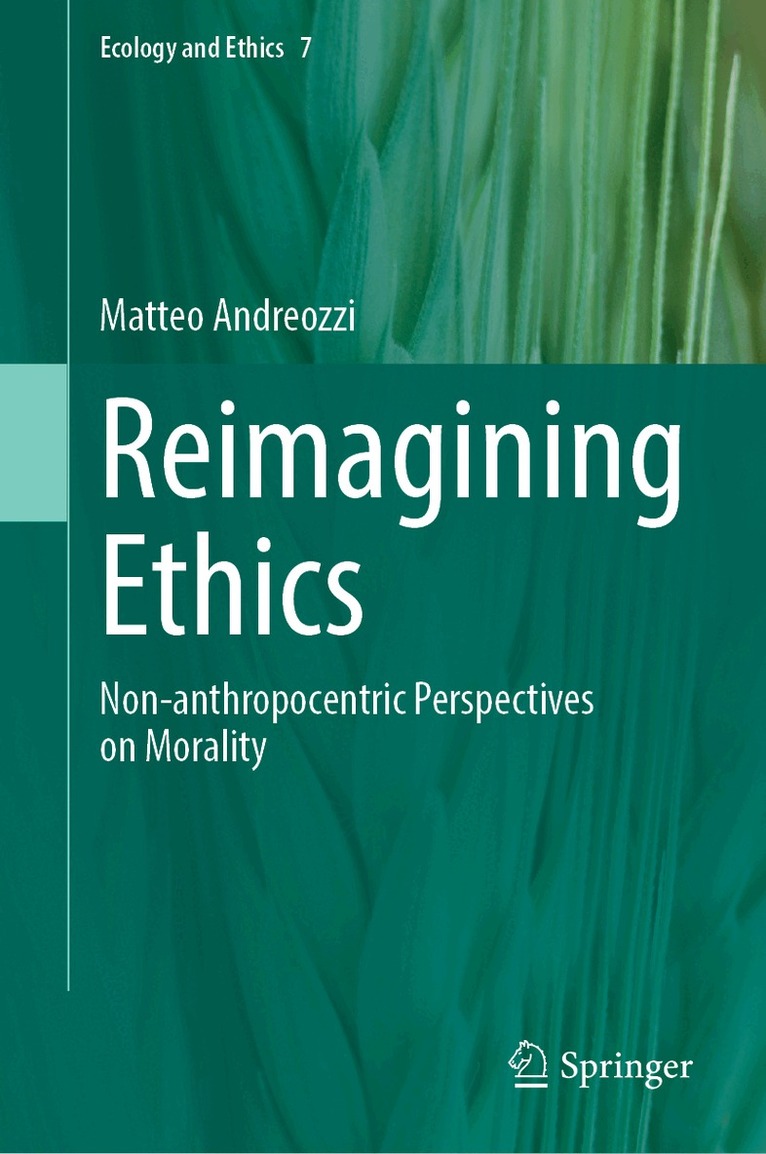
Reimagining Ethics
Non-anthropocentric Perspectives on Morality
Av Matteo Andreozzi, Luca Valera m. fl.
Inbunden, 2025
1311 kr
Lägg i varukorg
Several environmental problems are currently seriously undermining the traditional belief that the moral community should be restricted to human beings only. New scientific theories, especially in the fields of biology, ethology, and ecology, together with recent scientific discoveries …
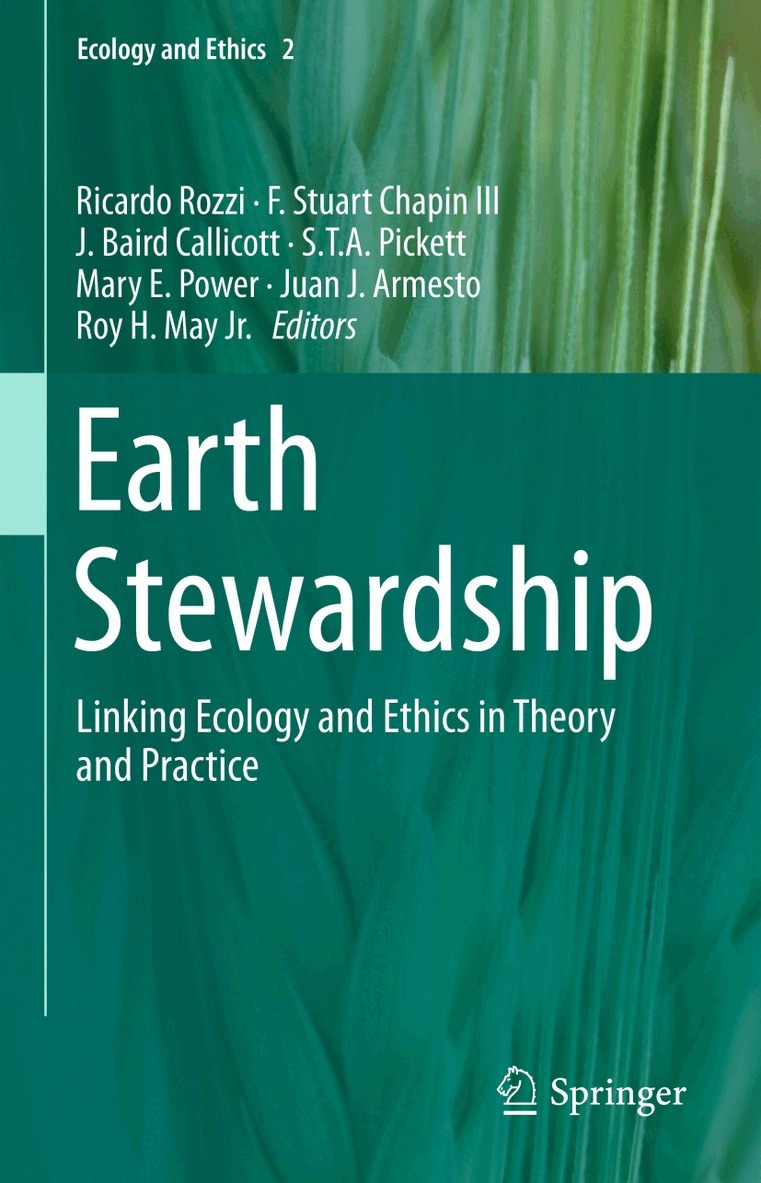
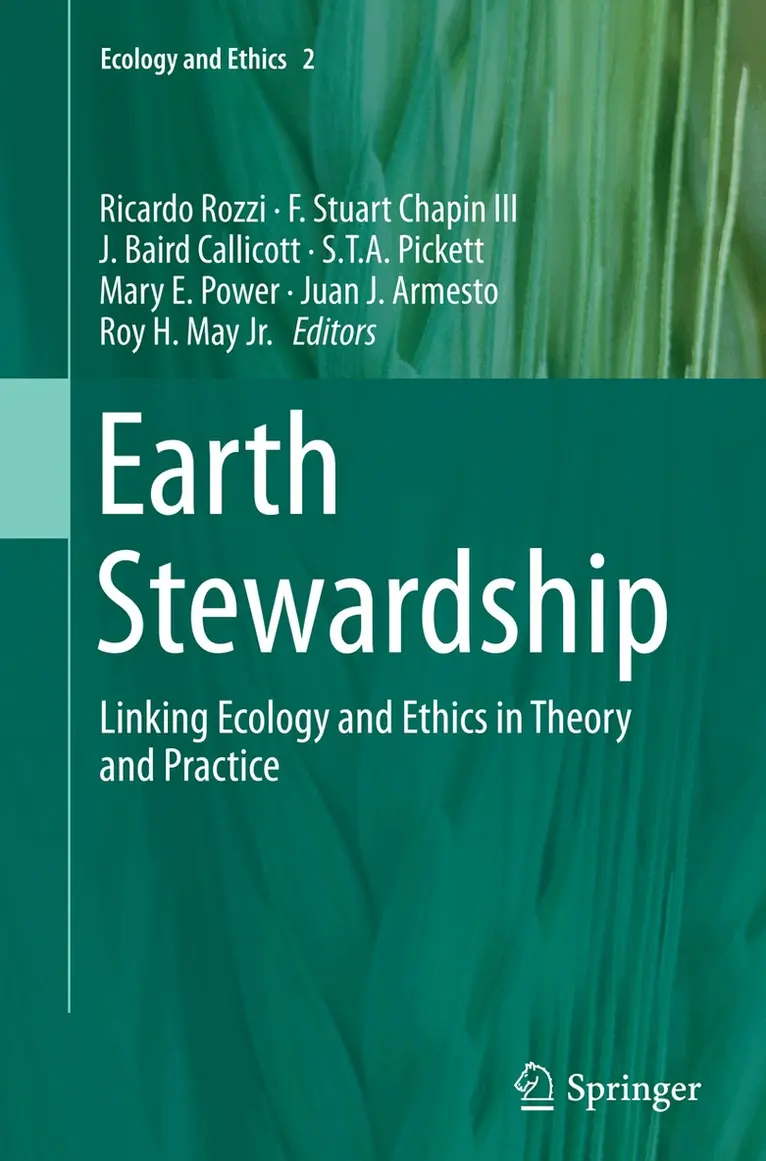
Earth Stewardship
Linking Ecology and Ethics in Theory and Practice
Av Ricardo Rozzi, F. Stuart Chapin III m. fl.
Inbunden, 2015
1637 kr
Lägg i varukorg
This book advances Earth Stewardship toward a planetary scale, presenting a range of ecological worldviews, practices, and institutions in different parts of the world and to use them as the basis for considering what we could learn from one another, and what we could do together. Today, …
Earth Stewardship
Linking Ecology and Ethics in Theory and Practice
Av Roy H. May Jr., Juan J. Armesto m. fl.
E-bok, 2015
2044 kr
Lägg i varukorg
This book advances Earth Stewardship toward a planetary scale, presenting a range of ecological worldviews, practices, and institutions in different parts of the world and to use them as the basis for considering what we could learn from one another, and what we could do together. Today, …
Earth Stewardship
Linking Ecology and Ethics in Theory and Practice
Av Ricardo Rozzi, F. Stuart Chapin III m. fl.
Häftad, 2016
1637 kr
Lägg i varukorg
This book advances Earth Stewardship toward a planetary scale, presenting a range of ecological worldviews, practices, and institutions in different parts of the world and to use them as the basis for considering what we could learn from one another, and what we could do together. Today, …
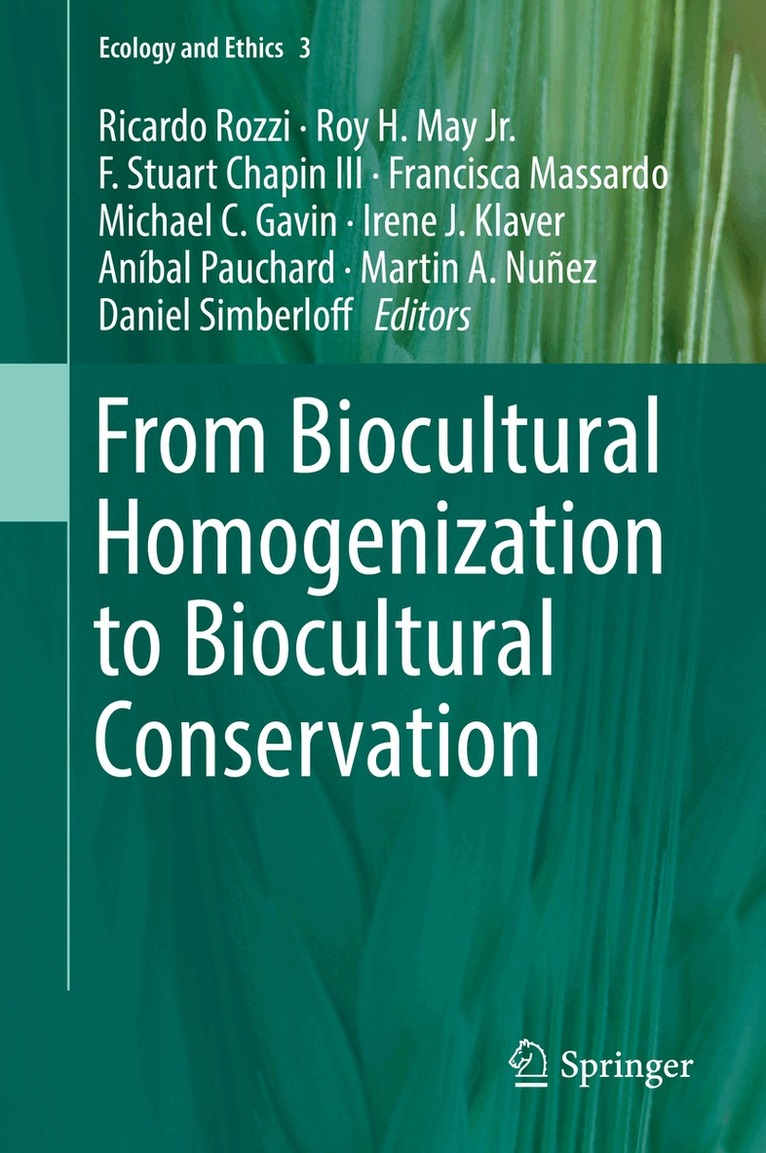
From Biocultural Homogenization to Biocultural Conservation
Av Ricardo Rozzi, Roy H. May Jr. m. fl.
Inbunden, 2019
1637 kr
Lägg i varukorg
To assess the social processes of globalization that are changing the way in which we co-inhabit the world today, this book invites the reader to essay the diversity of worldviews, with the diversity of ways to sustainably co-inhabit the planet. With a biocultural perspective that highlights …
From Biocultural Homogenization to Biocultural Conservation
Av Daniel Simberloff, Martin A. Nunez m. fl.
E-bok, 2019
2065 kr
Lägg i varukorg
To assess the social processes of globalization that are changing the way in which we co-inhabit the world today, this book invites the reader to essay the diversity of worldviews, with the diversity of ways to sustainably co-inhabit the planet. With a biocultural perspective that highlights …