
Eric Sandberg - Böcker
Visar alla böcker från författaren Eric Sandberg. Handla med fri frakt och snabb leverans.
7 produkter
7 produkter
600 kr
Skickas inom 10-15 vardagar
The primary aim of Studying Crime in Fiction: An Introduction is to introduce the emerging cross-disciplinary area of study that combines the fields of crime fiction studies and criminology. The study of crime fiction as a genre has a long history within literary studies, and is becoming increasingly prominent in twenty-first-century scholarship. Less attention, however, has been paid to the ways in which elements of criminology, or the systematic study of crime and criminal behaviour from a wide range of perspectives, have influenced the production and reception of crime narratives. Similarly, not enough attention has been paid to the ways in which crime fiction as a genre can inform and enliven the study of criminology. Written largely for undergraduate and graduate students, but also for scholars of crime fiction and criminology interested in thinking across disciplinary boundaries, Studying Crime in Fiction: An Introduction provides full coverage of the backgrounds of the related fields of crime fiction studies and criminology, and explores the many ways they are reciprocally illuminating.The four main chapters in Section 1 (Orient You) familiarize readers with the history and contours of the broad fields within which Studying Crime in Fiction: An Introduction operates. It introduces the history of crime and criminology, as well the history of crime fiction and the academic field dedicated to its study. In its final chapter it looks at the ways these areas of study can be conceptually interrelated. Section 2 of the book (Equip You) is dedicated to examining aspects of criminological theory in relation to various forms of crime fiction. It highlights a range of the most relevant theories, paradigms, and problematics of criminology that appear in, shed light on, or can be effectively illuminated through reference to crime fiction. Its five chapters deal with the definition of crime; explanations for crime and criminal behaviour; investigations into crime; the experience of crime; and, finally, punishments for crime. All of these areas are examined alongside examples of crime fiction drawn from across the genre’s history. Section 3 (Enable You) presents six case studies. Each of these reads a work of crime fiction alongside one or more criminological approaches. Each case study is supplemented with a set of questions addressing issues central to the study of crime in fiction.
2 247 kr
Skickas inom 10-15 vardagar
The primary aim of Studying Crime in Fiction: An Introduction is to introduce the emerging cross-disciplinary area of study that combines the fields of crime fiction studies and criminology. The study of crime fiction as a genre has a long history within literary studies, and is becoming increasingly prominent in twenty-first-century scholarship. Less attention, however, has been paid to the ways in which elements of criminology, or the systematic study of crime and criminal behaviour from a wide range of perspectives, have influenced the production and reception of crime narratives. Similarly, not enough attention has been paid to the ways in which crime fiction as a genre can inform and enliven the study of criminology. Written largely for undergraduate and graduate students, but also for scholars of crime fiction and criminology interested in thinking across disciplinary boundaries, Studying Crime in Fiction: An Introduction provides full coverage of the backgrounds of the related fields of crime fiction studies and criminology, and explores the many ways they are reciprocally illuminating.The four main chapters in Section 1 (Orient You) familiarize readers with the history and contours of the broad fields within which Studying Crime in Fiction: An Introduction operates. It introduces the history of crime and criminology, as well the history of crime fiction and the academic field dedicated to its study. In its final chapter it looks at the ways these areas of study can be conceptually interrelated. Section 2 of the book (Equip You) is dedicated to examining aspects of criminological theory in relation to various forms of crime fiction. It highlights a range of the most relevant theories, paradigms, and problematics of criminology that appear in, shed light on, or can be effectively illuminated through reference to crime fiction. Its five chapters deal with the definition of crime; explanations for crime and criminal behaviour; investigations into crime; the experience of crime; and, finally, punishments for crime. All of these areas are examined alongside examples of crime fiction drawn from across the genre’s history. Section 3 (Enable You) presents six case studies. Each of these reads a work of crime fiction alongside one or more criminological approaches. Each case study is supplemented with a set of questions addressing issues central to the study of crime in fiction.
679 kr
Skickas inom 10-15 vardagar
Crime fiction is one of the most popular literary genres and has been for more than a century. At the heart of almost all forms of mysteries—from the Golden Age puzzler to the contemporary police procedural, from American hardboiled fiction to the Japanese timetable mystery—is the investigator. He—or, increasingly, she—can be a private eye, a police officer, or a general busybody. But whatever forms these investigators take, they are the key element of crime fiction. Criminals and their crimes come and go, while our attention is captured by these fascinating characters who exist at the intersection of so many different literary and social roles. 100 Greatest Literary Detectives offers a selection of the most influential, important, and intriguing fictional sleuths—amateur or professional—from around the world. From Sherlock Holmes to Harry Hole, Kinsey Millhone to Kiyoshi Mitarai, the detectives profiled here give readers a broader picture of one of fiction’s most popular genres. Each entry summarizes the distinctive features of notable investigators and their approaches to crime, provides a brief outline of major features of their fictional careers, and makes a case for their importance based on literary-historical impact, novelty, uniqueness, aesthetic quality, or cultural resonance. The characters profiled here include Lew Archer, Martin Beck, Father Brown, Brother Cadfael, Adam Dalgliesh, Mike Hammer, Miss Jane Marple, Hercule Poirot, Ellery Queen, Ezekiel “Easy” Rawlins, Kay Scarpetta, Sam Spade, Phillip Trent, V. I. Warshawski, Lord Peter Wimsey, Nero Wolfe, and many others. Readers will find some of their favorite detectives here, learn more about their literary and cultural significance, and discover other great sleuths—old and new, local and international—in this engaging volume. 100 Greatest Literary Detectives provides a fascinating look into some of the most intriguing fictional characters of all time.
783 kr
Skickas inom 5-8 vardagar
Dorothy L. Sayers was one of the "Queens of Crime." Alongside writers like Agatha Christie, she perfected the whodunnit, but also used the genre to explore social, ethical, and emotional matters. Her characters, particularly Lord Peter Wimsey and his investigative partner Harriet Vane, struggle with the complexities of life and love in a rapidly changing world while solving some of the most intricate and complex mysteries ever offered to the reading public. Sayers was also an important theoretician of detective fiction, a religious dramatist, a public intellectual, and one of the 20th century's most important translators of Dante.While focusing on her mystery fiction, this companion offers a full view of all aspects of Sayers's career. It is an ideal introduction for readers new to Sayers's diverse and rewarding body of work, and an invaluable companion for her many fans.
1 512 kr
Skickas inom 10-15 vardagar
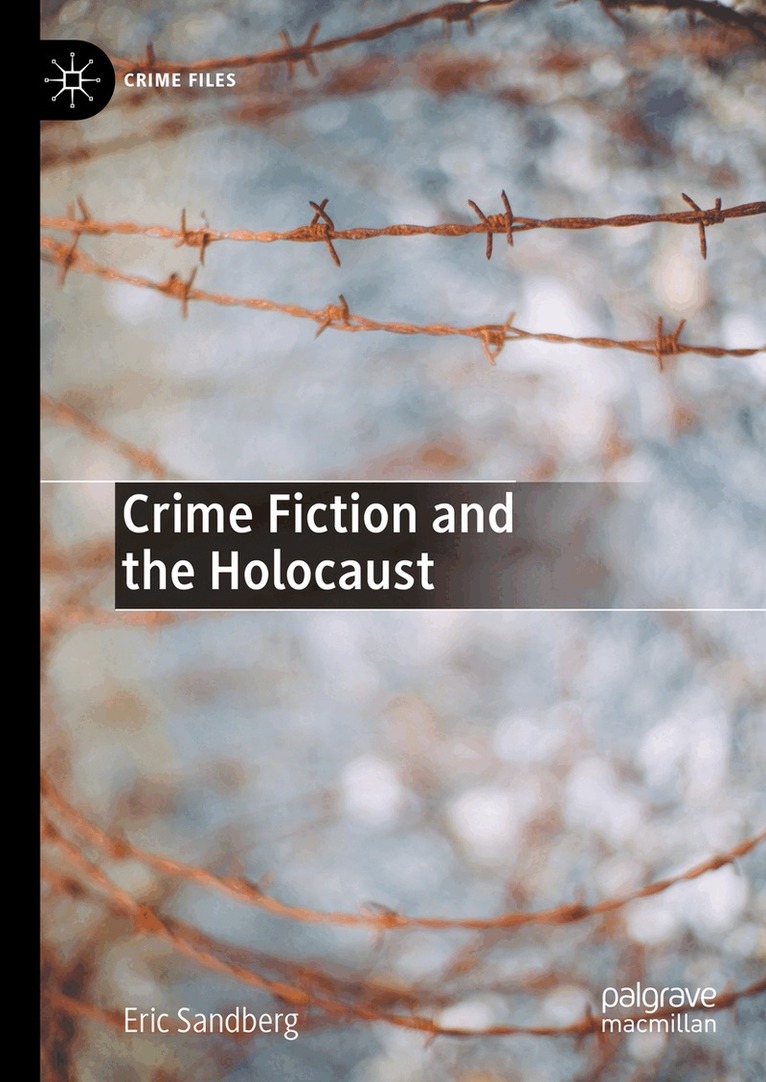
It examines the use of tropes of crime and detection in the representation of historical atrocity in both explicit crime fiction and in literary fiction that relies on some of crime fiction’s signature techniques.
1 169 kr
Skickas inom 10-15 vardagar
This book explores the intersection between adaptation studies and what James F. The second section focuses on the juncture where adaptation, the canon, and awards culture meet, while the third considers alternative modes of locating and expressing prestige through adapted and adaptive intertexts.
852 kr
Skickas inom 10-15 vardagar
This book explores the intersection between adaptation studies and what James F. The second section focuses on the juncture where adaptation, the canon, and awards culture meet, while the third considers alternative modes of locating and expressing prestige through adapted and adaptive intertexts.