
Eugenia Afinoguénova - Böcker
Visar alla böcker från författaren Eugenia Afinoguénova. Handla med fri frakt och snabb leverans.
6 produkter
6 produkter
1 364 kr
Skickas inom 7-10 vardagar
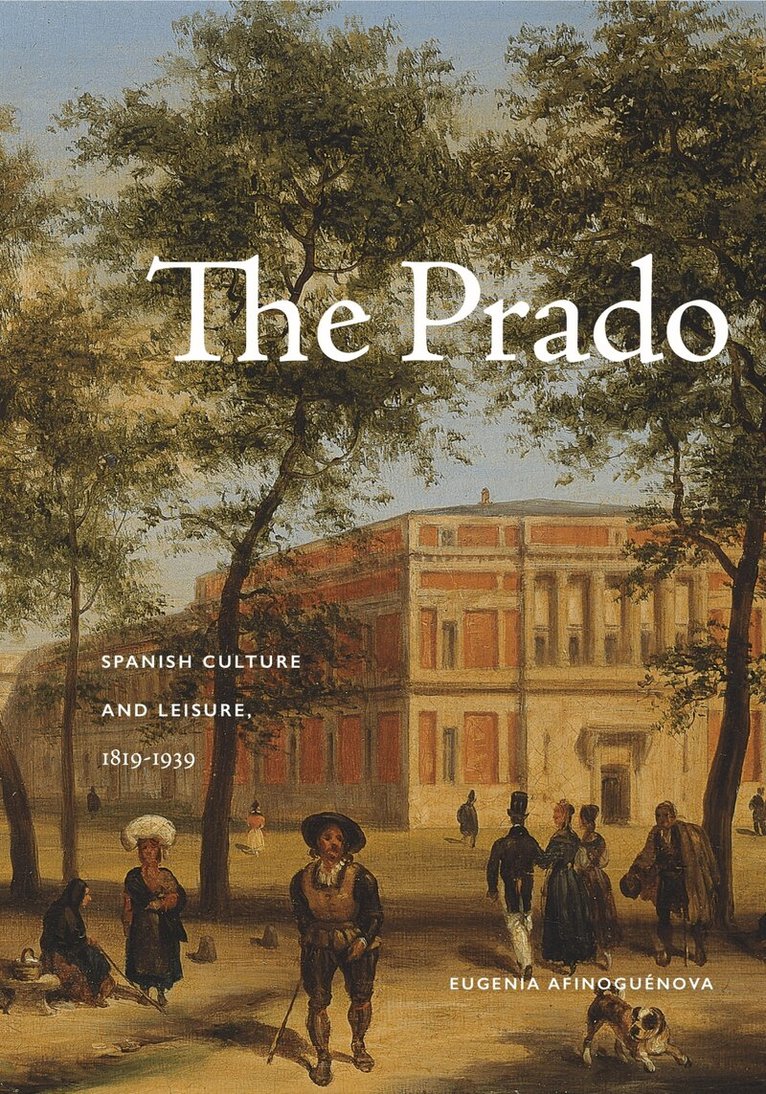
The Prado takes an unconventional look at Spain’s most iconic art museum. Focusing on the Prado as a space of urban leisure, Eugenia Afinoguénova highlights the political history of the museum’s relation to the monarchy, the church, and the liberal nation-state, as well as its role as an extension of Madrid’s social center, the Prado Promenade.Rather than assume that visitors agreed about how to interpret the museum, Afinoguénova approaches the history of the Prado as a debate about culture and leisure. Just like those crossing the museum’s threshold, who did not always trace a firm line between what they could see or do inside the building and outside on the Paseo del Prado, the participants in this debate—journalists, politicians, museum directors, art critics—considered museum-going to be part of a broader discussion concerning citizenship and voting rights, the rise of Madrid to the status of a modern capital, and the growing gap between town and country.Based on extensive archival research on the museum’s displays and policies as well as the attitudes of visitors and city-dwellers, The Prado unfolds the museum’s many political and propagandistic roles and examines its complicated history as a monument to the tension between culture and leisure. Art historians and scholars of museum studies and visual and leisure culture will find this foundational study of the Prado invaluable.
637 kr
Skickas inom 7-10 vardagar
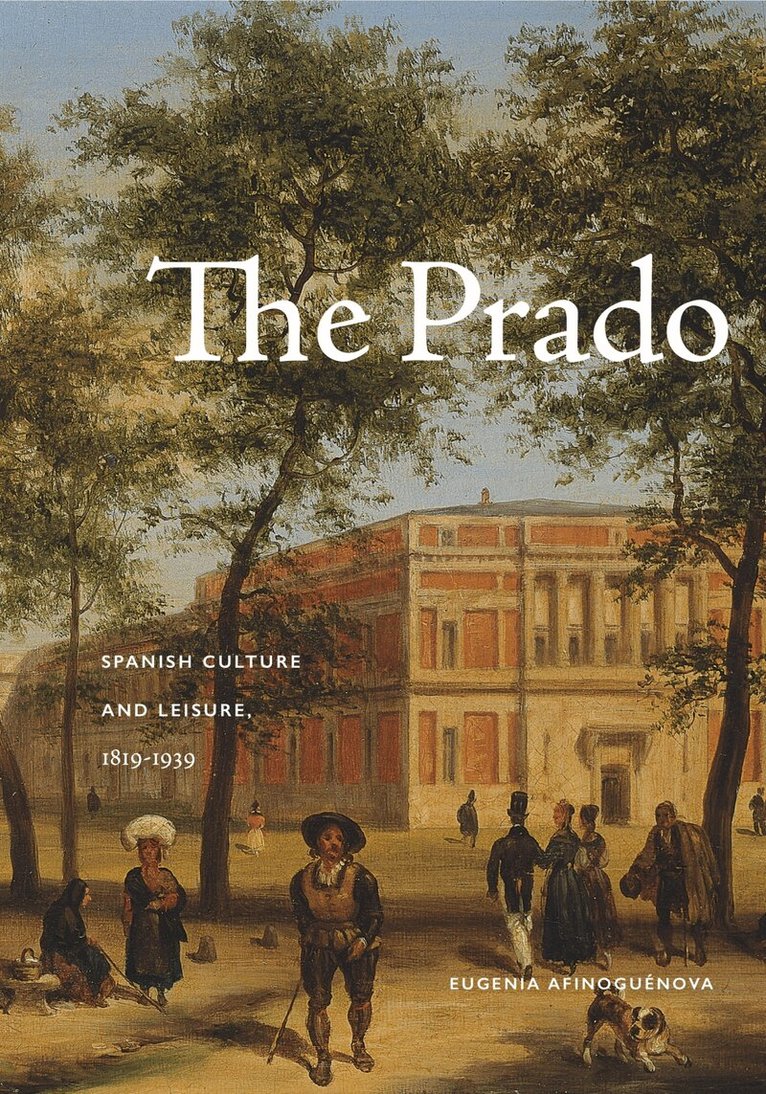
The Prado takes an unconventional look at Spain’s most iconic art museum. Focusing on the Prado as a space of urban leisure, Eugenia Afinoguénova highlights the political history of the museum’s relation to the monarchy, the church, and the liberal nation-state, as well as its role as an extension of Madrid’s social center, the Prado Promenade.Rather than assume that visitors agreed about how to interpret the museum, Afinoguénova approaches the history of the Prado as a debate about culture and leisure. Just like those crossing the museum’s threshold, who did not always trace a firm line between what they could see or do inside the building and outside on the Paseo del Prado, the participants in this debate—journalists, politicians, museum directors, art critics—considered museum-going to be part of a broader discussion concerning citizenship and voting rights, the rise of Madrid to the status of a modern capital, and the growing gap between town and country.Based on extensive archival research on the museum’s displays and policies as well as the attitudes of visitors and city-dwellers, The Prado unfolds the museum’s many political and propagandistic roles and examines its complicated history as a monument to the tension between culture and leisure. Art historians and scholars of museum studies and visual and leisure culture will find this foundational study of the Prado invaluable.
1 572 kr
Skickas inom 10-15 vardagar
Spain Is (Still) Different addresses both theoretical perspectives on the study of tourism in Spain and specific cases of the cultural impact of travel and tourism on Spanish culture in the late eighteenth to early twenty-first centuries. With contributions from experts in leisure and culture studies, literature, film, and art historians from Spain, the UK, and the U.S., this innovative multi-disciplinary volume introduces readers to methodological and practical issues concerning the cultural function of tourism in Spain.The main body of contributions comes from the area of cultural studies. In the introduction, Afinoguénova and Martí-Olivella provide a comprehensive overview of the problematic of tourism in Spain and of diverse approaches to the study of tourism in its relation to Spanish culture. Unlike other collections on tourism studies, this book is aimed to bridge the gap between the social sciences and the humanities. It is structured to provide an example of how experts in different fields can use each other's work in order to achieve a multi-faceted understanding of the phenomenon of tourism and its implications.
292 kr
Skickas inom 7-10 vardagar
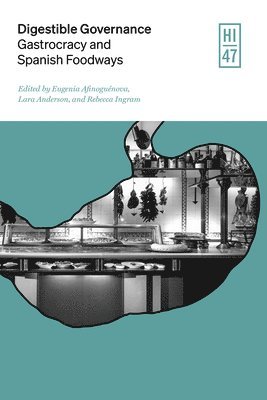
The term “gastrocracy” refers to the appropriation of discourses and practices related to the sourcing, preparation, distribution, and consumption of food for political purposes. The intersections of gastronomy and governance, dating in Spain to the last quarter of the nineteenth century, have become highly visible over the past decade, when political debates around nationalism in its different forms have taken the guise of discussions about regional and local cuisines. Concomitant with the rise of the “slow food” movement and following UNESCO’s addition in 2011 of “Gastronomic Meal of the French” to its list of Intangible Cultural Heritage of Humanity, public and private associations all around Spain have been established with the goal of achieving recognition by UNESCO for Spanish, Catalan, and other national cuisines. In 2016, Gastro Marca EspaÑa—an association and a web portal—was launched to raise the profile of food in Spain’s national brand.Eliciting wide public participation, coopted for political purposes, regarded as a factor of economic development on any scale, and integrated into every so-called banal nationalism, the production, distribution, and consumption of food are highly relevant for historical analysis. Seeking to encourage a broader discussion about Peninsular gastrocracies, this book brings together an interdisciplinary group of scholars from different sides of the Atlantic and the Pacific who have spearheaded research on gastronomy and governance in Spain.
1 451 kr
Skickas inom 5-8 vardagar
The term “gastrocracy” refers to the appropriation of discourses and practices related to the sourcing, preparation, distribution, and consumption of food for political purposes. The intersections of gastronomy and governance, dating in Spain to the last quarter of the nineteenth century, have become highly visible over the past decade, when political debates around nationalism in its different forms have taken the guise of discussions about regional and local cuisines. Concomitant with the rise of the “slow food” movement and following UNESCO’s addition in 2011 of “Gastronomic Meal of the French” to its list of Intangible Cultural Heritage of Humanity, public and private associations all around Spain have been established with the goal of achieving recognition by UNESCO for Spanish, Catalan, and other national cuisines. In 2016, Gastro Marca EspaÑa—an association and a web portal—was launched to raise the profile of food in Spain’s national brand.Eliciting wide public participation, coopted for political purposes, regarded as a factor of economic development on any scale, and integrated into every so-called banal nationalism, the production, distribution, and consumption of food are highly relevant for historical analysis. Seeking to encourage a broader discussion about Peninsular gastrocracies, this book brings together an interdisciplinary group of scholars from different sides of the Atlantic and the Pacific who have spearheaded research on gastronomy and governance in Spain.
2 613 kr
Kommande
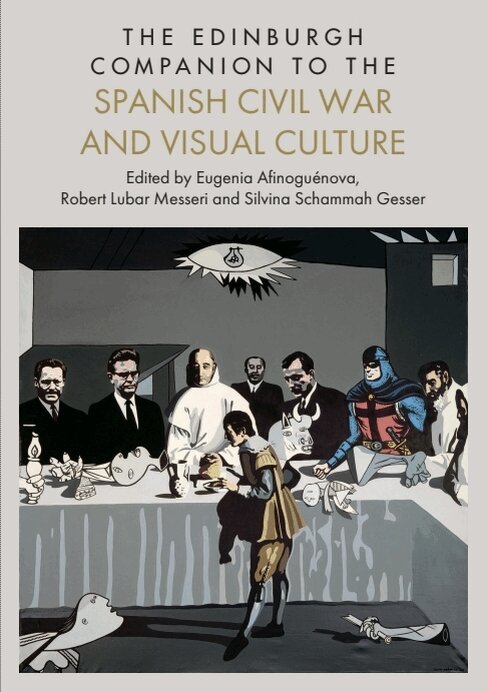
From propaganda posters to Pablo Picasso’s Guernica, images of the Spanish Civil War (1936–1939) reemerge across the globe wherever fratricidal conflicts and crimes against humanity occur. The War’s iconic visual language continues to shape contemporary painting, propaganda and advertising – a surprisingly long afterlife for a conflict lasting less than three years. This richly illustrated Companion explains this phenomenon, examining new sources and initiating fresh approaches to studying the visuality of the War and its legacies. The thirty-three essays collected here reveal the extent to which images helped – and still help – construct meaning around the War and other civil conflicts. Drawing on disciplines including art history, anthropology, history, art therapy, memory studies and forensic archaeology, the contributors’ case studies show how visual representation united or divided wartime and postwar communities in Spain and beyond.