
Gavin Fridell - Böcker
Visar alla böcker från författaren Gavin Fridell. Handla med fri frakt och snabb leverans.
9 produkter
9 produkter

599 kr
Skickas inom 7-10 vardagar
In a world of high finance, unprecedented technological change, and cyber billionaires, it is easy to forget that a major source of global wealth is, literally, right under our noses. Coffee is one of the most valuable Southern exports, generating billions of dollars in corporate profits each year, even while the majority of the world’s 25 million coffee families live in relative poverty. But who is responsible for such vast inequality? Many analysts point to the coffee market itself, its price volatility and corporate oligarchy, and seek to "correct" it through fair trade, organic and sustainable coffee, corporate social responsibility, and a number of market-driven projects. The result has been widespread acceptance that the "market" is both the cause of underdevelopment and its potential solution. Against this consensus, Gavin Fridell provocatively argues that state action, both good and bad, has been and continues to be central to the everyday operations of the coffee industry, even in today’s world of "free trade". Combining rich history with an incisive analysis of key factors shaping the coffee business, Fridell challenges the notion that injustice in the industry can be solved "one sip at a time" - as ethical trade promoters put it. Instead, he points to the centrality of coffee statecraft both for preserving the status quo and for initiating meaningful changes to the coffee industry in the future.
178 kr
Skickas inom 7-10 vardagar
In a world of high finance, unprecedented technological change, and cyber billionaires, it is easy to forget that a major source of global wealth is, literally, right under our noses. Coffee is one of the most valuable Southern exports, generating billions of dollars in corporate profits each year, even while the majority of the world’s 25 million coffee families live in relative poverty. But who is responsible for such vast inequality? Many analysts point to the coffee market itself, its price volatility and corporate oligarchy, and seek to "correct" it through fair trade, organic and sustainable coffee, corporate social responsibility, and a number of market-driven projects. The result has been widespread acceptance that the "market" is both the cause of underdevelopment and its potential solution. Against this consensus, Gavin Fridell provocatively argues that state action, both good and bad, has been and continues to be central to the everyday operations of the coffee industry, even in today’s world of "free trade". Combining rich history with an incisive analysis of key factors shaping the coffee business, Fridell challenges the notion that injustice in the industry can be solved "one sip at a time" - as ethical trade promoters put it. Instead, he points to the centrality of coffee statecraft both for preserving the status quo and for initiating meaningful changes to the coffee industry in the future.
- Nyhet
2 088 kr
Skickas inom 10-15 vardagar
Trade Fetishism argues that “trade” not only meets material goals, but also simultaneously works as a fantasy that seeks to satisfy and soothe our unconscious desires and anxieties. Countering the idea that trade is driven ultimately by rational economic, political, and strategic logics, it argues that non-rational beliefs and unconscious desires are equally motivating in our obsession with trade and its promises of enjoyment.Reassessing trade and trade politics, Fridell and Clark make a distinct contribution through systematic case studies that explore trade agreements in North America, between Europe and the Caribbean, and at the World Trade Organization. Drawing on case study research on specific trade agreements and trade justice movements, and engaging with a wide range of thinking about trade - from neoclassical economics and international law, to Marxist, feminist, postmodern, and other critical approaches – the book contends that trade and trade agreements are increasingly “fetishized”: offered up as near-magical objects that meet our desires, soothe our anxieties, and offer simple solutions to complex problems, even if they perpetually disappoint.An exploration of the desires and anxieties embedded in the widespread and enduring faith in global trade and free trade - a faith that persists despite abundant contradictions, gaps, and injustices – Trade Fetishism will appeal to scholars of sociology, social and political theory, and economics with interest in international trade and political economy.Chapter 1 of this book is freely available as a downloadable Open Access PDF at http://www.taylorfrancis.com under a Creative Commons Attribution-Non Commercial-No Derivatives (CC BY-NC-ND) 4.0 license.
550 kr
Skickas inom 3-6 vardagar
Claims unconscious desire plays a constitutive role in global political economy.This is the first book to examine global political economy from a psychoanalytic perspective. It claims that the libidinal-the site of unconscious desire-plays not a supplementary or trivial, but a constitutive role in global political economy. Consumption, for example, is not simply a way of satisfying a material or biological need but a doomed attempt at soothing our deeply held sense of loss; and capital is not just a means to material growth and prosperity but is invested with "drive" that seduces, beguiles, and manipulates in the service of unending accumulation. Thus, in contrast to political economy, which assumes a rational subject, libidinal economy is founded on the notion of a desiring subject, who obeys a logic not of good sense or self-interest but profligacy and irrationality. By applying a psychoanalytic lens, Global Libidinal Economy thereby seeks to uncover the unconscious excesses and antagonisms emergent in such key political economy categories as "production," "trade," and "ecology," while also bringing out significant contemporary themes relating to "gender" and "race."
1 415 kr
Skickas inom 3-6 vardagar
Claims unconscious desire plays a constitutive role in global political economy.This is the first book to examine global political economy from a psychoanalytic perspective. It claims that the libidinal-the site of unconscious desire-plays not a supplementary or trivial, but a constitutive role in global political economy. Consumption, for example, is not simply a way of satisfying a material or biological need but a doomed attempt at soothing our deeply held sense of loss; and capital is not just a means to material growth and prosperity but is invested with "drive" that seduces, beguiles, and manipulates in the service of unending accumulation. Thus, in contrast to political economy, which assumes a rational subject, libidinal economy is founded on the notion of a desiring subject, who obeys a logic not of good sense or self-interest but profligacy and irrationality. By applying a psychoanalytic lens, Global Libidinal Economy thereby seeks to uncover the unconscious excesses and antagonisms emergent in such key political economy categories as "production," "trade," and "ecology," while also bringing out significant contemporary themes relating to "gender" and "race."
350 kr
Skickas inom 7-10 vardagar
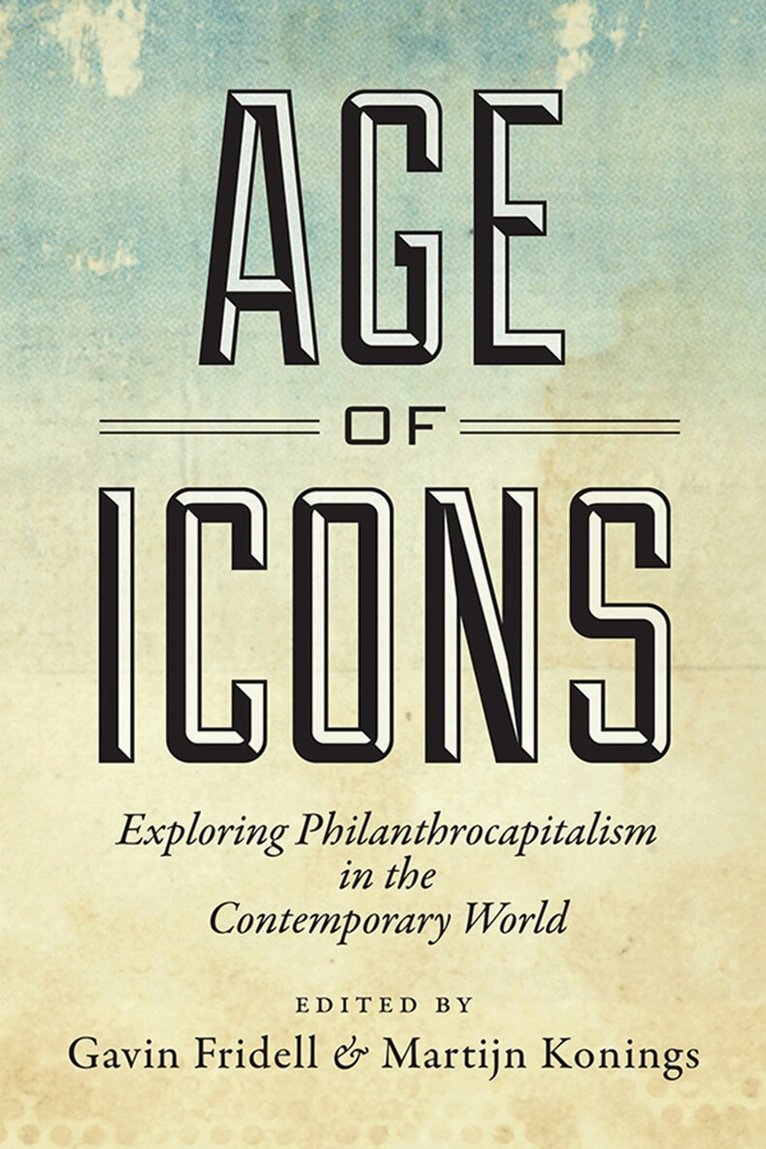
Celebrities are increasingly front and centre in public debates on everything from solving world poverty to halting genocide, confronting obesity, and finding spiritual contentment. Bono, Bill Gates, Al Gore, Bob Geldof, Oprah, Madonna, and Angelina Jolie are just some of the entertainers, politicians, pundits, elite business people, and policy-makers whose highly visible political activism has become an integral part of their public personas.These pop icons tend to be celebrated as “philanthrocapitalists” with a unique ability to remedy the world’s problems. However, as Age of Icons demonstrates, the solutions these icons promote for addressing global injustice, when examined critically, can be seen to work through the very same institutions that create these problems in the first place.This volume assesses the growing role of popular icons in the construction of a culture that appears to incorporate a critical attitude towards the capitalist experience while, in fact, legitimizing the neoliberal character of the modern world. It will be an eye-opening read for anyone interested in the juncture between current events and celebrity culture.
247 kr
Tillfälligt slut
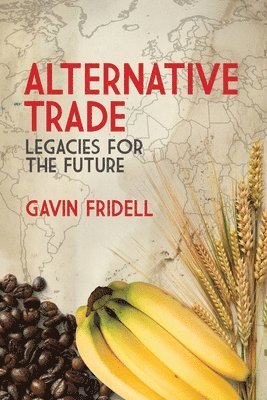
Free trade does not make a significantly positive contribution to a society’s well being, nor does real free trade exist. In Alternative Trade, Gavin Fridell confronts these assumptions through a passionate and rigorous appraisal of alternative trade and its imperfect legacy. Examining the history of alternative trade models – the International Coffee Agreement, the Canadian Wheat Board and the European-Caribbean banana regime – Fridell exposes the unbridgeable gap between “free trade” proclamations and the lack of actually existing free trade, arguing that the alternative trade models are much more socially efficient than what followed in their wake.Additionally, Fridell places politics, history, social change, class power and violence front-and-centre in his analysis and examines alternative trade within a broader social and historical context to uncover lessons for a more cooperative, socially just world order.
263 kr
Skickas
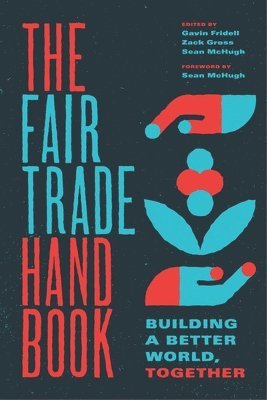
Framed within the common goal of advancing trade justice and South-North solidarity, The Fair Trade Handbook presents a broad interpretation of fair trade and a wide-ranging dialogue between different viewpoints. Canadian researchers in particular have advanced a transformative vision of fair trade, rooted in the cooperative movement and arguing for a more central role for Southern farmers and workers. Contributors to this book question the limits of fair trade against the broader structures of the capitalist, colonialist, racist, and patriarchal global economy.The debates and discussions are set within a critical development studies and critical political economy framework. However, this book will appeal to a wide range of readers, as it translates the key issues for a popular audience.Includes the graphic story 'a lively bean that brightens lives'!, by Bill Barrett and Curt Shoultz
1 308 kr
Skickas inom 7-10 vardagar
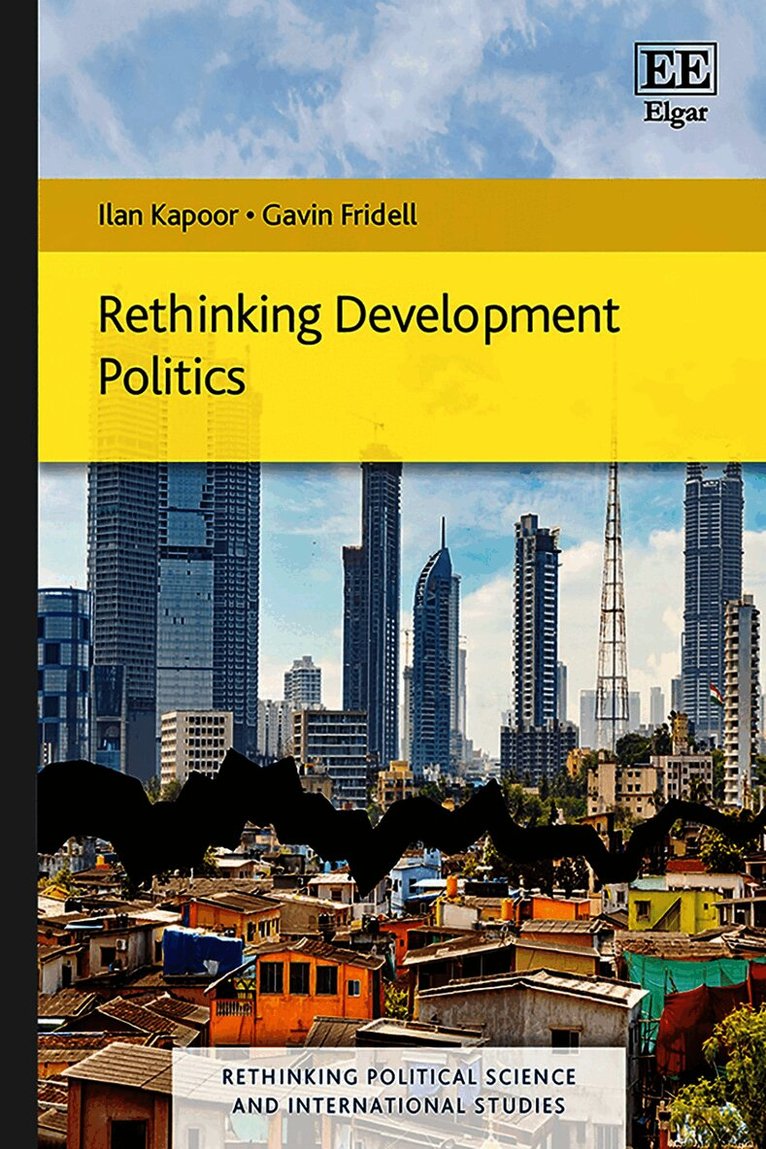
In this innovative book, Ilan Kapoor and Gavin Fridell rethink development politics psychoanalytically, investigating its unconscious. Whereas mainstream development politics is organized around stability and rationality, psychoanalysis points to disharmony and irrationality, helping to explain the development subject’s often self-defeating behaviour — for example being seduced by growth and shopping, despite being aware of the inherent perils of inequality and climate crisis.Rethinking Development Politics reassesses development in relation to three significant schools of thought: Modernization; (neo)Marxist political economy; and Postdevelopment/Decoloniality. It exposes how all three disavow the unconscious temptations of development, resulting in the rationalization of the market, the undervaluation of fantasy and fetishism, and the advocacy of an uncritical politics of authenticity. The book distinguishes the psychoanalytic approach from its predecessors by focusing on contemporary case studies, including digital and green modernization, trade, neopopulism, anti-racist training, and radical politics in present-day Iran. Crucially, these case studies speak to the extent to which the unconscious may be a political resource for reconfiguring development politics to put the subaltern first.Proposing a distinctive method of inquiry, Rethinking Development Politics will be of great interest to students, academics, and researchers in development studies, psychology, sociology, international relations, political science, and peace and conflict studies. Its critical analysis will also be of great use to global agency officials, corporate policy-makers, public policy institutions, and activist and advocacy organizations.